


Automakers Worried About New Aluminum Shortages, Raw Material Prices

Truck fans have argued for years about whether the aluminum body used on the Ford F-150 was the correct choice. While it lightened the vehicle by hundreds of pounds and proved to be incredibly resistant to corrosion, many worried that it was less durable to impacts and more expensive to repair than alternatives. Well, none of that matters now because the biggest con for Ford’s lightweight truck these days is that nobody in the industry can afford the raw materials.


GM Increasing Heavy Truck Production Despite Rising Fuel Prices
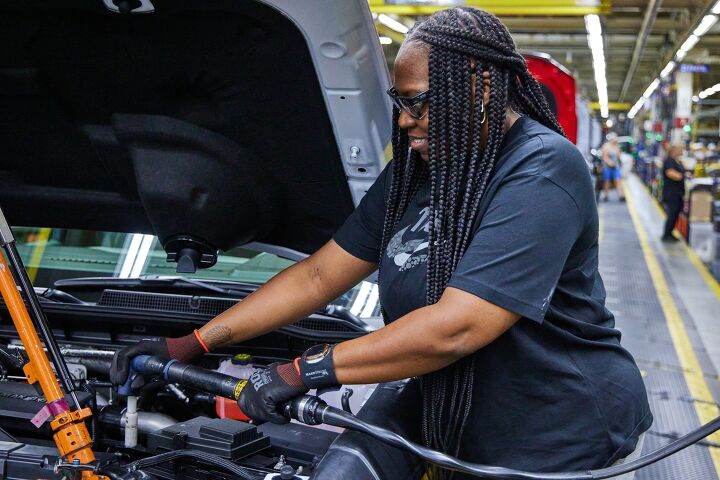
Rising gas and diesel prices haven’t slaked the thirst for General Motors’ heavy-duty pickups, forcing the company to increase production of its Chevrolet Silverado and GMC Sierra HD trucks.

Hyundai Hitting North America with 36 New, Updated Models by 2030

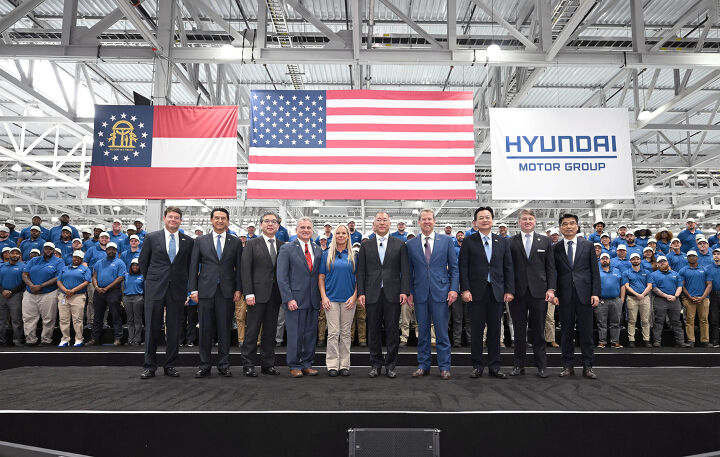
Hyundai Motor Co. revealed it has big plans for its biggest market — North America — where it looks to completely update and expand its portfolio by 2030 while looking to grow in the world’s largest market: China.
Jeep Slows Some Production Temporarily UPDATED

It appears that Jeep has paused production of at least one model for a couple of weeks.
BMW Expands Implementation Of Humanoid Robots

BMW has announced that it will be expanding its usage of humanoid robots after having successfully tested units from Figure AI in Spartanburg, South Carolina, last year. The next batch of bipedal robots will be sent to Leipzig, Germany, to see how they handle its European facilities.

New And Old? Mercedes-Benz Has Some Interesting Ideas About Vehicle Manufacturing

Mercedes-Benz recently announced a plan to make vehicles more “sustainable” and a portion of it pertained to bringing back some of the ways it used to build automobiles. However, suggesting that this is a complete return to traditional automotive manufacturing would be a gross misrepresentation.
QOTD: What Does American Made Mean To You?

I spent a few days last month with Nissan learning about its production operations in America.
Report: Automakers Knew About Battery-Production Lead Poisoning

A couple of weeks ago we brought you this New York Times report about lead poisoning being caused by factories that produce batteries for automotive use.
Report: Lead Recycled For Car Batteries Is Poisoning People

According to the New York Times, lead that's being recycled for car batteries is poisoning people.
Ford Earmarks $370 Million for Fresh Manufacturing - in India

The bleatings of current White House occupants telling American-based automakers to BUILD MOAR CARS HERE GOBBLESS notwithstanding, Ford is setting aside nearly half a billion dollars as part of initiative to reopen a plant in India it shuttered four years ago.

General Motors Slashes Thousands Of Electric Vehicle Related Jobs

General Motors is cutting more than 3,000 jobs associated with its electric vehicle and battery programs—one of the largest industry clawbacks since U.S. policy shifted away from EV mandates earlier this year. The layoffs are a function of GM trimming electric vehicle production to match declining demand.


More Bad News For Volkswagen
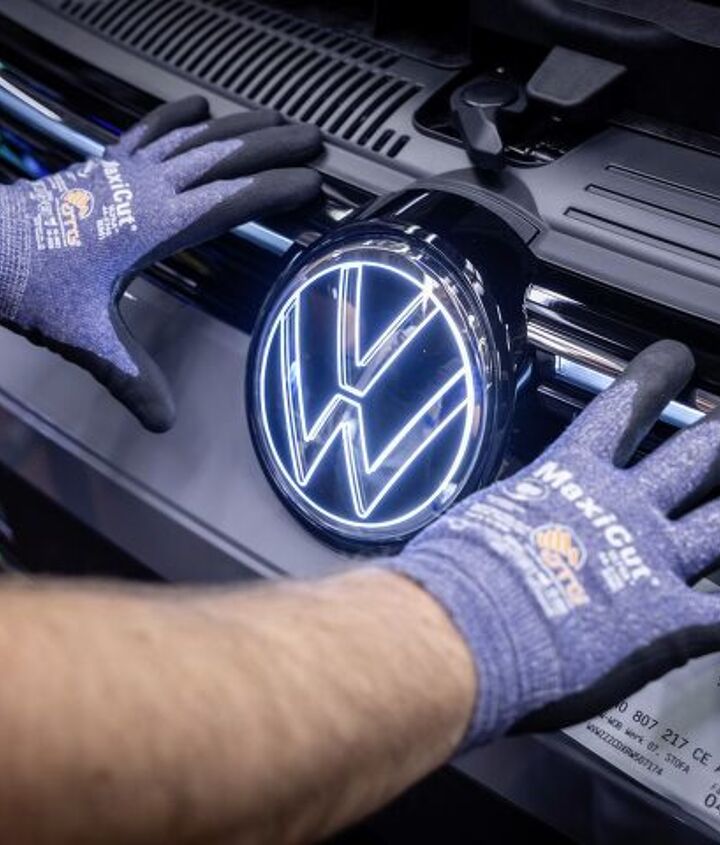
Volkswagen is preparing to idle production of the Golf at its Wolfsburg, Germany, plant beginning October 29, as the auto industry faces yet another chip shortage—this time triggered by escalating trade tensions between the United States, the Netherlands, and China.
VW Pauses ID. Buzz Van Production Because People Aren't Buying Them

Volkswagen’s retro-inspired ID. Buzz was supposed to rekindle the free-spirited appeal of the original Microbus while headlining the company’s electric future.
After Ford, The American Aluminum Shortage Hits Stellantis
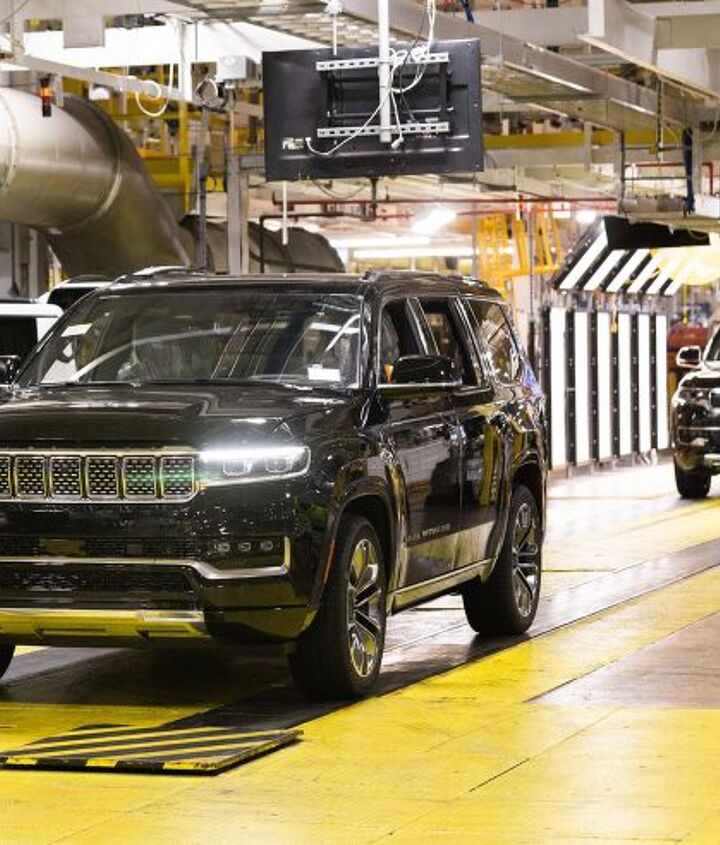
The fire that shut down the Novelis aluminum plant in Oswego, New York, continues to disrupt automakers across the industry. What started as a material supply shortage for Ford—the plant's largest client—has now spread to Stellantis, which paused production of the Jeep Grand Wagoneer at its Warren, Michigan, assembly plant.
Report: Tariffs Are Costing Car Dealers

While the role of tariffs enacted by President Donald Trump might be small when it comes to rising average transaction prices, the tariffs are costing car dealers money. At least according to one report.
Report: Auto Tariffs Will Be Tamped Down After Heavy Lobbying From Detroit

The White House appears ready to extend tariff relief for the U.S. auto industry—the plan involves a five-year extension of a previously carved out provision allowing automakers to reduce the tariffs they pay on imported car parts.
European Automakers Are Catching Collateral Damage From Washington and Beijing

The Dutch government’s decision to seize control of chipmaker Nexperia has roiled Europe’s auto industry. On September 30, The Hague invoked the rarely used Goods Availability Act to take oversight of Nexperia, citing “serious governance shortcomings” and the risk of technology transfer to its Chinese owner, Wingtech.
QOTD: Does Stellantis' Product Plan Excite You?

Stellantis Plans $13 Billion U.S. Investment

Stellantis plans to invest $13 billion in the United States and increase U.S. production by 50 percent.
The company claims that it's the largest in the 100-year history of Stellantis (and its predecessors like Fiat Chrysler).
Ford Forced To Idle SUV Production To Protect F-150 Profits
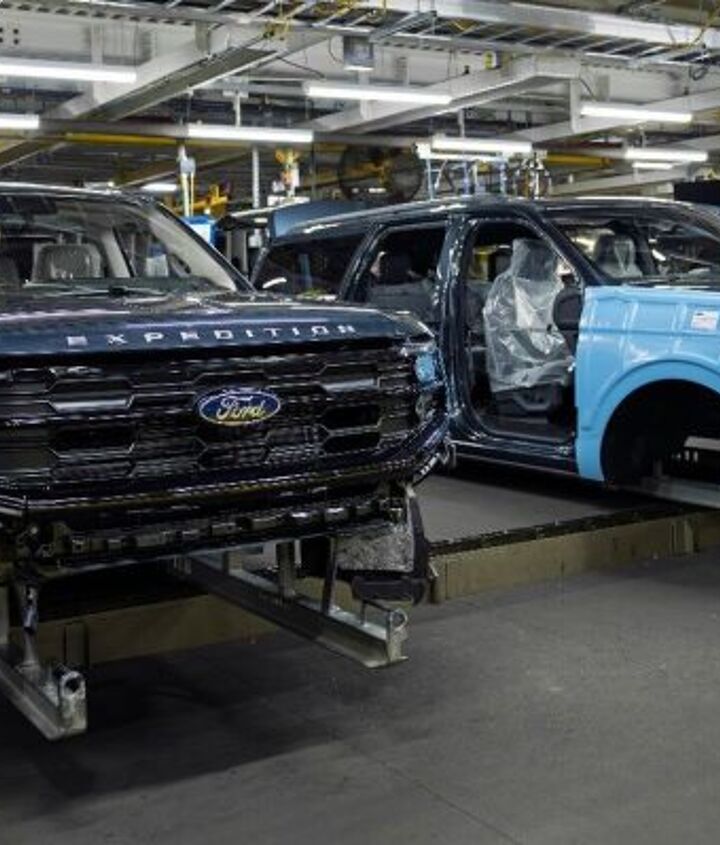
Ford has temporarily halted production of the Expedition and its twin, the Lincoln Navigator, after a massive fire crippled a major aluminum supplier in upstate New York.
Hyundai Pledges To Put America First, Promises New Body-on-Frame Pickup

Hyundai sees the U.S. as its largest growth opportunity and plans to produce more than 80% of U.S.-sold vehicles locally by 2030, up from roughly 40% today.

Ford Announces New Midsize Electric Truck and Significant EV Investment Plans

Ford’s much-hyped Model T moment arrived earlier today. The automaker held an announcement event to reveal its plans for a $5 billion investment in American manufacturing, which it said would bring thousands of jobs and create a new Universal EV platform. Ford also announced a new four-door electric pickup truck with a surprising starting price.

Nissan Puts Brakes On Two New EVs
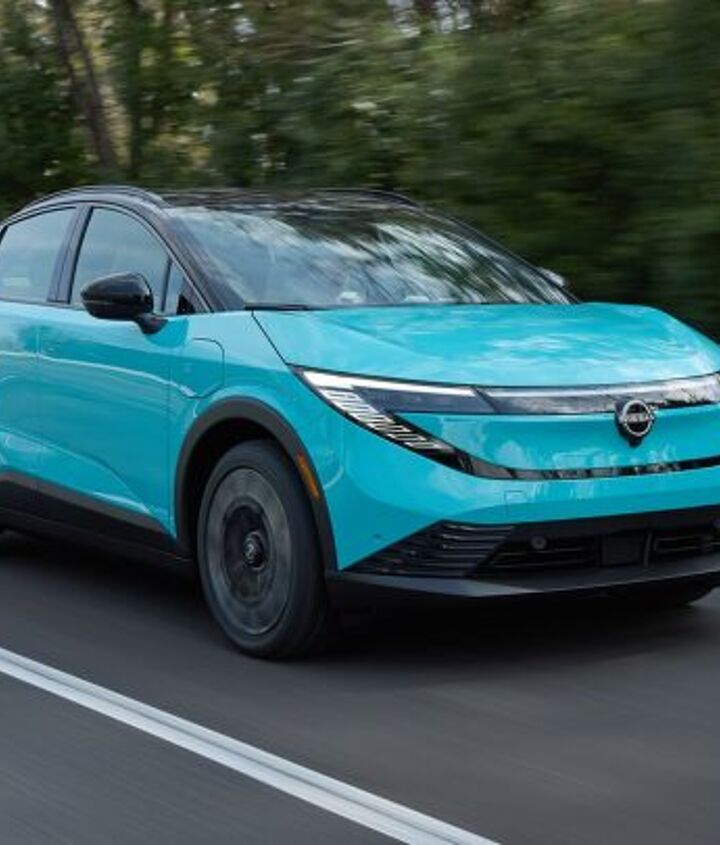
Reports are surfacing that Nissan is delaying or halting the rollout of two new electric vehicles amid the Trump administration’s decision to rescind EV tax credits.
Report: Nissan Talking to Foxconn About EV Production Again

Nissan is reportedly back in discussions with Foxconn regarding EV assembly. Previous negotiations pertained to the Taiwanese company buying a major stake in the Japanese automaker after the prospect of a Honda-Nissan merger was abandoned. Foxconn (famous for building Apple iPhones) reportedly wanted to help Nissan with production and software development, with a bend toward all-electric vehicles. Now, Foxconn is allegedly interested in utilizing Nissan-owned facilities to build its own vehicles.
Opinion: Software-Defined Vehicles Will Be Awful

While the automotive industry is gearing up to pivot toward “software-defined vehicles,” there hasn’t been a surplus of clear explanations on what exactly that will entail. Oversimplified, it just means that manufacturers want to start building automobiles where all functions are controlled via software, rather than being determined exclusively upon the mechanical hardware they came with — and I have a sinking feeling they are going to be just awful.
Former GM Engineer Explains Industry's Pathway To Planned Obsolescence And Disposable Cars
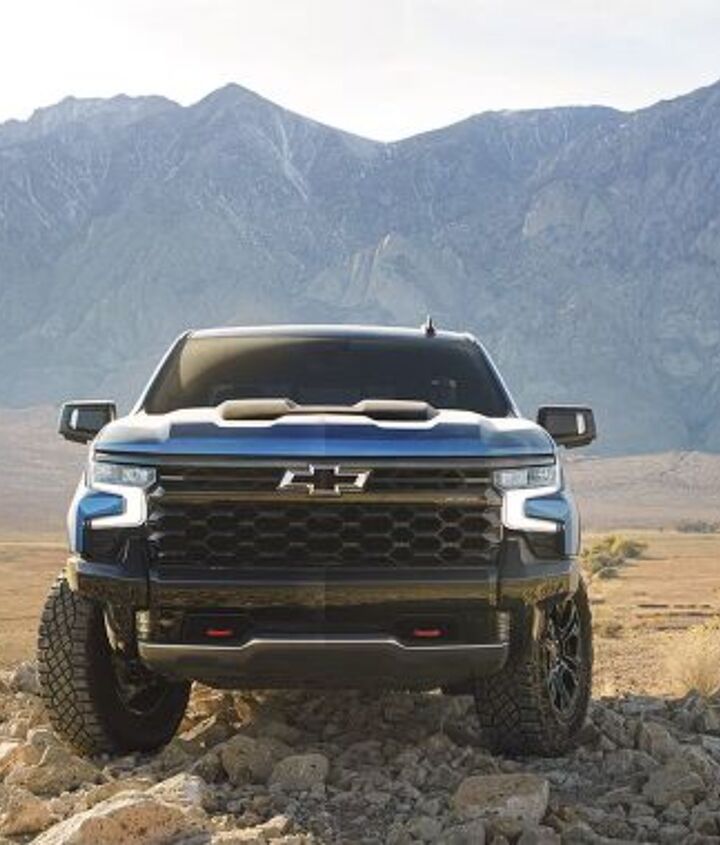
A recent interview with an industry whistleblower has suggested that the automotive sector is intentionally designing vehicles to be less robust than their predecessors. His assertion is that lapses in quality control, expanding computer integration, and shifting priorities in terms of component materials are all in service of pushing drivers toward having to replace vehicles sooner and paying more for them over the entirety of their artificially limited lifespans.
Honda Shuffling U.S.-Canada Production To Save Jobs
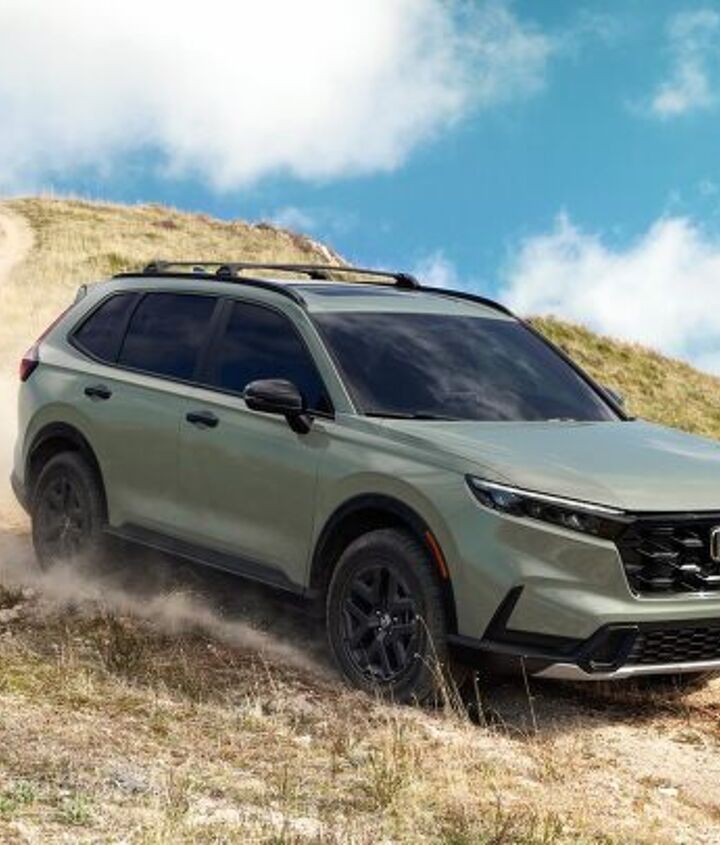
Honda is moving some of its CR-V production out of the U.S., but the decision actually saves jobs. Instead of initiating layoffs, Honda will shift production of export-bound CR-Vs into Canada, but in return, the automaker’s U.S. factory will receive some of the volume produced north of the border.
Europe Attempts Ban On Carbon Fiber

European regulators have decided that carbon fiber should be on a shortlist of “hazardous materials” and are seeking to have it banned. While the industry will presumably petition the government against instituting any official restrictions, there’s always a chance the rule could come to pass — shaking up the global supply chain.
President Donald Trump Announces 25 Percent Tariffs on Imported Cars UPDATED

President Donald Trump announced 25 percent tariffs on imported cars on Wednesday afternoon.
Trump Praises Hyundai Spending Money in Louisiana

At a press conference in the White House, President Donald Trump commended an upcoming $6 billion investment by Hyundai to further steel production in the state of Louisiana.
Report: Tariffs Could Lead To Halt In Auto Production

Automotive intelligence firm S&P Global Mobility is predicting that if President Donald Trump's proposed tariffs lead to a trade war, there's a 50 percent chance that the auto industry could enter a long period of disruption.
Hecho en Mexico: Volkswagen Shifting Golf Production to Puebla

It seems as Wolfsburg preps itself for the impending all-electric ID.Golf, the gasoline-powered variant will shift its production home to Mexico – potentially by the 2027 calendar year.
Stellantis Pledges to Build More Cars in the U.S.

In response to President Donald Trump's proposed 25 percent tariffs on products built in Canada and Mexico, Stellantis is promising to build more cars in the United States of America.
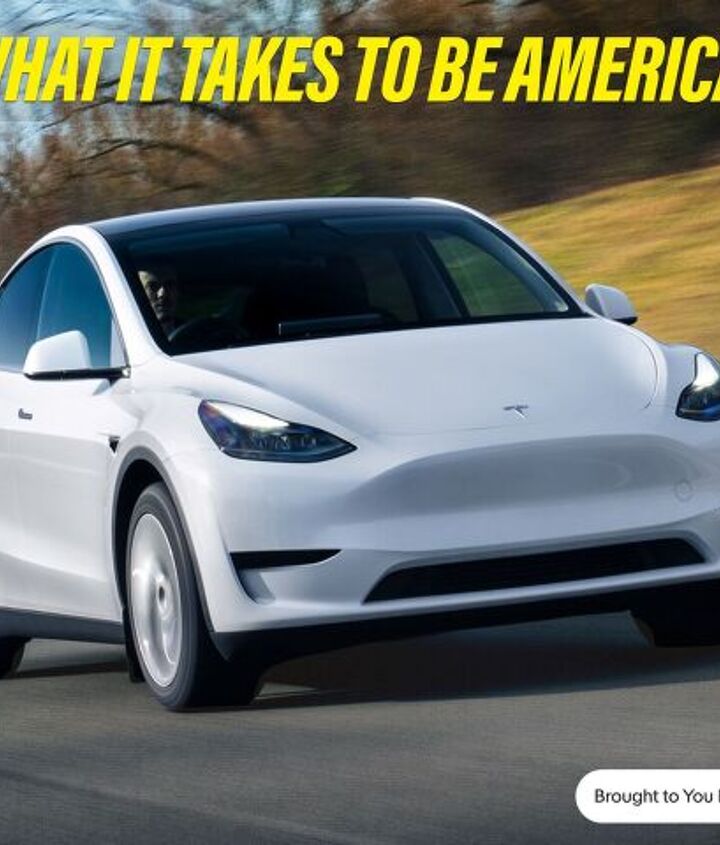
QOTD: Does Automotive Patriotism Mean Anything to You?
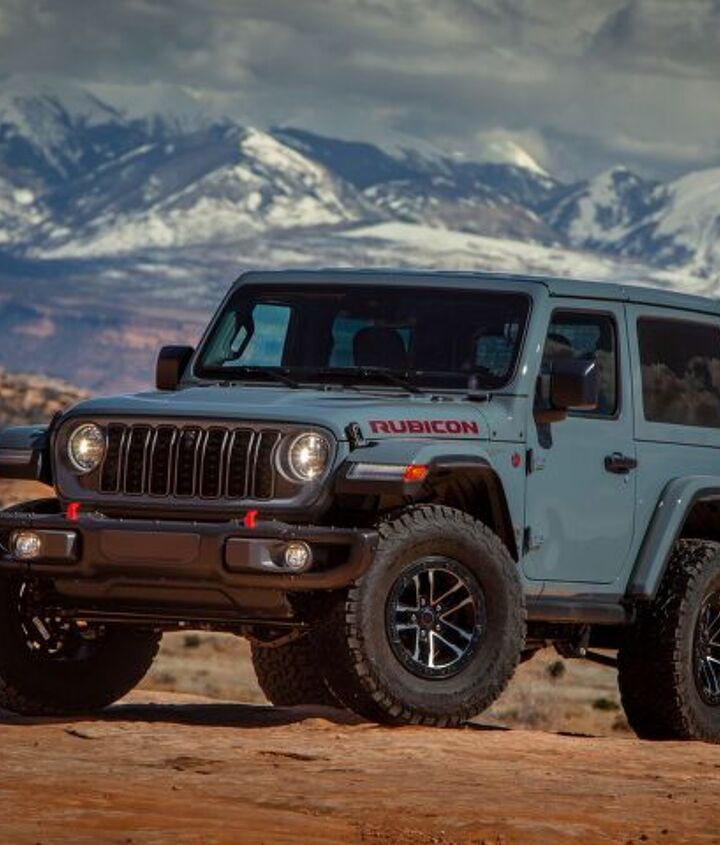
Yesterday we showed you that for the 23rd year in a row, Jeep stands atop a list of patriotic brands, both automotive and not.
QOTD: How Would Tariffs Impact the Automotive Industry?
Once again, I am going to borrow today's question of the day from one of our earlier posts. I like to do this because it gives you all another forum to give your opinion about any given topic, and sometimes we can pick a particular question from a certain story and really dig in.
Today, Matt wrote about presidential candidate/former president Donald Trump's rhetoric involving tariffs and the automotive industry.
Why Did Trump Propose a 100-Percent Tariff on Mexican Auto Imports?

Earlier this week, Donald Trump suggested that he would impose a 100 percent tariff on select automobiles manufactured in Mexico — sending the industry into a minor tizzy.
Having done some digging into the matter, Trump only appears to be targeting Chinese vehicles being manufactured south of the border. The statement was made during the “Buckeye Values PAC” rally in Dayton, Ohio, and comes after Chinese automaker BYD announced plans to build a production facility in Mexico. While most of the resulting vehicles are assumed to be electric, BYD has stated its intention is not to sell them within the United States.
Report: Lithium Americas Breaks Ground in Nevada Mining Operation
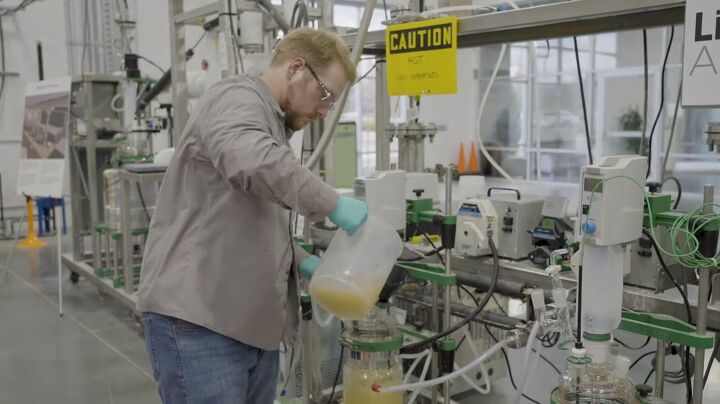
Lithium Americas has broken ground on its Thacker Pass mining operations, potentially opening the door to what some are calling the largest lithium deposit in the entire world. However, it’s estimated to be another three years before refinement takes place and the materials can be adapted for use in battery powered products — including all-electric vehicles.
Possible Arson Causes Tesla to Temporarily Shutter Gigafactory Berlin
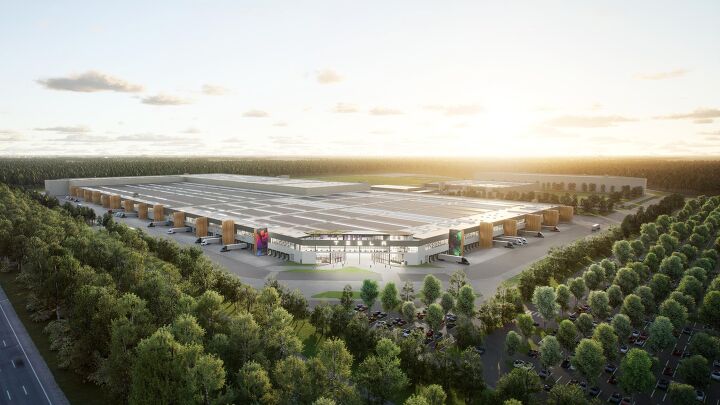
We’ve heard of automakers shuttering factories for production issues and parts shortages over the last few years, but Tesla’s recent shutdown is a new one. The automaker said it shut down production at its Gigafactory Berlin due to a potential sabotage attack, which left the facility without power.
Report: U.S. Prepping $540 Million for SK Group Semiconductor Factory in Michigan
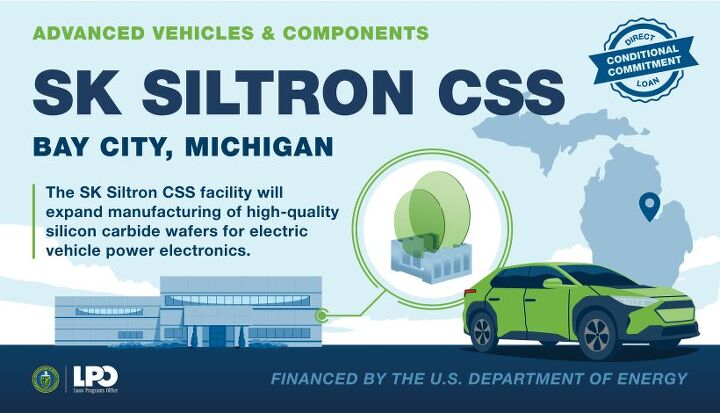
The United States Department of Energy has confirmed plans to loan $544 million to South Korean tech conglomerate SK Group under the conditions it be used to expand semiconductor production in the Midwest. Finances have been earmarked for a facility operated by subsidiary SK Siltron CSS to expand a plant located in Bay City, Michigan, which had previously expressed plans to build more chips.
Report: BYD Plotting New EV Factory in Mexico
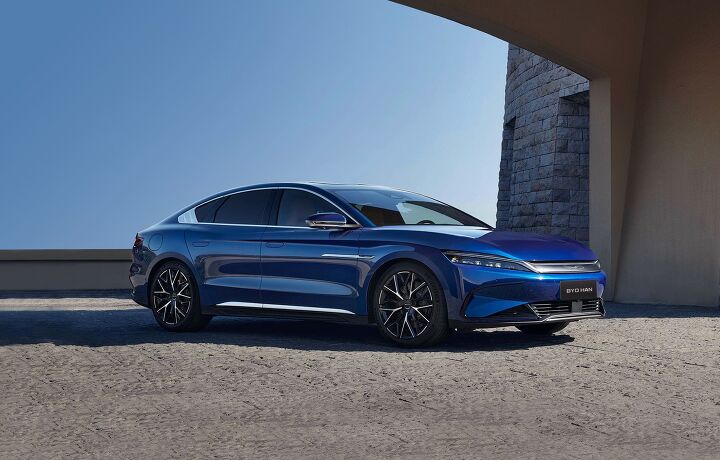
China’s BYD is reportedly prepared to set up a new production facility in Mexico with the alleged plan to use the locale as an export hub for the United States.
Mexico has long been a convenient venue for automakers vying to sell products within the Western Hemisphere without having to pay the kind of salaries commensurate with higher living standards. American brands love sending jobs to Mexico, as does every other company interested in moving high volume models through North and South America. With BYD having previously voiced its global aspirations, setting up shop in El Águila Real seems like an obvious play.
Chips Ahoy: Manufacturers Warn of Glut

Remember when there was a shortage of microchips in the automotive industry? Pepperidge Farm remembers. According to reports, images showing fields of almost-but-not-quite completed new cars awaiting One More Chip, along with manufacturers wildly deleting features like heated seats as if they were the mob deleting computer files, could be permanently in the rear-view mirror.
Mustang Gallops Back Into Production
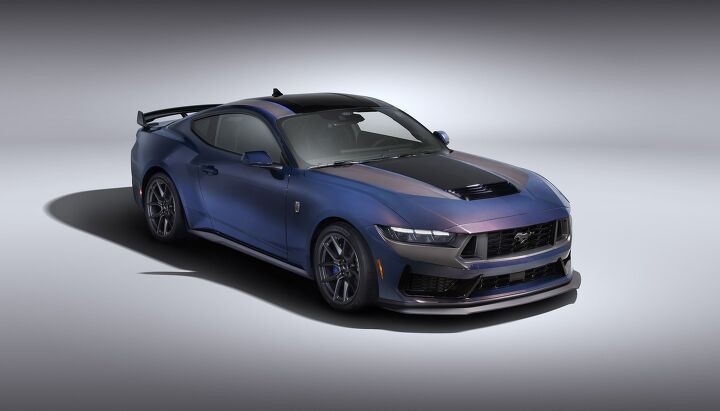
Customers who had thrown down money to reserve a new Ford Mustang have been playing a waiting game in recent months, with the Blue Oval pushing production back in April and again earlier this month. Now, according to several reservation holders with accounts on the 7thMustang.com fan forum, production is ramping up and should be underway by at least the end of July.
Toyota Scales Back June Production, Ford Drops German Factory
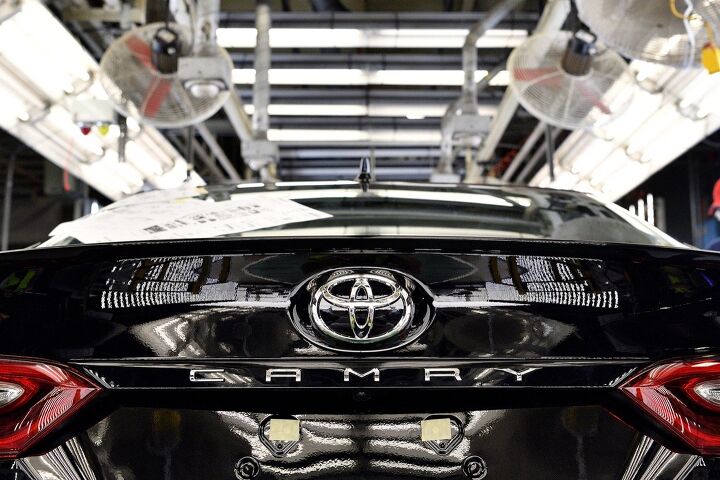
Despite starting 2022 announcing a plan to normalize output, Toyota has had trouble living up to its promise. While most automakers were figuring out how to make more money off diminished production, the Japanese brand was plotting assembly schedules that would restore assembly rates to levels that would have been considered normal prior to 2020. But the rest of the market hasn’t managed to match Toyota’s optimism and the automaker has had to scale back its global production plan yet again — citing the usual supply chain constraints stemming from COVID restrictions and worldwide deficit of semiconductors.
Meanwhile, Ford Motor Co. looks to be abandoning its vehicle assembly plant in Saarlouis, Germany. The facility produces the Focus for Europe and may be in danger of closing if the automaker elects to sell it. While the site was in the running to produce Ford’s next-gen electric vehicles, those products have since been slated for assembly in Valencia, Spain.
Report: Ferrari Plotting Italian EV Assembly Line

Ferrari is rumored to be preparing a third assembly line in Maranello, Italy, dedicated for electric vehicles. The automaker has already purchased land near the facility and is presumed to make an official announcement on June 16th when it’s scheduled to present its four-year business plan.
As usual, this comes from a major media outlet that cited unnamed sources from within the industry. Though, considering the luxury sports car manufacturer’s confirmation that it would begin producing hybrid and all-electric automobiles, it’s more than plausible. Ferrari’s first battery electric vehicles are scheduled to arrive in 2025 and it still needs somewhere to build them.
How Shanghai Lockdowns Are Changing the Auto Industry

While the semiconductor shortage was long considered the excuse par excellence for why the automotive sector couldn’t produce enough vehicles during the pandemic, some manufacturers have begun pivoting to blaming supply chains that have been stymied by Chinese lockdowns. Toyota is probably the best-known example. But the matter is hardly limited to a singular automaker and market analysts have already been sounding the alarm bell that strict COVID-19 restrictions in Asia will effectively guarantee prolonged industrial hardship around the globe.
Back in April, Shenzhen was emerging from a month-long lockdown. However, the resulting downtime severely diminished the tech hub’s output which exacerbated global component shortages. While Chinese state-run media claimed regional factories maintained full-scale production during the period, the reality was quite a bit different. Meanwhile, Shanghai has remained under harsh restrictions since March and more look to be on the horizon. As an important industrial center and the world’s busiest port by far, the situation has created an intense backlog of container ships that are presumed to create some of the sustained problems that we’re about to explore.
Chinese Lockdowns Force Toyota to Cut Production Again

The automotive industry has basically resigned itself to running with lessened production for the foreseeable future. A significant number of automakers have suggested that it might be more lucrative to scale back output, reduce overhead, and focus on achieving broader margins per car during this prolonged period of economic and logistical duress. However, Toyota started the year saying it would do its utmost to raise production output as a way to make up for losses incurred during the pandemic. The company even said it anticipated things to gradually normalize through the spring.
Unfortunately, things have not gone according to plan. By March, the Japanese automaker had lowered its output goal for the fiscal year by 500,000 global units. Another 20 percent was lopped off for the month of April and leadership began expressing concerns that those preexisting goals might be totally untenable. While there were moments with the target actually rose, Toyota has repeatedly been forced to walk those claims back as the realities of the market dashed its dreams. Now, the company is once again cutting planned output for the month of June over supply chain issues with China.
Still Interested? 2023 Acura Integra Enters Production

Acura has announced that production of the much-anticipated 2023 Integra has officially commenced in Marysville, Ohio. Deliveries of the iconic nameplate are said to commence in June and orders can be placed now.
But with pricing having revealed the starting MSRP of $31,895 — over three grand more than the mechanically similar Honda Civic Si — one wonders if the public interest has held strong. We now know that we’re effectively getting a revamped version of the ILX (also based on the Civic) with a steeper price tag and a more desirable name. The Integra comes with a 200-horsepower turbocharged 1.5-liter inline-four, mated to either a continuously variable automatic (CVT) or a six-speed manual transmission. But the CVT is standard, forcing customers that want a manual to spend $36,895 (including destination) for the A-Spec — which also comes with adaptive dampers, sportier looks, a limited-slip differential, and Acura’s technology package.
Ford Lightning Getting Company in Tennessee

The 2022 Ford F-150 Lightning has officially started production at the company’s Rouge Electric Vehicle Center in Michigan and will apparently be getting some company at the Blue Oval City campus in Tennessee. On Tuesday, CEO Jim Farley said that the upcoming plant had been selected to produce a new model during a press event covering the official launch of the all-electric F-Series.
“It’s another truck,” he explained. “This is not our only truck. We said very clearly we want to be the leader in electric pickup trucks.”
Mazda Rotary Engine Returning on MX-30

After years of speculation that Mazda would someday bring back rotary-powered performance, the company is finally willing to confirm that our collective hope was not in vain. However, there will be no rear-drive RX model spinning up its triangular Wankel beyond 8,000 rpm because piston-free rotary engines are difficult to seal. Despite making oodles of power for their size, they’re not well optimized for everyday driving and tend to offer the kind of fuel economy and emissions that get regulators’ panties in a twist.
Given the circumstances, Mazda’s rotary will be returning as a range extender for the MX-30 PHEV.
Toyota Supra Finally Getting Manual Transmission
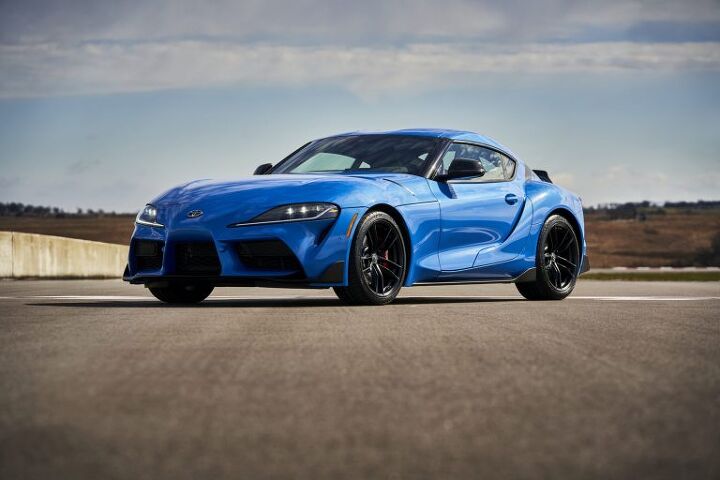
Toyota engineers have been fairly adamant that there would eventually be a manual version of the Supra sports coupe since its formal introduction in 2019. By February of 2020, chief engineer Tetsuya Tada even confirmed that the car has been tested extensively with a clutch and choose-your-own-adventure gearbox. But Toyota explained that the automaker opted against having one at launch due to a desire to lead with the model yielding the best specs on paper. Toyota was also fretting over customers modifying vehicles, claiming the eight-speed automatic could handle far more torque before giving into physics and dismantling itself.
However, the automaker has recently begun teasing the Supra with a three-pedal setup over social media, later stating that an-all new manual transmission was indeed on the way for the coupe. But why now?
Honda Insight Being Replaced By More Hybrids Across Lineup

Ahead of Honda’s planned EVs offensive for the United States, the automaker has announced a deluge of hybrid variants of existing products. However these new vehicles will come at the expense of the Insight, which the company had just confirmed will be discontinued after 2022. In its stead will be new hybrid trips for the CR-V, Accord, and Civic — the latter of which served as the template for the passing model.
Chip Shortage Lambasts Europe, Supply Chains Confront New Problems
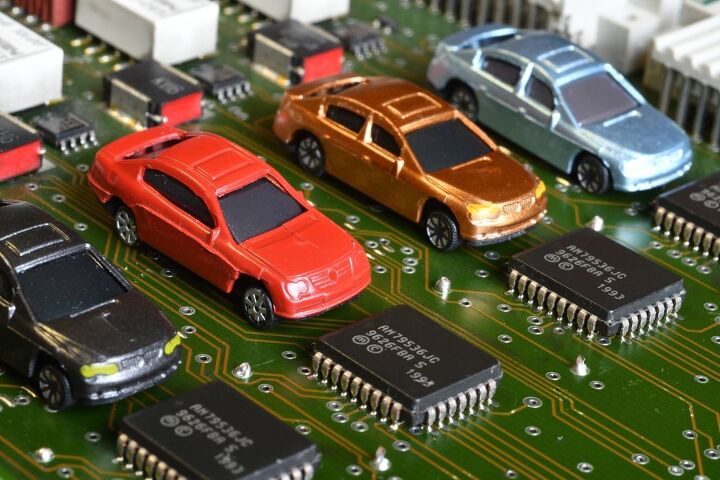
Even though the global semiconductor shortage has been going strong for about two years now, the world has failed to successfully manage the situation. Production stoppages remain relatively common within the automotive sector, with manufacturers continuing to attribute factory stalls to an inability to procure a sufficient number of chips. But the excuse seems to have evolved into a catch-all explanation for supply chain issues that continue that go beyond a single missing component.
That makes it a little hard to determine precisely how much of the ongoing production shortfalls can be pinned on semiconductors. But AutoForecast Solutions (AFS) was keen to take a whack at it and determined roughly 1.4 million vehicles have been removed from the automotive industry’s targeted output for 2022 — that’s on top of the 10.5 million units we lost in 2021. While the issue is indeed global, AFS stated that the last batch of vehicles to get the ax was predominantly from Europe.
GM's Oshawa Plant Increasing Truck Production, CAMI Getting Electric Vans
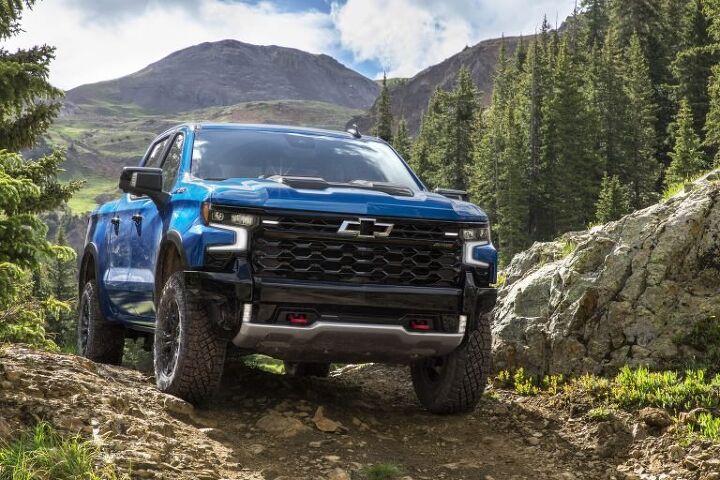
On Monday, General Motors’ added a second shift for Heavy Duty variants of the Chevrolet Silverado at Oshawa Assembly to ensure the automaker can meet demand. There are also plans to launch a third shift to spur production of light-duty pickups after GM spent the last two years struggling to deliver vehicles in a timely manner.
GM Canada recently representatives from the Canadian federal government, eager to show that its $2 billion investment into Ontario manufacturing (specifically at Oshawa and CAMI Assembly) had already borne fruit. While this is said to eventually include the production of BrightDrop’s all-electric and perpetually connected Zevo vans, GM is presently focused on swelling production on some of its most valuable products.
Ford, GM Pausing Production in Michigan Over Parts Shortage
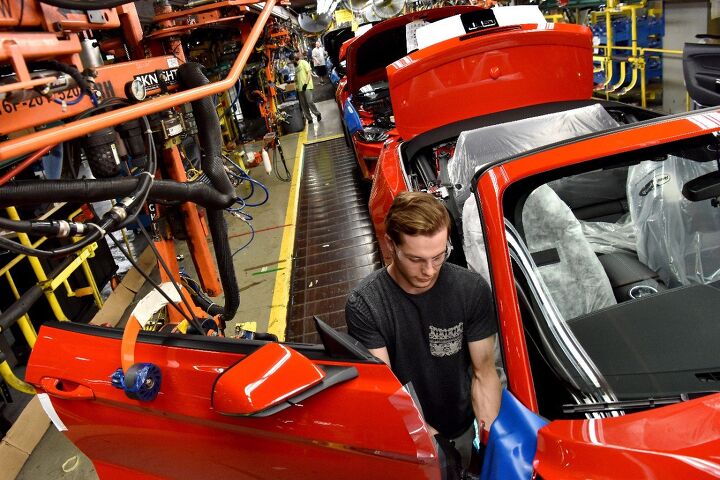
Ford Motor Co and General Motors will be individually suspending production in Michigan next week due to supply chain constraints. However, it’s difficult not to notice that the chosen facilities are responsible for lower-volume models they could probably afford to idle.
GM is stalling Lansing Grand River Assembly and Stamping, citing a parts shortage it said had nothing to do with the ongoing deficit of semiconductor chips. The company later stated that the Russo-Ukrainian war had not played a factor, abandoning the two most popular excuses for why something isn’t being done in 2022. Meanwhile, Ford has said the chip shortage has everything to do with its temporary closure of Flat Rock Assembly.
Auto Industry Assets Could Be Seized by Russian Nationalization
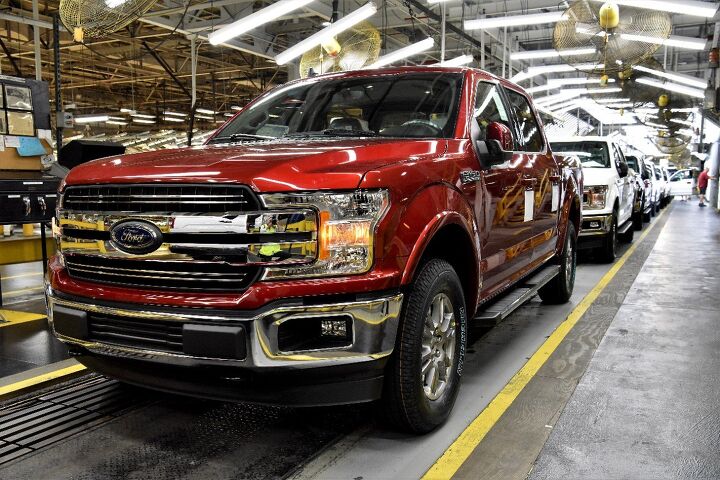
The war in Ukraine continues to have ripple effects.
A new report from industry bible Automotive News suggests Vladimir Putin is considering seizing the assets of automakers who left Russia in the wake of its invasion of Ukraine.







Recent Comments