
BMW Expands Implementation Of Humanoid Robots

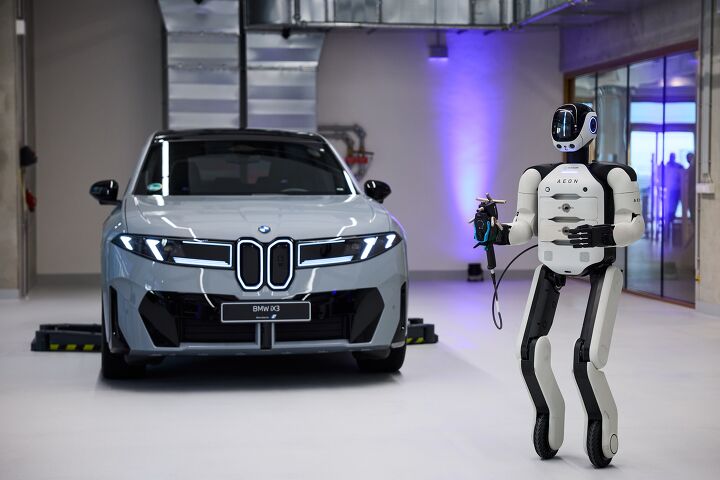
BMW has announced that it will be expanding its usage of humanoid robots after having successfully tested units from Figure AI in Spartanburg, South Carolina, last year. The next batch of bipedal robots will be sent to Leipzig, Germany, to see how they handle its European facilities.
“Digitalisation improves the competitiveness of our production — here in Europe and worldwide. The symbiosis of engineering expertise and artificial intelligence opens up entirely new possibilities in production,” stated Milan Nedeljković, Member of the Board of Management of BMW AG, responsible for Production.
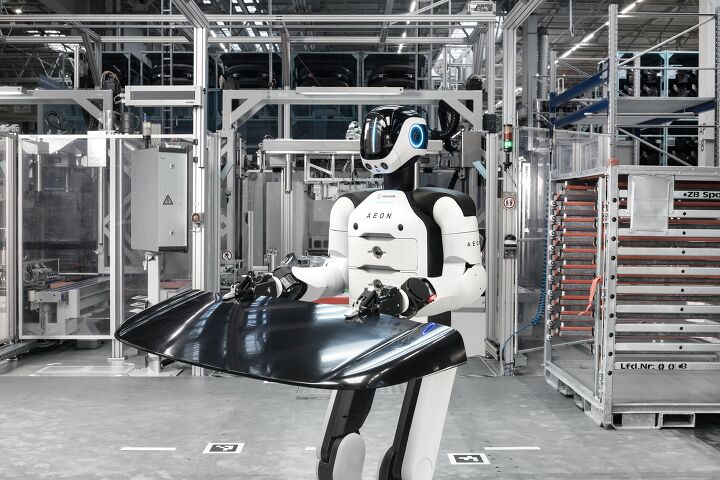
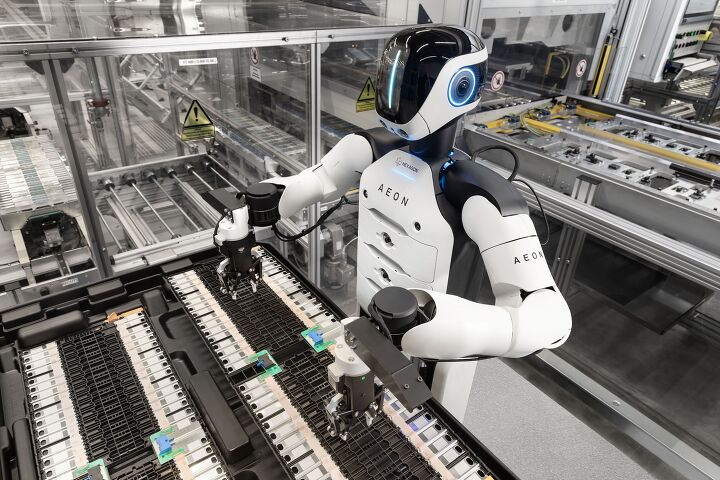
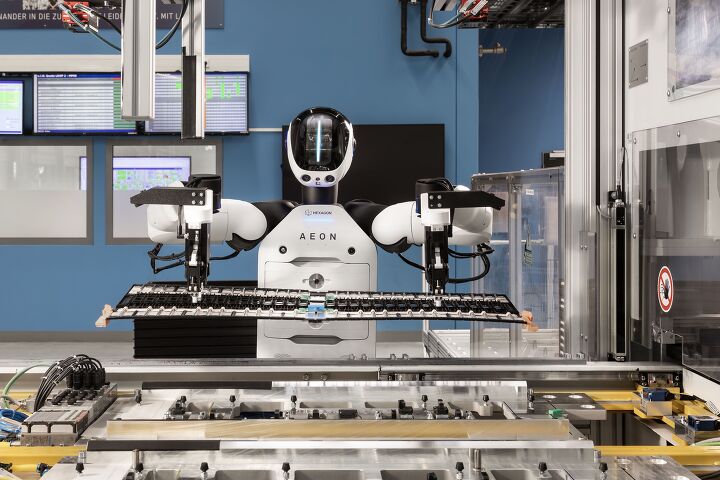
The Spartanburg Figure 02 robots reportedly assisted in building over 30,000 vehicles through 2025, most of which were the X3 SUV. Robots were said to run on 10-hour shifts, which was based around battery limitations, and collectively walked over 200 miles of the factory floor in order to move over 90,000 individual components. This was reportedly good enough for the automaker to extend its robotic pilot program to Germany, pivoting to the Hexagon Robotics AEON units in the process.
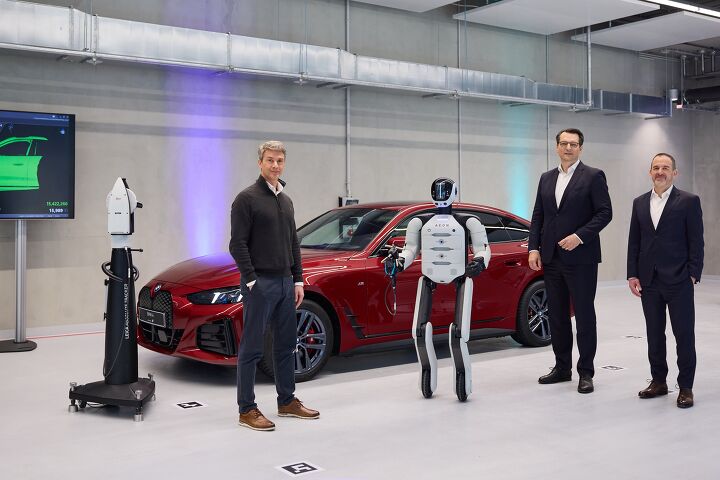
From BMW:
The pilot confirmed that humanoid robots can safely perform precise, repetitive work steps — such as positioning components with millimetre precision — and provided important insights for the further deployment of Physical AI in production.
During the initial test phases with Figure 02, it was essential to involve all areas of the production IT infrastructure, occupational safety, production process management, and shop floor logistics at an early stage.
One key finding was that the transition from the laboratory to the actual production environment was faster than expected. Motion sequences trained in the laboratory could be quickly transferred into stable shift operation. To ensure smooth coexistence with existing systems, integration into the BMW Smart Robotics ecosystem was implemented via standardised interfaces.
The body shop was deliberately selected for the test phase in Spartanburg, as it already has a high degree of automation. BMW Group employees in this area have extensive experience in integrating new technologies and processes. For example, material supply on the line is already carried out almost exclusively via automated smart transport robots (STR). The project team’s early communication ensured transparency from the outset and promoted acceptance. The deployment of humanoid robots was met with great interest among employees and quickly became a natural part of everyday work during the course of the project.
“Our aim is to be a technology leader and to integrate new technologies into production at an early stage. Pilot projects help us to test and further develop the use of Physical AI — that is, AI‑enabled robots capable of learning — under real-world industrial conditions,” explained Michael Nikolaides, Senior Vice President of Production Network and Supply Chain Management at BMW Group.
But one still wonders about how much of this is just about the optics. Automakers desperately want to be seen as technology companies these days. While tech firms are becoming extremely unpopular with the general public, companies believe adopting their traits will bolster shareholder value and there's evidence to support that it has thus far.
BMW has been careful to frame its robotic implementation as a major success, perhaps for that very reason. But most accounts only had South Carolina running a couple of Figure 02 robots during the 11-month testing phase. That really drives home the point that this was indeed a pilot program and not necessarily indicative of large-scale implementation.
Several automakers have launched programs to test bipedal robots at production facilities, including BMW and Mercedes-Benz. Hyundai even went so far as to purchase Boston Dynamics in 2021 as a flex on rivals as it prepares to do the same. Then there is Tesla, which presently looks to be attempting to pivot away from automobiles so it can place more focus on its Optimus robot and artificial intelligence initiatives.
Having humanoid robots doing all of our manual labor is an extremely old trope. We’ve seen them in films for over a century. But ancient Greece had been toying with mechanical novelty animals that used steam for power a couple thousand years earlier. Leonardo da Vinci developed a suit of armor that could mimic humanoid movements via a series of gears and pulleys around 1495. Centuries before that, Ismail al-Jazari attempted to build similar automated devices that used an early form of hydraulics to create movement. Japan would even try its hand at similar devices hundreds of years later with mechanized karakuri puppets that produced uncanny humanoid movements.
While many of the above concepts and designs would serve as necessary to develop many of the machines we use today, legitimate humanoid robots have been completely off the table until very recently.
Most of the big technological breakthroughs have come by way of computing. Before that, automation was really only effective at completing whatever singular task a machine was designed for. True robots wouldn’t emerge until General Motors installed one of George Devol’s Unimate arms at one of its assembly plants in 1961. By having the ability to modify a series of behaviors for the arm, the automotive sector effectively became the first industry to use true robots for industrial labor.
This form of automation has gradually reduced the number of human employees necessary for large-scale manufacturing efforts via increased mechanization on assembly lines. However, people have remained an essential component since most of these devices have historically been massive units that are permanently mounted to the floor and fit for singular tasks.
Now, the industry is testing humanoid robots — making everyone who isn’t upper management a little uneasy.
Automakers ultimately want to flex that they’re on the cutting edge of technology. But many have also suggested that leveraging bipedal robots could help them cope with rising labor costs and employment shortfalls. The concept of having machines capable of doing the kinds of tasks that were formerly exclusive to humans is simply too enticing for companies to ignore.
But it’s not abundantly clear that these units are ready for serious, generalized work routines. The initial investment into these machines will be quite substantial and they will undoubtedly require specialized maintenance routines. They’re also more energy intensive than sticking with people and there are real questions about lifespan. Replacing an entire fleet of robotic laborers every few years likely isn’t as practical as keeping real people on staff, especially if the latter still proves more capable. However, the biggest risk is upsetting the social order. Displacing a large number of workers never goes over particularly well. Introducing bipedal robots too quickly or at the wrong time could just result in your former employees coming back to the factory armed and unhappy.
Hyundai’s plan to begin using Boston Dynamics’s Atlas robots to replace its human employees in 2028 has resulted in some serious backlash from its South Korean labor union. It has promised to make life extremely difficult for the automaker without properly negotiating the implementation of bipedal robots as part of union contracts. Those familiar with the Korean union know this is not an empty threat.
Interestingly, Hyundai initially wants to field its Atlas robots at Hyundai Motor Group Metaplant America in Georgia. Like BMW, it views the United States as the best testing grounds for the concept.
Mercedes-Benz has likewise been testing Apptronik's Apollo robots. But it has been similarly careful about public messaging. The German company wants to convey that the robots would only be used for intensive and repetitive labor, allegedly freeing up human employees to do more low-impact tasks.
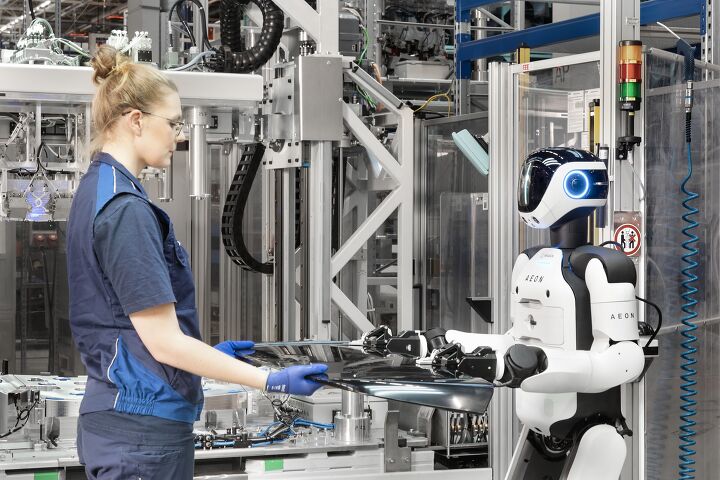
But the outcome will be functionally the same and IG Metall (Germany’s largest industrial union) has expressed that more automated labor will negatively impact regional employment figures. However, they seem to be more accommodating than their South Korean counterparts due to the assumption that introducing bipedal robots could make for a safer work environment.
Much of the above is speculative. Despite loads of assurances that all of these robots are fit for purpose, most of the promotional materials showcase the units conducting rather simple tasks at a relatively slow pace. But that could simply be the result of their not being properly optimized and they may still outpace human alternatives just by nature of never getting tired.
Still, we’ve seen numerous robotics companies being criticized for overpromising on capabilities. Some of the most impressive displays of modern robots have turned out to be units being remotely controlled by real people or carefully curated footage showcasing flawless runs that may not be representative of reality.
That’s not to suggest that bipedal robots aren’t going to be the future — just that the current state of the technology is being overhyped to boost corporate share prices. That has certainly become a common trend within the tech industry of late and automakers are arguably just as guilty. Keep in mind that analysts have proposed that bipedal robots could become a multi-trillion-dollar industry in a few years. That’s a lot of pressure to put on the industry and investors today, regardless of whether or not it is representative of tomorrow.
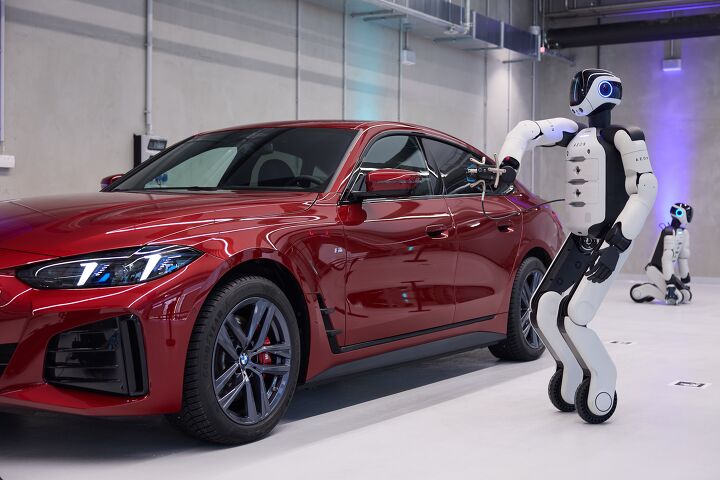
[Images: BMW]
Become a TTAC insider. Get the latest news, features, TTAC takes, and everything else that gets to the truth about cars first by subscribing to our newsletter.
Consumer advocate tracking industry trends and regulations. Before joining TTAC, Matt spent a decade working for marketing and research firms based in NYC. Clients included several of the world’s largest automakers, global tire brands, and aftermarket part suppliers. Dissatisfied, he pivoted to writing about cars. Since then, he has become an ardent supporter of the right-to-repair movement, been interviewed about the automotive sector by national broadcasts, participated in a few amateur rallying events, and driven more rental cars than anyone ever should. Handy with a wrench, Matt grew up surrounded by Detroit auto workers and learned to drive by twelve. A contrarian, Matt claims to prefer understeer and motorcycles.
More by Matt Posky







Comments
Join the conversation
Now the robot tells you you are driving it wrong instead of the service writer
Cue the usual pop culture robot references.