
The Callaway C12: America’s Forgotten Supercar
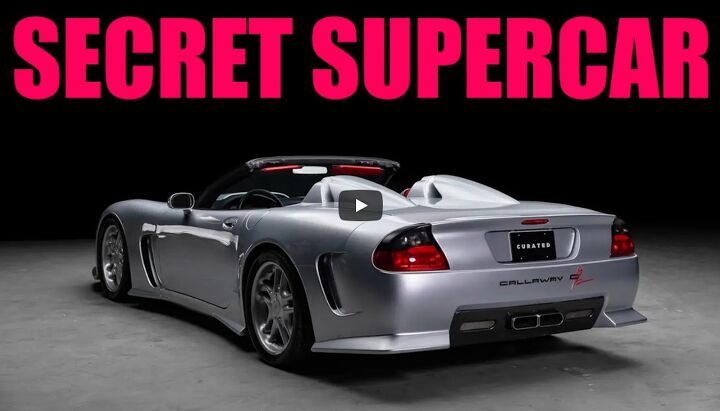
Reeves Callaway transformed the C5 Corvette into a specialized machine by pushing its dimensions to the limits of international GT2 racing regulations.
Chris VS Cars explores how this boutique manufacturer utilized rigorous engineering, custom carbon bodywork, and a refined engine to challenge European supercar standards during the late 1990s.
The TTAC Creators Series tells stories and amplifies creators from all corners of the car world, including culture, dealerships, collections, modified builds and more.
An AI-generated transcript edited by a staffer is below.
[Image: YouTube Screenshot]
Become a TTAC insider. Get the latest news, features, TTAC takes, and everything else that gets to the truth about cars first by subscribing to our newsletter.
The transcript is a detailed overview of the Callaway C12, a rare high-performance car created by Callaway Cars in the late 1990s.
Key points:
- The narrator argues the C12 was far more than a modified Corvette. It was a purpose-built supercar engineered to compete with European exotics like Ferrari and Porsche.
- A defining feature was its width: 1,998 mm, just 2 mm below the GT2 racing regulation limit. This wider stance improved cornering grip and handling by distributing tire loads more effectively.
- Built on the Corvette C5 platform, the car retained the Corvette’s strong fundamentals — hydroformed chassis, rear transaxle, and balanced weight distribution — but dramatically expanded its capabilities.
- The body was almost entirely redesigned using carbon and Kevlar composites. Designer Paul Deutschman shaped it with aerodynamic efficiency in mind, making it look more like an endurance racer than a typical American muscle car.
- The suspension and braking systems were heavily upgraded with longer custom suspension arms, adjustable dampers, composite leaf springs, and massive 14-inch metal-matrix brakes.
- Power came from a modified 5.7-liter LS1 V8 called the “Supernatural” engine, producing 440 horsepower and 395 lb-ft of torque — very competitive numbers for 1999. The engine upgrades included revised intake runners, improved ports, stronger internals, and a freer-flowing exhaust.
- Performance figures included:
- Zero-to-60 mph in about 4.2 seconds
- Top speed near 192 mph, with possible 200 mph capability
- More than 1G of lateral grip
- Performance figures included:
- Unlike stripped-out race cars, the C12 was also designed to be comfortable and refined for daily driving, with leather interiors, carbon fiber trim, and luxury customization options.
- One of the most important details was that the C12 was homologated and sold as its own manufacturer product through Callaway’s German facility, effectively making Callaway a boutique automaker rather than just a tuner.
- Fewer than 40 examples were produced, making the car extremely rare. Its original price was around $140,000, justified by performance that rivaled much more expensive supercars.
The narrator concludes that the C12 represented what the Corvette could have become with unlimited engineering ambition: an understated but technically brilliant “quiet assassin” of the late-1990s supercar world.
I am a proud owner of a single turbo 335i and a Ducati 999s. I make a lot of content on both, as well as just sharing my opinion on just about everything car and motorcycle related,
More by Chris VS Cars | TTAC Creator
Latest Car Reviews
Read moreLatest Product Reviews
Read moreRecent Comments
- Vid169489471 The technology exists today to produce a variable color temperature (kelvin) LED lamp. It can vary from 2700k that soft orange look to 6500k the bright daylight with the bluish tint.Since everything in a late model car is computer controlled, it would be an easy task to write a few lines of code that enables your vehicle to not only dim down from hi to low beam but to shift color temp down to the 2700k range for oncoming traffic, then back up to 5000k once oncoming traffic has passed. For the operator it would be automatic and seamless. For older cars they could be retrofitted with LEDs that are 2700k on low beam and 5000k on hi beam. As far as standards, there could be a lumens max, and a minimum. Several States already have minimum lumen standards going back to the old incandescent bulbs. Why not update these to national standards.
- Jam169859557 More regulation is needed for ALL vehicle lighting systems. [list=1][*]The lighting that is most blinding are the rapidly flashing red, blue and amber lights on emergency vehicles. The lights themselves are blinding, flashing so rapidly that it's impossible for even the sharpest eyes to adjust. What's worse, is the nature of the emergency requires a careful view of the area surrounding the emergency vehicle. There is something going on that needs to be seen. More flashing lights is not the solution.[/*][*]Brighter headlights need to be regulated. The tall riding vehicles do not need headlights positioned so high that they blind drivers in lower riding vehicles. And those heasdlights need to be aimed properly. When I first started driving my 2020 Subaru Outback, many drivers would flash their lights, hoping I would dim my lights. This stopped after I performed am easy adjustment that tilted the beam lower. Late model Subaru headlamps are designed with a sharp cutoff that project less glare above the hood line. When the headlights are properly aimed, other drivers are not blinded by the beam.[/*][*]Customized light assemblies make it more difficult to see the marker lights (tail lamps, turn signals and side marker lamps) that have been tinted. There are many municiple codes that prohibit this tinting, but these laws are seldom enforced.[/*][/list=1]Solutions: Tight controls on emergency vehicle lighting. In trying to make these vehicles more visible, a dangerous side effect is reducing the ability of drivers to see the surrounding perils.Headlight design regulations that reduce the height of the headlight assemblies. Just because a pickup truck has a hood that sits 4 feet abouve the pavement, it does not mean the headlights need to be so high. Owneres should maintain proper adjustments to their vehicle headlights.Establish and enforce regulation requiring a illumination standard be followed.
- Stl170698708 as someone who hates big government, and their interference;but you can add me to the list of people that are blinded by the lights.unfortunately "the poop is out of the horse and no way is it going back in"They have had 5 years to make lights bigger, badder and brighter because in the vehicle work it is go big or go home!Trucks are the worst because so many people use them to express their dominance and that is big, big, big $$ both at the Original Purchase and in the Aftermarket world.If, we are so lucky to get some good government regulation on this it will also take some very good Court enforcement to get the aftermarket people with fines and lawsuits.Much like the EPA did with the Diesel Tuner Industry that felt emission regulations didn't apply to them.This is from someone that owns said pickup truck with the same bright headlights,but i only use the truck when I have too and always turn off the Fog lights when driving in traffic.
- Art65765977 I saw a porsche 911 with the most amazing headlights from behind approaching the Sunshine skyway in Florida. The pattern was 108 degrees across sweeping the road like a broom. My brother and I were amazed. I don't know what it looked like from the front but i am sure it was better than American cars
- Master Baiter This is what happens when you take a chance on a startup auto company. Designing and building cars is hard.
Comments
Join the conversation
Cool taillights. Apparently from an Opel Tigra.
This thing is butt ugly and over done ….everywhere .