


Ethanol Blended Fuels Won’t Save Drivers Money

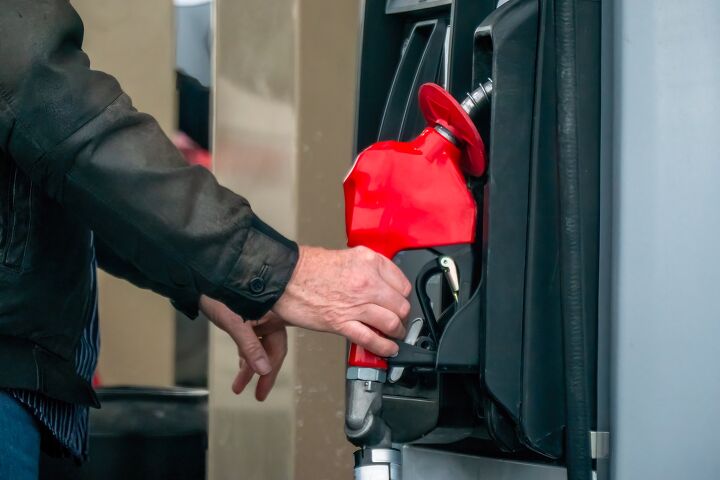
Earlier this month, special waivers allowing the sale of fuel blends containing higher levels of ethanol came into effect. While the measure was supposed to be temporary, U.S. legislators have since moved to make changes permanent. The government rationale is that the decision will help safeguard gasoline supplies while also reducing the amount of money drivers have to pay at the pump. However, the latter claim may not be true.
If you’re interested in the history of ethanol being used as a fuel source for automobiles, we covered that previously as part of the Environmental Protection Agency’s (EPA) initial announcement of E15. The article likewise covers some of the reasons fuel prices increased so dramatically over the last two months.
What we’re concerned with now is determining whether or not adding even more ethanol to your fuel tank actually ends up saving you money, because that’s supposedly one of two reasons this action was taken. However, we should be crystal clear on what the U.S. government is trying to achieve before we do some math and try to make them out to be liars.
From the EPA:
U.S. Environmental Protection Agency (EPA) Administrator Lee Zeldin, in consultation with U.S. Department of Energy (DOE) and in accordance with the Clean Air Act (CAA), issued a temporary emergency fuel waiver to allow nationwide sales of E15, gasoline blended with 15 percent ethanol, and to remove all federal impediments to selling E10, gasoline blended with 10 percent ethanol, across the country. Through the waiver, EPA is fortifying the domestic gasoline supply chain and providing Americans relief at the pumps ahead of the summer driving season. Beginning on May 1, 2026, EPA’s waivers will work to prevent disruption in America’s fuel supply by keeping E15 on the market and giving Americans more fuel options. EPA is issuing the waiver notice today to allow fuel industry stakeholders adequate time to transition the fuel distribution system. As required by the CAA, EPA and DOE evaluated the current situation and determined that granting the waiver was in the public interest.
“EPA is working with our federal partners to reduce unnecessary costs and uncertainty and ensure that gas prices remain affordable for all Americans through the summer. This emergency action will provide American families with relief by increasing fuel supply and consumer choice,” said EPA Administrator Zeldin. “President Trump has prioritized ensuring American families have an affordable domestic energy supply. The Trump Administration has made great strides on this during the first year and will continue to do so.”
There’s no doubt that cutting gasoline with ethanol results in stretching fuel supplies. But we’re much more interested in the assertion that ethanol blends save drivers money by lowering the price of gasoline.
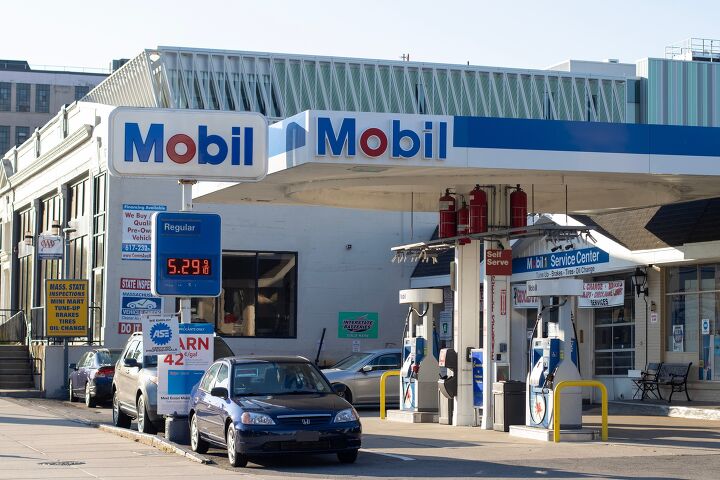
Having sampled a dozen random fueling stations spread across the United States and browsed a few relevant studies, it seems like E10 is about $0.20 cheaper than ethanol-free 87 octane on average. However, we know that ethanol only has about two-thirds the energy density of pure gasoline and results in reduced fuel economy. Blended with gasoline, the resulting difference is modest. But then so is the reduction in price.
While there has been plenty of debate on the topic, most studies peg E10 as reducing the average fuel economy by around five percent. On a vehicle that averages 30 miles per gallon, that equates to lowering fuel economy by roughly 1.5 mpg.
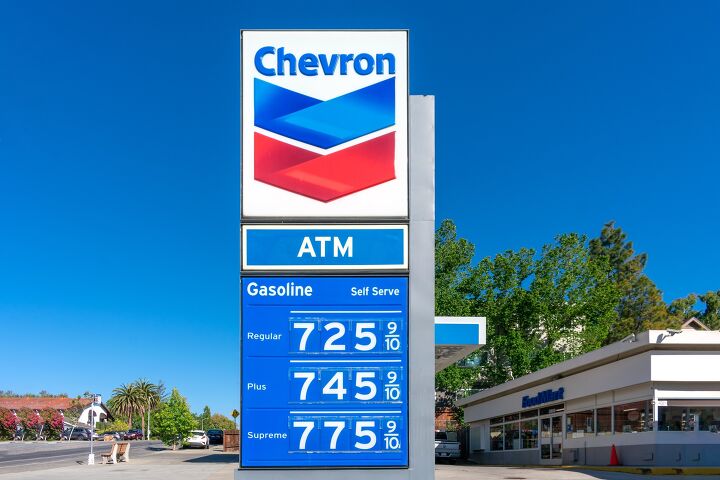
According to AAA, the national average for a gallon of 87 octane is presently $4.54. Let’s keep the math easy and assume you need to drive your vehicle 300 miles this week and it typically yields somewhere around 30 mpg. You’ll be spending $45.40 to fill up.
On E10, that averages out to $45.68 due to the increased fuel consumption. The lower price per gallon didn’t result in a net savings and we can assume the same would be true for E15.
Now, the issue here is that there’s a wild amount of variability in the above data. Most states now allow businesses to market E10 as regular 87 octane, with stations having special white pumps labeled as “pure gasoline.” Other regions are required to visibility differentiate ethanol blends for customers, with any pumps labeled as “regular” 87 octane being exactly that.
However, sometimes the states requiring delineation can still produce confusing labels. For example, you may see a pump labeled as “88 octane” and assume it’s not much different than pure 87 octane. But it’s actually an E15 ethanol blend.
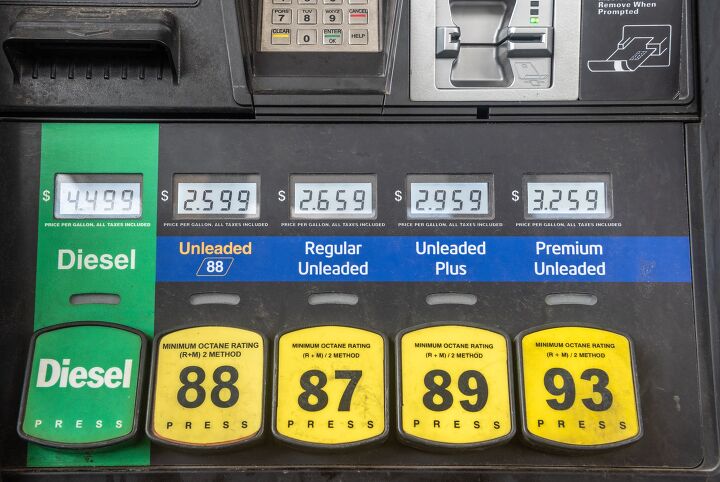
This severely undermines national pricing averages and things just get trickier when we start to account for different types of vehicles. Some cars can make better use of ethanol-blended fuels. We’re not talking about flex-fuel vehicles that are designed to run on something like E85 (51-83 percent ethanol) either.
Automobiles equipped with engines featuring extremely high compression rates can make better use of ethanol-blended fuels. This means the 5 percent average increase in fuel consumption on E10 is actually somewhere between 2 percent and 8 percent depending on what you drive. However, we can safely assume that E15 will further reduce fuel economy on those cars.
The above severely undermines any government claims that this pivot to higher ethanol blends is actually a boon to drivers. Most won’t actually see any legitimate fuel savings and there are lingering concerns about how safe it is to run ethanol blends through even modern engines.
While basically every vehicle manufactured after 2001 can effectively run on E10, most still are not officially rated for E15. But even E10 has proven to be less stable to store than pure gasoline over longer periods of time and can shorten the lifespan of plastic or rubberized components by acting as a solvent. Since ethanol is likewise hygroscopic, it’s prone to attracting water. This can induce premature corrosion on metal components and, again, risks creating serious problems for any fuel stored without taking the proper precautions.
These are all the kinds of things that would presumably add to maintenance costs over time. An appropriate analogy might be tracking the health of someone eating a lifetime of junk food instead of higher-quality produce. The former certainly costs less upfront but may result in some major downsides once someone has a few years under their belt.
At a minimum one could certainly make the claim that E15 would make all of those drawbacks a little worse. Cursory estimates suggest that it would probably lower the price of a gallon of fuel by at least another $0.15 per gallon. But you’d likewise be taken an additional 1 percent to 2 percent reduction in average fuel economy while potentially exacerbating the aforementioned maintenance issues.
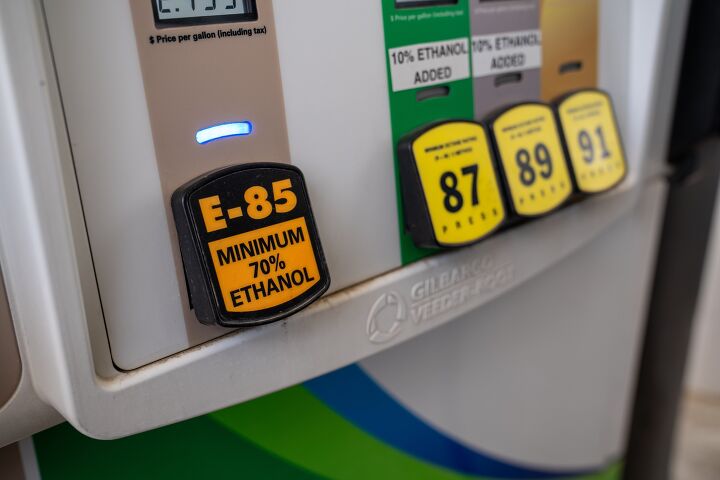
Others have also attempted to run the cost-benefit analysis of normalizing E15 and the results were mixed. If you're willing to believe researched backed by oil producers, pivoting to higher ethanol blends actually increased the per gallon price of fuel by roughly 10 cents in the Midwest by way of tacking on infrastructure costs. Complaints have also been made that the agricultural lobby has been pushing politicians into normalizing higher ethanol content in fuels, eliminating any objectivity in the decision making process.
Then there is the matter of whether or not our current fuel prices are wholly representative of reality. While the Strait of Hormuz being closed undoubtedly helped spike speculative oil future, the per barrel price of crude isn't much different than it was in 2022. Valuations for oil are also significantly lower today than they were in early 2008. But fuel prices of that era aren't much different than what we're seeing right now, even after adjusting for inflation.
We’ll quickly gloss over any claims about the environmental impacts of ethanol-blended fuels because they’re about as conflicting as it gets. Industry studies unsurprisingly support the notion that adding ethanol to fuel saves consumers money and serve as a boon to the environment by producing less greenhouse gas emissions at the tailpipe, lessening the need for oil production.
Meanwhile, independent studies have questioned if pivoting farms away from food production to focus on crops (typically corn) that can be used for fuel production is truly wise. The University of Michigan leveled concerns that the amount of energy that goes into converting organic matter may outweigh the potential savings. The Massachusetts Institute of Technology (MIT) Center for Energy and Environmental Policy Research has made similar assertions.
We also know that sale of higher ethanol blends, including E15, have historically been banned during the summer months because they produce higher evaporative emissions that contribute to things like localized smog. This is the whole reason that the EPA had to issue special waivers to allow the nationwide sale of E15 this month.
Despite assurances from the government that this is the correct play, all of the above makes the utilization of higher ethanol blends a fairly dubious proposition. The environmental benefits are questionable and the financial equation doesn’t really seem to be working in favor of motorists. While this doesn’t necessarily preclude some models from benefiting, it seems unlikely that the average driver will see any meaningful savings by running more ethanol through their vehicle. In fact, the opposite scenario seems far more plausible.
[Images: Habanero Pixel/Shutterstock; Tada Images/Shutterstock; Alizada Studios/Shutterstock; Bryan Middleton/Shutterstock; Michael Vi/Shutterstock]
Become a TTAC insider. Get the latest news, features, TTAC takes, and everything else that gets to the truth about cars first by subscribing to our newsletter.
Consumer advocate tracking industry trends and regulations. Before joining TTAC, Matt spent a decade working for marketing and research firms in NYC. Clients included several of the world’s largest automakers, global tire brands, and aftermarket part suppliers. Since adding automotive writing to his repertoire, he has become an ardent supporter of the right-to-repair movement, discussed the status of the automotive sector on national broadcasts, participated in a few amateur rallying events, and driven more rental cars than anyone should ever have to. Handy with a wrench, Matt grew up surrounded by Detroit auto workers and learned to drive by twelve. Alleged to be contrarian, Matt claims to prefer understeer and motorcycles.
More by Matt Posky








Comments
Join the conversation
This isn't fair! Even Republikans I HAND PICKED and put in office are yelling at me to back off on Iran.
What a idiot. Posts that there is a deal with IRAN on friday, then attacks them on sunday and gas goes up.... making his rich oil friends richer.. AND makes china and Russia richer..
Comrade-trump
cnn.com/2026/05/25/world/live-news/iran-war-us-peace-deal
Comment #327. I guess it really is true that no one cares about the price of gasoline? 😂