


Report: GM Requiring Customers to Spend $1,500 for OnStar

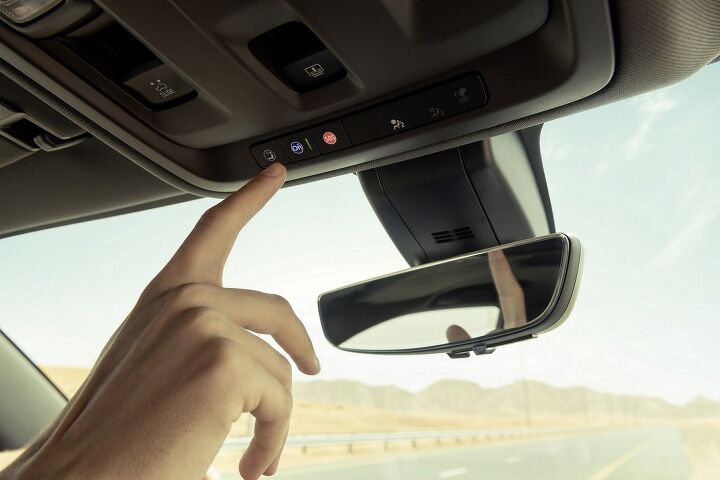
General Motors is reportedly making OnStar standard equipment for all new Buick, Cadillac, and GMC models. However, it's also been alleged that the company will be forcing customers of those brands into a three-year subscription for the "Connected Services Premium Plan" that'll cost roughly $1,500 and represent the latest example of how automakers are leveraging subscription fees to improve their overall profitability.
OnStar originated in 1996 as a collaboration between GM, Electronic Data Systems, and the Hughes Electronics Corporation. While primarily marketed as a way to notify police and rescue services in the event of an emergency, the system likewise featured vehicle tracking designed to locate car thieves in real-time. But it's gradually been built up to incorporate the ability to remotely slow vehicles that have been reported as stolen and offers an array of connected services tied to various subscription packages. These can include Wi-Fi hot spots, video/audio streaming services, additional keyless entry options (using a phone app), integration of Amazon's Alexa into the vehicle, enhanced GPS navigation, on-demand vehicle diagnostics, roadside assistance, automatic crash notifications when a driver has been incapacitated, and plenty more.
Customers even have the option to share their driving data with insurance agencies to get discounted rates. However, this has opened the service to some criticism as it's previously been reported that OnStar is likely susceptible to remote activation by malicious third parties or government agencies. The company also stated in 2011 that it would begin retaining all the data collected by the GPS and internal data logging systems so it could be sold off. While the information was said to be anonymized prior to being delivered to any third parties, privacy advocate groups questioned how that would be possible and bemoaned the fact that OnStar would even consider selling the private information of paying customers. The mounting pressure encouraged the business to change its mind on the issue. But testing has shown that the system still tracked the relevant data and a surprising amount of other information (e.g. calling history) as of 2019.
That last bit is of key relevance, as General Motors seems to have uncovered a new way of profiting off the service — forcing people to buy it.
Last year, GM told investors that software subscriptions would become an $80-billion industry in the near future and followed up in 2021 by suggesting some of its customers could soon be spending $135 a month for various subscriptions it planned on adding in addition to their monthly car payment.
But this isn't something that's exclusive to the American automaker. German manufacturers have been ahead of the curve when it comes to subscription fees (though Tesla and GM aren't far behind) and the whole industry has been on a quest to find the best ways to maximize margins using connected services for years now.
By forcing customers to pay for an OnStar system that's already been equipped to their cars, whether they use it or not, General Motors has effectively found a sly way to raise the price of all vehicles by $1,500 without announcing a sizable price hike for each individual model. Pricing increases have become brutally common due to supply chain disruptions and record levels of inflation. Though it's hard to feel any sympathy for most brands when the whole industry still can't seem to manage ongoing component problems, has been enjoying healthy profits despite the diminished output, and will be getting massive EV subsidies from the same governments that devalued currency via unfettered spending. Meanwhile, a lot of brands and suppliers are prepping for sizable layoffs as they won't need as many employees after transitioning to all-electric fleets.
It seems like a snake eating its own tail from my vantage. But nobody wants to report quarterly losses as the economy continues to curdle, so businesses are desperate to find ways of raising prices that won't totally enrage cash-strapped customers.
A GMC spokesperson told the Detroit Free Press, which first broke the story, that the company decided to make the connected services standard because it would be "more convenient for our customers and provides a more seamless on-boarding experience."
You may have already paid for the service without even realizing it. Since June 2nd, all new Buick and GMC vehicles sold in the U.S. have included three years of OnStar's Connected Services Premium Plan under options & pricing for $1,500. Though it's not actually an option since the subscription is baked into the MSRP. Cadillac similarly started including it on certain vehicles as of June 18th, starting with the Escalade.
So, what are customers getting for the money? Well, the formerly free items (e.g. vehicle diagnostics, dealer maintenance notifications, and GM's in-car marketplace) haven't gone anywhere and the Premium Plan adds Wi-Fi, automatic crash response, roadside assistance, turn-by-turn navigation, remote keyless features, and more.
If those things sound good to you, then there's probably little about the price hike that grinds your gears. But, if you like your vehicles to be a little less nosy or feel like your phone offers all the connectivity you need, then you might find the additional fees more than a little unsavory.
[Image: General Motors]
Become a TTAC insider. Get the latest news, features, TTAC takes, and everything else that gets to the truth about cars first by subscribing to our newsletter.
Consumer advocate tracking industry trends and regulations. Before joining TTAC, Matt spent a decade working for marketing and research firms based in NYC. Clients included several of the world’s largest automakers, global tire brands, and aftermarket part suppliers. Dissatisfied, he pivoted to writing about cars. Since then, he has become an ardent supporter of the right-to-repair movement, been interviewed about the automotive sector by national broadcasts, participated in a few amateur rallying events, and driven more rental cars than anyone ever should. Handy with a wrench, Matt grew up surrounded by Detroit auto workers and learned to drive by twelve. A contrarian, Matt claims to prefer understeer and motorcycles.
More by Matt Posky











Comments
Join the conversation
This is utter BS and people need to push back hard against it by refusing to buy the affected vehicles. I find it interesting that this only applies to Buick, Cadillac, and GMC... the "premium" GM brands. I guess they're betting that the people who buy these brands won't balk at a $1500 shakedown (and they may be right). I just read an article about the redesigned Chevy Colorado/GMC Canyon twins that are about to start production. This will definitely push people away from the GMC toward the Chevy. Why does GMC still exist anyway? I can't believe they kept that division around back when they went bankrupt, reorganized and shed Oldsmobile, Pontiac, Saturn, and Hummer - given that GMCs are literally nothing more than rebadged Chevys. Nobody uses OnStar... and FORCING people to subscribe to it is not going to make it any more relevant. It just needs to go away.
I was pi$$ed when GM dumped Pontiac ..I had an on off affair with Ford .. Moving forward, its all "Bow Tie " for this guy.