


Hyundai Previews Next-Generation Infotainment System for Software-Defined Vehicles

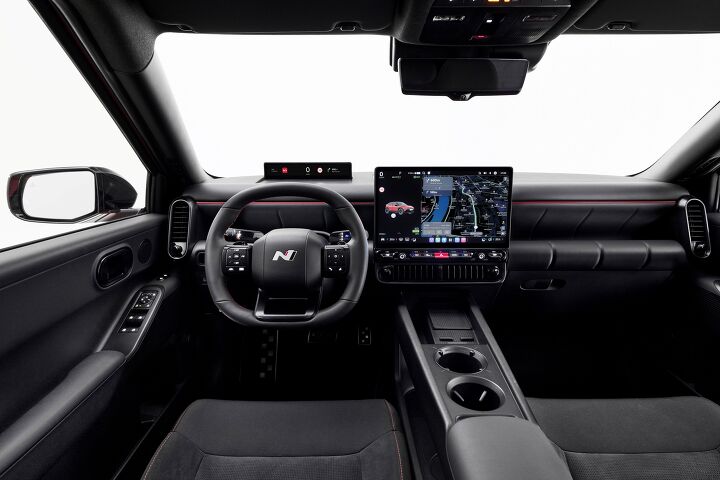
Hyundai Motor Group has previewed its new Pleos Connect infotainment system, which the automaker said would pivot its vehicle lineup to software-defined vehicles. The setup is a blend of touchscreens, artificial intelligence, and a smattering of buttons.
Pleos Connect will debut on the all-new Grandeur sedan, which will be a Korean-market exclusive. The model has been slumbering for a while and used to be sold on our market as the Hyundai Azera until 2017.
The rest of the world won’t see the updated infotainment system until Hyundai updates the all-new Ioniq 3 near the end of 2026. But Pleos Connect is poised to become the default operating system on all Hyundai and Kia models as the automaker pushes toward selling software-defined vehicles.
Clearly aware that the industry has offended (and probably even endangered) customers by removing traditional controls from automobiles, Hyundai has wisely sought to retain them where it matters most. The company even notes this in the official press release, stating that “driver safety is enhanced through the inclusion of physical buttons on the steering wheel and below the Large Central Screen, allowing quick access to key controls without using the touchscreen.”
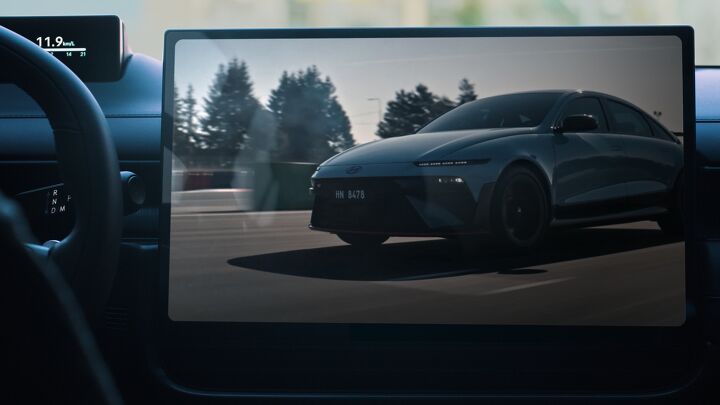
A cursory glance shows that there’s physical switchgear for media and HVAC controls, which are the things you’re likely to interface with most during a drive. But it’s still the bare minimum.
The bar has been set pretty low thanks to so many otherwise excellent models moving toward touch controls (e.g. Mazda CX-5) in an effort to save money while “modernizing” cabin spaces. So Pleos Connect is getting widespread praise for retaining any amount of buttons in an era where many automakers have been doing the exact opposite.
However, Hyundai spent far less time talking about the buttons than your author just did. It instead wanted to hype up artificial intelligence integration and in-car marketplaces. We’ve grumbled about this in the past but the push toward software-defined vehicles is effectively to make automobiles into smart devices. Vehicle features will be gatekept behind subscriptions and will likely need to be purchased via connected services.
We’ve seen this in modern cars via companies forcing customers to purchase things like remote start using a subscription and making activation exclusively available via a phone app. This not only has you paying more for hardware that has already been equipped to the vehicle, it also creates additional avenues for the manufacturer to harvest information about you. Exactly how far the industry plans on going with this isn’t clear. However, the assumption is that it will be as far as possible because that’s been the trend thus far.
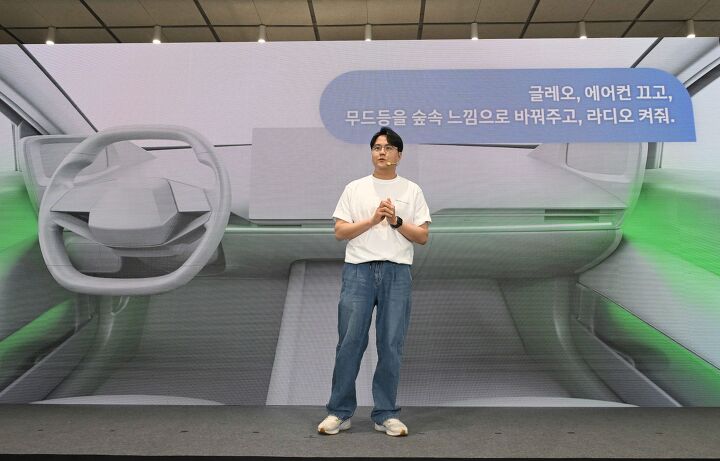
In exchange, brands promise things like artificial intelligence integration and driver assistance suites. These are often marketed as “mobility features” adding convenience, despite never really feeling all that convenient once you’re behind the wheel.
“Pleos Connect is a next-generation infotainment system that offers customers an elevated mobility experience by combining a mobile-friendly platform with advanced AI technology,” stated Jongwon Lee, senior vice president and head of the Feature & CCS Sub-Division at Hyundai Motor Group. “With the new Gleo AI and an open app market, users will experience the limitless potential of future mobility.”
Gleo AI is basically a large language model serving as a digital assistant. It’ll handle voice commands for things like navigation and basic vehicle controls. But you can also just ask it questions in a manner similar to Amazon’s Alexa (e.g. vehicle status, web searches, etc).
Privacy concerns notwithstanding, voice command systems have improved immensely over the years. Older systems seemed totally incapable of accurately interpreting commands with any reliability. While modern systems are significantly better, they can also make mistakes and some manufacturers have made them so persistent that they’re honestly a massive annoyance.
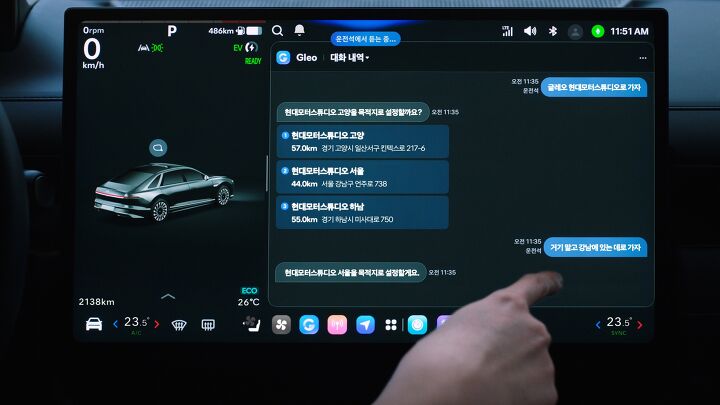
Regardless, the press release certainly makes Gleo sound very advanced.
“Gleo AI is an intelligent AI agent that engages in natural conversation like a companion in the passenger seat, understanding user intent and making holistic, context‑aware judgments,” explained Jongho Lee, team lead of the Gleo AI Group at 42dot. “Going forward, Gleo AI will continue to evolve with more advanced personalized services, helping deliver a more enjoyable and convenient mobility experience for customers.”
Vehicles equipped with Pleos Connect will also come with gesture controls, which also have a mixed track record. The issue here is that drivers often have to get the hand positioning just right and a dirty sensor might stymie whatever you were trying to convey to the vehicle. Hyundai didn’t go into much detail about how its gesture controls work — which is probably fine since I’ve never met anyone who actually uses them on their personal vehicle.
The final factor was the marketplace, which Hyundai said will be open to third parties. That means you should be able to get a fair number of popular applications, with the infotainment system poised to see more apps added over the years. Hyundai even has plans to launch a development platform, known as “Pleos Playground,” to encourage companies to design new software for the system.
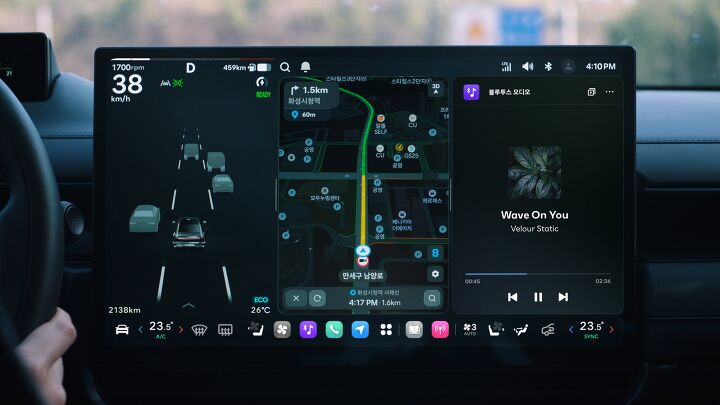
In terms of layout, we assume things will vary quite a bit between models. But the previewed interior showed a small, digital instrument cluster stuck high on the dashboard. While the position may upset traditionalists and those worried about tasteful interior designs, keeping the information near one’s eye line presumably comes with some safety advantages. But it’s clearly just stuck on the initial impression is one of cost cutting.
The larger central screen also appears as if it was affixed to the dashboard as an afterthought. But it’s similarly mounted at a height that might make it slightly easier to keep your eyes on the road when you’re hunting through menus. As previously mentioned, it also retains a few buttons underneath to mitigate at least some of the time you’ll be spending distracted.
While Hyundai wants to drive home the point that Pleos Connect was designed from the ground up specifically for use inside automobiles, it’s honestly hard to get excited. Software-defined vehicles seem blatantly aimed at exploiting consumers by muddying the waters of what constitutes ownership. Meanwhile, touchscreens and artificial intelligence are answers to a problem that never really existed.
Outside of some highly specific use cases, your smartphone is probably already capable of most of the things automakers want to implement. The main difference is that trying to interface with your phone while driving is probably even less safe than using a dashboard-mounted touchscreen. What’s really taking place is manufacturing attempting to rejigger how you interface with their vehicles in a manner that gives them more control and burying features behind new digitized paywalls.
That’s not to suggest that there aren’t some very cool features being added to modern cars. For example, something like Ford’s Pro Trailer Hitch Assist is genuinely useful and wouldn’t have been possible without modern technologies. But automakers don’t need to make vehicles software defined or primarily reliant on touch controls to make something like that happen. There’s no rule that says a car should have to harvest your data or be permanently connected to the internet in order to come with advanced features.
One should hold off on final judgement until they’ve actually interacted with Pleos Connect. The UX may yet prove to be well designed relative to its peers, resulting in it being more enjoyable to interact with than the alternatives. However, it’s difficult to get excited about something that looks to be leaning into some of the absolute worst industry trends we’re currently being confronted with. Software-defined vehicles are by their very nature at odds with consumer rights.
[Images: Hyundai]
Become a TTAC insider. Get the latest news, features, TTAC takes, and everything else that gets to the truth about cars first by subscribing to our newsletter.
Consumer advocate tracking industry trends and regulations. Before joining TTAC, Matt spent a decade working for marketing and research firms in NYC. Clients included several of the world’s largest automakers, global tire brands, and aftermarket part suppliers. Since adding automotive writing to his repertoire, he has become an ardent supporter of the right-to-repair movement, discussed the status of the automotive sector on national broadcasts, participated in a few amateur rallying events, and driven more rental cars than anyone should ever have to. Handy with a wrench, Matt grew up surrounded by Detroit auto workers and learned to drive by twelve. Alleged to be contrarian, Matt claims to prefer understeer and motorcycles.
More by Matt Posky









Comments
Join the conversation
"Software defined vehicles"
Uh, what?
Remeber when your car was a private place