

Junkyard Find: 1970 Dodge A108 Sportsman
We admired an early-1970s GMC van in a California car graveyard last week, and now I'm following that up with an early-1970s Dodge van in a Nevada car graveyard. Will we see a Ford Econoline in Utah next week? It's possible!
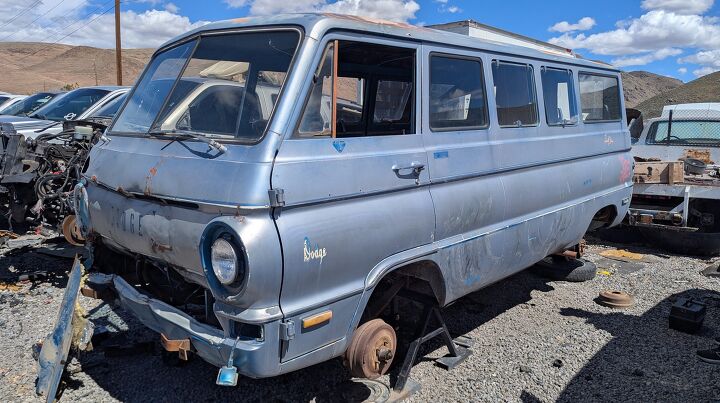
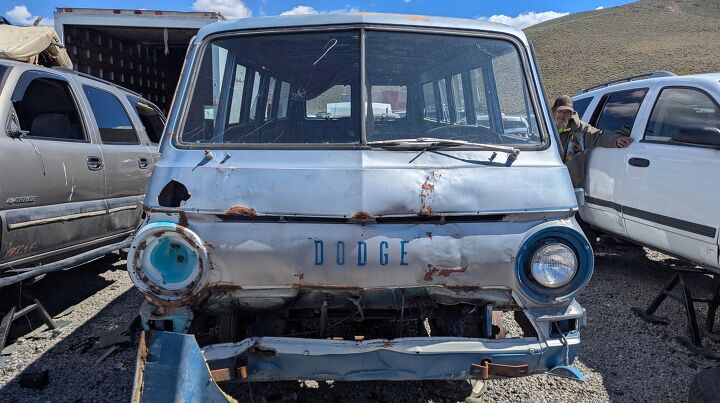
Chrysler built the Dodge/Fargo A100 series of forward-control vans from the 1964 through 1970 model years, and final-year examples are very hard to find in junkyards. This one currently resides in a boneyard near Sparks, Nevada.
Because I bought, fixed up and then sold a 1966 A100 Tradesman during the 2010s, I spent that entire decade in a frenzied search for junkyard parts donors and writing about them as a by-product.
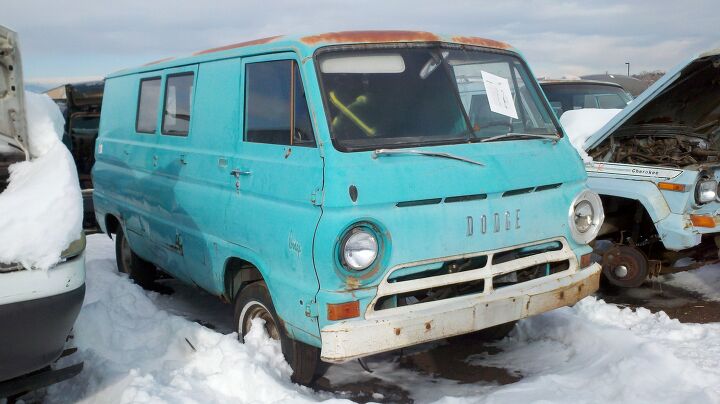
That means I have photographed and written articles about all the discarded A100s I could find since 2007, including the '66 Tradesman above, a '67 Sportsman, a '67 camper, a '68 Sportsman, and a '69 Sportsman (yeah, Chrysler didn't always use the Tradesman and Sportsman names on the A100, but I'm applying them anyway).
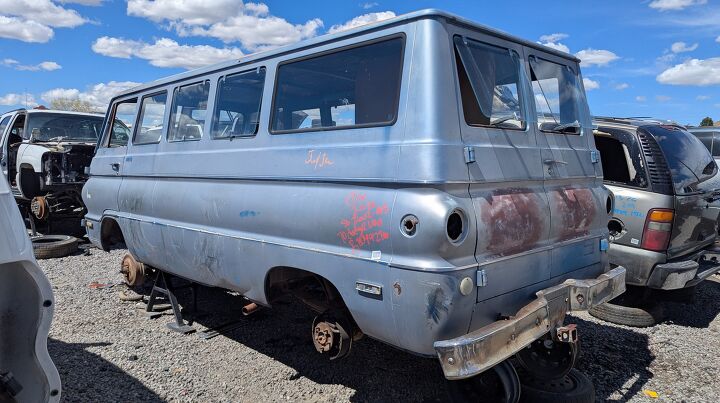
For the 1967-1970 model years, Chrysler built a long-wheelbase version of the A100, and that's what we have here.
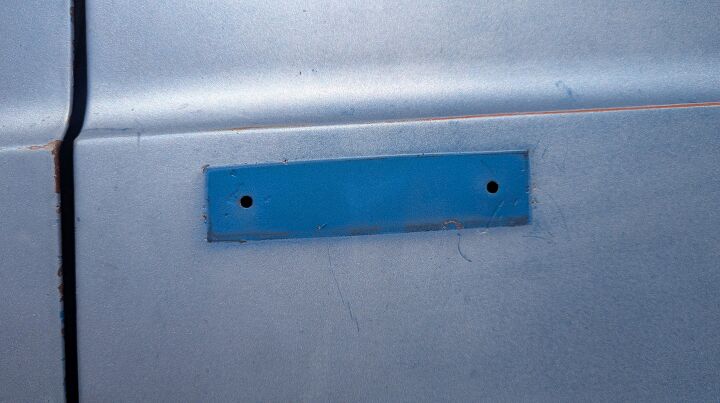
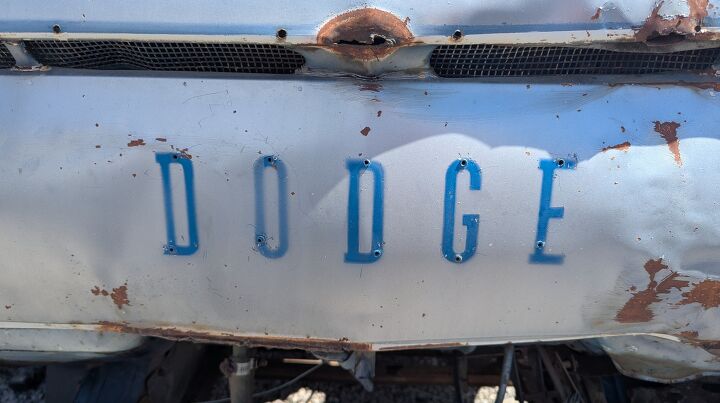
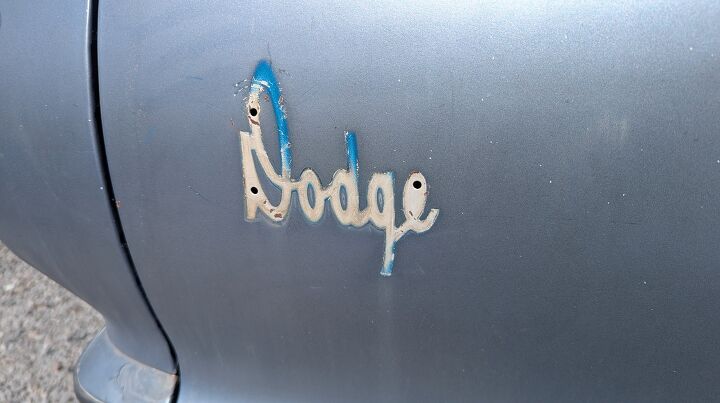
The regular A100 had a 90-inch wheelbase (yes, that's shorter than the wheelbase of the MGB), while the stretched version had a 108-inch wheelbase (about the same as that of the first-generation Chevrolet Camaro). Chrysler badged these vans as A108s; you can see the shadow of the A108 emblem in this photograph.
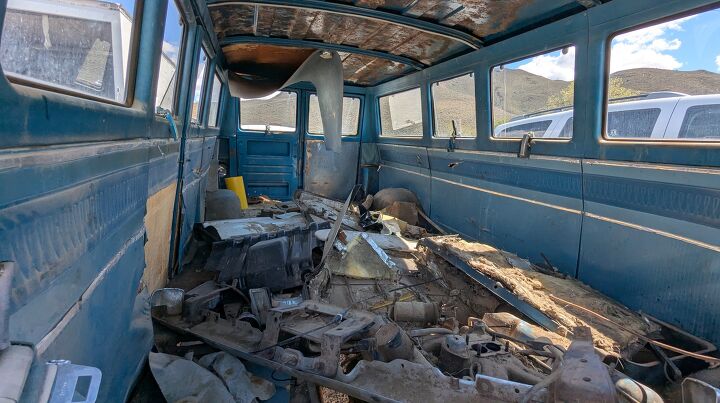
The impressive thing about the A100 was its impressive load capacity for such a small footprint. It rode on solid axles and leaf springs, front and rear, which meant you could carry a hefty load of cargo and/or passengers. But it also burdened drivers with a jouncy, porpoising ride that got terrifying at highway speeds, especially once the kingpins wore out.
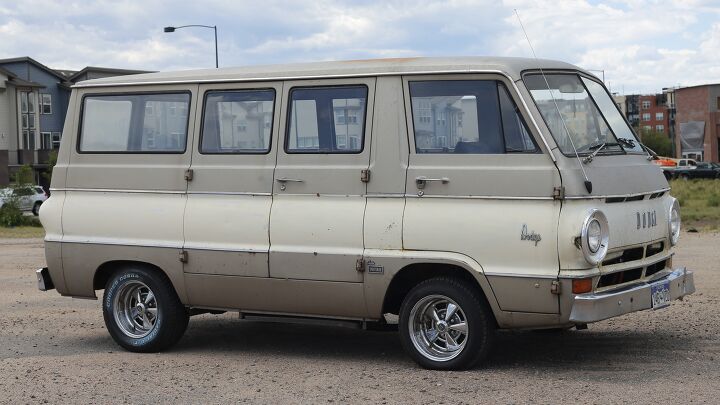
By the time I sold it, my A100 had a good 318 bolted to a freshly rebuilt TorqueFlite, plus better-than-new brakes and suspension (with nice new kingpins and bushings), and it still sucked to drive at any speed above about 45 mph. That's why I sold it. Last I heard, it lives in Canada.
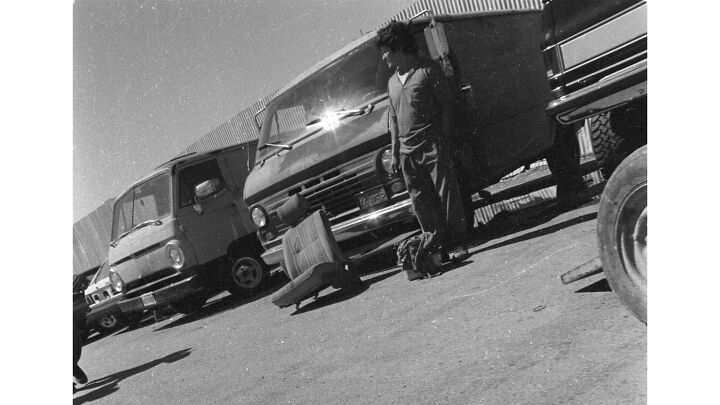
Total A100 sales were just over 100,000 units, which was enough to ensure that these vans were a common sight on American roads as late as the early 1990s. I shot this one (and the Econoline next to it) in the parking lot of the now-defunct Hayward Pick Your Part in 1991.
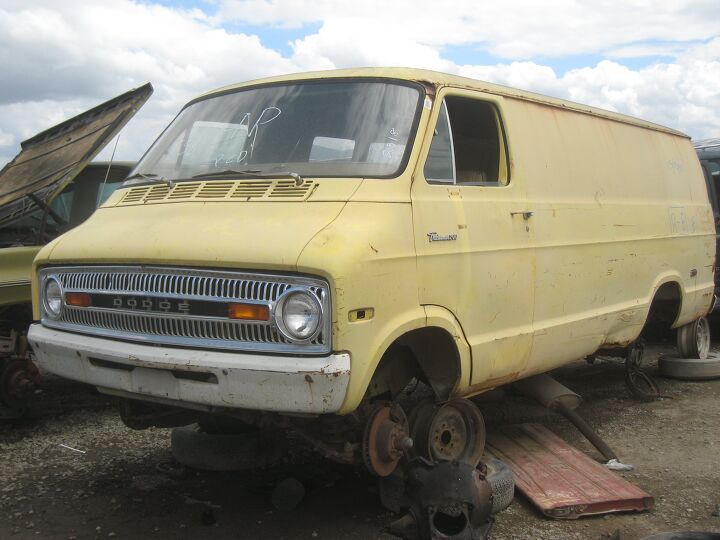
For the 1971 model year, Chrysler (and GM) followed Ford's lead and redesigned their vans to be bigger, with independent front suspensions and the engines moved forward. Chrysler's design proved so successful that those Dodge (and, for a few years, Plymouth) B-Series vans were built all the way through either 1997 or 2003 (depending on where you draw the line between "facelift" and "new design").
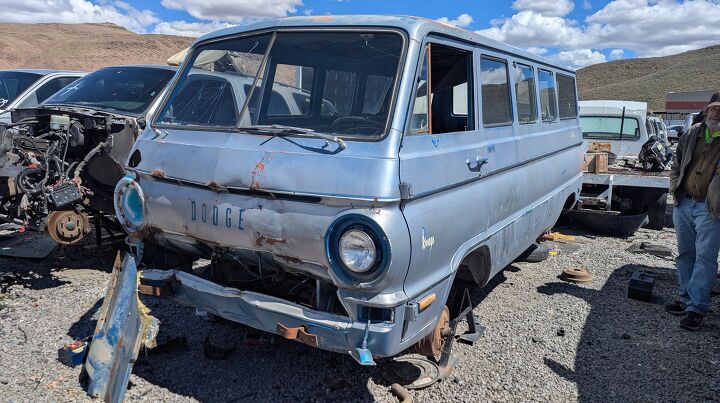
When I ran across this van, there was a guy measuring the rear axle assembly to see if it would fit his 1967 Barracuda. He was kind enough to get out of the way for these photos.
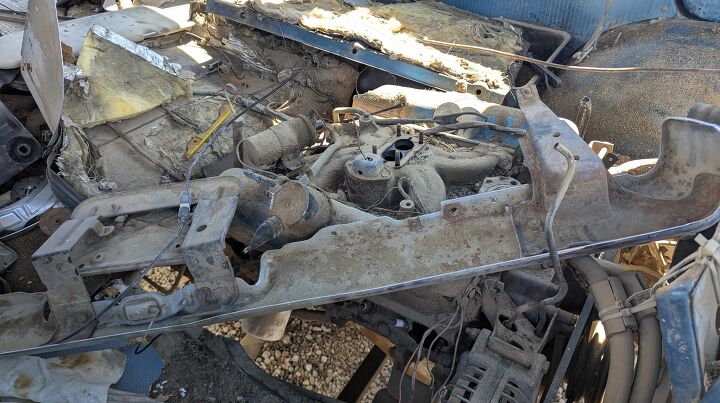
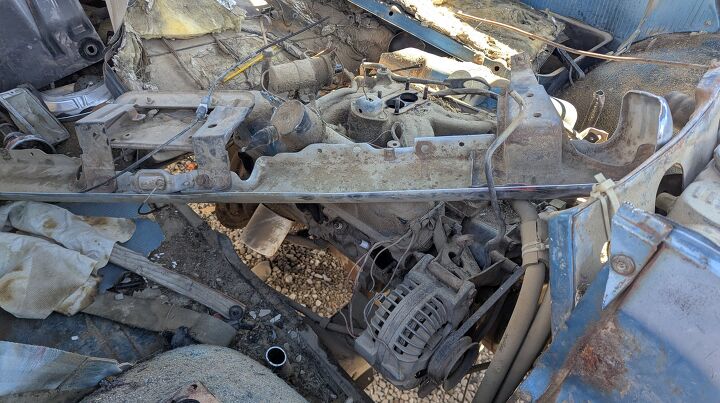
The engine is some flavor of two-barrel LA-series Chrysler V8, which would be a 318 if original. Most of these vans came with Slant-6 power, partly because the V8's exhaust manifolds were such a tight fit against the engine doghouse that the front-seat occupants courted serious leg burns.
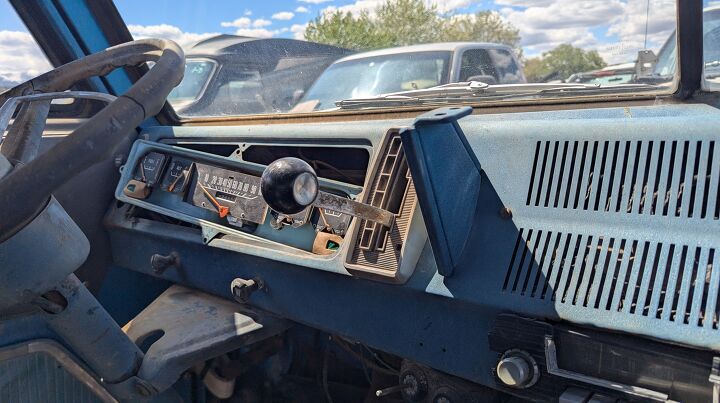
The base three-on-the-tree manual was the most popular transmission in the A100, but the original purchaser of this van opted for the three-speed automatic with the cool-looking one-armed-bandit-style dash shifter.
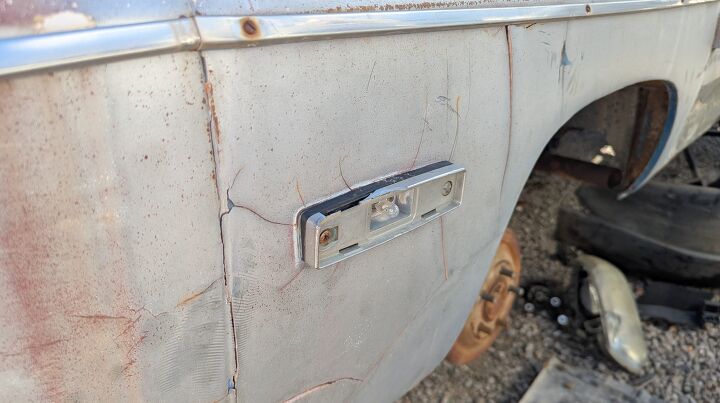
The 1968-1970 US-market A100s had side marker lights, thanks to federal safety regulations (cars got them a year earlier).
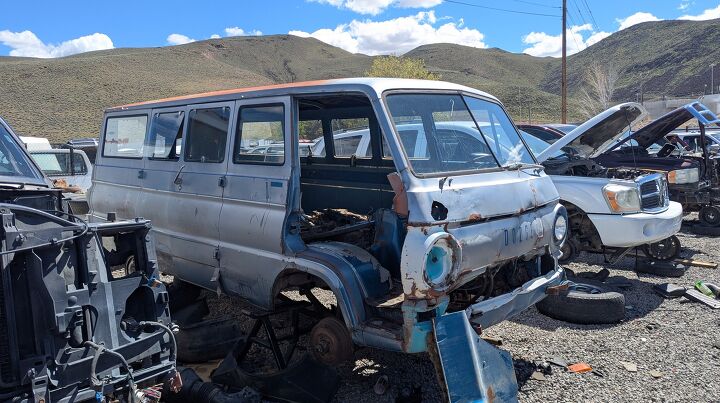
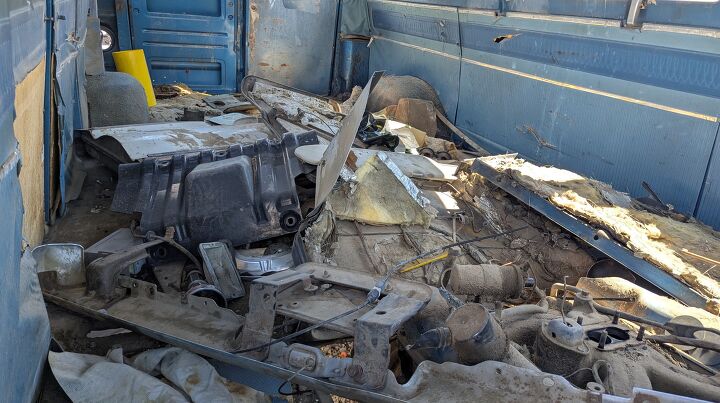
It's rough, but there are still plenty of nearly-impossible-to-find parts on it.
The only compact van with an available V8 engine!
(to the tune of "Ghost Riders in the Sky")
When cargo needs deliverin'
Dodge trucks will haul the load.
Across the Western prairies,
along the mountain roads.
From heavy-duty big ones
to pickups and the vans,
the good guys keep on rollin'
across this sprawling land.
They're rollin' along, rollin' along!
From Dodge, more truck per buck!
It appears that Chrysler wasn't willing to give the A100 its own TV commercials, instead making it share screen space with other Dodge products.
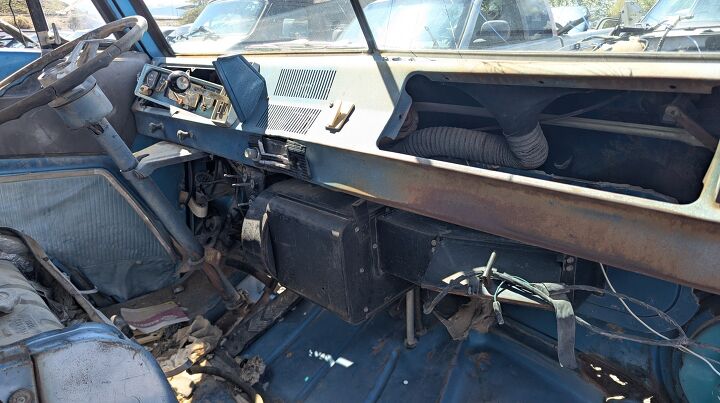
1970 Dodge A100 in Nevada wrecking yard.
1970 Dodge A100 in Nevada wrecking yard.
1970 Dodge A100 in Nevada wrecking yard.
1970 Dodge A100 in Nevada wrecking yard.
1970 Dodge A100 in Nevada wrecking yard.
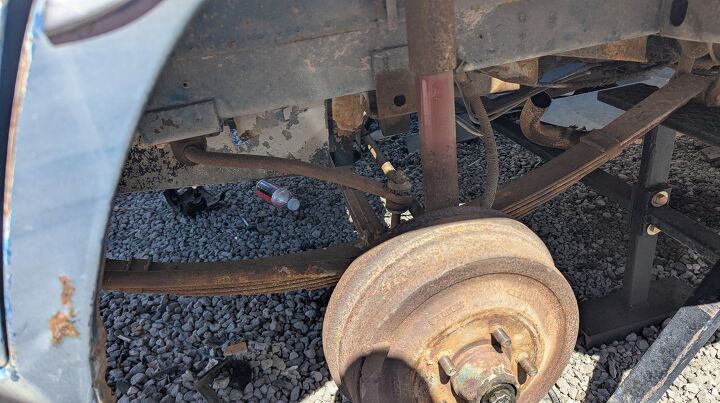
1970 Dodge A100 in Nevada wrecking yard.
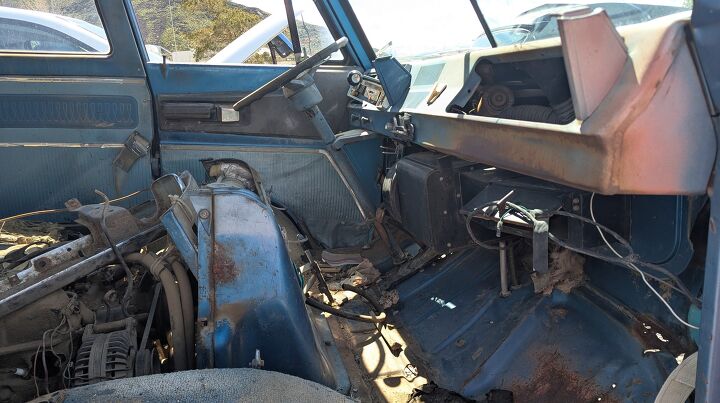
1970 Dodge A100 in Nevada wrecking yard.
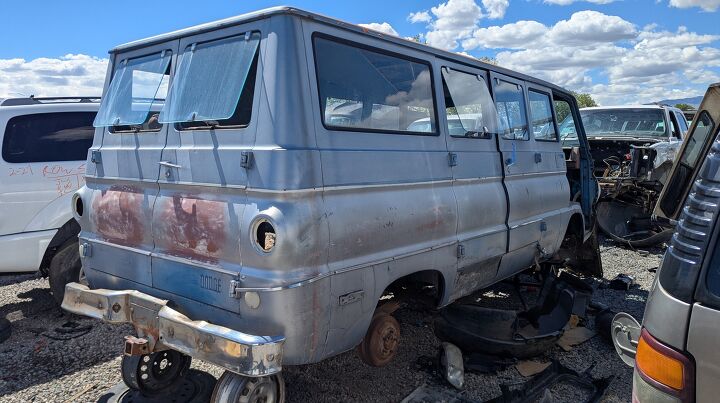
1970 Dodge A100 in Nevada wrecking yard.
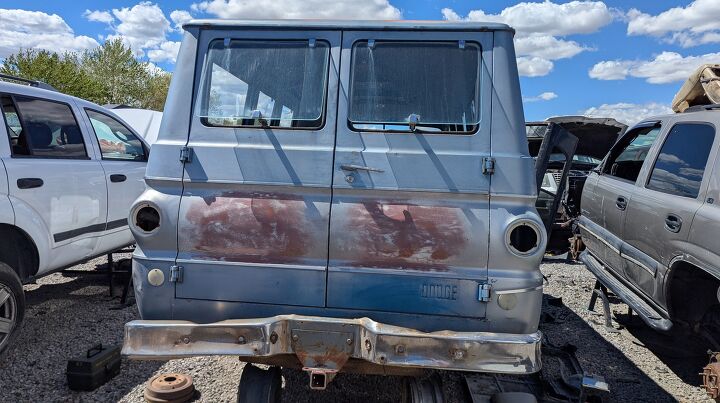
1970 Dodge A100 in Nevada wrecking yard.
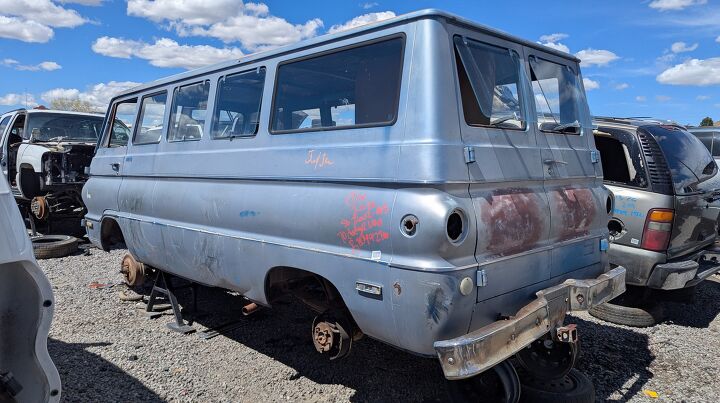
1970 Dodge A100 in Nevada wrecking yard.

Murilee Martin is the pen name of Phil Greden, a writer who has lived in Minnesota, California, Georgia and (now) Colorado. He has toiled at copywriting, technical writing, junkmail writing, fiction writing and now automotive writing. He has owned many terrible vehicles and some good ones. He spends a great deal of time in self-service junkyards. These days, he writes for publications including Autoweek, Hagerty and The Truth About Cars.
More by Murilee Martin






Comments
Join the conversation
We had a 71 dodge van with a slant-six in it in the mid 70's. My parents traded their 68 caprice 4 door with a 327 V8 for it. I think the caprice was a better vehicle.
'67 cars did not have side marker lights, '68 cars did. That's the telltale clue to find out what year a car is. At least that was true of my '67 Cougar.