
Buick Going EV Only After 2030, Gets New Logo

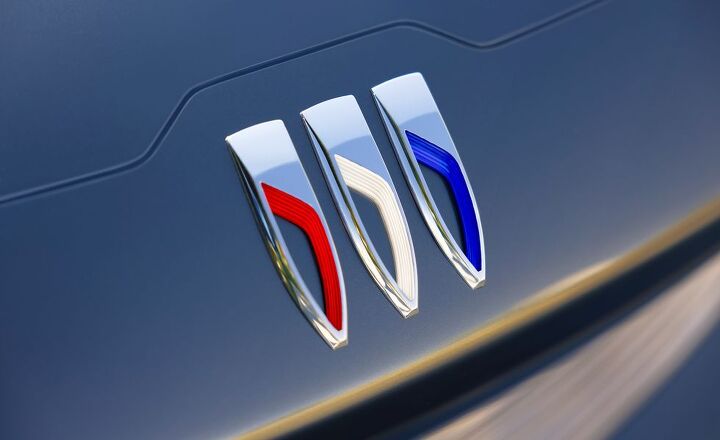
On Wednesday, Buick formally committed itself toward an “all-electric portfolio” by 2030 — saying that it would be embarking on a brand transformation that would fundamentally change the company forever. This includes an entirely new horizontally oriented badge that doesn’t stray too far from Buick’s traditional tri-shield design.
“The Buick brand is committed to an all-electric future by the end of this decade,” stated Duncan Aldred, global vice president, Buick and GMC. “Buick’s new logo, use of the Electra naming series and a new design look for our future products will transform the brand.”
This decision is wholly in line with General Motors’ overarching efforts to become a zero-emissions automaker prioritizing all-electric vehicles and could work particularly well for Buick, which sees the majority of its sales in China. The Chinese Communist Party (CCP) has mandated that the nation ban the sale of all internal-combustion vehicles by 2035 with increasingly stringent emissions requirements being required for preceding model years. Europe, Canada, and the State of California have imposed similar timelines for their gasoline bans. However Chinese automakers have issued self-imposed bans targeting 2030 in anticipation and have been joined by multiple manufacturers based in the West.
The transition for Buick will be particularly swift. Under its current strategy, the automaker does not plan to launch any new internal-combustion vehicles after 2024. This is roughly the time its first EV (the Electra) is scheduled to arrive and will coincide with efforts to gradually remove gasoline-driven vehicles from its North American lineup.
Though the related presentation spent very little time talking about Buick’s product planning to outline changes to branding. In addition to the new logo, Buick is also intent on using new naming conventions, typography, and marketing tactics — saying the swap would take place over the next twelve-to-sixteen months.
From GM:
The new badge, which is the first significant change to the emblem since 1990, will be body-mounted onto the front fascia of Buick products starting next year. No longer a circular logo, the badge incorporates a sleek, horizontally aligned layout that builds upon Buick’s recognizable tri-shield. The redesigned columns of the tri-shield, which have roots in company founder David Dunbar Buick’s ancestral heraldry, incorporate fluid movements that will be found in future vehicle design.
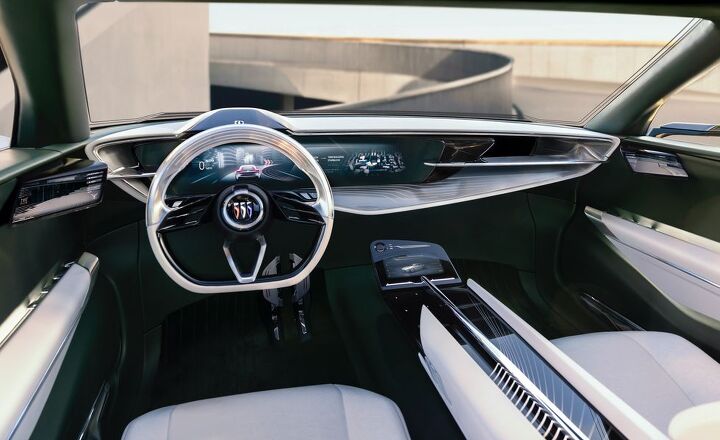
“Our forthcoming products will adopt a new design language that emphasizes a sleek, dynamic and forward-looking appearance,” said Sharon Gauci, executive director, Global Buick and GMC Design. “Our exteriors will incorporate fluid movements that contrast with tension to convey motion. Interiors will balance modern design, new technologies and attention to detail to evoke warmth and a rich sensory experience.”
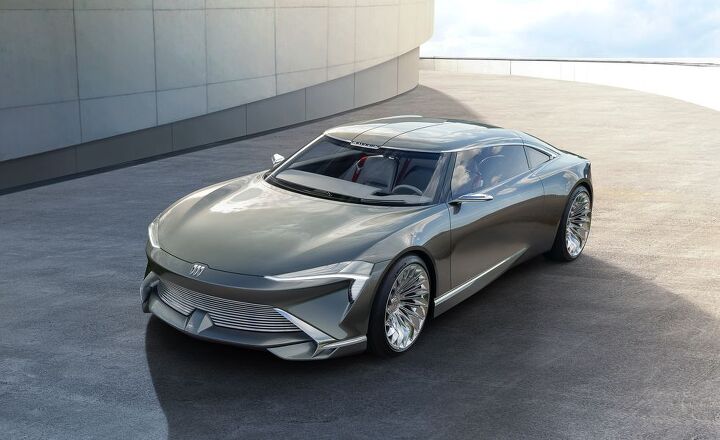
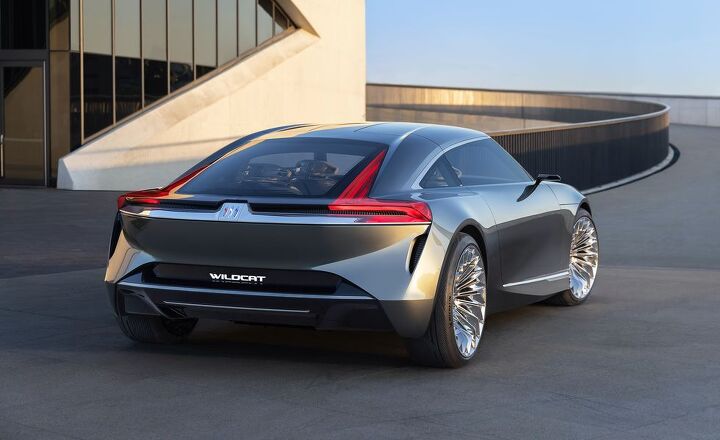
The brand previewed the Buick Wildcat EV concept (pictured) to help illustrate what the new design language could mean for the streets. However, GM was hesitant to confirm it for assembly, saying instead that aspects of its design would be apparent in the production vehicles going forward. It also plans on using the “Electra naming series” to come up with monikers for all subsequent vehicles — which we were told would be crossovers.
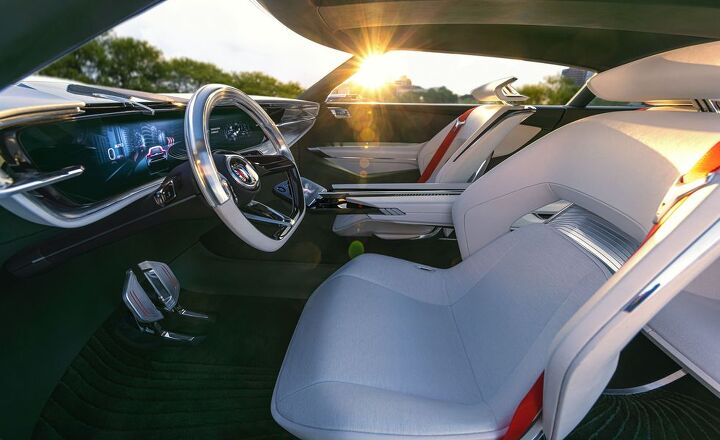
That’s kind of a shame. The Wildcat has a storied history and was arguably one of the company’s better products until it was ruined (like so many other American cars) by the 1970s. Basically indistinguishable from the LeSabre, GM pulled the plug on the model right as the decade started. Regardless of past tragedies, the concept isn’t bad to look at (even if it does resemble a Toyota/Lexus product) and customers will probably be pleased to see future Buick designs offering a little more attitude. There’s just no hope of the vehicle you’re seeing here actually making it into production. The Wildcat EV isn’t even sized in a way that would make it possible to use GM’s Ultium platform. It’s simply a design study designed to hype consumers about Buick’s pending all-electric future without serving as a direct representation of the forthcoming automobiles.
“Our forthcoming products will adopt a new design language that emphasizes a sleek, dynamic and forward-looking appearance,” said Sharon Gauci, executive director, Global Buick and GMC Design. “Our exteriors will incorporate fluid movements that contrast with tension to convey motion. Interiors will balance modern design, new technologies and attention to detail to evoke warmth and a rich sensory experience.”
But there is a potential catch here. Despite the langue indicating that Buick will forego gasoline-powered models entirely by 2030, it has left itself an out by tying EVs to the Electra name. This theoretically would allow the automaker to walk back promises of total electrification by making EVs into their own sub-brand in a manner similar to Cadillac. However, the automaker has not explicitly said this would be the plan, only that all subsequent Buick EVs would use the Electra naming convention. As things currently stand, Buick has famed itself as wholly committed to electric cars.
[Images: Buick]
Consumer advocate tracking industry trends and regulations. Before joining TTAC, Matt spent a decade working for marketing and research firms based in NYC. Clients included several of the world’s largest automakers, global tire brands, and aftermarket part suppliers. Dissatisfied, he pivoted to writing about cars. Since then, he has become an ardent supporter of the right-to-repair movement, been interviewed about the automotive sector by national broadcasts, participated in a few amateur rallying events, and driven more rental cars than anyone ever should. Handy with a wrench, Matt grew up surrounded by Detroit auto workers and learned to drive by twelve. A contrarian, Matt claims to prefer understeer and motorcycles.
More by Matt Posky








Comments
Join the conversation
All these companies and governments have jumped out of the airplane hoping they can make a parachute before they hit the ground. Personally, I think it's all going to go splat.
Why has TTAC not paid more attention to the issue around 'wire harnesses'? Or have I missed it? A significant number of these were manufactured in Ukraine. Some investment 'experts' believe that auto manufacturers will not invest in new plants to manufacture these for ICE vehicles. And that Tesla has largely circumvented the problem, with their design. The lack of supply for this one product may hasten the demise of ICE vehicles.