
Does Mazda Even Need A Rotary Sports Car?

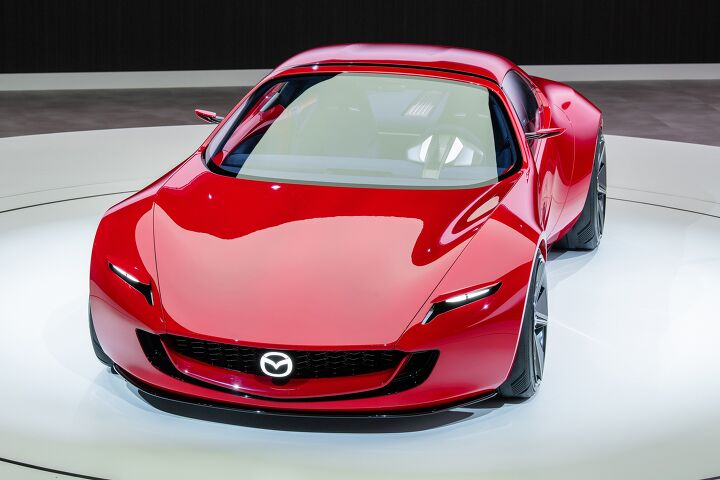
Mazda hasn’t sold a true rotary sports car in over a decade. But this has not prevented the Japanese brand from constantly teasing the prospect of there being a new one.
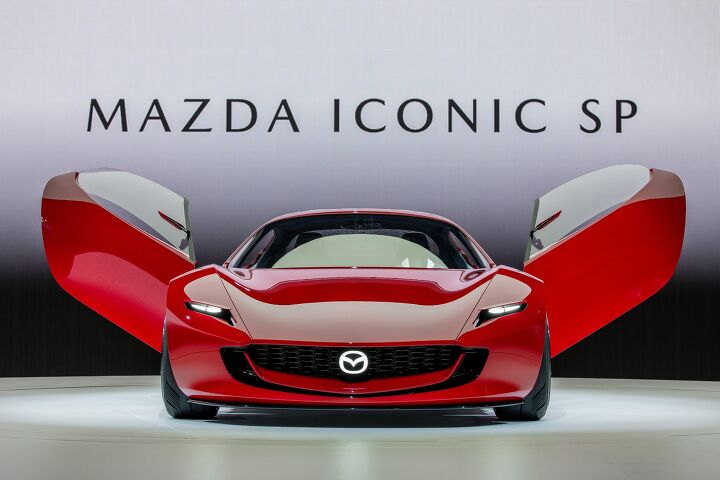
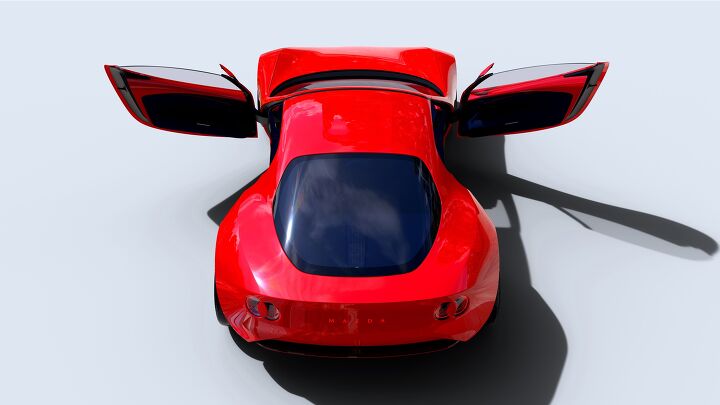
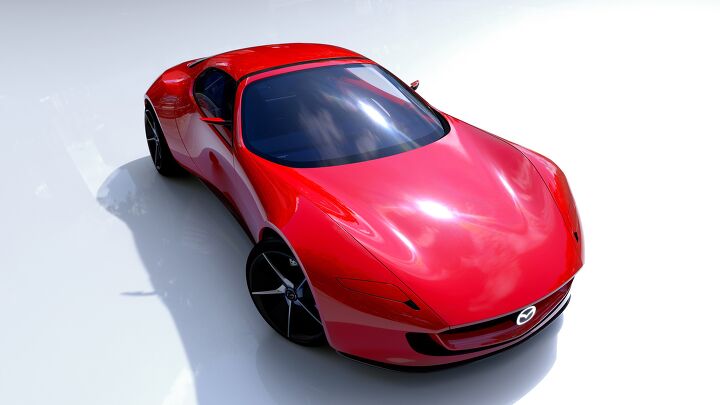
Officially, Mazda hasn’t confirmed anything beyond routinely acknowledging that its engineering team would desperately like to build one. The company even showed off the “Iconic SP” concept in 2023, which was very obviously designed to be a successor to its RX series of performance cars. Even more interesting was the fact that the SP was very obviously just a refined version of the earlier Mazda Vision Study, leading many to think it was more of a preproduction prototype than a concept vehicle.
However, we’ve heard nothing about Mazda making moves to put the would-be RX-9 into production. At best, we’ve only received confirmation that the team has continued working on Wankel rotary engines as generators for prospective EVs. This included the Iconic SP, which the brand initially stated it wanted to see go into production.
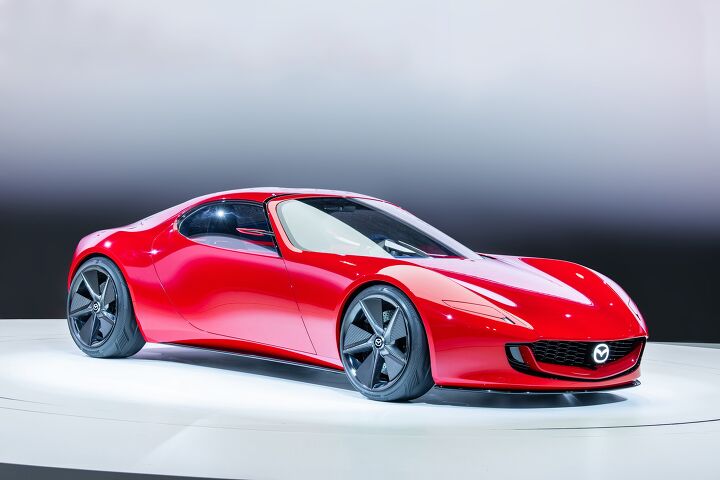
Sadly, there’s been little news on that front in recent years. Reputable rumors that Mazda has been prepping the SP for assembly are borderline nonexistent. Dwindling interest in electrified models are likewise assumed to have made automakers hesitant to field new EVs in general.
Still, that hasn’t prevented everyone from asking about it. AutoExpress recently inquired with Moritz Oswald, Mazda’s supervisor of product planning for Europe, about the status of the Iconic SP.
“If there's a feasible way to do that, then I'm sure if somebody will do it, it's Mazda, because here the enthusiasts still make things happen,” Oswald, told the outlet in an interview. “I think at the moment the MX-5 is still our halo car that stands for everything that Mazda products should. Could there be something next to it or above? Yes.”
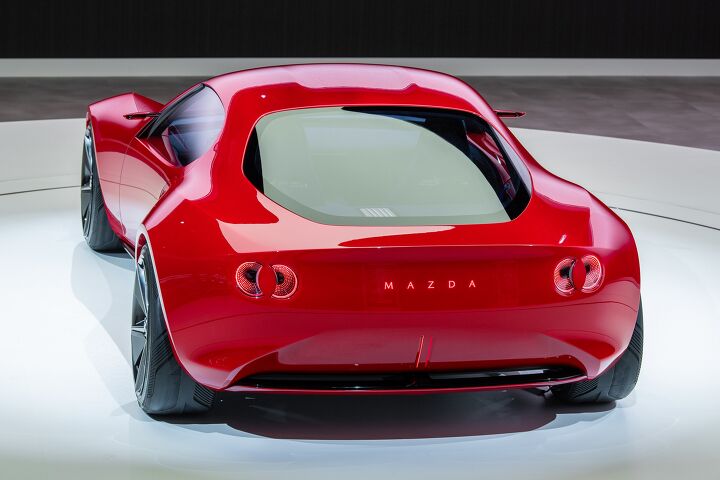
“The amount of car enthusiasts in this company is insane,” he continued. “Everybody loves cars, so of course there is a deep desire to keep on launching emotional products. So are we looking into that? Yes, of course. But again, we are also a company that has to bring in revenues.”
There are a lot of ways to interpret that statement. However, your author is inclined to believe that it’s an admission that manufacturing such a vehicle isn’t financially feasible right now — even if basically everyone within the business would like to see it happen.
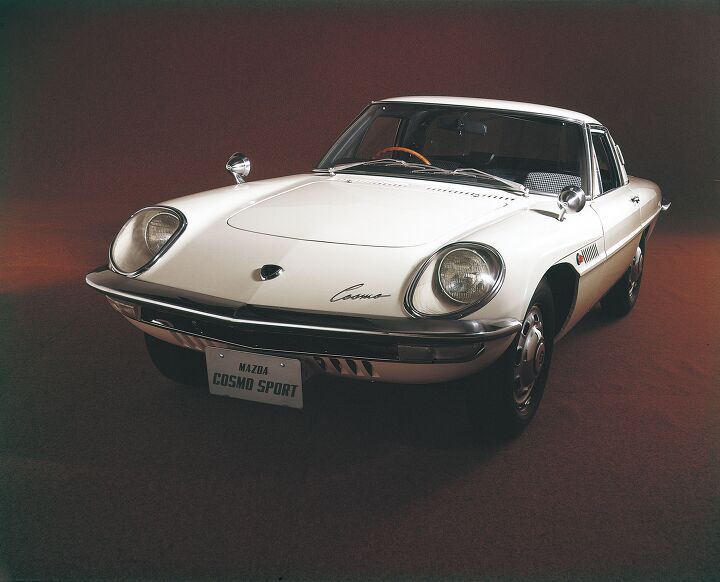
Mazda’s role as an automaker has never been simple. The company implemented the Wankel rotary to differentiate itself from other Japanese brands in 1967, starting with the Cosmo/110S (above). However, this also resulted in Mazda taking on the persona of a sports-car manufacturer that also happened to offer a bunch of small, economy models.
As the years rolled on, Mazda would gradually move away from rotary engines on everything but their most hardcore performance cars. While the rev-happy motors were smooth and offered a staggering amount of power relative to their size, the company had a difficult time getting them to pass emissions. Rotaries also needed specialized maintenance and more frequent rebuilds than the average piston engine.
Due to the comparative simplicity and compact size of the motors, this really shouldn’t have been a serious problem. But few mechanics had experience with rotary engines, giving them a mixed reputation. Combined with the oil and fuel consumption that was also typical with the powertrain, Mazda was effectively forced to move away from the system.
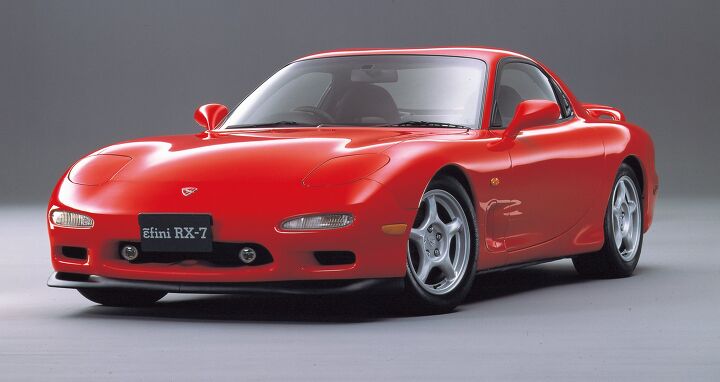
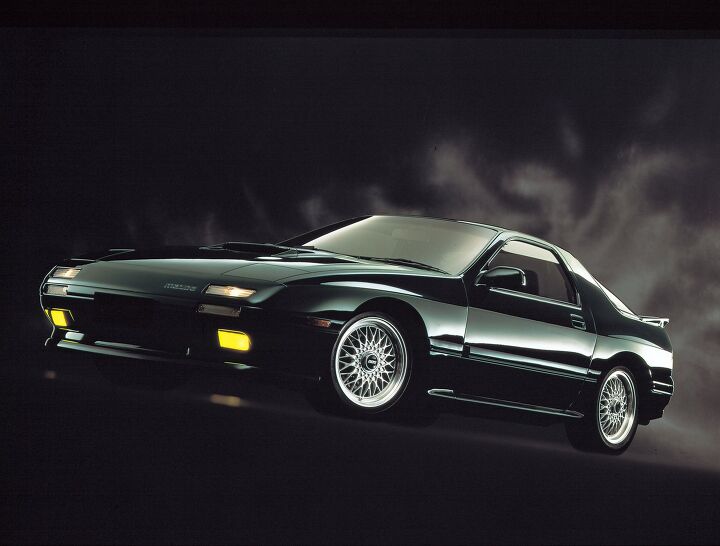
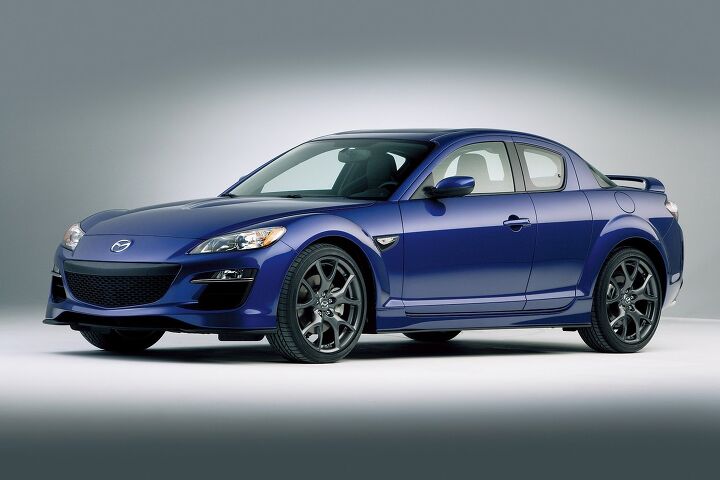
By 1990, the automaker’s fleet had pivoted almost entirely to pistons. The legendary RX-7 (FD above, FC below) and criminally underrated RX-8 were the last two models Mazda sold with rotary engines — with the latter vehicle ending production in 2012.
Of course, some would argue that’s a matter of perspective.
While the company has brought the rotary back for conceptual vehicles, the only production model to see one since then was the MX-30. But it’s hardly worth counting due to the fact that it was never used for propulsion. The unit is effectively an on-board generator installed into a single variant of the electrified MX-30. This sidesteps the model having any of the relevant characteristics of a rotary powered automobile.
Since Mazda had basically spent the last thirteen years teasing the Wankel’s return, the MX-30 felt like a minor slap in the face to enthusiasts. The car also barely existed in North America, which has historically been the automaker’s biggest market. Mazda fans clearly just wanted a successor to the RX-7 — if not the slightly more practical RX-8 (below).
But it’s also not obvious that the car would be a winner for the brand. Mazda has carved out an interesting niche for itself and may not want to rock the boat. It likewise doesn’t possess the same resources as larger Japanese brands — making development of a halo sports car that leverages an extremely rare engine type that’s unlikely to pass emissions a massive risk.
However, Mazda has also framed itself as an entry level luxury brand that’s still laser focused on performance automobiles. This has yielded loads of attractive models that are practical and still quite fun to drive. Mazda has even developed a reputation for above-average reliability. This is thanks largely to the automaker using common powertrains on most models and mimicking Toyota in restraining itself from radical redesigns between generations. However, some of the newer crossovers (especially the plug-in hybrids) have displayed some teething issues.
Sadly, that recipe has not resulted in any models boasting staggering levels of performance. We actually own the fastest Mazda currently in production and, assuming you’ve given it the right fuel and are willing to do some ill-advised brake boosting, it’ll manage 60 mph in about 5.5 seconds from a dead stop. Meanwhile, the brand’s true enthusiast model (the MX-5 “Miata”) isn’t any faster.
Mazda would argue acceleration shouldn’t be the most essential factor when it comes to building a good driver’s car and that’s extremely true. A lot of people already believe the MX-5 is pretty close to perfect. However, the company still lacks a model that could rival something like the Ford Mustang, even if we’re talking about the base Ecoboost.
But it may not need one. Rather than developing a couple of ultra-fast performance vehicles, Mazda has instead built an entire fleet of relatively practical, non-slow vehicles that are still engaging to drive. It’s hardly the worst brand identity to have. Of course, this doesn’t necessarily preclude there being another rotary sports car.
With the United States recently softening emissions rules for automakers, there’s a window for all companies to build more cars with powerful engines without fines. One of the biggest reasons so many automakers pivoted toward SUVs and crossovers is because emissions laws were kinder to them. Assuming deregulation remains in place, Mazda may indeed be able to sneak a rotary powered automobile past U.S. regulators.
That said, it remains incredibly difficult to see such a model making sound financial sense for the company. Christian Schultze, Mazda’s deputy general manager of R&D for Europe, seems to agree.
“People have a specific design and expectations for our cars, so making a sports car that is for everybody is a real challenge,” noted Schultze.
“If I say I want to sell something for $100,000, I can make a credible sports car. But if I say I want to make something for normal people like me and you and everyone, this is a real challenge.”
We also haven’t seen a surplus of evidence that Mazda’s clientele would want a six-figure, electric sports car with a rotary range extender. While a traditional, lightweight, Wankel-powered RX model has better prospects, there’s nothing to support the notion that such a vehicle is in active development.
If Mazda does build a faster steed in the coming years, odds are good that it’ll be the next-generation of the MX-5. That car may even make use of the gorgeous styling cues of the Iconic SP. Credible rumors have Mazda working with Toyota to jointly develop the car alongside the updated GR86. However, neither company has been willing to confirm those claims and the resulting vehicles would ultimately focus on driving pleasure — rather than maximum performance — and certainly wouldn’t boast rotary engines.
Fine by me.
[Images: Mazda]
Become a TTAC insider. Get the latest news, features, TTAC takes, and everything else that gets to the truth about cars first by subscribing to our newsletter.
Consumer advocate tracking industry trends and regulations. Before joining TTAC, Matt spent a decade working for marketing and research firms based in NYC. Clients included several of the world’s largest automakers, global tire brands, and aftermarket part suppliers. Dissatisfied, he pivoted to writing about cars. Since then, he has become an ardent supporter of the right-to-repair movement, been interviewed about the automotive sector by national broadcasts, participated in a few amateur rallying events, and driven more rental cars than anyone ever should. Handy with a wrench, Matt grew up surrounded by Detroit auto workers and learned to drive by twelve. A contrarian, Matt claims to prefer understeer and motorcycles.
More by Matt Posky








Comments
Join the conversation
The coupe Miata is the BRZ once Toyota unifies the platform. Sorta.
While mustang and others are faster. I would rather have one that is a little slower that could drive 365 days a year as opposed to one i could only drive 300 days a year. the other 65 days i am waiting for warranty repairs or 2 to 3 week wait for parts because all other cars of that model are down causing a shortage of parts. Had a RX-8 great car got T-boned and totaled at 147k. only changed fluids, 3 sets of tires, one battery, and new clutch at 132k. never broke down. and great and fun car to drive. poor man's vet. Ford Focus is good example of reliability. I had 3 friends owned them . The electric solenoids in the transmission were weak in design. Sold those cars knowing that for 14 years without changing the design. Ford would cheerfully replace solenoids and even extended the warranties, but when the warranty ran out you would have to pay $1200 very four to five thousand miles for replacements, Ford and the dealers were laughing all the way to the bank, WAKE UP people . All the Vehicle reviewers and ratings say Ford F150 is the best truck to buy in 2025, but you can't get repair parts for them and they are at the top with 172 Recalls for the year. Yep there the greatest