


Fuel Stations Will Soon Start Pushing More Ethanol

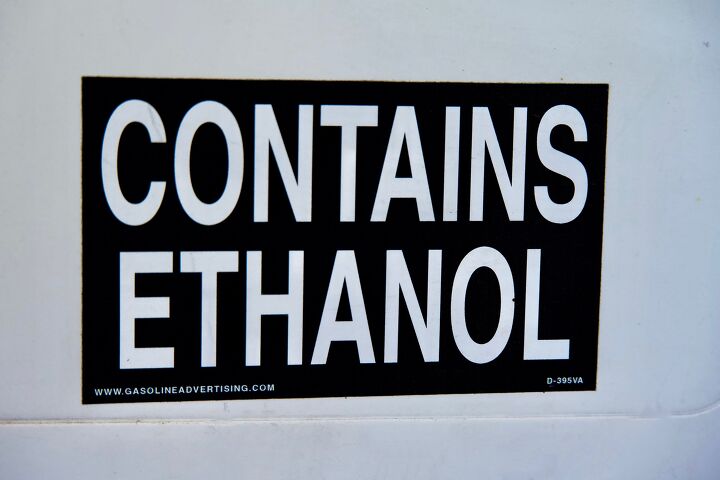
Last month, the Environmental Protection Agency decided to allow higher ethanol content in summer fuel blends in an effort to lower fuel prices. On March 25, the EPA formally approved a temporary waiver for the nationwide sale of E15. Several weeks later, the European Commission started to prepare itself to do the same thing for E20.
The claimed rationales and specific blends are different, but the results are functionally going to be the same.
Europe wants to start selling fuel that is 20 percent ethanol and 80 percent gasoline. This week, European Commission President Ursula von der Leyen even asked members of parliament to consider allowing E20 as a way to de-carbonize the continent. The EU is attempting to frame this as an environmental issue.
By contrast, the Trump administration has said that the play for E15 in the United States is being done to help drive down gasoline prices that spiked after Israel and the U.S. attacked Iran — ultimately resulting in the closure of the Strait of Hormuz, which is responsible for a significant portion of the world’s oil exports.
Sourced from organic material (typically corn in the U.S.), Ethanol is effectively just grain alcohol. If you’re old enough, you probably remember “Flex Fuel” being introduced on vehicles starting in the 1990s.
However, it was actually a fairly common fuel to be used on early automobiles. By the 1920s, prohibition effectively ended widespread usage of alcohol-based combustion on normal passenger vehicles inside North America.
While we did see a resurgence in select parts of the world during World War II, ethanol wouldn’t see much regular use until the 1973 oil shortages. The event encouraged some fuel suppliers to use it as a way to cut gasoline. At the time, fuel containing more than 10 percent ethanol (E10) was basically unheard of. However, many companies would also start selling it by the bottle and market it as an octane booster around this time.
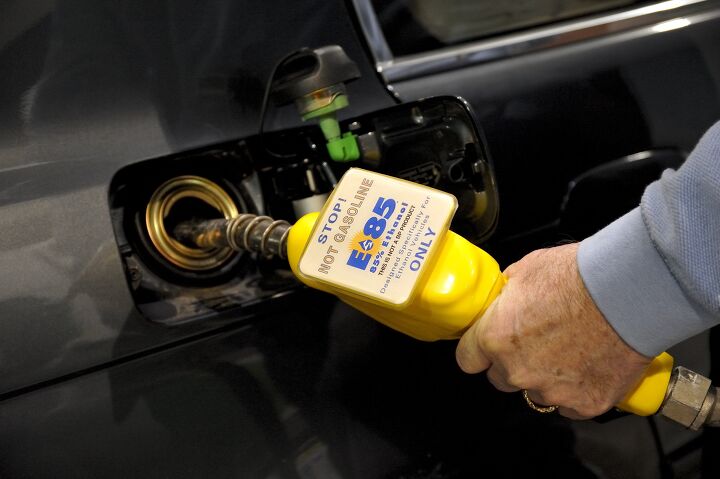
Popularity would rise again during the Obama administration. Starting in 2005, numerous energy policies were advanced to help normalize ethanol as a fuel source. The U.S. government even went so far as to subsidize farmers to grow crops specifically intended for fuel production, with other countries following suit. Since then, ethanol blends have been a fairly common sight at fuel stations. But you rarely see more than E10 in North America. While E85 (blends that include anywhere from 51 percent to 83 percent ethanol content) exist in the United States, availability is limited in certain regions and would damage any non-flex-fuel vehicle attempting to run it.
The United States and Europe are now taking another look at ethanol to counter rising energy costs, even if the latter doesn’t want to admit this.
Europe has regions where customers may be able to find E85. But anything more than E10 hasn’t been officially approved for regular automobiles. The EU would like to change this by making formal amendments to the Fuel Quality Directive to authorize widespread use of E20. However, despite Europe having some of the highest energy costs in the world, leadership has framed this primarily as a way to tamp down greenhouse gas emissions.
“The Commission confirms the role that higher biofuel blending can play in decarbonizing existing vehicle fleets,” Von der Leyen wrote in a letter to three German MEPs, as quoted by Bild. “As part of the revision of the policy framework for fuels, the Commission will consider authorizing higher ethanol contents (E20), taking into account in particular any problems related to the suitability of engines in existing vehicles for this fuel, as well as the need to incentivize investment in advanced biofuels.”
Leadership from the United States has been more upfront about things. Following an executive order from Donald Trump, the EPA has prepared a monthlong waiver for May in response to the national fuel prices increasing by over a dollar within the last five weeks. While plenty of states can already sell E15, it’s not normal to see it as part of summer fuel blends. Studies have suggested that higher ethanol content, despite often being marketed as environmentally friendly, may actually promote localized smog during warmer weather.
Depending on America’s energy needs, the EPA said that it may opt to extend the waiver.
"EPA is working with our federal partners to reduce unnecessary costs and uncertainty and ensure that gas prices remain affordable for all Americans through the summer," the EPA director Lee Zeldin said in a statement. "This emergency action will provide American families with relief by increasing fuel supply and consumer choice."
Is the scheme likely to work? Sort of.
Adding more ethanol to fuel will presumably help to stabilize the per gallon price of gasoline. But it comes with some big drawbacks. For starters, whatever crops are being used to produce fuel aren’t going to make it into your grocery store. Ethanol crops also tend to double as animal feed, so there’s a chance that prices may be going up on more than just corn chips.
Meanwhile, a lot of us don’t like running ethanol in our vehicles. While modern cars are better engineered to handle fuel with a dash of ethanol in the mix, older vehicles often have trouble running it efficiently. It’s also prone to dissolving rubber and plastic parts, which aren’t exactly rare components when it comes to the back half of your fuel system. Claims have been made that any cost savings attributed to E10 are probably offset by vehicles needing additional maintenance. But we’d wager it really depends on the type of vehicle you're pumping it into.
It’s also less energy dense than pure gasoline, so it tends to reduce engine efficiency and power. The only real exception is for turbocharged vehicles that have been especially tuned to run on E85 to capitalize on its high octane rating and unique cooling properties. But those hardly qualify as typical passenger vehicles.
For me, the biggest issue is the fact that ethanol is hygroscopic. Since I have a few older vehicles that don’t see much regular use, I worry about having water separate from the fuel inside the tank. But I’m likewise not enthused about the concept of ethanol gumming up my fuel filters or gradually making my fuel line brittle. I’ve also lost a couple lawnmowers to ethanol over the years, solidifying my bias.
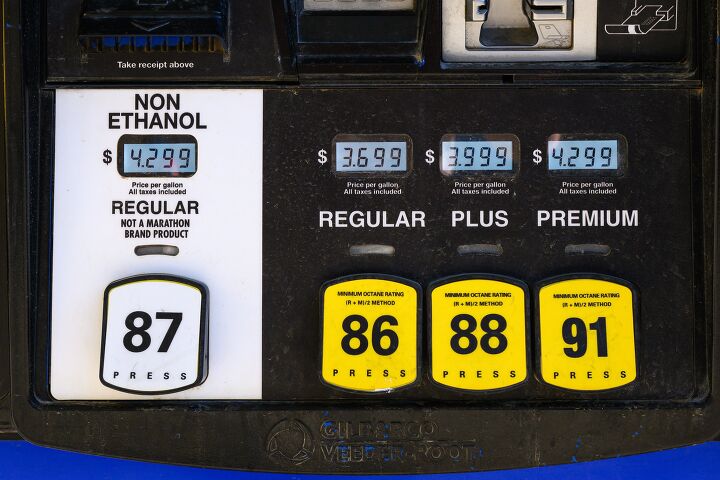
However, a modern vehicle being driven on the daily probably won’t need to stress about those things quite so much. That’s not a recommendation to rush out to buy E15. You’re welcome to do whatever you want to save some money on fuel. But I’m planning on trying to avoid it even more than I already do with E10 and would recommend anyone interested in doing the same carefully read how the pumps are labeled before filling up.
For Americans, customers can expect to see gasoline being further diluted at the start of May. Officially, the waiver is only supposed to last until the end of the month. But Congress is already discussing making it a permanent fixture of fueling stations.
Europeans will have a longer wait, as nothing has been officially decided. At present, the European Commission is working with NGOs to try and make E20 happen. They’re still in the early stages but seem wholly committed to the cause and have seen broad support from German automakers who have been trying to normalize synthetic fuels.
[Images: John M. Chase/Shutterstock; Carolina K. Smith MD/Shutterstock; Irene Miller/Shutterstock; Ian Dewar Photography/Shutterstock]
Consumer advocate tracking industry trends and regulations. Before joining TTAC, Matt spent a decade working for marketing and research firms based in NYC. Clients included several of the world’s largest automakers, global tire brands, and aftermarket part suppliers. Dissatisfied, he pivoted to writing about cars. Since then, he has become an ardent supporter of the right-to-repair movement, been interviewed about the automotive sector by national broadcasts, participated in a few amateur rallying events, and driven more rental cars than anyone ever should. Handy with a wrench, Matt grew up surrounded by Detroit auto workers and learned to drive by twelve. A contrarian, Matt claims to prefer understeer and motorcycles.
More by Matt Posky







Comments
Join the conversation
So if the owner's manual says the car is designed for up to 10% ethanol content, and specifies not to use higher ethanol content... what happens to your warranty if you fill it with E15?
Topics for further study:
A) Let's say a guy had a vehicle that had been sitting for awhile, say a year and a half. Let's say maybe the tank had fuel stabilizer in it all that time, maybe it didn't. Let's say the tank is 5/8 full of cheap fuel laced with ethanol. Faced with a no-start condition, would you add the yellow bottle of HEET (methanol based) or the red bottle of HEET (isopropyl alcohol based)? [per HEET's website, they are more proud of red HEET's ability to remove water, I didn't know this until today]
B) What might be helpful is a drain plug at the lowest point of the fuel tank to drain any water (heavier than fuel) and crud out. Recall that the fuel pump is pulling fuel from near the bottom of the tank. This is not a thing, but it could be. (Apparently it really was a thing before my time.)
C) I wanted to add some fresher gasoline to the tank to mix with the old stuff, but then realized that all of the gasoline I have on hand is pretty old, because I don't use as much for my power equipment anymore. Which means a dedicated trip to the fuel station, but my truck won't start. Dilemma lol.
D) Some have suggested a mechanism to blend the fuel in the tank. No, I'm just kidding, that was only me. Rocking the vehicle works, maybe, but it is slow. And it isn't going to do much to get any water back in solution (if that is even possible).