
Rare Rides Icons: The Jeep Wagoneer, The First Luxury SUV Ever (Part V)

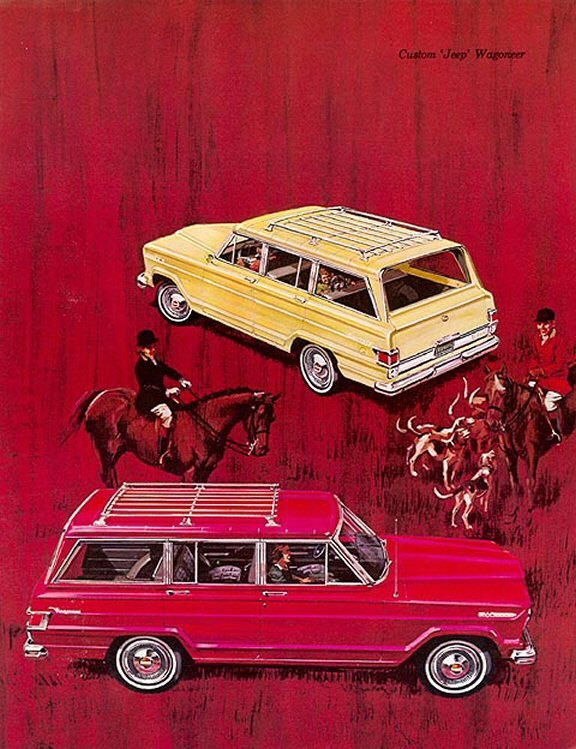
The Jeep Wagoneer had an unusually long run for a passenger automobile, and successfully spanned across four decades. Though it was in production from the Sixties into the Nineties, the SJ Wagoneer had but one generation. As mentioned in the last entry where we covered the original interior details, there were many changes inside, outside, and underneath through the decades. Oh, and Wagoneer invented the luxury SUV in 1966.
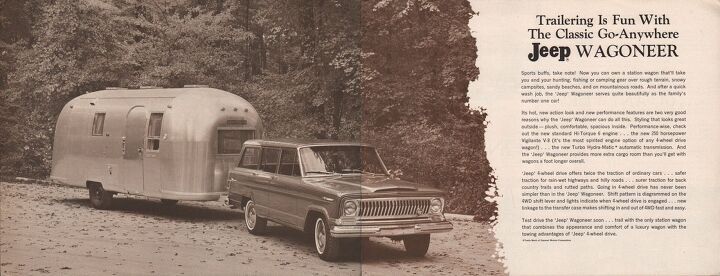
One of the first upgrades to the Wagoneer was a bow to consumer demands, as factory air conditioning became available in 1964. The Jeep-developed Tornado I6 ( immediately problematic) was limited to a lower compression version with 133 horsepower. This was supposed to correct cooling issues experienced in the higher compression engine. It would be the second and final year the Tornado was used in the Wagoneer, as it was simply too unreliable to remain in Jeep’s flagship wagon.
In 1965 Jeep purchased an engine from the company that would own it five years later: AMC. The standard engine in the Wagoneer was AMC’s 3.8-liter OHV inline-six. Jeep selected this engine because AMC was willing to sell it to them more cheaply than engines from other domestic manufacturers. The AMC engine was worlds apart from the old Tornado, and crucially was reliable and easy to maintain.
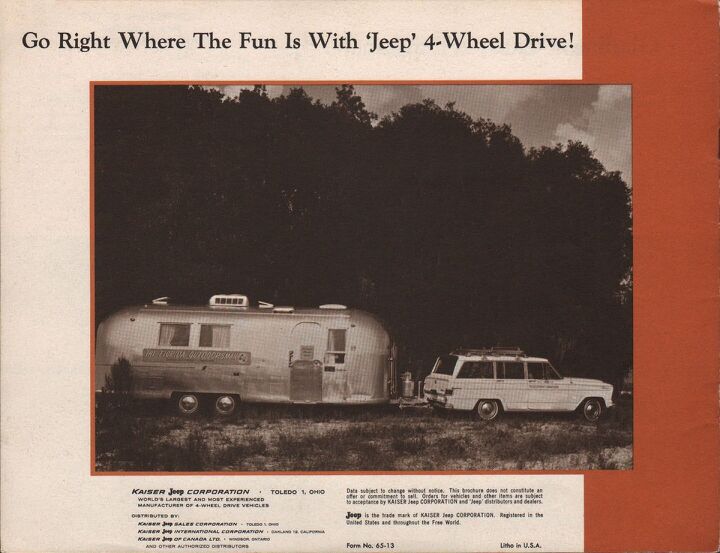
Later in 1965 the engine options expanded, and the Wagoneer received its first optional V8. Another purchase from AMC, it was the 250-horse 327 (5.4L) commonly known as the Rambler V8. Jeep renamed the engine for Wagoneer and Gladiator usage to “Vigilante V8.” Notably, the 327 was the first commercial engine to have electronic fuel injection when the Electrojector version debuted in 1957. But the system was problematic and only a few examples were made before AMC reverted to carburetors.
One of the Wagoneer’s innovative features, an independent front suspension in four-wheel drive models, was dropped in 1965. Though it was a creative design that found favorable reviews, it was not popular enough amongst 4WD consumers to continue as an option. All four-wheel drive examples from 1965 onward used the traditional axle, while rear-drive examples had an independent front suspension.
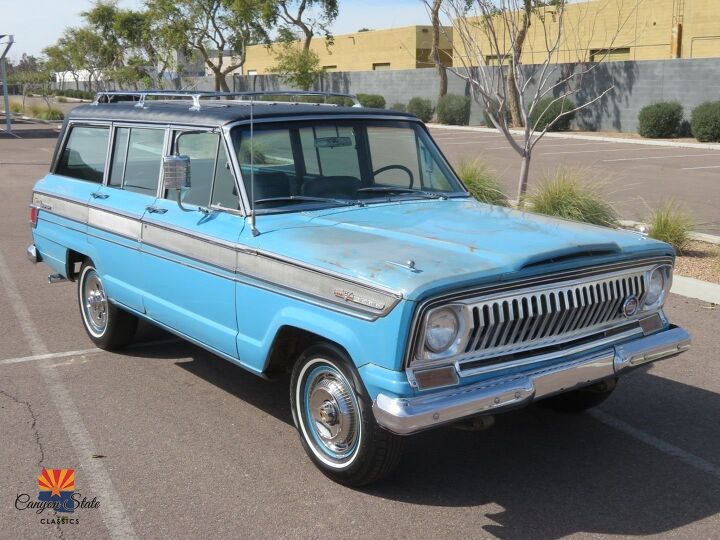
The following year in 1966 there were revisions to the interior, with a new chrome faced gauge cluster, a new steering wheel, and revised door panels. There was a new full-width grille to modernize the front end. Jeep also added more upholstery options to the base model Wagoneer, which was no longer the only trim.
In 1966, years before the Grand Wagoneer, the Super Wagoneer became the first luxury SUV. This was the moment, the genesis. Even Jeep said it was unusual. The aptly named Super Wagoneer debuted with markedly different exterior trim to set it apart from standard models. The trim and copious standard features were only available on Super Wagoneer.
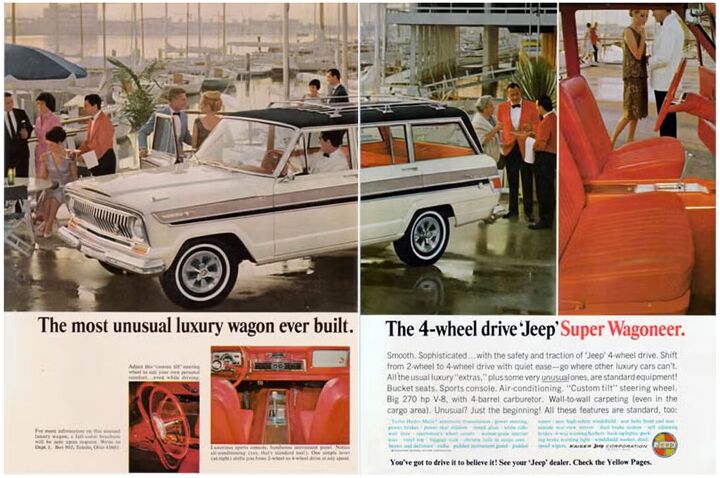
The brochure showed the decked-out Super Wagoneer at an exclusive marina restaurant. Check the messaging: The sailboats, waiters in red jackets to match the Wagoneer’s interior, and the owner in a white tuxedo. His female companion looks like Twiggy.
With alloy wheels and whitewall tires, the off-white Super Wagoneer is prominently displayed with its chrome trim and black accent stripe, and a black vinyl roof like a luxury sedan. The interior finished in bright red, displaying the unusual bucket seats and wood trim. The word luxury is front and center on the ad in large text. Everything is standard, said the copy.
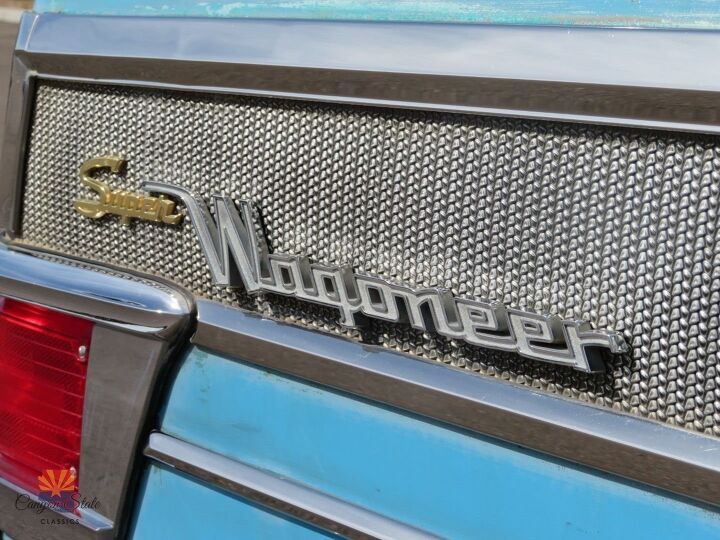
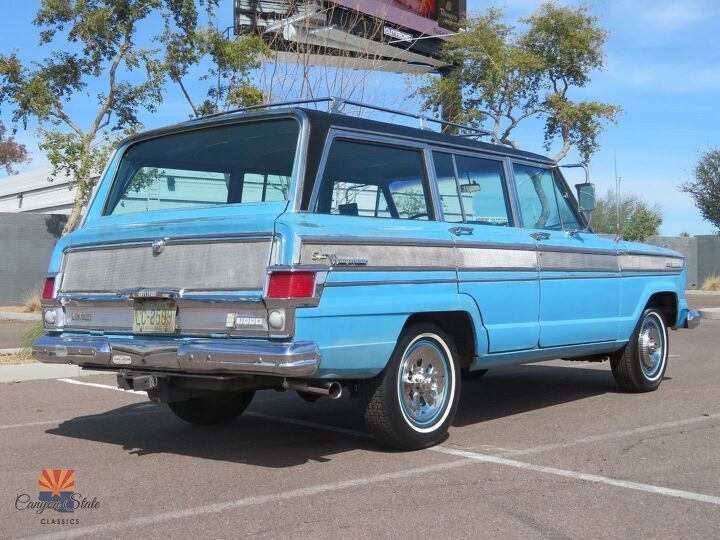
The exterior was upgraded with additional paint combination options in two-tone, and there was some woven chrome trim along the length of the sides. At the rear, a gold “Super” was added to the Wagoneer badging. The tailgate featured an entirely different trim treatment to standard models, as a large chromed panel filled the middle section that was painted on standard models.
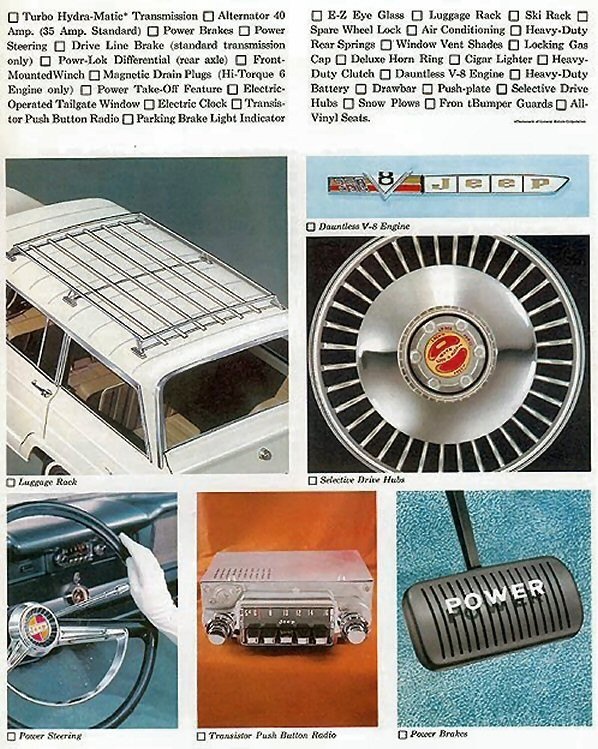
Super Wagoneer was fitted as standard with a high-performance 270-horsepower version of the 327 V8 with a four-barrel carb. Though it used the same basic interior layout as the regular Wagoneer, the Super Wagoneer had features that were off-limits to car buyers outside the luxury realm in 1966. There was a tilt wheel that had seven positions, standard air conditioning, a push-button radio, power steering, power brakes, and a power rear window.
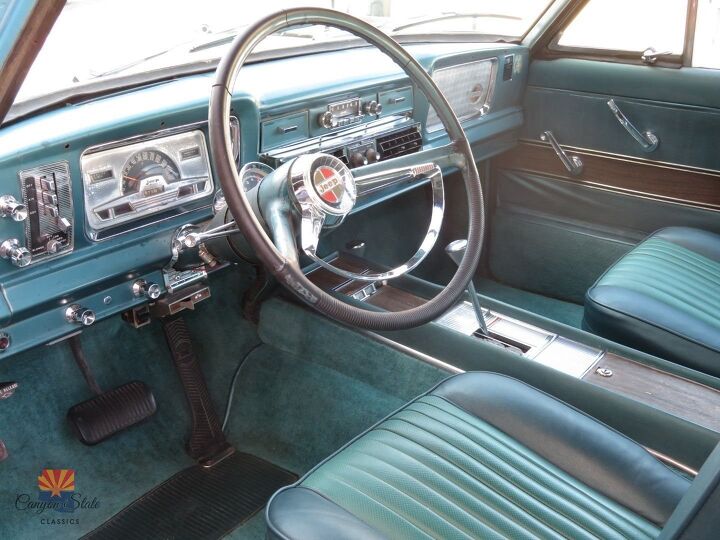
The interior was fitted with a center console with brushed metal trim, and the automatic shift lever moved to the floor beside the new bucket seats. The transmission was GM’s THM400 three-speed automatic, used in the company’s largest luxury cars. Wood trim appeared on the doors and center console, unheard of in a utility wagon.
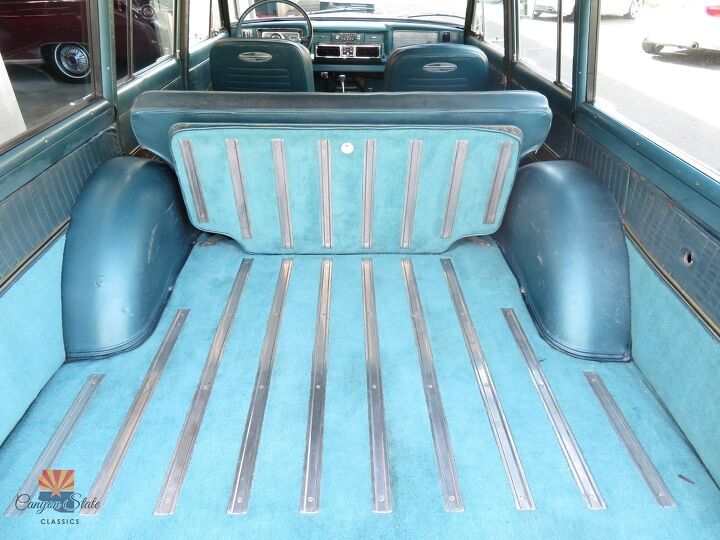
At the rear there was a fully carpeted cargo area, with chrome cargo slide strips. The ribbed padding at the top of the door panels even continued into the cargo area. As it was expensive, the Super Wagoneer became a rare sight on the roads and sold only 3,989 examples over its four years in production.
In 1967 Jeep began to lean into the utility and family vehicle aspects of the Wagoneer. Rear-drive only models (less popular since debut in 1963) were phased out between 1967 and 1969. Additionally phased out were the two-door models, which saw their final year in 1968.
Like the two-wheel drive models, the two-doors were slow sellers from the beginning. Jeep would reintroduce the two-door version as the less expensive Cherokee in 1974, which had many fewer features than the Wagoneer. That year’s Cherokee was accompanied by the first use of the term Sports Utility Vehicle, clearly a masterstroke in marketing.
There was another new engine in 1966 which was better matched to the THM400 transmission: A Buick 350 (5.7L) 90-degree Dauntless V8 good for 230 horsepower. Though it made 20 fewer horsepower, it had more torque lower down, and offered 350 lb-ft at 2,400 RPM. The AMC V8 managed 340 lb-ft at 2,600 RPM.
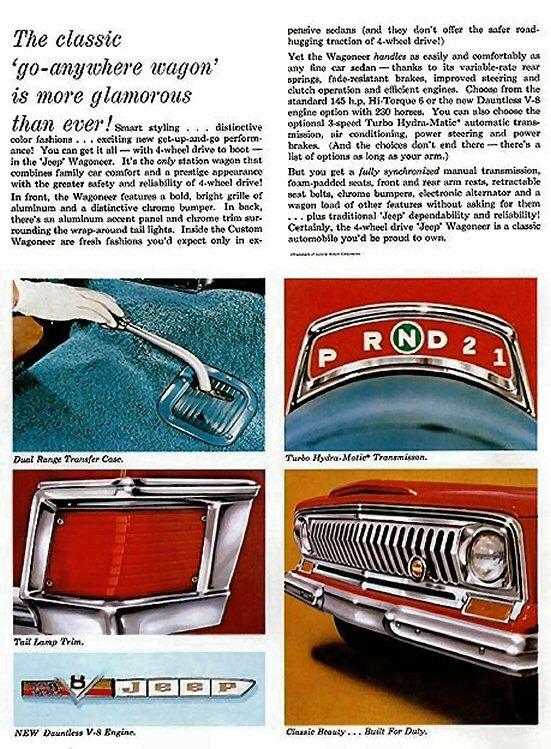
But the Buick engine foray was short-lived, as AMC made a little purchase in 1970. Jeep’s ownership by AMC would fundamentally change the Wagoneer’s direction. We’ll pick up next time circa 1971.
[Images: Jeep, seller]
Become a TTAC insider. the latest news, features, TTAC takes, and everything else that gets to the truth about cars first by subscribing to our newsletter.
Interested in lots of cars and their various historical contexts. Started writing articles for TTAC in late 2016, when my first posts were QOTDs. From there I started a few new series like Rare Rides, Buy/Drive/Burn, Abandoned History, and most recently Rare Rides Icons. Operating from a home base in Cincinnati, Ohio, a relative auto journalist dead zone. Many of my articles are prompted by something I'll see on social media that sparks my interest and causes me to research. Finding articles and information from the early days of the internet and beyond that covers the little details lost to time: trim packages, color and wheel choices, interior fabrics. Beyond those, I'm fascinated by automotive industry experiments, both failures and successes. Lately I've taken an interest in AI, and generating "what if" type images for car models long dead. Reincarnating a modern Toyota Paseo, Lincoln Mark IX, or Isuzu Trooper through a text prompt is fun. Fun to post them on Twitter too, and watch people overreact. To that end, the social media I use most is Twitter, @CoreyLewis86. I also contribute pieces for Forbes Wheels and Forbes Home.
More by Corey Lewis







Comments
Join the conversation
Tilt wheel. Had to be the gm -saginaw unit. A dream of functionality and ease of use. (until the quality went to shite in the 80s)
Almost bought one of these of off the lemon lot but I decided to get my current 85 FJ60 instead.