
Rare Rides Icons: The Jeep Wagoneer, the First Luxury SUV Ever (Part II)

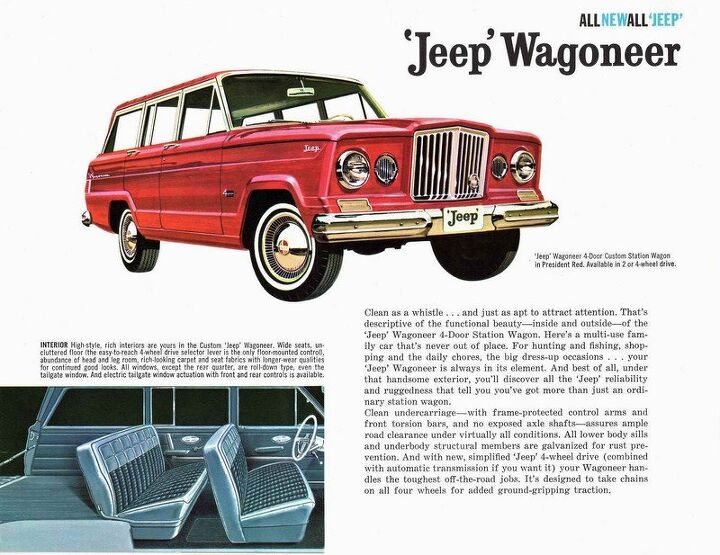
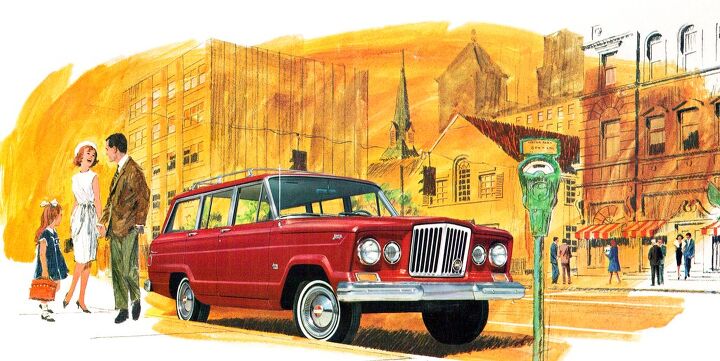
We return to the Jeep Wagoneer (here’s Part I) this week for a dive into its chassis, running gear, and other particulars. From the get-go the Wagoneer was designed with families in mind: It was slightly smaller than competition from Suburban and Travelall, lower to the ground, easier to get in and out of, and better equipped as standard. Jeep built the Wagoneer as an advancement of its Station Wagon product from the Forties, but was a clean sheet design with some very innovative thinking behind it.
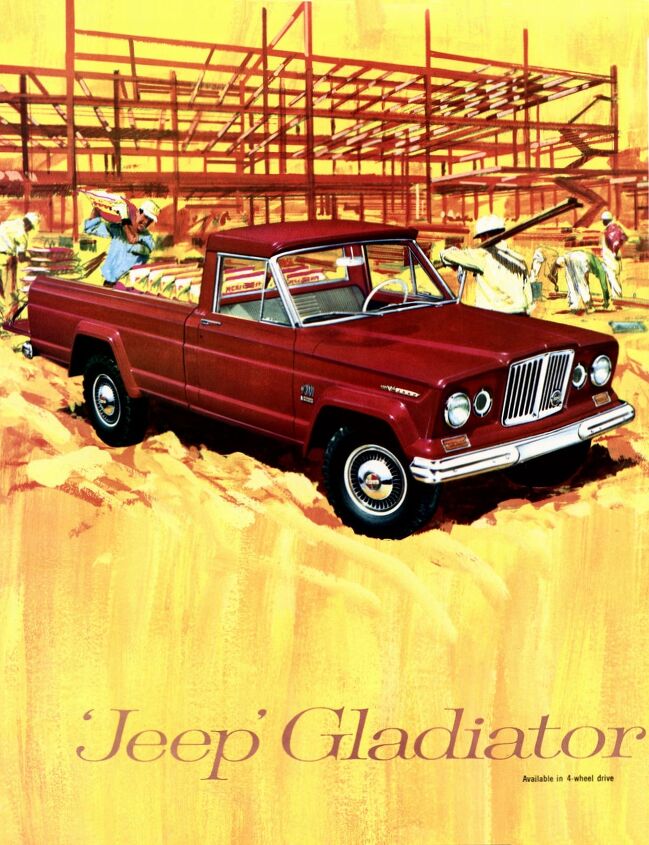
As mentioned last time, the Wagoneer shared its SJ platform with the Jeep Gladiator pickup that also debuted in 1963. The Gladiator was available in several wheelbase lengths as was expected at the time, though all versions had only two doors as the extra length went right into bed capacity. The smallest Gladiator had a 120-inch wheelbase, while the midsize version had a wheelbase of 126 inches. The longest Gladiator (J300) used a 132-inch wheelbase. There was also a specialty 165-inch option used as a basis for campers.
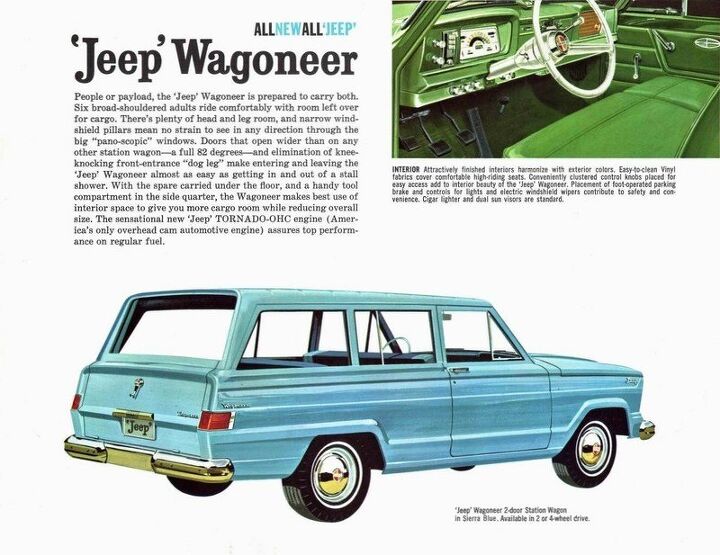
Aiming to be smaller than full-size competitors, the Wagoneer chopped a full 10 inches off the shortest Gladiator and used a 110-inch wheelbase. Overall length was a tidy 186.4 inches, with a width of 74.8 inches, and overall height of 66.4”. Curb weight would balloon over time as engines grew larger and luxuries were layered on, but Wagoneer began in 1963 at 3,701 pounds.
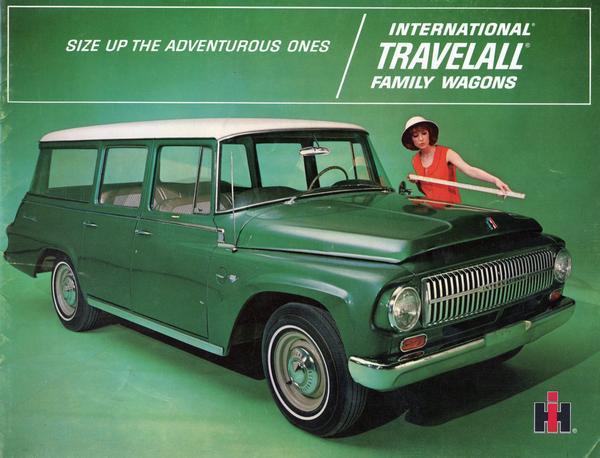
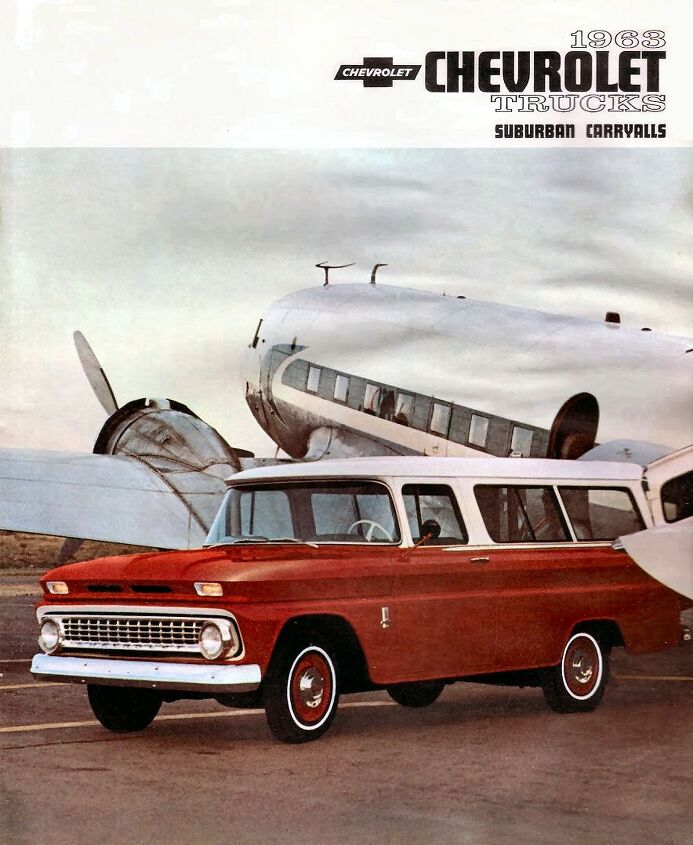
Comparatively, the fifth generation Suburban (1960-1966) was available only as a two-door in all markets except Brazil. It rode on a 115-inch wheelbase, and had an overall length of 199.5 inches, with a substantial 79.5-inch width. The third generation IH Travelall (1961-1968) was available only as a four-door wagon. But it had an even longer wheelbase than the Suburban, at 119 inches. Travelall’s length spanned 203.9 inches, with a width of 77.6”.
With its tidy dimensions making it much more maneuverable than the competition, the Wagoneer also had them beat on body styles. Two-door versions were available as a wagon or panel truck, while all four-door versions were wagons. These three body style options would persist through 1968. Afterward, Wagoneer became a dedicated four-door model. Worth noting, the wagon model was designed as a wagon from its inception in contrast to Suburban and Travelall, which were a capped roof design applied to a four-door truck.
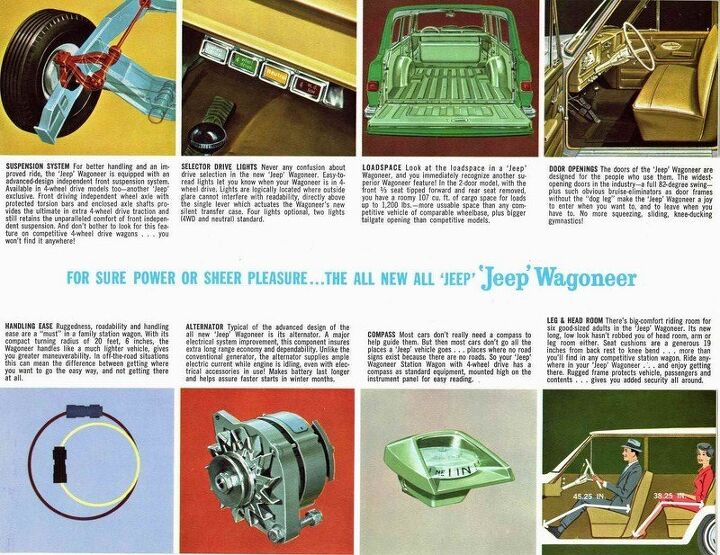
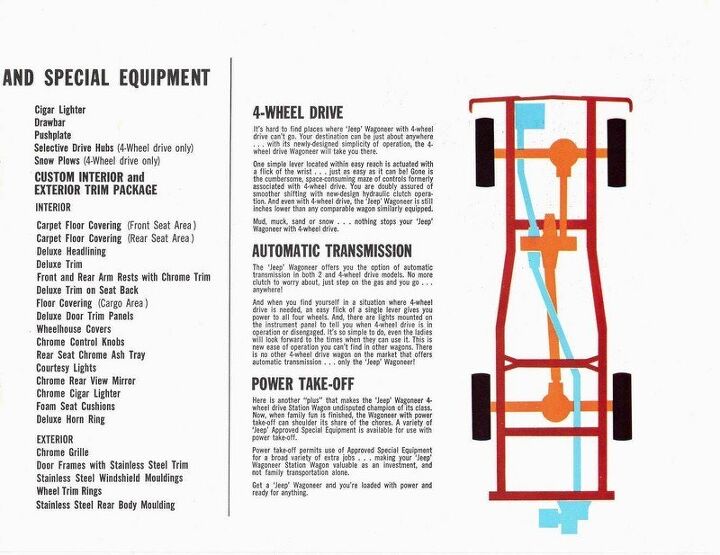
All body styles of Wagoneer used an independent front suspension in rear-wheel drive configuration, and it was an optional extra on four-wheel drive examples at a cost of $135 ($1,439 adj.). The suspension was a new design for Jeep, and different to the Station Wagon’s Palandyne-type suspension. The Palandyne design used a transverse semi-elliptic leaf spring setup, with double-action hydraulic shock absorbers.
Wagoneer’s independent front suspension implemented swing axles and torsion bar springs. Combined with short upper A-arms, the torsion bars were tied at their inner pivot points. This meant the swing axles functioned as the lower control arms. Four-wheel drive Wagoneers without independent front suspension used an axle up front: a Dana 27AF with a center-pivot.
The Jeep’s four-wheel drive system was a notably convenient feature at the time. Unlike trucks that had complicated four-wheel drive systems, the Wagoneer’s was activated by a single lever. Operated by a hydraulic clutch, the system was paired with manual Warn Industries hubs that required the driver to exit the Wagoneer to activate the four-wheel drive.
Crucially, both two- and four-wheel drive Wagoneers were available with manual and automatic transmissions. The Wagoneer was the first mass production four-wheel drive vehicle to offer an automatic from the factory. The manual option was a three-speed from Borg-Warner (T-90J) in use from 1945. The automatic used in early Wagoneers was from Borg-Warner and was also a three-speed.
All Wagoneers had drum brakes at each corner that were 11 inches in diameter. For Wagoneers that would be put to work for duties other than people hauling, there were power take-off (PTO) options available from the factory. These implements were cataloged as Jeep’s Approved Special Equipment that could be powered by the Wagoneer’s engine.
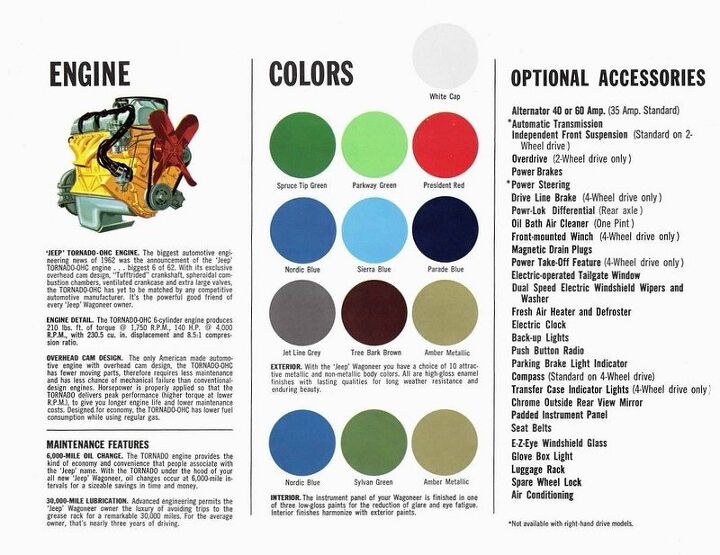
The engine in question was an all new inline-six called the Tornado. The development project was for a “new vehicle” at Jeep, and was assigned to chief engineer Sammy Sampietro. Work on the engine began in the late Fifties and took place in Europe. The focus of engine development was to improve power output via better air intake and management.
The engine that resulted was an inline-six of 230 cubic inches (3.8L), and was a hemi, with hemispheric combustion chambers. It was the first post-WWII overhead cam engine that was mass-produced and designed by a United States firm. In addition to overhead cam innovation, the engine also used a crankshaft that was hardened by ferritic nitrocarburizing. In layman’s terms, it was bathed in a saline solution for two hours at 1,025 degrees Fahrenheit.
Tornado also used a silent Morse timing chain that was covered in cast iron and designed for longevity. Aluminum construction was also used for many key components of the engine, like the valve cover, water pump, and intake manifold. That made for weight savings of about 40 pounds over the outgoing Super Hurricane engine, as Tornado’s total weight was 575 pounds.
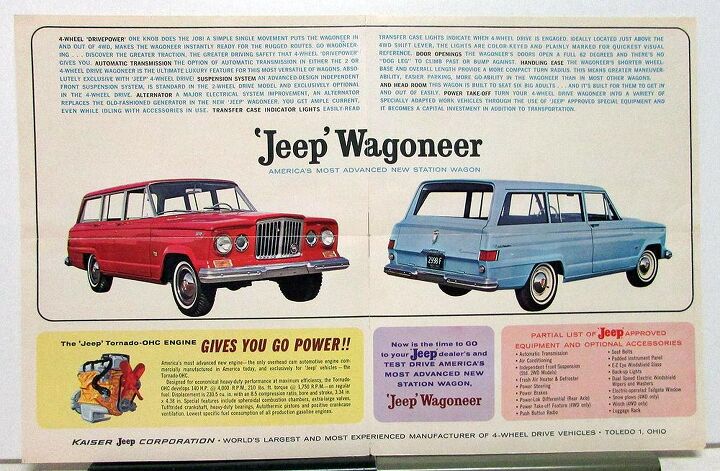
There were two different versions available: The standard had an 8:5:1 compression ratio, while the “high-efficiency” low compression version had 7:5:1. Power was 140 horses at high compression, or 133 horsepower at low compression. Torque figures were 210 lb-ft and 199 lb-ft, respectively.
Unfortunately, the complex Tornado engine was a short-lived advancement. Engine failures occurred quickly and were down to a design fault. Front engine mounts bolted to an engine cover instead of to the engine block. The cover also sealed the timing chain. The cover mounting was too harsh for the timing chain gasket, and they quickly failed which caused oil loss and a seized engine.
This only affected passenger vehicles with Tornado engines, as the military version used block-mounted motor mounts and had no such failure. The engine was used in Wagoneer in 1963 and 1964 only, before being replaced with two different AMC engine options in 1965. In our next installment we’ll take a look at the exterior details of the earliest Wagoneer, and see what made Jeep’s offering so special.
[Images: Jeep, GM, International]
Become a TTAC insider. the latest news, features, TTAC takes, and everything else that gets to the truth about cars first by subscribing to our newsletter.
Interested in lots of cars and their various historical contexts. Started writing articles for TTAC in late 2016, when my first posts were QOTDs. From there I started a few new series like Rare Rides, Buy/Drive/Burn, Abandoned History, and most recently Rare Rides Icons. Operating from a home base in Cincinnati, Ohio, a relative auto journalist dead zone. Many of my articles are prompted by something I'll see on social media that sparks my interest and causes me to research. Finding articles and information from the early days of the internet and beyond that covers the little details lost to time: trim packages, color and wheel choices, interior fabrics. Beyond those, I'm fascinated by automotive industry experiments, both failures and successes. Lately I've taken an interest in AI, and generating "what if" type images for car models long dead. Reincarnating a modern Toyota Paseo, Lincoln Mark IX, or Isuzu Trooper through a text prompt is fun. Fun to post them on Twitter too, and watch people overreact. To that end, the social media I use most is Twitter, @CoreyLewis86. I also contribute pieces for Forbes Wheels and Forbes Home.
More by Corey Lewis






Comments
Join the conversation
"Suburban (1960-1966)" I believe this was the sixth generation.
"The cover also sealed the timing chain. The cover mounting was too harsh for the timing chain gasket, and they quickly failed which caused oil loss and a seized engine. "
I was wondering where GM recruited all those engineers who worked on the Vega engine, Northstar and 3800...they poached them from Jeep.