
Rare Rides Icons: The Jeep Wagoneer, The First Luxury SUV Ever (Part IV)

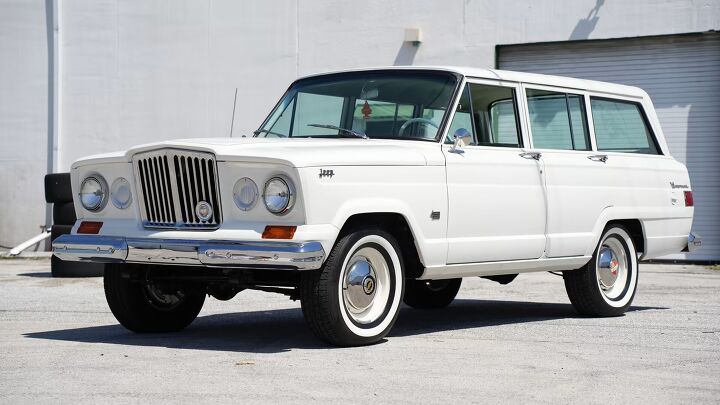
As we reviewed in our last installment, the exterior design of the Jeep Wagoneer was a notable thing at its debut in 1963. The design emphasized its wagon nature rather than its truck underpinnings, which set it apart from the competition. Like the exterior, the interior was designed with daily livability in mind and was less basic and utilitarian than contemporary utility wagons.
(For lots of pictures of a very nice 1963 example click here. We can’t use BaT pictures.)
First, a disclaimer. Given the collectable status and age of all Wagoneers and restoration efforts, it is very difficult to find an unrestored original Wagoneer. Much less one with photos we’re permitted to use (hello, legal department in Canada). Today we’ll feature a 1964 Wagoneer with a restored interior, and a 1966 example with an original interior. As we’ll see, by 1966 Jeep had already implemented some interior improvements.
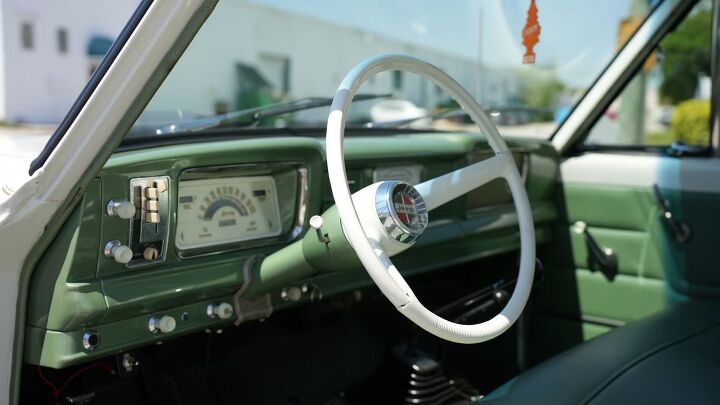
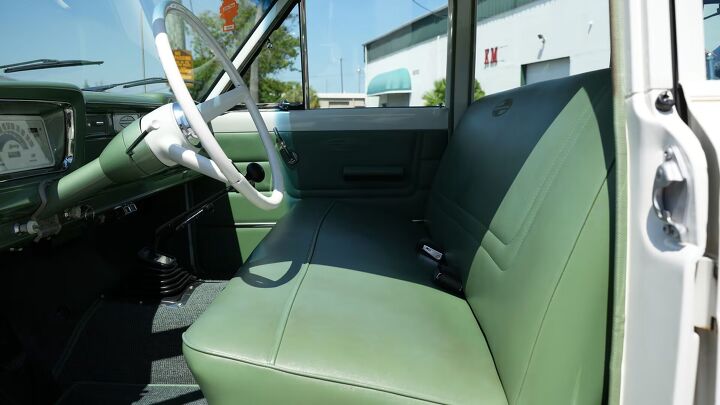
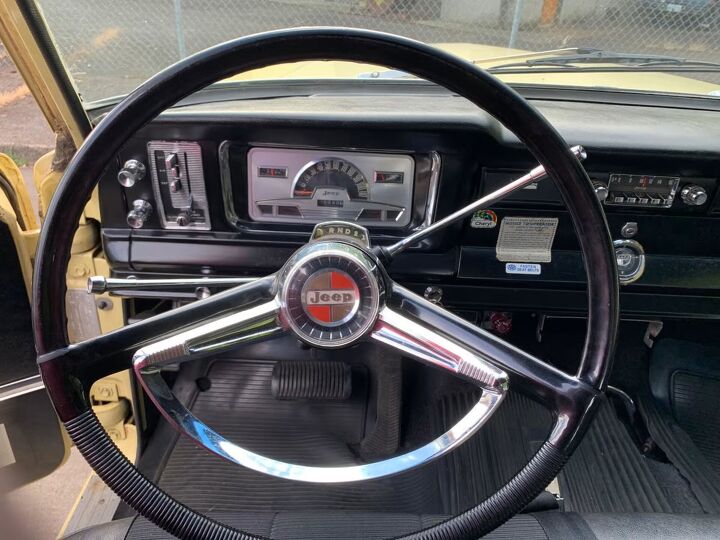
Customers of the 1963 Wagoneer opened the driver’s door to a two-spoke steering wheel that was available in a not-very-utilitarian white, and trimmed with a central Jeep logo set into a deep chrome ring. Chrome also surrounded the simple instrument cluster, which featured a clean and modern design for the time.
White gauges featured metallic gold lettering, and the half-circle speedometer went up to an optimistic 100 miles per hour. There was Jeep lettering front and center in the cluster just above the odometer. Beneath it were oil and lamp warning lights, depicted in simple red rectangular bars. The only other information presented in the cluster was a fuel and temp gauge at either side of the speedometer. Simplicity of operation was the emphasis.
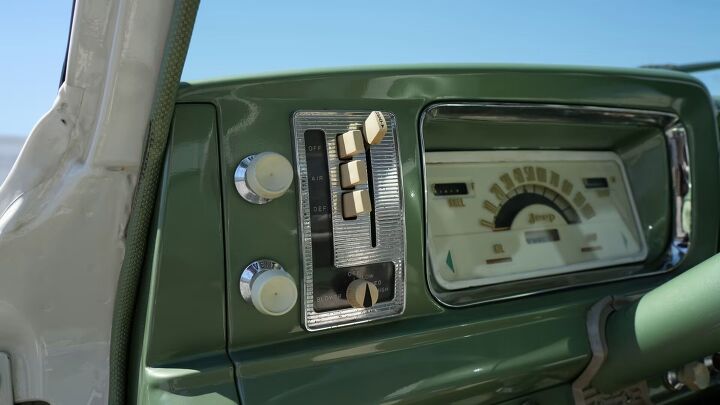
At the left of the wheel and within easy reach of the driver were the ventilation controls for fresh and blower air. Push buttons controlled whether the air came through the vents or the defroster, with three settings for the blower speed. A single slider was positioned up for outside temp air or slid down to add heat.
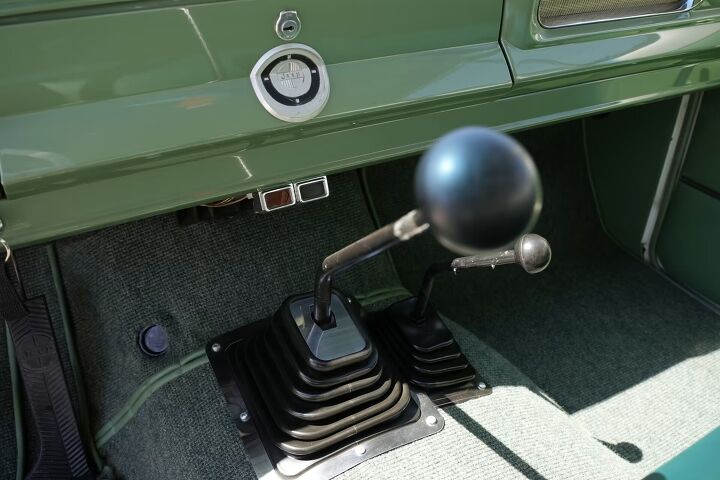
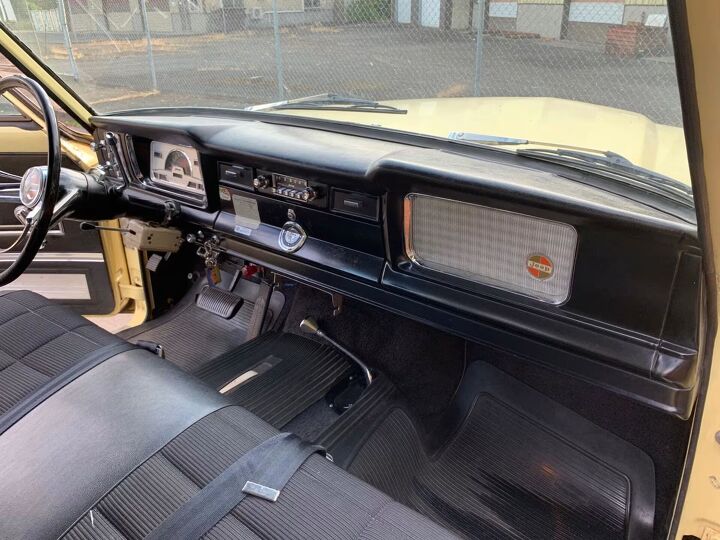
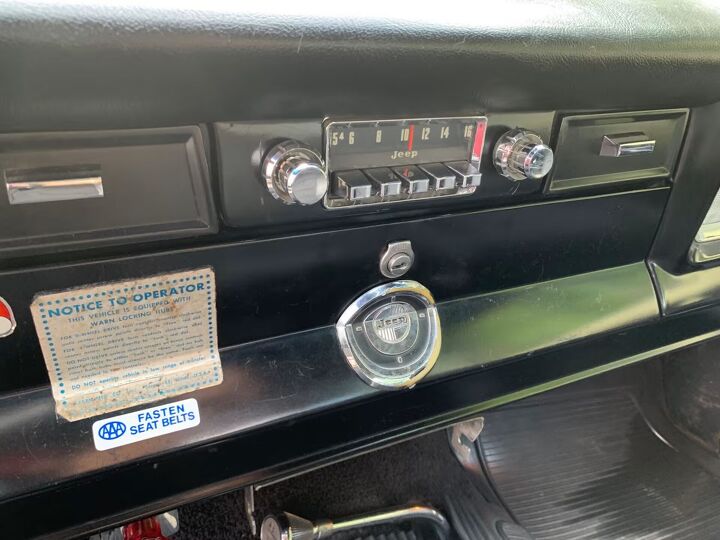
Other functional knobs for the wipers and other accessories were underneath the steering wheel, arranged across the lower dash panel. The ignition key was also located there. The middle of the dash was all filled by the glove box. It was lockable, and featured a metal jeep logo that was bent across two surfaces in an odd design choice.
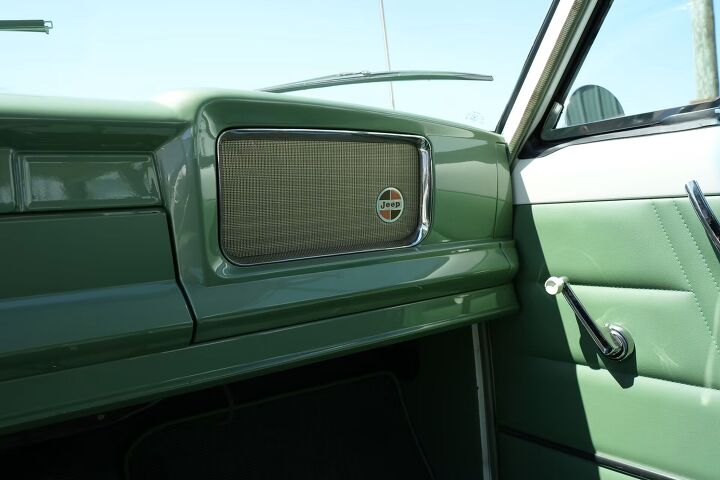
Notably, early examples such as this one did not come with an AM radio as standard. If selected, it would have been mounted in the middle of the dash next to the ashtray. The dash design itself was largely horizontal, with a defined “binnacle” area for the driver and front passenger as was de rigeur at the time. In front of the passenger was a cut-out for a binnacle. Used for right-hand drive purposes, it meant Jeep didn’t need a different dashboard for other markets.
Filling this space on AM-equipped examples was a speaker, but on those without optional audio it was simply a fabric panel to cover the space. In early examples this was the only upholstery material on the dash, as the rest of it was painted to match the body color. While a painted dash was a common feature of trucks at the time, what wasn’t common were the padded door panels.
Wagoneer’s padded doors matched the interior color, and included a globe-type logo, ribbed detailing, chrome decor strips with their own detailing, and a padded arm rest. There were simple metal levers for the window winders and door handle. Much unexpected luxury on a truck-based vehicle at the time!
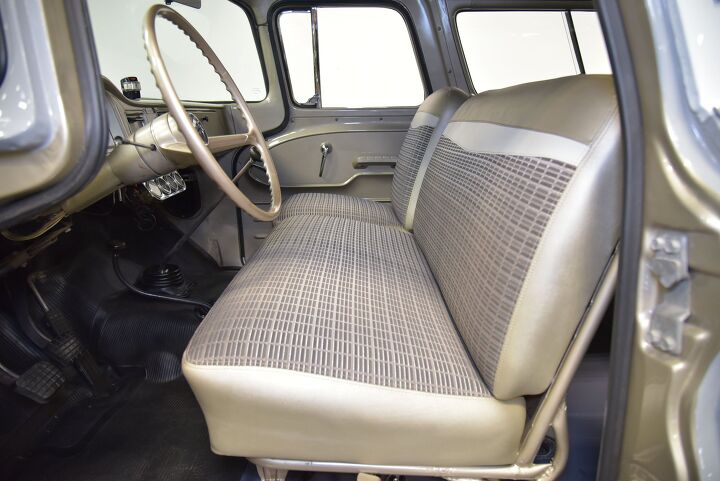
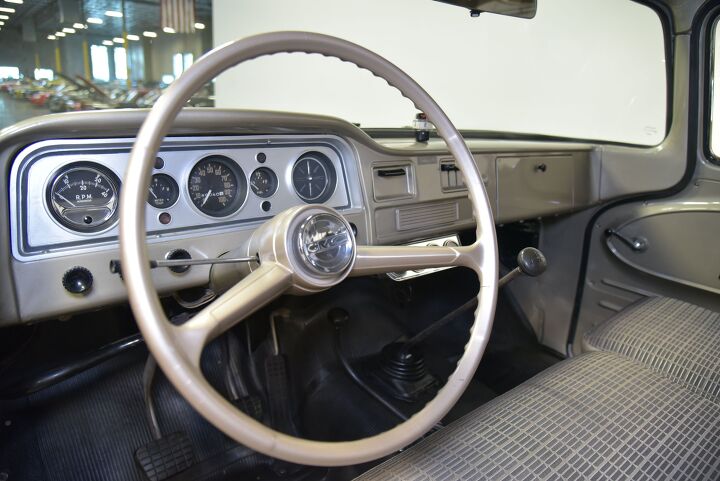
Taking a brief look at a 1963 Suburban, its stamped metal door panels and lack of interior features is apparent. Door arm rests are simply hard plastic. While it does have a more complete gauge package than the Wagoneer, it is also more utilitarian. The seat frame was visible with its crude welding and seat cushions affixed to it. And rather than carpets, the Suburban’s floors were covered in rubber.
Wagoneer’s upholstery stood out as well, with varying colors and textures available in cloth rather than vinyl. Some early examples even featured button tufting at the top of the seats. Rear seat passengers were treated to the same upholstery as the front, and the same door panel design.
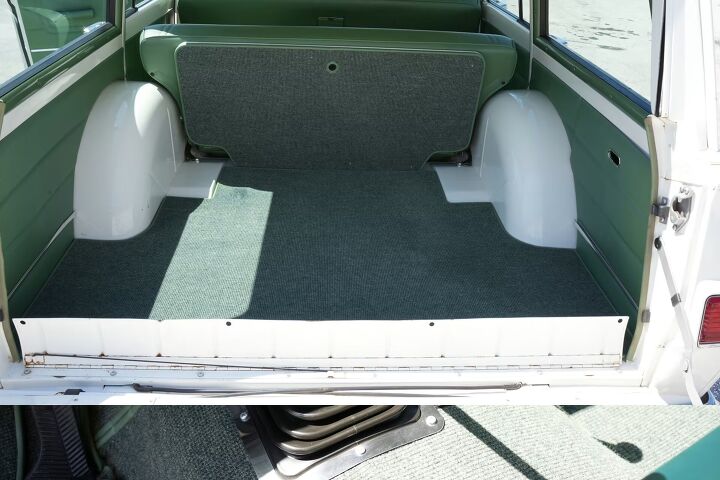
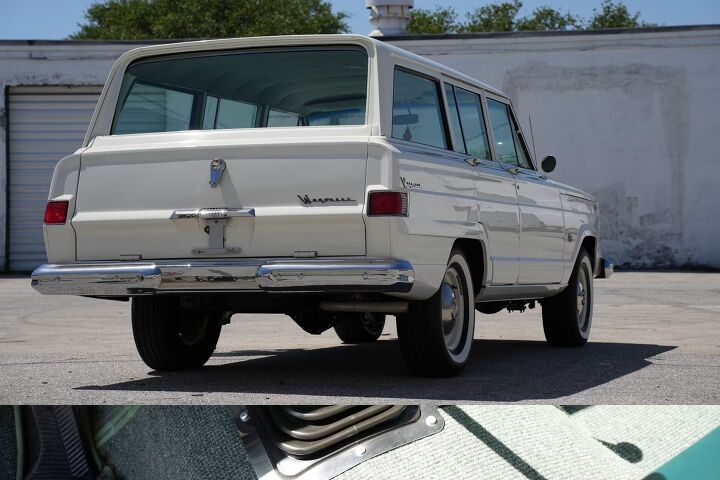
Behind the passengers was the large cargo area that was flat, apart from the intrusion of the wheel wells. The rear seat folded down to provide additional cargo space. The back featured a consumer-friendly feature, a hinged metal panel that bridged the gap between the tailgate and the cargo area to aid in sliding cargo across. It also ensured that small objects didn’t fall into the space. Wagoneer was notable for its tailgate, as other wagon utility offerings used only side-hinged barn doors at the rear.
In 1966 a revised exterior and interior treatment debuted, the latter bringing with it a new steering wheel that featured additional chrome. There was a new chrome-faced gauge cluster with revised warning lights. Gauges were picked out in white on a black background as Jeep ditched the gold lettering.
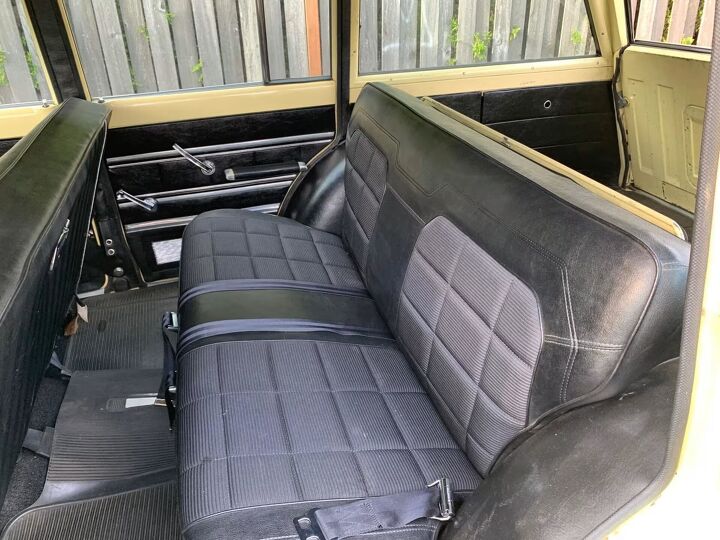
Other interior updates included revised door panels that opted for rectangular section detailing instead of the previous ribbed look. There were new upholstery patterns as well, as Jeep attempted to make the Wagoneer’s seats closer to what one would find in a car-based wagon.
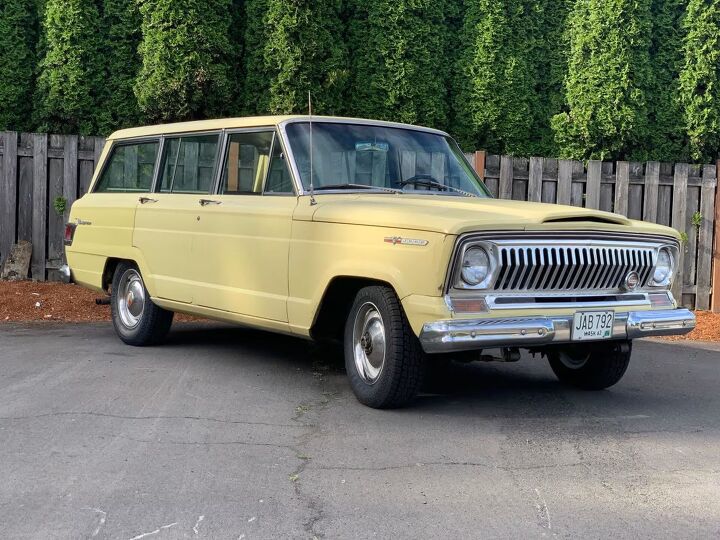
And those updates were just the start, as the Wagoneer was massaged into a luxury product for the suburban upper-crust over the years. In our next installment we’ll discuss the changes made through the decades. That’s where this series will diverge from our standard format, as the SJ Wagoneer had only one generation over 29 years.
[Images: seller, seller, seller]
Become a TTAC insider. the latest news, features, TTAC takes, and everything else that gets to the truth about cars first by subscribing to our newsletter.
Interested in lots of cars and their various historical contexts. Started writing articles for TTAC in late 2016, when my first posts were QOTDs. From there I started a few new series like Rare Rides, Buy/Drive/Burn, Abandoned History, and most recently Rare Rides Icons. Operating from a home base in Cincinnati, Ohio, a relative auto journalist dead zone. Many of my articles are prompted by something I'll see on social media that sparks my interest and causes me to research. Finding articles and information from the early days of the internet and beyond that covers the little details lost to time: trim packages, color and wheel choices, interior fabrics. Beyond those, I'm fascinated by automotive industry experiments, both failures and successes. Lately I've taken an interest in AI, and generating "what if" type images for car models long dead. Reincarnating a modern Toyota Paseo, Lincoln Mark IX, or Isuzu Trooper through a text prompt is fun. Fun to post them on Twitter too, and watch people overreact. To that end, the social media I use most is Twitter, @CoreyLewis86. I also contribute pieces for Forbes Wheels and Forbes Home.
More by Corey Lewis






Comments
Join the conversation
Can't see any pulls for the Floor Vents, wonder if this had them.
Four wheel drive vehicles, and most importantly “Jeeps”, were very prominent in Nevada, where they were used for a variety of outdoor, off-road fun. The Waggoner was a perfect fit for the slightly affluent and ‘gentry’ of Reno Nevada. As a result, the local store, CalVada Auto, sold more Wagoneers than any other store in the nation.