
Tax the Rich (Person's Car): Luxury Auto Dealers in One Canadian Province Aren't Happy About Their Customers Getting Soaked
After hitting it big with the Fab Four, George Harrison wrote the scathing song Taxman in protest of the British government’s “Super Tax” on high-income earners. At the time, the boys faced a 95 percent tax on their earnings (“There’s one for you, nineteen for me”), and Harrison reportedly did everything he could to offshore his wealth.
Britain’s dismal weather wasn’t the only reason rock musicians fled the country during this period.
In beautiful British Columbia, a mountain- and wine-filled area north of Seattle, the provincial government’s recent budget has some auto dealers steaming mad and worried their customers will hit the road in search of deal. The province’s New Democratic Party government, elected last year, plans to levy a 25 percent tax on the purchase of very high-end vehicles, with lesser models facing a 20-percent markup. However, many dealers wonder where the law of diminishing returns comes into play.
To those unfamiliar with Canadian politics, the NDP is the equivalent of Bernie Sanders. Tax increases and boosted social spending is the party’s bread and butter. In this case, the government claims the extra revenue will go towards increased spending on child care and affordable housing — a popular platform in Vancouver, a city where home prices make San Francisco look low-rent.
The vehicle surtax breaks down like this: models retailing for $125,000 to $149,999 see the provincial sales tax (PST) rise from 10 to 15 percent on April 1st. Cars costing $150,00 or more will see that surcharge rise to 20 percent. Coupled with the 5 percent federal goods and services tax (GST) applied to all things, that means a 20 or 25 percent tax on big-ticket vehicles.
Private sales are also subject to the new PST ceiling.
“My phone has not stopped ringing,” Blair Qualey told CBC. Qualey, president and CEO of the New Car Dealers Association of B.C., said, “Our members who sell in the market are gravely concerned.”
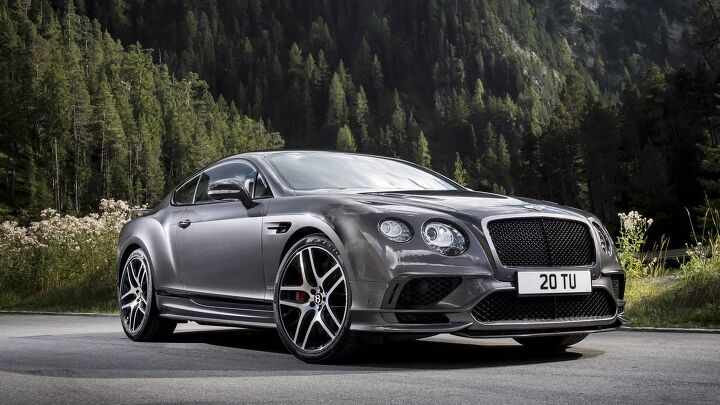
Some 400 dealers and 36,000 employees fall under the association’s purview. While it’s hard to argue against many government-funded social initiatives, dealers don’t see the new taxes panning out. B.C. isn’t a captive market, and its neighboring province, Alberta, only levies a 5 percent tax on vehicle purchases. Sure, Vancouver is overflowing with wealthy people, but having to pay $75,000 in tax on top of the MSRP of a Ferrari or Bentley is no small thing.
Sales of luxury vehicles rose 9 percent in B.C. last year, making up roughly a third of the province’s auto sales. Obviously, a ripe target for lawmakers armed with calculators.
“The automotive sector is incredibly competitive. Where a consumer can go to another jurisdiction to save money, they will,” Qualey said.
At one Vancouver Ferrari-Maserati dealer, general manager Mark Edmonds said he expects would-be buyers will consult their wallets before buying a new vehicle locally.
“It’s a psychological thing for people. [25 percent] is a big number,” he told CBC. “Maybe now they’ll buy a boat instead of a car, or maybe a vacation property. … Then the province will lose out on the sale completely.”
Depending on who you ask, the taxes are either too steep or not high enough. Dealers admit it will be hard for the public to feel sympathetic to the luxury car buyer’s plight — a six-figure car is no one’s idea of a necessity of life. One factor not helping the sympathy is the province’s troubled auto insurer (British Columbians get their coverage from the government) and its projected 1.8 billion-dollar loss this fiscal year.
As more and more British Columbians snap up mega-buck vehicles, the insurer faces an ever-higher number of claims not covered by the owner’s premiums. The province’s budget has to cover any shortfall. If it means avoiding a rate increase, many B.C.ers will sleep just fine knowing well-off drivers are being turned upside down and shaken at the dealer.
That could change if the government doesn’t get the haul it expected.
[Image: Bentley]

More by Steph Willems





Comments
Join the conversation
Time for a bit of levity? Singapore students come to Vancouver for various educational reasons. They ask the parents for money for a car. The parents, being unaware of car costs in Canada say OK but nothing more expensive than a Corolla, or similar. The kids agree. The parents send the money, the kids go out and buy a Nissan GT-R or similar. The price of a Corolla, after taxes, in Singapore is $125K USD.
Some who frequent this site will be delighted to know this luxury car tax has ensnared Tesla.