
What Is Car Spreading And Why Is It Bothering Europeans?


Perhaps you've heard the term "manspreading". It refers to when a man seated on a busy subway car spreads his legs so wide that it makes it difficult to sit next to him. Well, now we have "carspreading", thanks to the BBC.
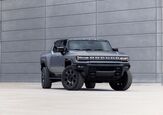
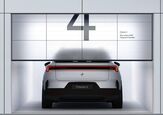
It means exactly what you'd think it means -- vehicles are getting bigger and taking up a lot of space. This is especially an issue in Europe -- many parts of the continent have cities and towns that predate the automobile. Towns with narrow roads, urban density, and not a lot of sprawl.
And while parts of Europe have better public transit systems than we do in most of America, that's not true everywhere in the Old Country.
Of course, we Americans have been dealing with "carspreading" for a long time now -- I still remember when I wrote one of my very first car reviews more than 15 years ago. An editor kindly suggested that I missed an opportunity to make a point about the rising size of vehicles -- and American waistlines -- using this particular sedan, which had grown significantly over the first-gen version.
I've had some version of the "boy, cars are getting bigger now" conversation over the years at many a press event, and I keep thinking about the Accord Coupe I once owned. A new Civic is similar in size.
Back to Europe. Not too long ago, Paris trebled -- that's British for "tripled" -- parking fees for heavy vehicles.
Other places in Europe are looking to do the same -- Cardiff in Wales is looking into charging heftier fees for vehicles over 5,920 pounds.
Europe is experiencing a problem we Yanks are all too familiar with -- just later. And with different infrastructure. The BBC says cars have gone from 5.97 feet wide on average to 6.15 feet wide since 2018. And that the average weight has gone from 3,000 pounds to 3,500 pounds.
The reasons for the growth of vehicles overseas are the same reasons we hear over here -- people want room for passengers and stuff. And some have fallen in love with the rugged off-road styling offered by some large SUV/crossover models.
A British Land Rover owner sounds quite American when he says he needs his SUV to ferry around three kids -- and their stuff.
Or, as an Autocar editor puts it:
Rachel Burgess, editor of Autocar magazine, believes it is their size that makes them so popular. "Everyone I've spoken to over the years who has bought an SUV says they like being higher up, they like better visibility, and they feel safer on motorways and bigger roads.
"It's often better for people with kids to get them in and out of the car with that extra height; and also, for people who are less mobile, it's much easier to get in and out of an SUV than a lower hatchback or saloon."
Sound familiar, American parents?
As in the U.S., SUVs are outselling cars big time in the Old Empire. And not just Britain -- the market share for SUVs across 27 European countries went from around 13 percent in 2011 to 59 percent this year.
So the situation is the same as it is here -- larger vehicles offer more utility, more passenger space, and more cargo space. The higher ride height increases visibility and entry and exit are easier for some folks.
Adding to the issue -- as we all know, automakers tend to make more profit off of SUVs. And, as the Beeb notes, the addition of safety equipment and comfort features, in addition to a desire for more space, has made even small cars bigger. The European Volkswagen Golf is over 10 inches longer than the first-gen car introduced in the 1970s.
Europe has the same right-sizing problem we do -- just the other day I struggled to get a Hyundai Kona test car around an oversized pickup on a narrow Chicago street with cars parked on each side -- but we have more room to spread out, especially outside of our older cities. Europe has a lot less room to work with, generally speaking.
Personally, I understand all sides of the issue. I understand why folks want as much space as possible, though I think some folks buy more than they need. I understand why people like the higher ride height. I understand why people think that if everyone else is buying a big car, they need one, too, for safety in case of a crash.
I also understand that bigger vehicles tend to pollute more, are harder on roads, create or exacerbate crowded conditions in urban centers/centres, and make parking more difficult. And that those issues are a bigger problem in old, densely built cities with narrow roads.
I don't know the solution -- is it regulation, a mindset change among consumers, or something else? A shift to EVs will obviously reduce tailpipe emissions, but EVs are heavy and some are still large dimensionally.
Maybe the answer is to take the subway -- if you can find a seat that isn't being occupied by a manspreader.
[Image: Land Rover]
Become a TTAC insider. Get the latest news, features, TTAC takes, and everything else that gets to the truth about cars first by subscribing to our newsletter.
Tim Healey grew up around the auto-parts business and has always had a love for cars — his parents joke his first word was “‘Vette”. Despite this, he wanted to pursue a career in sports writing but he ended up falling semi-accidentally into the automotive-journalism industry, first at Consumer Guide Automotive and later at Web2Carz.com. He also worked as an industry analyst at Mintel Group and freelanced for About.com, CarFax, Vehix.com, High Gear Media, Torque News, FutureCar.com, Cars.com, among others, and of course Vertical Scope sites such as AutoGuide.com, Off-Road.com, and HybridCars.com. He’s an urbanite and as such, doesn’t need a daily driver, but if he had one, it would be compact, sporty, and have a manual transmission.
More by Tim Healey







Comments
Join the conversation
Many of us remember stuffing ourselves into tiny coupe back seats in the 70s and 80s. It sucked, but it did promote togetherness, that's for sure.
I like Europe. The WIX fuel filter I installed today was manufactured in Bulgaria. TG supports NATO. While the rest of you yammer on. Talk is cheap, isn't it? 😂