
Which EVs Still Qualify for Federal Tax Credits?

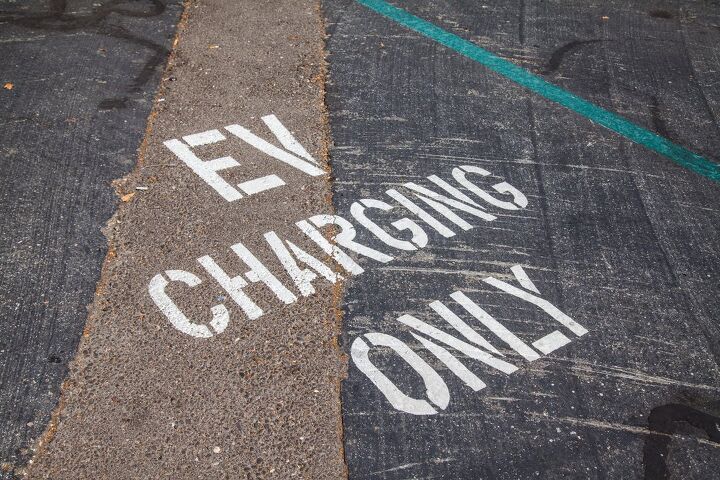
With the guidance having come in on the United States’ updated EV tax credit scheme, outlined in the so-called Inflation Reduction Act, we now have a pretty good idea of which electric vehicles still qualify. Stringent content requirement stipulations have certainly culled the roster, however, and helped explain why the automotive sector didn’t have any issues with the government taking its sweet time in making decisions regarding content quotas.
There are only about a dozen models that qualify for the full $7,500 tax credit after April 18th, with a few more being eligible for a partial credit of $3,750.
Vehicles approved by the Internal Revenue Service (IRS) can be found by going to the fuel-economy offshoot of the Environmental Protection Agency (EPA) website. But it’s kind of a clunky interface so we’re just going to list them here for you.
Starting Tuesday, here are the all-electric and plug-in hybrid (PHEV) models that are eligible to receive the full $7,500 federal credit: Chevrolet Bolt and Bolt EUV (2022-23); Chrysler Pacifica Plug-in Hybrid (2022-23); Ford F-150 Lightning (2022-23); Lincoln Aviator Grand Touring (2022-23); Tesla Model Y Performance (2022); Tesla Model Y (2022-23); Tesla Model 3 Performance (2022-23); Cadillac Lyriq (2023-2024); Chevrolet Blazer (2024); Chevrolet Equinox (2024); Chevrolet Silverado (2024).
And here are the models that managed to qualify for one of the $3,750 credits: Ford Escape PHEV (2022-23); Ford Mustang Mach-E (2022-23); Ford E-Transit (2022-23); Grand Cherokee Plug-in Hybrid 4xe (2022-23); Jeep Wrangler Plug-in Hybrid 4xe (2022-23); Lincoln Corsair Grand Touring (2022-23); Tesla Model 3 Standard Range Rear-Wheel Drive (2022-23).
We recently covered why some models wouldn’t make the cut in our breakdown of why Ford was celebrating how many of its models would still qualify under the updated guidance. But it basically comes down to whether or not they can qualify for the two $3,750 credits.
The first of those is broken down into electrified automobiles that have at least 40 percent of the battery's critical mineral values extracted and/or processed within the U.S. or in a country where the U.S. has a free-trade agreement. Alternatively, the batteries can be produced from materials recycled in North America.
The other $3,750 stems from whether or not at least half the value of the EV's battery components were made (or assembled) inside North America. This was allegedly done to help support localized production after the automotive unions realized electric vehicles meant fewer hands-on assembly lines and the prospect of further labor outsourcing.
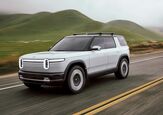
That also means a bunch of foreign-made vehicles no longer qualify. Formerly eligible models from BMW, Audi, Volkswagen, and Volvo have been bumped off the list. Even the humble Nissan Leaf has been removed. Though, perhaps more interesting, is seeing Rivian's electric trucks (the R1S and R1T) losing their eligibility — despite the vehicles themselves being assembled in Illinois.
But there are a few more hoops to jump through if you want the government to offer some cash back on your EV purchase. Eligible vans, sport utility vehicles, and pickup trucks have to come in under $80,000, while other passenger models need to retail below $55,000. Those filing for the credit also need to have a modified adjusted gross income (AGI) below $300,000 for married couples filing jointly, $225,000 for heads of households, and $150,000 for everybody else.
There are other considerations taken into account (kilowatt requirements, weight, etc.) that we don’t need to get into here. But you can find them on the IRS website.
Keep in mind that the stringency of the content requirement rules increases annually. So a vehicle that qualifies through the 2023 model year may not be eligible in 2024. There are even forthcoming provisions that would eliminate credits for vehicles using any battery components stemming from a “foreign entity of concern,” which basically means any country the U.S. government decides it doesn’t like that year.
It’s a very different situation from the 200,000-unit-per-automaker sales quota that has been supplanted. Interestingly, only General Motors and Tesla managed to hit those caps and they’re some of the biggest winners under the new scheme as well.
[Image: Jan Hendrik/Shutterstock]
Become a TTAC insider. Get the latest news, features, TTAC takes, and everything else that gets to the truth about cars first by subscribing to our newsletter.
Consumer advocate tracking industry trends and regulations. Before joining TTAC, Matt spent a decade working for marketing and research firms based in NYC. Clients included several of the world’s largest automakers, global tire brands, and aftermarket part suppliers. Dissatisfied, he pivoted to writing about cars. Since then, he has become an ardent supporter of the right-to-repair movement, been interviewed about the automotive sector by national broadcasts, participated in a few amateur rallying events, and driven more rental cars than anyone ever should. Handy with a wrench, Matt grew up surrounded by Detroit auto workers and learned to drive by twelve. A contrarian, Matt claims to prefer understeer and motorcycles.
More by Matt Posky









Comments
Join the conversation
Do the subsidies get taken out of the kid's pay who are mining the lithium for batteries? How about other slave labor being used to make EVs? Or the environmental impact of these things?
Funny how externalities are rarely discussed by EV advocates.
These people aren't as environmentally conscious as they think they are. The good news is that if they ever decide to be honest about EVs, they could always re-engage in a different cult, say working with pharmaceutical companies or large banks or.... oil companies.
How many buyers get the car and find out at tax time that they dont qualify plus they paid sales tax on the phantom rebate!!