


Stellantis Suggests V8 Return While Promising Revised Business Strategy

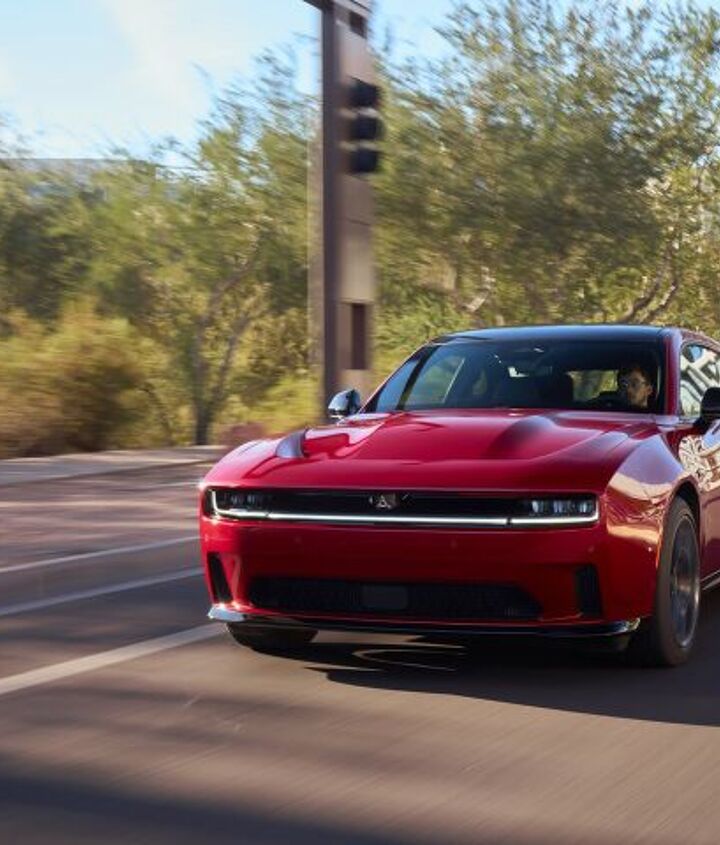
Stellantis is allegedly shifting gears to better cater to the needs of the American market following the departure of Carlos Tavares as its executive officer. The company is signaling it might pull back on all-electric vehicles and may even begin to offer V8 engines again. But there is some conflicting information being presented as the company does what it can to improve public relations.
According to Automotive News, the company is revising plans to make Chrysler and Alfa Romeo all-electric brands by 2028. It has also confirmed that it will be delaying the launch of the electric version of the Ram pickup, likely due to seeing the sales performance of rivals EVs introduced by Ford Motor Co and General Motors. But this really isn’t all that surprising. Most of the industry went from heavily investing into and promoting EVs to walking back product launches due to a lack of demand.
What’s perhaps more interesting is that Stellantis has suggested that it may actually keep the V8 engines leadership was so eager to see replaced by the Hurricane 3.0-liter straight six. The Dodge Durango Hellcat (below) is confirmed as returning (despite previously being confirmed as dead). But The Drive has likewise spoken with Dodge CEO Matt McAlear, who further hinted that larger engines may persist.
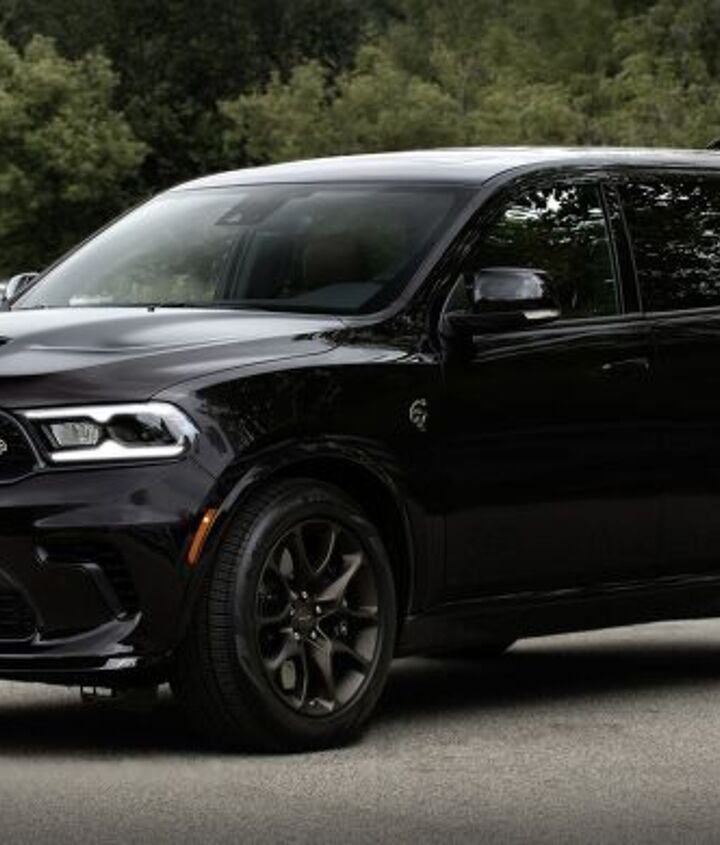
“If you look back across the last generation, you go through the engines between the Charger and the Challenger and the Magnum,” McAlear explained. “We started out with a 3.5L V6, 6.1L V8, then a 3.6L V6, 5.7L V8, 6.4L, 6.2L, 6.2L Demon, 6.2L Redeye, 6.2L Demon 170. You know, how many different powertrains, RWD and AWD, did we have on those engines? [The new Charger] is a multi-energy platform that can accommodate all of that. This is just the first year, and you’ve got four powertrains that outperform every one that they’re replacing, with standard AWD? We’re just getting started. We’re going to have a lot of fun.”
That sounds as though Dodge may eventually field V8 versions of the new Charger. McAlear even suggested that it was possible with a forthcoming SRT model. However, considering the price bump the current model has seen over the previous generation, the assumption is that customers will need to shell out significantly more cash to get eight cylinders than they would have a few years ago. The big question is whether or not this hypothetical trim will be priced above the electrified Dodge Charger Daytona EV — which starts at $62,000.
While the above are clear signals that Stellantis is rethinking how it should handle the American brands, it doesn’t seem to want to abandon everything. The company mentioned needing to make changes in December of 2024 and reiterated those tweaks in a recent press release. But the end result seems to be a smattering of meaningful staffing changes and prompts to reexamine how it handles our corner of the globe, especially in regard to public relations and marketing.
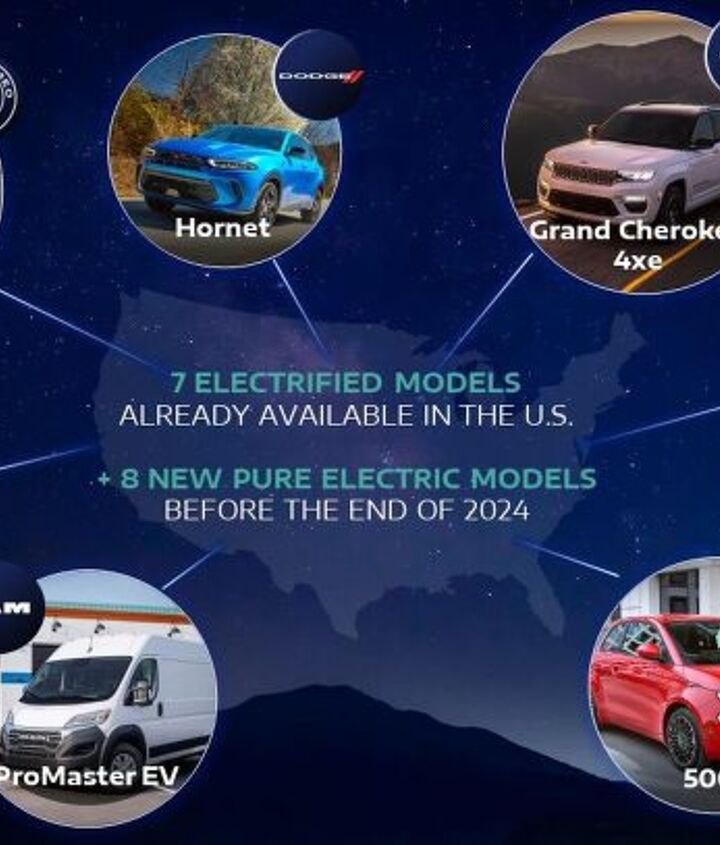
But it is also still committed to its “Dare Forward 2030” campaign which seeks to make Stellantis into a “carbon net zero mobility tech company by 2038.” Unless the definition of carbon neutral changes, which is certainly possible since it’s changed before, that means exclusively fielding all-electric vehicles (à la the slide from 2024 pictured below). However, one could argue that no company operating industrial facilities at the scale of automakers could ever be considered “carbon neutral.”
Some of this feels like lip service on the part of Stellantis, albeit as a direct result of listening to consumer feedback. But it’s easy to see why Stellantis would feel compelled to make these kinds of statements.
Despite seeing relatively healthy profitability in 2023, Stellantis sales declined by 15 percent in 2024 with the quarterly trends suggesting that this year could be even worse. The automaker has received a lot of bad publicity in our market, most of it revolving around its handling of the American brands obtained when PSA Group purchased Fiat Chrysler Automobiles (FCA) in 2021.
Former Chrysler brands hadn’t seen much development cash and were fielding a lot of holdover products as a result. Most just seemed to be waiting around until they were bought out. Ironically, this resulted in those brands selling models that featured larger powertrains and less gimmicky tech inclusions than their rivals — something that a meaningful subset of car buyers want.
Another nice byproduct of retaining older designs is that the relevant models tend to see their reliability improve and MSRPs go down. That’s not to suggest that brands like Dodge were offering ultra-dependable automobiles. But it was offering competitively priced V6 and V8-equipped products in body styles that were becoming harder to find elsewhere.
This changed when Stellantis was formed. CEO Carlos Tavares immediately suggested giving the American brands a few years in which to prove themselves while European leadership began brainstorming on how to electrify Chrysler and modernize the other marquees. They effectively wanted to make the FCA nameplates more like every other automotive brand in existence, which hasn’t gone over terribly well with die-hard Mopar fans.

They liked that the former Chrysler brands weren’t doing what Ford and GM were doing. So, by embracing industry trends, Stellantis may have accidentally harmed its U.S. prospects.
The Ram 1500 became another full-size American pickup with its V8 options dwindling. The Dodge Charger became an all-electric sedan (for now, six-cylinder ICE models are on the way) producing fake exhaust noises, with the promise of it eventually getting the same 3.0-liter straight six (pictured above) that was cropping up wherever V8s were disappearing. Everything that made the former-FCA brands unique was being stripped away while Stellantis continued to try and pivot upmarket with vehicles like the Jeep Grand Wagoneer (below) few Americans can actually afford.
Meanwhile, badge-engineered economy offerings, like the Dodge Horner (aka Alfa Romeo Tonale), haven’t been selling and the company has started discussing the value of “software-driven” vehicles. Like most major automakers, it wants to leverage connectivity to harvest customer data for profit, launch a slew of car-related apps, and retain as much control over the product as possible via digital gatekeeping.
Some of this wasn’t Stellantis’ fault. Those FCA brands hadn’t seen much attention in terms of development and there was a deficit of new products (particularly at Chrysler and Dodge). But their solution was to simply leverage what Stellantis was already doing in Europe and try to export it to North America — a tactic that hasn’t historically worked out terribly well for manufacturers.
Despite Stellantis’ Board of Directors (chaired by John Elkann) undoubtedly having been influential in terms of the big decisions, Tavares took the fall for championing those ideas and was removed as CEO. Since then, the company has been focusing on improving its public image by rehiring Tim Kuniskis to head the Ram brand because he is generally well-liked and was so successful overseeing American brands in the past.

Suggesting that V8s could come back has been another avenue for redemption. After decades of marketing these brands as unapologetically American, pivoting away from the market’s favored engine hasn’t garnered a lot of praise. Automakers are now starting to realize this, which is why we recently saw BMW reassuring the public that it would likewise continue offering V8 motors in North America.
But this may not mean they’ll be readily available. BMW seems like it’ll probably make most V8 options hybrids and make them exclusive to the highest performance trims. It has already been doing that. Stellantis may end up doing the same, allowing itself to claim that it still builds V8 engines while selling them at a premium to a slim minority of clients — though that’s totally speculative at this juncture and based upon what we’ve seen other automakers do in recent years.
We cannot predict the future of Stellantis. The company is obviously trying to earn back some amount of goodwill right now. But it’s hard to assume that will turn into products that resonate with the public when the whole automotive sector seems to have bet everything on electrification and maximizing per-vehicle profit margins. As much as I want to believe every brand (including those owned by Stellantis) will offer a diverse array of affordable vehicles, their priorities still appear to be deeply entrenched in profiting off software, using environmental regulations to leverage government subsidization, and seeing returns on their investments into electrification.
Stellantis, like most automakers, continues to say it’s reimagining itself as a tech company. But the industry seems to have forgotten that most people who aren’t investors aren’t terribly fond of those. What the market needs now is a business that wants to build good cars for a reasonable price, not shifting platitudes about how the future of motoring will be totally different from what we have today because of some allegedly novel code of business ethics. We’ve seen the changes made thus far and consumers are becoming increasingly disenfranchised with the results.
Car companies can promise that they’ll bring back the V8 till their executives are blue in the face. But the iconically American motor being pulled from so many models is really more of a symbol of what customers see as wrong with the broader industry right now. Consumers can obviously tell that they’re getting less value for the money these days. Mechanical hardware is being downgraded while the implementation other technologies (some of which are outright understandable or tantamount to spyware) has become the industry’s main concern. That’s arguably what Stellantis and others need to address. But, since they’ve based their entire business model on doing the inverse as "carbon neutral, mobility tech companies," it’s hard to imagine that’ll be the overriding plan.

[Images: Stellantis]
Become a TTAC insider. Get the latest news, features, TTAC takes, and everything else that gets to the truth about cars first by subscribing to our newsletter.
Consumer advocate tracking industry trends and regulations. Before joining TTAC, Matt spent a decade working for marketing and research firms based in NYC. Clients included several of the world’s largest automakers, global tire brands, and aftermarket part suppliers. Dissatisfied, he pivoted to writing about cars. Since then, he has become an ardent supporter of the right-to-repair movement, been interviewed about the automotive sector by national broadcasts, participated in a few amateur rallying events, and driven more rental cars than anyone ever should. Handy with a wrench, Matt grew up surrounded by Detroit auto workers and learned to drive by twelve. A contrarian, Matt claims to prefer understeer and motorcycles.
More by Matt Posky











Comments
Join the conversation
Stellantis has made so many product blunders with it’s US brands I’ve lost track. And it’s not just one brand, but all of them. They have dug themselves into a deep hole and right now they don’t have much of a way out.
I owned two Jeep Grand Cherokee’s and l loved the interior and the the designed and performances of both of them. The 2019 and the 2023 . I don’t think much need to be changed in the interior of the Grand Cherokee just the softness of the set’s , the exterior l think needs some updating. My thoughts are to make a bold more luxurious grill . The grill could use a more defined look such as more larger slimmer look . Like thinner and larger 7 post which defines the jeep with the Jeep symbol in the middle .