
Japanese Automakers Forming Dueling EV and Software Alliances


Honda and Nissan are reportedly interested in formally creating the EV and software alliance the duo hinted at earlier this year, with Mitsubishi apparently asking if it can come along for the ride.
Nissan and Honda signed a memorandum of understanding in March that confirmed the companies were actively considering joining forces on the development of electric vehicles and automotive software. That partnership now seems closer than ever, with sources claiming that Mitsubishi (34 percent of which is owned by Nissan) may also be getting in on the action.
Nikkei Asia has reported that that the partnership would consolidate the domestic market into two forces (the aforementioned Honda-Nissan alliance against Toyota Motor Corp and its partners). While that does exclude a few smaller brands, the above companies do indeed represent the vast majority of Japanese automobiles produced in a given year.
From Nikkei Asia:
Mitsubishi Motors signed a nondisclosure agreement with Honda and Nissan and began discussions. Honda and Nissan are the second- and third-largest automakers in Japan, respectively, with global sales of 4.1 million and 3.44 million units in the fiscal year ending March 2024. When Mitsubishi's 810,000 units are added, the group will have sales of 8.35 million vehicles.
Toyota, the largest automaker, has been making alliances in Japan. It has formed a tie-up with Daihatsu, Suzuki, Subaru, Mazda and Hino Motors, bringing the five automakers' combined sales volume to 16 million units.
Mitsubishi will work with Honda and Nissan to finalize specific details of the alliance. The three companies intend to standardize the in-vehicle software that controls the vehicle. Nissan and Honda are expected to jointly develop the basic software, and will discuss its use in Mitsubishi vehicles.
In-vehicle software can be updated using a bidirectional communication function between the vehicle and the outside world to improve performance even after the vehicle is sold. This will affect the competitiveness of next-generation vehicles, but it will cost an enormous amount of money to develop. The company will introduce high-performance technology while keeping costs down and redirecting management resources to other electrification-related fields.
With Japanese brands being generally hesitant to pivot their lineups toward all-electric vehicles, sharing the cost of development may make things go more smoothly for everyone involved. It likewise allows certain brands to flex their expertise in select fields to the advantage of all others. That’s the theory, anyway.
But the above only works if things go well. Were any one of the businesses to botch their part of the arrangement, the rest would suffer badly due to all products being dependent upon the same standardized software and presumably sharing numerous physical components. Still, the industry seems largely convinced that software-defined vehicles will be the evolutionary path of the automobile.

These so-called “next-generation” vehicles are effectively smartphones on wheels. Having seen how cell phone and tech companies have changed their business model into leveraging connectivity and software as a way of keeping customers locked into their corporate ecosystems, automakers are keen to follow suit. This is actually one of the main reasons the industry went so gaga over all-electric vehicles a decade ago. In addition to allowing brands to publicly signal that they’re offering sustainable vehicles, which is debatable, EVs are harder for independent repair shops and at-home mechanics to service themselves. They’re also easier to modify remotely via over-the-air updates.
But that’s becoming generally true of all vehicles as they’ve become more computerized. Software-defined vehicles certainly don’t need to be fully electric. They only need to have the brunt of their features and functions controlled by software that can be altered by the manufacturer via their wireless internet connection. While this does result in the ability for the factory to modify vehicles remotely by adding new features, it likewise gives the manufacturer unprecedented levels of control over the vehicle — exacerbating privacy and ownership concerns that your author believes have already crossed an ethical line in the sand.
Software-defined vehicles aren’t inherently bad. But they’re being used by the industry to bolster revenue streams many would argue are greedy at best and immoral at worst.
However, there are other reasons Japanese brands are showing more of a willingness to build purely plug-in vehicles. International pressure stemming from Western governments has grown so strong in recent years that Japanese automakers were already having to comply with their regulatory requirements to sell models globally. That influence has now crept into the Japanese government which is telling automakers to pursue all avenues of alternative-energy vehicles, including BEVs.
Western and Chinese brands have likewise spent vast sums of money to develop all-electric vehicles in anticipation of an industry-wide product shift, whereas Japanese manufacturers have focused more on hybrid vehicles and hydrogen power. Assuming that shift does take place and planned combustion bans go through, Japanese companies could find themselves at a disadvantage on the global market.
But it’s doubtful that either the Honda-Nissan or Toyota-led alliances will result in Japan swapping to battery driven vehicles overnight. At most, we can expect the resulting products to be shared between the brands and try to plug any holes they might have in their respective lineups — insofar as electrification is concerned. We’ve also seen other EV alliances (e.g. Ford and Volkswagen) being scaled back or outright eliminated in recent years. Your author would imagine that the software aspect of this deal will probably persist regardless of whatever happens over the next few years, while the electrification angle could be determined by geopolitical circumstances.

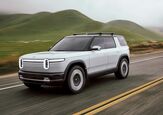
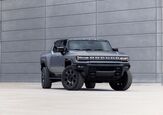
[Images: Honda; Nissan]
Become a TTAC insider. Get the latest news, features, TTAC takes, and everything else that gets to the truth about cars first by subscribing to our newsletter.
Consumer advocate tracking industry trends and regulations. Before joining TTAC, Matt spent a decade working for marketing and research firms based in NYC. Clients included several of the world’s largest automakers, global tire brands, and aftermarket part suppliers. Dissatisfied, he pivoted to writing about cars. Since then, he has become an ardent supporter of the right-to-repair movement, been interviewed about the automotive sector by national broadcasts, participated in a few amateur rallying events, and driven more rental cars than anyone ever should. Handy with a wrench, Matt grew up surrounded by Detroit auto workers and learned to drive by twelve. A contrarian, Matt claims to prefer understeer and motorcycles.
More by Matt Posky








Comments
Join the conversation
And if you watched the initial press conference between Nissan and Honda a few months back, you could totally tell which of the two were the reluctant partner doing this because of an outside pressure and which one was totally gung-ho. It was such an awkward press conference.
Given Honda's history with domestic partnerships, I totally expect this to break down. They usually do better with overseas partnerships like GM and BLMC. And even within the domestics the corporate culture of Honda and Nissan/Mitsubishi are the polar opposite so it wouldn't be too long before they start killing each other.
Maybe this is Mitsubishi's road to redemption - become an EV/hybrid brand. I