
Rare Rides Icons: The Jeep Wagoneer, The First Luxury SUV Ever (Part XII)

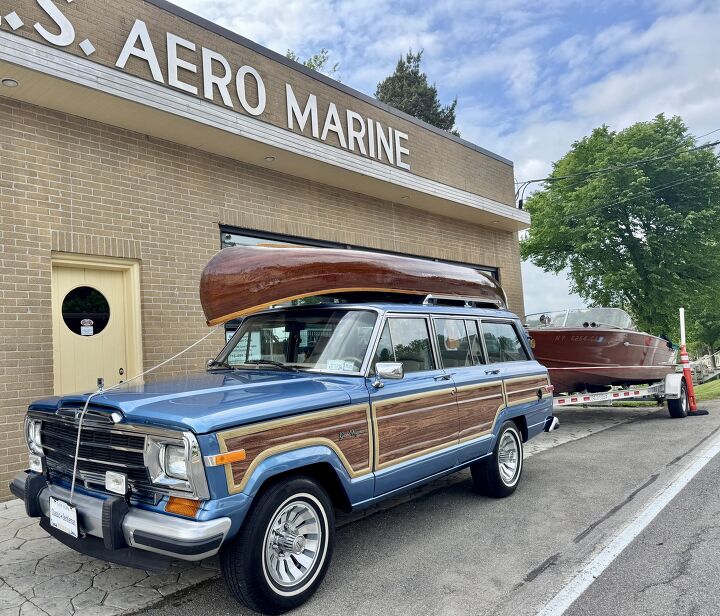
We return to the Jeep Wagoneer in 1987 and its 25th anniversary. As the Wagoneer remained on sale in its dated but popular guise, parent company AMC was at death’s door. Under ownership by Renault, AMC was in massive debt as the Renault-AMC lineup of cars proved unsuccessful. Chrysler stepped in during March to purchase AMC-Jeep for a huge sum, assuming all of AMC’s debt from Renault. On June 20, 1987 the American Motors Corp. ceased to exist, and was renamed to Jeep Eagle Corp.
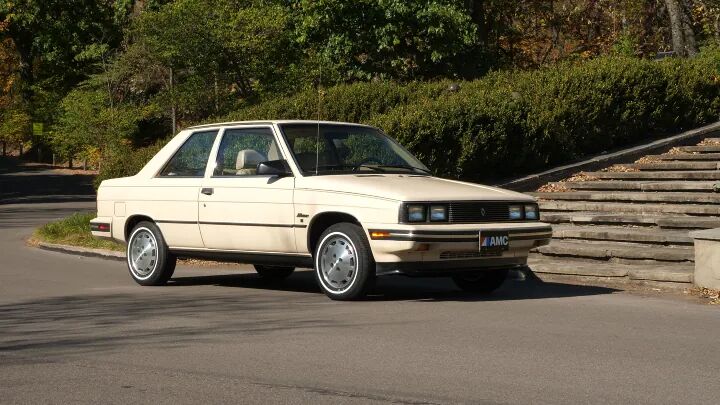
Jeep was the reason Chrysler was interested in the AMC acquisition (it cared very little about Eagle), and the automaker immediately redirected Jeep product development. Relevant to our subject, there was an important project underway at Jeep since 1983. It was an exciting new unibody SUV!
The project began shortly before the XJ Cherokee entered production, and was planned as the second generation Cherokee. It was supposed to be in production by the late Eighties, and would have kept the Cherokee lineup fresh. That was important as the XJ proved immensely popular from its inception.
However, Chrysler had other plans for the “XJC Project” as AMC called it. When it took over in 1987, the project stalled. Chrysler focused the vast majority of its product money on a hugely important project: the new generation of minivans. The second-gen Caravan and its siblings were to debut in 1991, and replace the first generation vans in on sale from 1984.
A further evolution of the K-car platform, the AS platform vans took highest priority. To the chagrin of the remaining AMC folks at Chrysler, the XJC SUV was delayed for several years. During that time, the project would move upmarket and diverge from its original intent. While the XJ Cherokee remained on sale relatively unchanged, the XJC project became the larger, entirely separate ZJ Grand Cherokee that debuted for the 1993 model year.
Another massive SUV success, the Grand Cherokee proved to be the right direction for the project and made a memorable splash when Bob Lutz drove it through a glass wall during the Detroit Auto Show. The ZJ also became a Wagoneer, but we’ll return to that topic in a later installment.
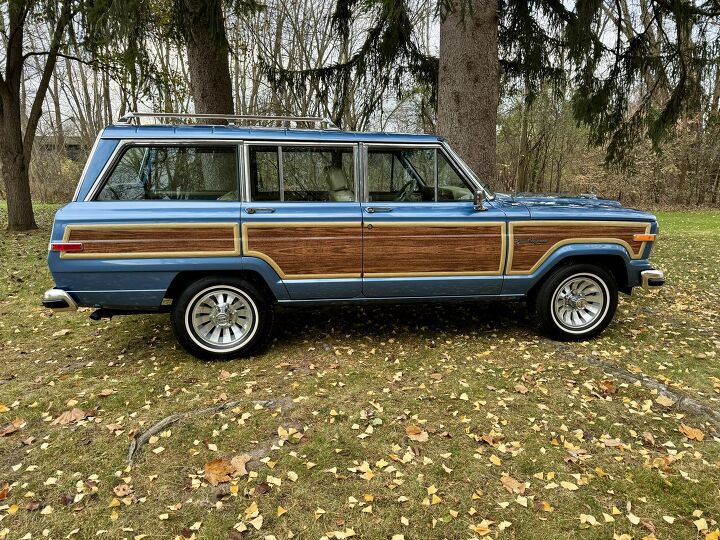
Under Chrysler ownership the Wagoneer saw some select improvements. Despite the changing market around it, Wagoneer sales remained steady each year. The 1987 and 1988 models were largely carrovers, as the final AMC iteration of the model. From 1989 there were several Chrysler-funded updates.
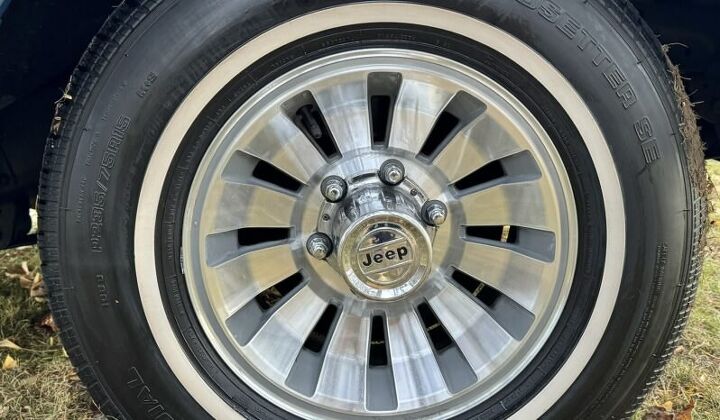
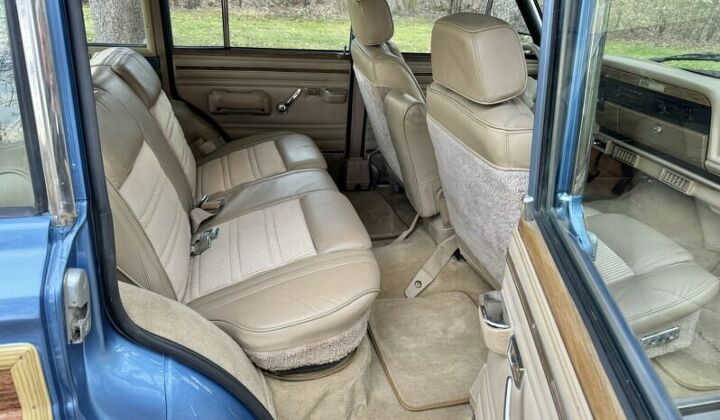
The exterior of the Grand Wagoneer received higher quality and better looking wood paneling in 1989. There were also revisions to the turbine alloy wheels, which swapped their previous gold tone within the wheel spokes for gray. The body was improved with a more advanced primer to prevent rust. Paint finishes were also upgraded to two-stage to include a clearcoat.
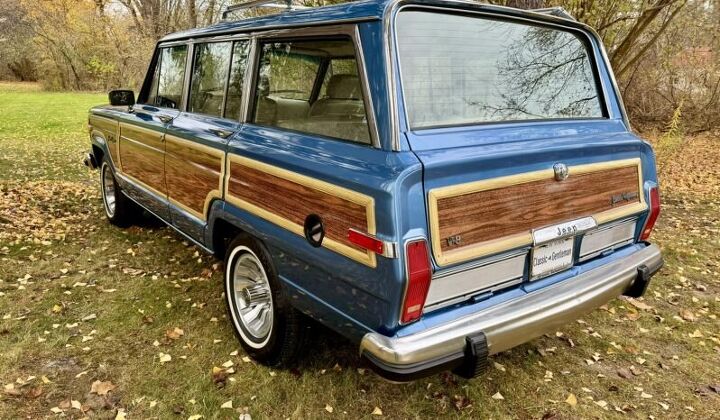
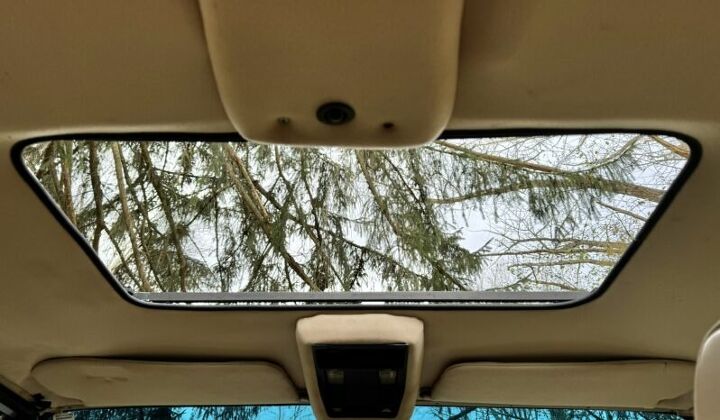
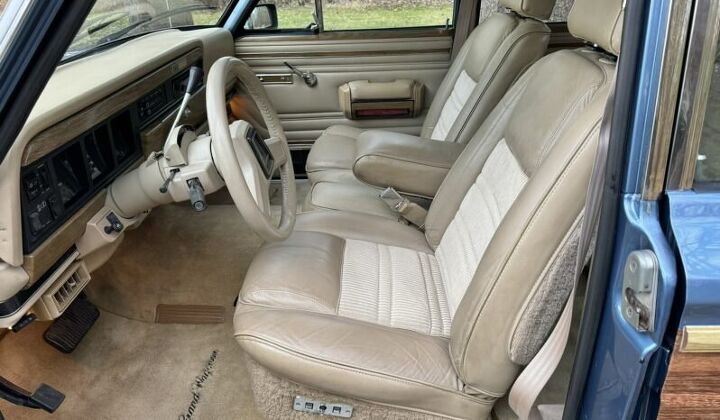
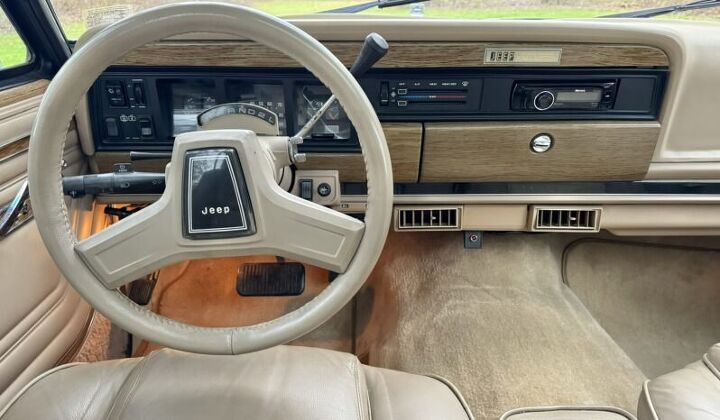
Chrysler also replaced the junky AMC AC compressor with one of their own. They added a feature AMC skipped: an optional rear wiper. Inside, there was better fit and finish via tighter controls at the factory, and an overhead console from the Dodge Caravan. Familiar to anyone who rode in a Chrysler product at the time, the console had some map lights, sunglasses storage, and a temperature indicator and compass.
Chrysler also integrated their keyless entry system into the Grand Wagoneer in 1989, a feature that was ever-closer to a requirement in a luxury vehicle of the time. Up front, the same carbureted AMC V8 powered the Grand Wagoneer through to the end, part of the quickly shrinking group of passenger vehicles with carburetors.
For the final three years of production there were new paint colors on offer, as Chrysler added in paint options from its existing other models. The darker tan interior color called “honey” that AMC introduced in 1987 was replaced in 1989 by a color called sand. The most exclusive paint color was hunter green metallic, a shade that was about to take over the United States for several years.
Available in 1991 only, the metallic green was the color that saw the Grand Wagoneer out of production. Sales took a tumble in 1990 when there was an 11 percent increase in fuel prices (in 2026 we’re at 30 percent from a year ago). Still, over 6,000 buyers purchased the 28-year-old model that managed 11 mpg. But it was regulation that ultimately killed the Grand Wagoneer.
There were updates to federal auto safety standards (FMVSS) on the way, like airbags, three-point belts on outboard seats, and side-impact crash testing. The Grand Wagoneer was not in compliance with any of it. The platform was so old it would have required a complete reengineering, and it simply wasn’t worth the investment required.
And so on June 21, 1991 when your author was probably coloring, the last SJ Grand Wagoneer was produced. It was metallic green, and lived in the Walter P. Chrysler Museum until its 2024 closure. All purchasers of the final run of the Grand Wagoneer could option a gold badge on the dash that said “Final Edition Jeep Grand Wagoneer.”
Though the XJ Cherokee’s unsuccessful Wagoneer trim (Wagoneer Limited) was cancelled after 1990, Jeep would try and rekindle the Wagoneer flame just a couple years after the Grand Wagoneer’s demise. In our next installment we’ll review the next time wood paneling was applied to a Jeep, along with pillow tufted Nineties glory.
[Images: seller, The Last Independent Automaker]
Become a TTAC insider. Get the latest news, features, TTAC takes, and everything else that gets to the truth about cars first by subscribing to our newsletter.
Interested in lots of cars and their various historical contexts. Started writing articles for TTAC in late 2016, when my first posts were QOTDs. From there I started a few new series like Rare Rides, Buy/Drive/Burn, Abandoned History, and most recently Rare Rides Icons. Operating from a home base in Cincinnati, Ohio, a relative auto journalist dead zone. Many of my articles are prompted by something I'll see on social media that sparks my interest and causes me to research. Finding articles and information from the early days of the internet and beyond that covers the little details lost to time: trim packages, color and wheel choices, interior fabrics. Beyond those, I'm fascinated by automotive industry experiments, both failures and successes. Lately I've taken an interest in AI, and generating "what if" type images for car models long dead. Reincarnating a modern Toyota Paseo, Lincoln Mark IX, or Isuzu Trooper through a text prompt is fun. Fun to post them on Twitter too, and watch people overreact. To that end, the social media I use most is Twitter, @CoreyLewis86. I also contribute pieces for Forbes Wheels and Forbes Home.
More by Corey Lewis






Comments
Join the conversation
Love that canoe!
Or is it a "kah-no-way"? I don't know; I'm pretty peasanty and old. Maybe you don't remember those '80s cologne ads.
Were the pictured vehicle mine, I would keep one box each of sterile shoe covers and exam gloves (loose!) beneath that center arm rest, donning each ere I swung legs inside.
Besmirching that interior would unzip my DNA.