

Rare Rides Icons: In Memoriam, The Chrysler LX Platform (Part II)

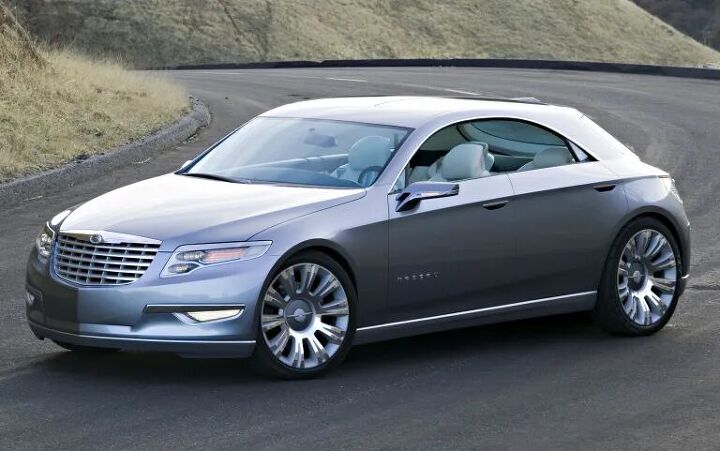
As the Chrysler LX platform heads toward its demise after the 2023 model year, Rare Rides Icons is making its way through the various large-ish vehicles that used the platform these past two decades. The starting point for this series are the original LX concepts that never made production. We covered the Airflite (basically a Crossfire hardtop hatchback) last week. And today we’ll take a look at the larger, more luxurious, and more obscure Nassau concept (of which there were two).
Allow me to explain. Though the show car in question today was displayed in 2007, it was actually Chrysler’s third usage of Nassau. Chrysler’s first use of the name was in the Fifties when it appeared as a trim on the coupe version of the full-size Windsor. Largely forgotten, the Nassau name was only used on the 1956 and 1957 Windsor.
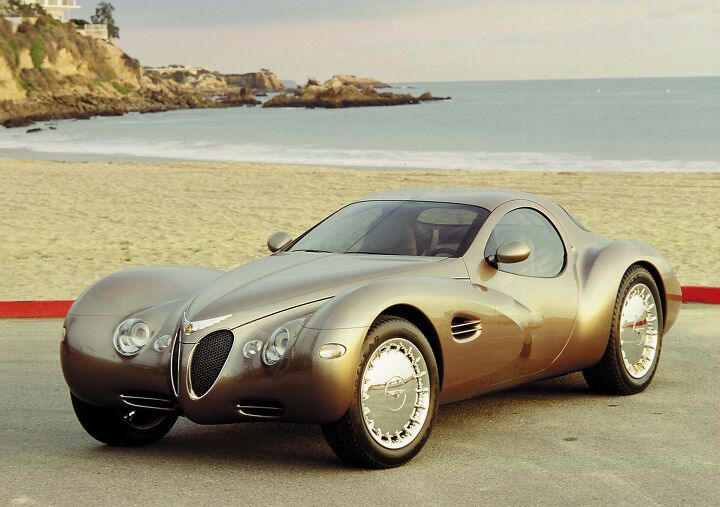
The name was technically used for a concept car in 2000, too. Chrysler asked designer Robbert Hubbach to draw up a four-door in the late Nineties. His history with the company included the stunning 1995 Chrysler Atlantic concept, the 1995 Dodge Copperhead concept, and the styling edits for the production 1996 Viper GTS and 1997 Viper GTS/R.
Hubbach worked up a large, blocky sedan with tiny side mirrors and tail lamps that arced over the rear fender. One glance and it’s obvious this was the source material for the Chrysler 300 of 2005, a design for which Ralph Gilles is credited. For whatever reason, the Nassau design was never unveiled to the public. There are few details about this Nassau and the platform underneath it.
The original Nassau concept was ushered to the Walter P. Chrysler museum in Detroit, and only a handful of pictures of it exist. It remained there until the museum’s closure in 2016 and is in theory still stored by Chrysler today. That leads us to the Nassau that was actually shown to the public, which had much less actual product impact in the end.
Nassau the Second appeared in early 2007 after the LX platform cars were already on sale; the 300, in particular, wearing much of the (undisclosed) first Nassau’s styling. Chrysler announced late in 2006 that the new Nassau design would debut at the 2007 NAIAS in Detroit. Much like the Airflite of a few years prior, the Nassau was billed as a four-door coupe.
And once again it wasn’t actually a coupe, as Chrysler seemed to struggle with the definition. The Airflite was a hatchback, and the Nassau was another hatchback that the internet fancily branded as a shooting brake. However, with its small cargo area and four doors, it didn’t qualify for shooting-brake duty either.
Chrysler opted once more for a pillarless hardtop design, this time on a much larger scale than the Airflite. The Nassau had a face familiar to Chrysler fans at the time, with an egg crate grille that was pulled taut and less square than the company’s current product. The Nassau came to a point in the middle and then continued with an edgy design through its side profile.
A strong character line started aft of the front wheel and continued through to the rear. Nassau’s body had minimal chrome trim, and let the angles do most of the talking. There was contrast color plastic on the rocker panels and lower valances, and NASSAU block lettering on the doors.
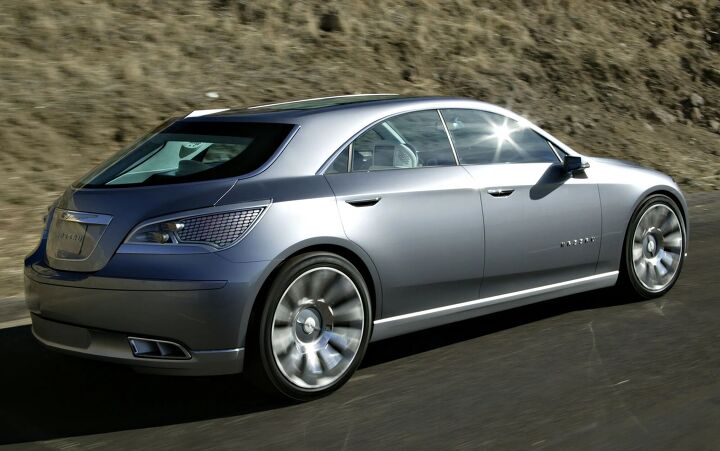
With a relaxed A-pillar and an upright C-pillar, the Nassau looked suitably sporty, though its scale and trim looked more luxury cruiser. The character line turned inward after the B-pillar and cut down and around the large rear LED lamps (with clear Altezza-style clusters). Mirroring the tailgate design on the Airflight, the Nassau created a narrow aperture for cargo.
Like the front end, the rear came to a point. Sporty quad exhaust outlets were integrated nicely into the contrasting lower valance. The pointy front and rear ends and the tail lamp treatment in particular put your author in mind of the Saturn (Opel) Astra hatchback that would appear in 2008.

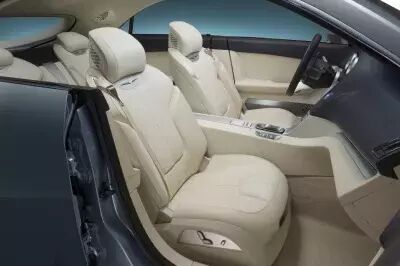
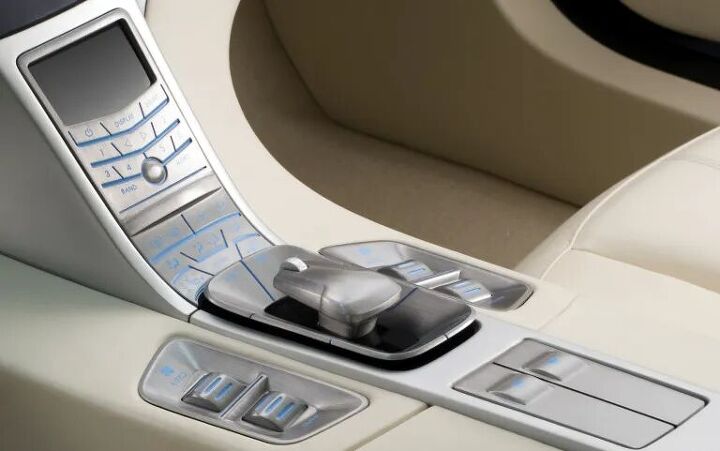
Inside the Nassau was an upscale cabin colored in cream and black, with simple controls that were future-oriented. The dashboard was of a cockpit style and divided the passenger area with a high console. Within it were cellphone-like center stack controls, complete with toggle switches.
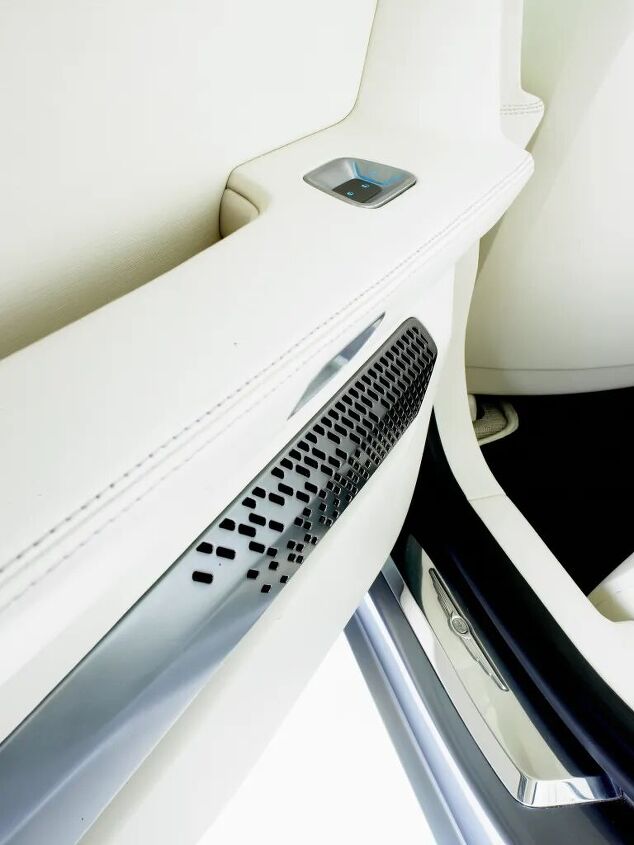
Nassau was a dedicated four-seat vehicle, as the high center console separated rear seat passengers as well. Plenty of stitched leather, satin finish metal materials, and speaker grilles with a digital pattern kept the Nassau from aging poorly: Most of it looks just fine today.
Chrysler resisted a flight of fancy interior like on the Airflite, and interior designer Ben Chang sought to mimic how well cell phones and MP3 players worked with each other at the time (ha). “We strived to achieve a seamless interface between your car and the rest of your electronic world.” It was smart thinking ahead in a pre-smartphone timeline.
Unlike the Airflite, Nassau rode on a standard 120-inch LX wheelbase from the 300. At 196.1 inches long, the concept was about an inch shorter than a 300 sedan. The Nassau was just slightly wider than the 300 at 74.2 inches (versus 74.1” on 300).
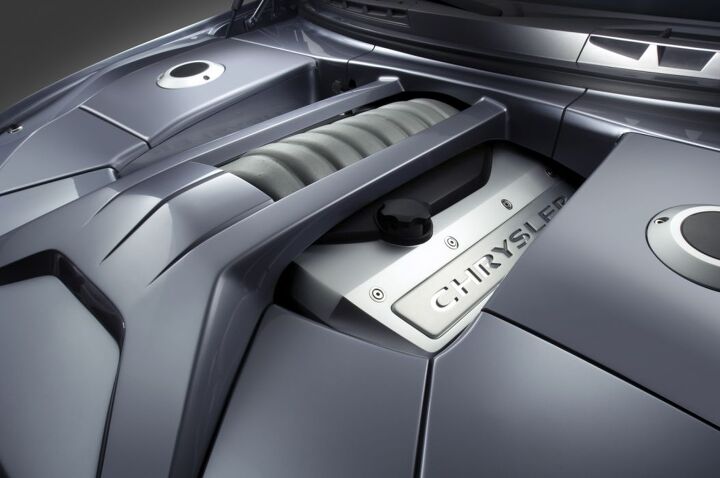
With its cab-rearward design, the Nassau looked longer and larger than the 300 and appeared to dedicate more space to fender length and less to passengers and cargo. Underhood was a 6.1-liter Hemi V8 (425 horsepower), the ESF version. Taken straight from the 300 and paired to its five-speed auto, the Nassau promised brisk performance.
Much like the Airflite debut, when the Nassau appeared auto journalists proclaimed it was likely a preview of the next generation 300. The 300 was due for a refresh circa 2008, and most expected Chrysler to pursue a big new styling direction soon after. Exterior designer Alan Barrington called the Nassau, “a more emotional and artistic articulation of what it means to be a Chrysler.”
And said artistic expression was near production ready, and drivable when it debuted at NAIAS. Chrysler let journalists drive it, and impressions were generally good. The Nassau conveyed luxury better than the 300 and was wafty and quiet. The early 300 also had a pretty garbage interior, which was not mirrored in the Nassau.
But of course, Nassau wasn’t to be. Unfortunately for an expensive new luxury project, Nassau was timed exactly to the 2007-2008 financial crisis that turned into the Great Recession. Chrysler reorganized itself in 2009 and received an $8 billion bailout package from the federal government. The 300 continued on to its second generation in 2010 as Chrysler’s only large sedan and looked much the same as it did in 2005. Nassau was never mentioned again, and few remembered it.
Speaking of the 300 and moving on, that’s where we’ll pick up next time. The big, blocky 300 that debuted in 2005 as the first production LX platform product was one of the most important things Chrysler had introduced in some time. We need to learn all about it!
[Images: Chrysler]
Become a TTAC insider. Get the latest news, features, TTAC takes, and everything else that gets to The Truth About Cars first by subscribing to our newsletter.
Interested in lots of cars and their various historical contexts. Started writing articles for TTAC in late 2016, when my first posts were QOTDs. From there I started a few new series like Rare Rides, Buy/Drive/Burn, Abandoned History, and most recently Rare Rides Icons. Operating from a home base in Cincinnati, Ohio, a relative auto journalist dead zone. Many of my articles are prompted by something I'll see on social media that sparks my interest and causes me to research. Finding articles and information from the early days of the internet and beyond that covers the little details lost to time: trim packages, color and wheel choices, interior fabrics. Beyond those, I'm fascinated by automotive industry experiments, both failures and successes. Lately I've taken an interest in AI, and generating "what if" type images for car models long dead. Reincarnating a modern Toyota Paseo, Lincoln Mark IX, or Isuzu Trooper through a text prompt is fun. Fun to post them on Twitter too, and watch people overreact. To that end, the social media I use most is Twitter, @CoreyLewis86. I also contribute pieces for Forbes Wheels and Forbes Home.
More by Corey Lewis









Comments
Join the conversation
Just think if there was no 2008 Recession and no Fiat takeover due to Chrysler's bankruptcy what Chrysler could have done. Not saying that I would buy any of these concepts but it is obvious that Chrysler did not lose all their good designers despite their Mercedes merger and then later ownership by Cerberus Capital Management. Maybe there is just a little bit of hope under Stellantis that some of Chrysler will be allowed to design and produce new vehicles that will excite buyers and become decent sellers. Dodge even though the Challenger and Charger are dated still manage to keep those vehicles relevant and Jeep and Ram seem to be doing well.
Ralph Gilles was one of those "one hit wonder" designers that was saved by Freeman Thomas. Brian Nesbitt and J. Mays were among the others
Notice how neither Gilles or Nesbitt have done ANYTHING since their "hit"