

Rare Rides Icons: In Memoriam, The Chrysler LX Platform (Part I)


Big change is in the air at Chrysler and company these days, as the rear-drive LX platform heads off into the sunset. With a longevity of two decades - far beyond the reach of the majority of current platforms - it seems fitting to eulogize the LX at this juncture. The end of the LX represents more than just the end of the rear-drive internal combustion vehicle at Chrysler.
It’s also the end of two gasoline-powered Dodge muscle cars, the Charger and Challenger (only the Charger returns as an EV). The LX is also the basis of the last two remaining full-size American sedans: Charger and 300C. In 2023 all the last LX-based vehicles will roll off the line, wearing their various gaudy special edition gingerbread. Before that time comes, we should consider all the cars that brought us to this point.
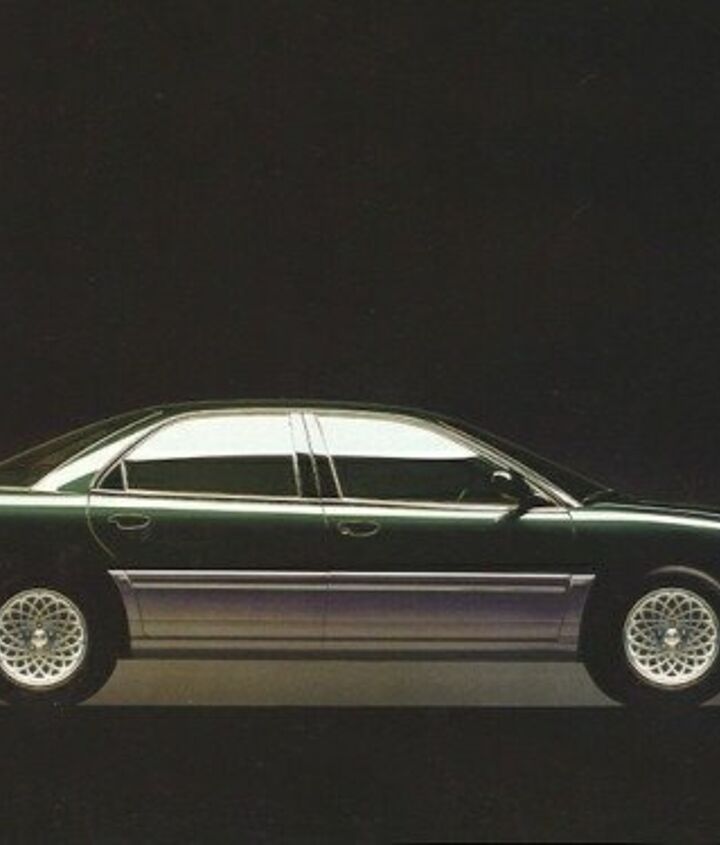
The LX was the immediate replacement for Chrysler’s successful LH platform. When it debuted in 1993 the Chrysler, Dodge, and Eagle full-size LH sedans reflected innovative cab-forward styling. The new design direction maximized space efficiency and made Chrysler’s sedans look newer than what everyone else offered at the time.
LH was benchmarked on the theoretically excellent but utterly failed Eagle Premier, the large American sedan that was a re-engineered version of the Renault 25. Through the LH’s two distinct generations, 1993 to 1997 and 1998 to 2004, the platform was used on 9 different sedans. It successfully pulled Chrysler from the muck that was the long, rattly, painful end to K-car everything.
But by the end of the LH cars, they’d developed a reputation for less than precise build quality, lackluster longevity, and looked a bit long in the tooth. Additionally, some cars equipped with the 2.7-liter EER V6 had big problems with oil sludge and timing chain tensioner failure. Aside from those issues, the luxury-oriented LH models (Concorde, LHS) sold to the sort of aging brougham customer who was at the conclusion of their driving days in the early 2000s (Intrepid and 300M had more youthful appeal). Time for a new direction.
All five LH-based nameplates were killed off, in favor of two new four-doors for 2005: Dodge Magnum and Chrysler 300. It had been a long time since Chrysler produced a rear-drive sedan, and their last in 1989 was the awkwardly roofed Chrysler Fifth Avenue. It was even longer since they’d made a rear-drive wagon like the Magnum.
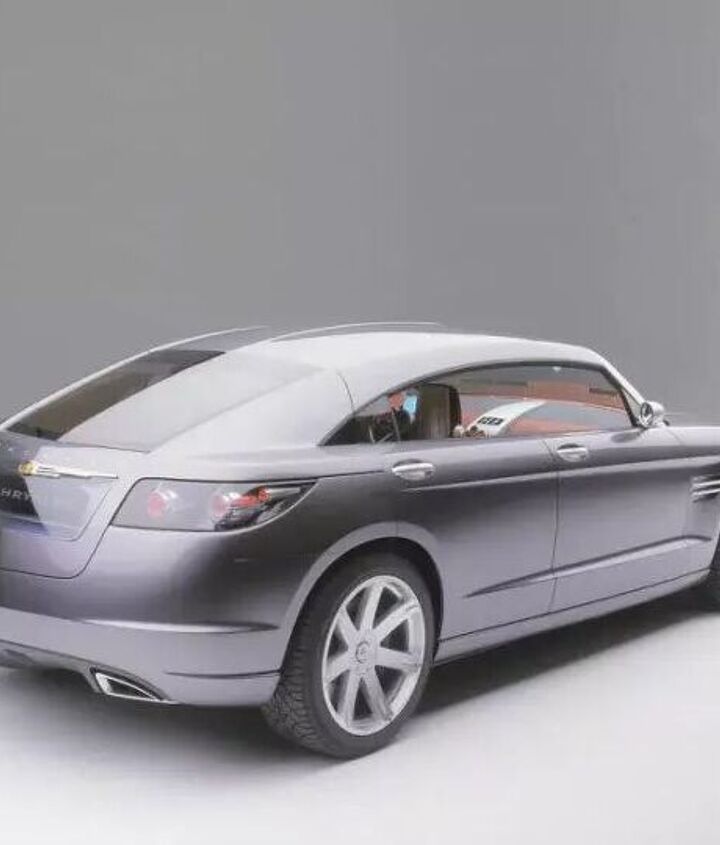
The aim was to bring some new excitement and credibility into the Dodge and Chrysler portfolio, and it worked. Throughout the ensuing two decades, LX spawned five different platform variants and will see its 20th year of production in 2023. It’s been an incredibly long run for a modern car platform.
Before we dig into the rear-drive products that kept Chrysler and Dodge sales afloat for so many years, we’re going to talk about the LX-based concepts that didn’t make the cut. The first canceled ideas from the original LX platform were the Chrysler Airflite and Nassau.
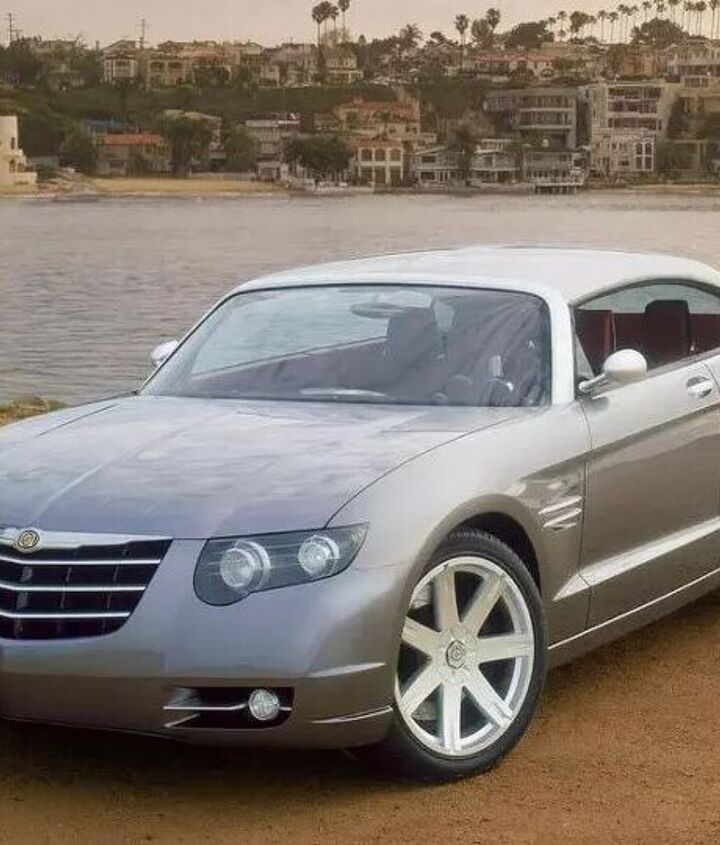
One of the earliest appearances of the LX platform was in 2003. At that year’s Geneva Auto Show Chrysler debuted an exciting concept called the Airflite. Airflite didn’t use the full wheelbase of the LX but was shortened slightly.
This edited platform was never, never given a new designation. Chrysler admitted the concept had a mixed mission and stated it blended “... the passion of Chrysler design, the styling of a coupe and the practicality and function of a sedan to create a unique interpretation of the five-door hatchback.” What?
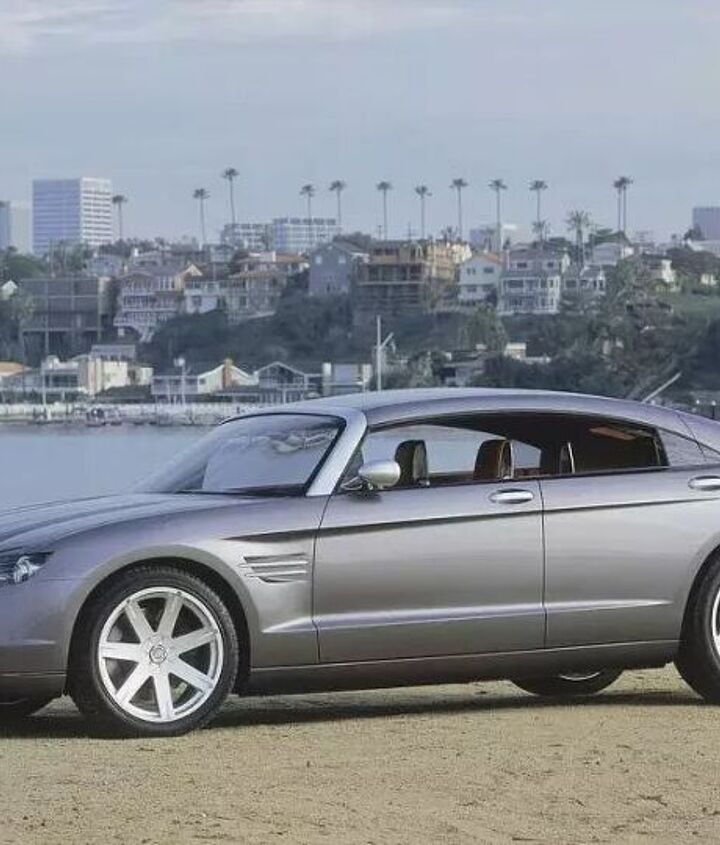
Some dimensions for the Airflite were hidden deep in the internet, and notably included the Airflite’s 116-inch wheelbase. That was four fewer inches than the standard LX platform. Airflite was 190.4 inches long, 73.6 inches wide, and 57 inches high overall. The Crossfire-style wheels were 20-inch 235/45s at the front, and 21” 255/45s at the rear. If built, all Airflites would have been rear-drive.
In general, the Airflite’s form was ahead of its time. The 2000s “four-door coupe” was still only an idea, with Mercedes’ CLS being the first in 2004. The Airflite shared many of its styling themes with the upcoming Chrysler Crossfire, which by that time had already been unveiled in its final guise.
Airflite was designed by a two-person team at Chrysler: Greg Howell penned the exterior, while the interior was designed by Simeon Kim. The pair drew design inspiration from yacht shapes, contemporary furniture, and in theory, the Chrysler building in NYC.
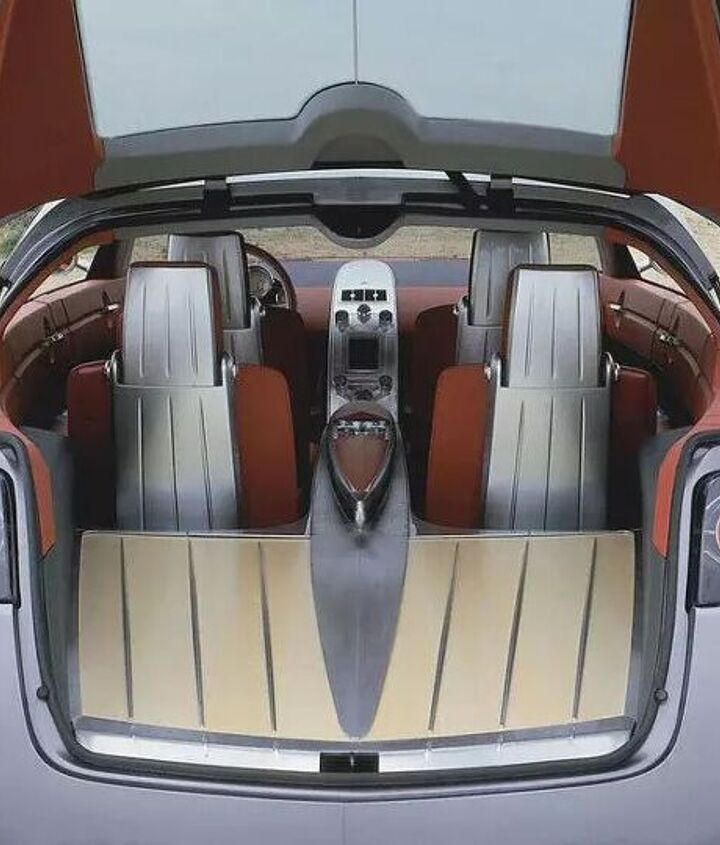
Airflite used the 3.5-liter EGG V6 from the contemporary 300M sedan, as well as its five-speed automatic. The concept’s front end was a mixture of what a next-generation 300M might’ve looked like, combined with the Crossfire’s angularity. Short overhangs front and rear emphasized its rear-drive roots, while its satin finish A-pillar and other chrome detailing emphasized the “retro modern” styling that was so popular at the turn of the century.
Notably, the Airflite had a pillarless hardtop form factor, with a sharply sloped roof that led to a truncated rear end. Most of the rear end lifted up on two gas struts, as a large hatch revealed a bifurcated cargo area with a wooden floor. The area was divided via a tunnel that ran the length of the interior and formed a spear shape that started at the dashboard.
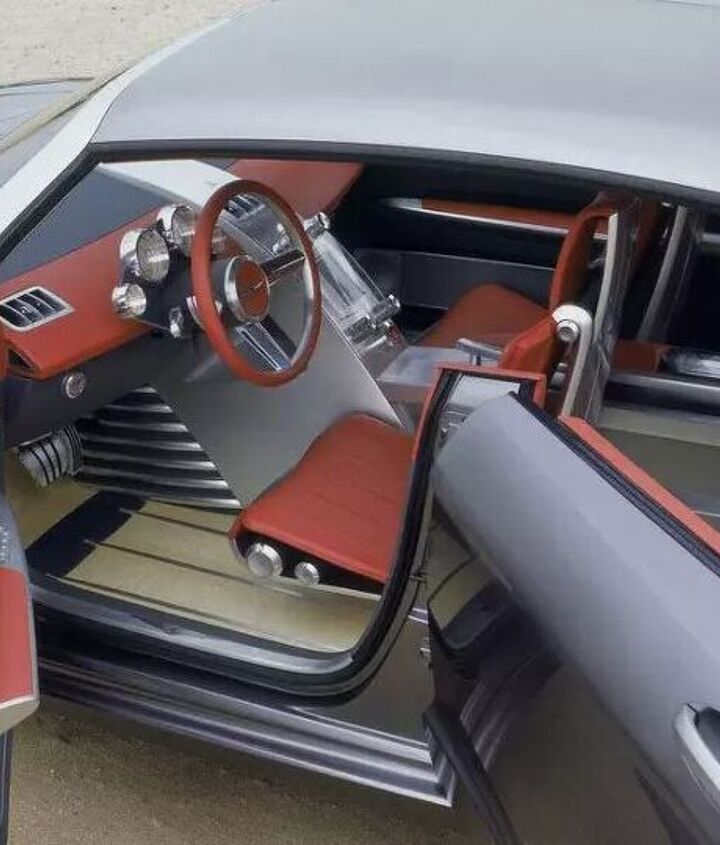
Inside, the Airflite had more retro-modern detailing that included lots of red leather and chrome accents. Seating for four people was available, though shorter passengers were required for the rear seats given their lack of headroom.
The interior’s theme was intended to reflect nautical shapes and used floating designs for the seats, center stack, and the armrests. (Such floating car interior designs never took off in the early 2000s, though floating center consoles were put into production by Volvo.) All in all, the Airflite was very close to what one would expect a four-door Crossfire to be.
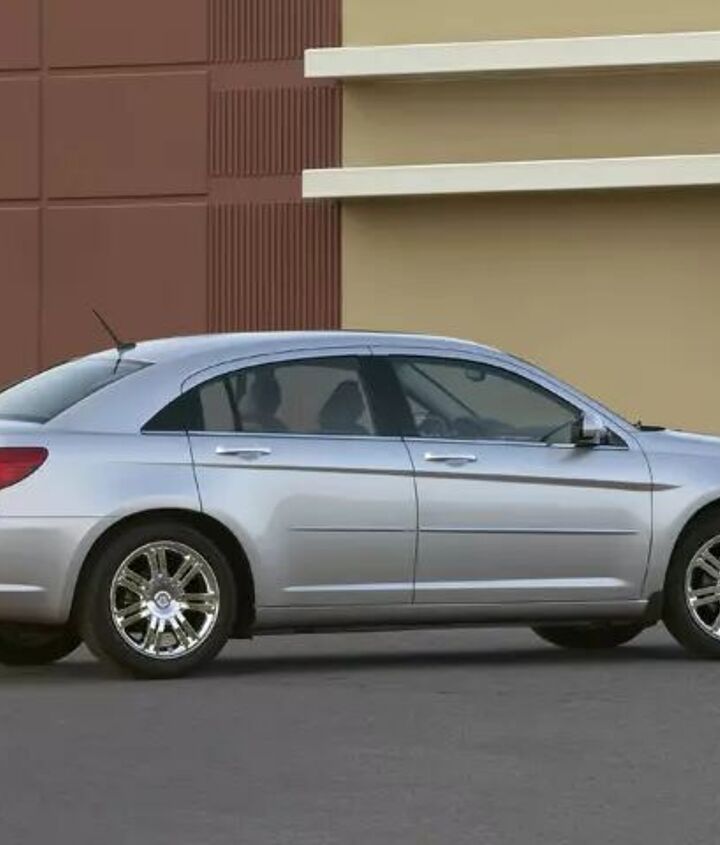
At the time, journalists expected that the Airflite was a sneak preview of the upcoming Chrysler 300C. While that speculation turned out false, some of the Airflite’s side profile design cues were (sort of) put to use years later in the 2007 Sebring sedan. There’s a Sebring here for reference, and that’s all the consideration we need to give the Sebring at this time.
For whatever reason, the Airflite was not put into production. As obscure as it’s become over the ensuing years, the other LX concept is probably even less remembered. It was large, luxurious, V8 powered, and had a shooting brake. Next time we’ll talk about Nassau.
[Images: Chrysler]
Become a TTAC insider. Get the latest news, features, TTAC takes, and everything else that gets to The Truth About Cars first by subscribing to our newsletter.
Interested in lots of cars and their various historical contexts. Started writing articles for TTAC in late 2016, when my first posts were QOTDs. From there I started a few new series like Rare Rides, Buy/Drive/Burn, Abandoned History, and most recently Rare Rides Icons. Operating from a home base in Cincinnati, Ohio, a relative auto journalist dead zone. Many of my articles are prompted by something I'll see on social media that sparks my interest and causes me to research. Finding articles and information from the early days of the internet and beyond that covers the little details lost to time: trim packages, color and wheel choices, interior fabrics. Beyond those, I'm fascinated by automotive industry experiments, both failures and successes. Find me on Twitter, @CoreyLewis86.
More by Corey Lewis










Comments
Join the conversation
I had a '99 300M. Inherited it from my folks.
Only had about 40k on the clock when I got it, but it already did strange things like... buzzing electric door locks, warping interior plastics (warped dashboard, and plastic trim along the headliner that was "peeling" out of place). The 3.5L was decent, though. The air conditioning system had a major overhaul before I took ownership, unsure as to what the issues were.
Come to think of it, I can't remember the last time I saw a Magnum. Or a 300M for that matter. Seems these were all BHPH favorites years ago.
I don't think the Airflite could have used the same exact transmission as the 300M, because the 300M's transmission was actually a longitude transaxle, with the halfshaft hubs toward the front of the housing that go out to the front wheels. While other brands that use this longitude-transaxle and that have AWD offerings--like Audi and Subaru--have an additional output that goes out of the back of the transmission for the rear propshaft, the LH cars were exclusively FWD and their transmissions had no such rear output. Moreover, the 300M transmission was a 4-speed called the 42LE, where you've cited a 5-speed.
It's possible the Airflite used the 42RLE, which was actually the 42LE adapted for RWD by removing the differential and routing the output back to the rear. That transmission went into many of Chrysler's longitude-RWD cars, including all four of the original LX cars.
If it was really a 5-speed, though, it would have been the Mercedes-Benz 5G-Tronic, which was also used on the LX cars, and was actually the volume option.