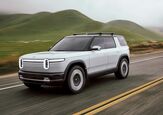


California Proposal Calls for 68 Percent EV Sales By 2030


Now that the U.S. Environmental Protection Agency (EPA) looks poised to reinstate California’s waiver under the Clean Air Act — allowing the state to establish stricter tailpipe emissions than the federal limits — the coastal region has resumed its quest to abolish gasoline-powered vehicles in earnest. While the California Air Resources Board (CARB) has yet to finalize all the details, the latest proposal calls for strengthened emissions standards for new light-duty vehicles in anticipation of the necessary approvals.
The scheme would require pure electrics and plug-in hybrids (PHEVs) to make up 35 percent of new-vehicle sales for the 2026 model year. By 2030, that number will become 68 percent before hitting 100 percent for MY 2035. CARB said zero-emission vehicles comprised 12.4 percent of the state’s new market in 2021, hinting that the number could have been higher without the Safer Affordable Fuel-Efficient (SAFE) Vehicles Rule Part One having stifled its progress.
Done in conjunction with the fuel rollback in an effort to prevent the Golden State from leveraging its large population to encourage automotive manufacturers to prioritize all-electric vehicles, California’s waiver was revoked in 2019. Donald Trump had been on a mission to deregulate U.S. industry, operating under the assumption that it would tamp down future vehicle pricing and create division among states with disparate guidelines for the automotive sector.
But the Biden administration has sought to return to stringent Obama-era standards, saying that pressing forward with battery technology would lead to high-paying jobs while also improving air quality. This has included the advancement of a renewed EV tax credit plan that has become a contentious issue for non-unionized automakers and a vow from the White House to totally transition federal fleets into all-electric vehicles that also hasn’t gone according to plan. Though none of this matters much to California because its proposals far exceed what the Biden administration has asked for.
That said, the White House is unlikely to mind the West Coast doing its own thing. Biden issued an executive order immediately after taking office in January of 2021, directing the U.S. Department of Transportation (DOT) and the EPA to reconsider the previous administration’s revocation of California’s waiver. Originally issued in 2009, the arrangement came after numerous passes on the state’s request to enact stricter air pollution standards for motor vehicles than the federal government required — but only after Barack Obama issued a Presidential Memorandum for the EPA to think twice before telling California no.
In December, CARB issued a draft of its latest proposal after the NHTSA began removing aspects of Trump’s SAFE Act. At the time, the rules were targeting 61-percent ZEV sales by 2030 — substantially higher than the White House’s nationwide target of 50 percent. The newly suggested standards are even loftier and have drawn plenty of criticism from Republicans, according to Automotive News.
From AN:
Rep. Cathy McMorris Rodgers, R-Wash., in April criticized the administration’s plan to allow California to set its own auto pollution rules, arguing that it would create a patchwork of standards and raise the cost of new vehicles.
“By allowing California to set stricter- than-federal emissions standards, President Biden is once again prioritizing a rush-to-green environmental agenda over the needs and well-being of hardworking American families,” said Rodgers, who is the GOP leader for the House Energy and Commerce Committee.
In July, a group of 16 Republican attorneys general also urged the EPA to not reinstate California’s waiver, arguing that any attempt to restore the authority would be “unconstitutional” because “a federal law giving one state special power to regulate a major national industry contradicts the notion of a union of sovereign states.”
Seventeen states and the District of Columbia have adopted California’s stricter vehicle emissions standards, representing more than one-third of all light-vehicle sales in the U.S.
Automakers also jumped aboard, with several companies previously vowing to adhere to Californian terms regardless of what the Trump administration did. Others opted against aligning themselves with CARB, while a few ( e.g. Honda) have committed to Californian standards but are actively pushing back against Biden’s union-based EV tax credit scheme. I suppose the takeaway is that the whole affair has become a political minefield for manufacturers, regardless of which side they happen to have joined.
Regardless, the EPA will need to officially reinstate the waiver before California can do anything with federal backing and the whole thing will be subject to judicial approval. However, the agency is presumed to do so and has already said it plans to make a formal decision on the matter in the near future.
[Image: guteksk7/Shutterstock.com]
Consumer advocate tracking industry trends and regulations. Before joining TTAC, Matt spent a decade working for marketing and research firms based in NYC. Clients included several of the world’s largest automakers, global tire brands, and aftermarket part suppliers. Dissatisfied, he pivoted to writing about cars. Since then, he has become an ardent supporter of the right-to-repair movement, been interviewed about the automotive sector by national broadcasts, participated in a few amateur rallying events, and driven more rental cars than anyone ever should. Handy with a wrench, Matt grew up surrounded by Detroit auto workers and learned to drive by twelve. A contrarian, Matt claims to prefer understeer and motorcycles.
More by Matt Posky






Comments
Join the conversation
Maybe by 2300?
These proposals are always passed when the current regime will have no responsibility for actually implementing it. See pension promises for another example. Vehicles are going electric, I don't why the goal seems to be to punish consumers as much as possible during the transition.