

Bill Ford Stresses Importance Of V8 Engines

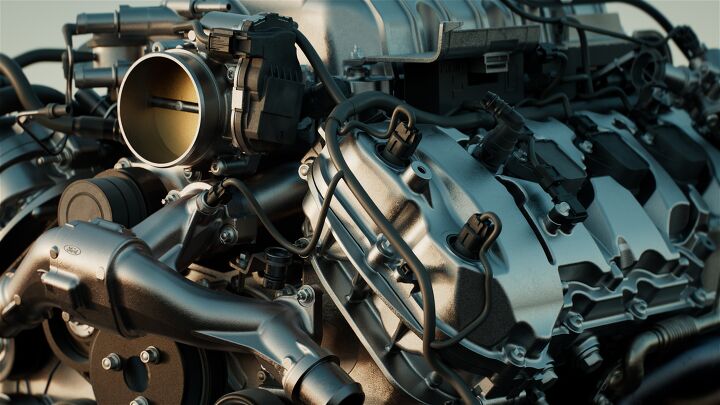
Bill Ford has been spending time in Australia to hype the family business and he’s been saying all the right things. Among his more recent statements was a proclamation that Ford would continue prioritizing V8s until regulations made that impossible.
Speaking with Australia’s Drive, Mr. Ford expressed his love for V8 motors and attempted to assure drivers that they would remain available for as long as the government allowed.
“You're talking to a guy who grew up on manuals and V8s, so obviously I've got a very soft spot for both of them. In fact, pretty much every car I have in my garage is a manual V8,” the executive chairman told the outlet.
“They're really important to us. We feel we do them very well. A lot of it depends on regulations around the world in terms of how much they tighten, but if they tighten too much, they really get out of sync with what the customer demand is,” he continued.
“One of the things that we've been impressing to governments around the world is that it's dangerous to get completely disconnected from what the customers want in terms of regulations … As long as that disconnect doesn't get worse, we're going to continue to work on the stuff that we do very, very well.”
That’s exactly what some automotive enthusiasts have been hoping to hear for years. But one wonders how serious Ford is considering the company’s recent predilection for all-electric vehicles, especially since Bill Ford himself has repeatedly stated that EVs are the future of the industry since at least 2011.
Your author has owned more V8s built by Ford than any other automaker. However, the company doesn’t seem to make them a priority anymore. That’s as true in Australia as it is here in North America. There are actually only two models from Blue Oval that can even be had with eight cylinders in 2026 — non-base versions of the Mustang and F-150.
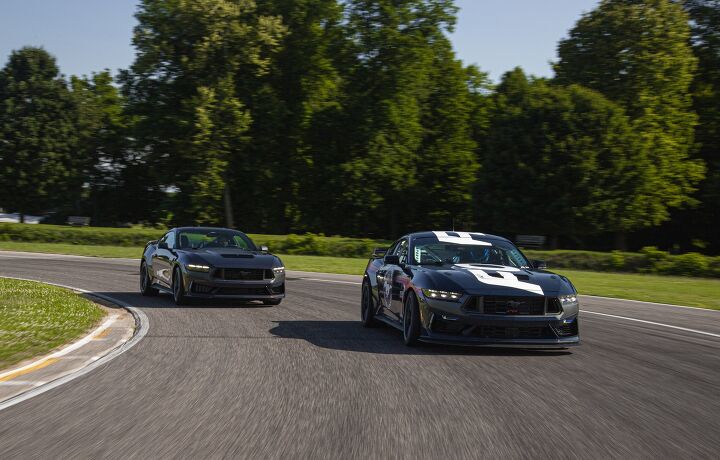
While V8 motors have always meant buying a bigger automobile, or spending more to option a larger powertrain, they used to be relatively easy to come across in the United States. Now, all mainstream automakers have either tied them to exclusive trims — charging an extra-hefty premium for access — or have abandoned them entirely.
That said, Ford has still done a better job at retaining the V8 than most other legacy automakers.
The industry likes to blame regulations and that’s certainly fair to an extent. We saw the introduction of the Clean Air Act yielding some of the most anemic V8 powertrains ever made during the 1970s, with improvements only coming after technological advancements helped bring them up to snuff in terms of emissions. However, additional pressures have been placed on Western countries to new targets that only become harder to comply with every single year.
This is the primary reason we’ve seen so many models pivot to increasingly tiny engines and all-electric powertrains. Companies initially claimed modern regulations make things like V8s too difficult to make compliant. With electrification being posited as the future of motoring, automakers largely abandoned spending their development dollars to improve large combustion engines. Instead, the brunt of their efforts went into squeezing every drop of performance out of smaller units (often leveraging forced induction and emissions tech that hampered longevity) and EVs.
However, this always seemed a little curious. The automotive industry spends an estimated $85 million on federal lobbying in the United States alone each year. It also happens to have one of the biggest globally recognized lobbying groups in history via the Alliance for Automotive Innovation. Rather tragically, Americans have come to realize just how influential corporate lobbyists happen to be in terms of legislation. So it stands to reason that automakers probably could have convinced regulators to slow down on emissions.
We also know that automakers previously seemed rather excited to pivot to EVs and managed to convince Western governments to subsidize those programs for years. Leadership seemed absolutely convinced that electrification would indeed become the new normal, allowing companies to streamline production while also embracing new revenue streams.
Several automakers even sided with California during Donald Trump’s first attempt at deregulating the industry. Despite several companies embracing Trump’s proposed emission rollbacks during his first term, many brands openly sided with California in publicly vowing that they would remain wholly compliant with its more-stringent emission requirements if the national standards were changed.
One could argue this was simply political posturing, however. Despite individual brands often claiming to take varied stances on emission requirements, their collective lobbying efforts tend to push for whatever leadership will give them the most leeway while keeping them profitable. Ideally, the automotive industry wants to build whatever it can sell for the most amount of money while also being subsidized by the government. If they can avoid creating a controversial image in the process, they will.
Automakers also want stability. Due to the relatively long development cycles of automobiles, companies would like to have predictable regulations. When the Trump administration finally managed to walk back federal emissions quotas in 2025, automakers were no longer complaining. The presumption here is that they finally realized that electrification wasn’t going to work for them in the short term and that the regulatory changes didn’t preclude them from building any vehicles that were already in development.
But that’s not the same as saying V8s actually matter to the industry’s top brass. While there are certainly executives that seem plugged into what customers want, some of whom have an obvious enthusiast streak. Most of the really big decisions seem to be coming from the finance department at the behest of the board members.
The priorities of customers really only matter insofar as it impacts a company’s bottom line. If there are loads of people shunning smaller engines for V8s, the automaker will eventually give it back to them. We recently saw Stellantis do exactly this with some of its American brands.
Bill Ford may personally care about V8s. But it’s hard to say how relevant that will actually be when several major markets have basically legislated them out of existence and the present economic situations may also hamper sales. Cars are very expensive right now and installing V8s is just going to raise MSRPs. If manufacturers are going to build them, they’re also going to want them to broaden their profit margins. However, the door is still open. There are certainly would-be buyers that want to see V8 engines making a comeback and are presumably willing to pay for them.
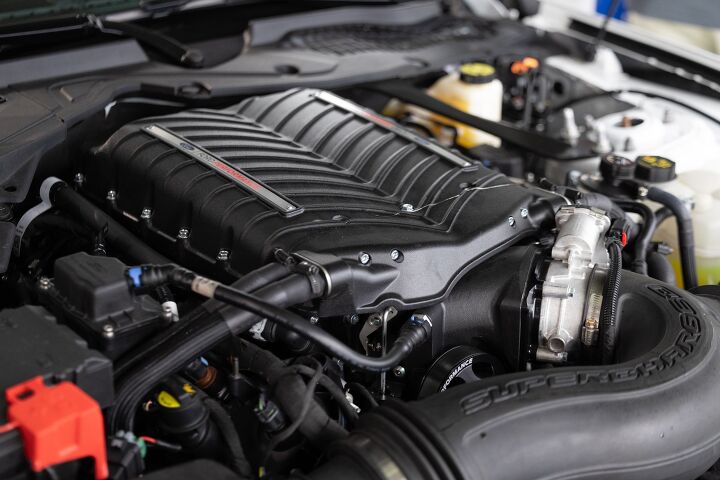
[Images: Ford Motor Co.]
Become a TTAC insider. Get the latest news, features, TTAC takes, and everything else that gets to the truth about cars first by subscribing to our newsletter.
Consumer advocate tracking industry trends and regulations. Before joining TTAC, Matt spent a decade working for marketing and research firms based in NYC. Clients included several of the world’s largest automakers, global tire brands, and aftermarket part suppliers. Dissatisfied, he pivoted to writing about cars. Since then, he has become an ardent supporter of the right-to-repair movement, been interviewed about the automotive sector by national broadcasts, participated in a few amateur rallying events, and driven more rental cars than anyone ever should. Handy with a wrench, Matt grew up surrounded by Detroit auto workers and learned to drive by twelve. A contrarian, Matt claims to prefer understeer and motorcycles.
More by Matt Posky











Comments
Join the conversation
This is why I'm not considering the Bronco Sport, at least not the non-badlands trim.
What a hypocrite!!!!!
He drops 3 pot buzz boxes in his bread & butter Escapes and Bronco Sports, but reserves the V8 for pickups and Expeditions due to there higher margin. That's why I stopped buying Fords!!
And Bill, get off your arse and do something about the recalls!!!