Rare Rides: A Completely Stock 1988 Pontiac Fiero Formula (Part II)


In Part I of this two-parter, we learned about the Fiero’s high-cost conception, and initial stumbling blocks in the form of fires and subsequent piles of melting plastic. But the team behind Fiero never gave up hope, as evidenced by what happened in the second half of its life.
Appearances changed for Fiero halfway through 1986 when the more exciting “1986.5” GT debuted a new fastback body style. The fastback looked larger and more modern than the standard coupe and wore its big, smoked heckblende with even more pride than the original. In its first full year of production, the GT trim sold well and made up 15,880 of the Fiero’s total 46,581 sales that year.
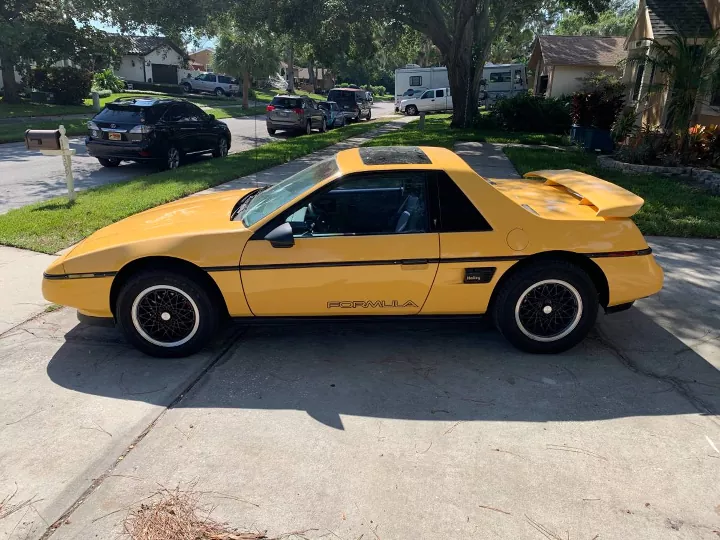
But the most substantial improvements were made to Fiero in 1988 when it gained a new suspension. In fact, it was the debut of the suspension the Fiero’s engineers designed for it in the first place. Changes were also made to address common consumer complaints: Brakes were upgraded to vented discs in all corners, and a new power steering pump was added. Also new for ’88 was the Formula trim, which brought many of the desirable features of the GT to the coupe’s form factor.

The most notable reasons for selecting the Formula trim were the sportier WS6 suspension, and its accompanying lace alloys and rear spoiler. Across all Fieros, yellow was available for the first time in 1988. The Formula proved a good seller and reached 5,484 sales in its only year, about 1,400 shy of sales on the GT.
But as was the way with GM, around the time the Fiero was improved to become the vision its engineers dreamed years before, the plug was pulled. There was already a 1989 Fiero prototype in the works, which was elongated and pulled in design features from the extant Firebird. Engineers proposed replacing the awful Iron Duke with a Quad 4 as the base engine and developed a new 3.4-liter DOHC V6 for the prototype. Also proposed for use was a newly developed turbocharged version of the Buick 3800. And that 3800T would’ve been the one to get, obviously. The new 3.4 V6 didn’t go to waste though. It was developed fully as the 210-horsepower LQ1, and GM put it into production in the Pontiac Grand Prix and the Z34 version of the Lumina.
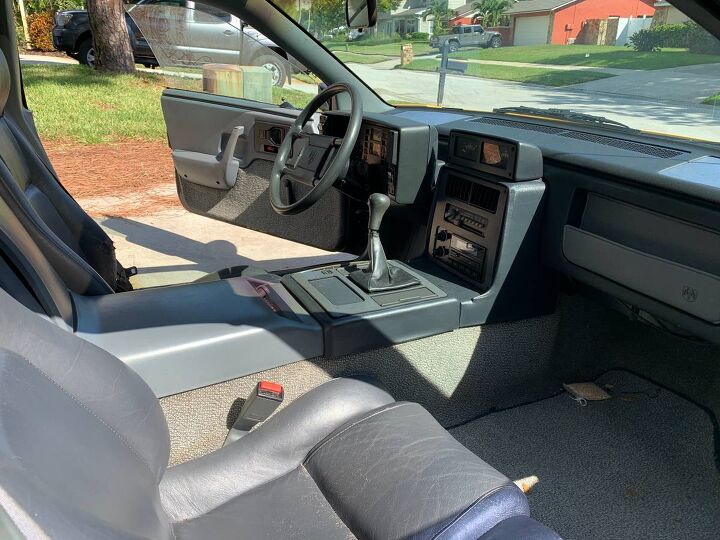
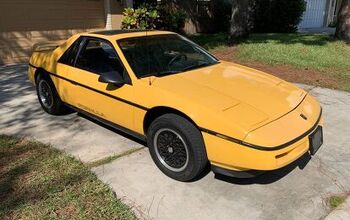
GM declined to greenlight the second generation Fiero citing its complete unprofitability and slow sales. Perhaps an expensive upcoming recall of 244,000 cars was also a factor. A sad end for an ambitious little car. Very not sad is today’s bright yellow V6 five-speed Formula in stunning original condition. With a couple of upgrades, modern air conditioning, and 54,000 miles, it asks $8,900 in Florida.
[Images: seller]
Interested in lots of cars and their various historical contexts. Started writing articles for TTAC in late 2016, when my first posts were QOTDs. From there I started a few new series like Rare Rides, Buy/Drive/Burn, Abandoned History, and most recently Rare Rides Icons. Operating from a home base in Cincinnati, Ohio, a relative auto journalist dead zone. Many of my articles are prompted by something I'll see on social media that sparks my interest and causes me to research. Finding articles and information from the early days of the internet and beyond that covers the little details lost to time: trim packages, color and wheel choices, interior fabrics. Beyond those, I'm fascinated by automotive industry experiments, both failures and successes. Lately I've taken an interest in AI, and generating "what if" type images for car models long dead. Reincarnating a modern Toyota Paseo, Lincoln Mark IX, or Isuzu Trooper through a text prompt is fun. Fun to post them on Twitter too, and watch people overreact. To that end, the social media I use most is Twitter, @CoreyLewis86. I also contribute pieces for Forbes Wheels and Forbes Home.
More by Corey Lewis






Comments
Join the conversation
GM made more interesting cars in those days. All GM produces today are angry looking SUV and Trucks, and EV's that nobody wants to buy. How is GM going to thrive with less than 15% of the US market. This is where they are headed by their own admission. Barra will stop at nothing to achieve an all electric future, which only 2% of the car buying public wants.
I worked at Oldsmobile Division in the Fiero Timeframe. Olds built many Fiero parts, including RRIM body panels, gas tanks and other ancillary parts. I had the privilege of touring the Fiero plant in January of 1984, which was the heyday of Fieros. Consumers couldn't buy them without being on a waiting list and dealers charged premiums for them. This was also when the Indy Pacecars were being produced. Couple of issues with this article. First off, the vehicle shown is not stock. The seats in it were retrofitted from a GT likely. Also, production 88 Fieros never had power steering as mentioned in the article (there were no power steering pumps! as the engine is in the back and the steering is up front!). I worked on a prototype '89 that had electric power steering that Saginaw was going to debut in that vehicle. The coolest thing I had the chance to work on was an Olds proto Fiero that was 'stretched' to have a back seat! It was a 2+2, very odd looking. I always wondered what happened to that prototype. We also had a big hand in the '89's quad 4 because that was an Olds developed powertrain. I have an '88 yellow fiero that is truly stock, unlike the one in this article. Love mine, Fiero problems aside - but I was part of its history. -Bob