
Rare Rides: A Pristine AMC Pacer Wagon From 1978

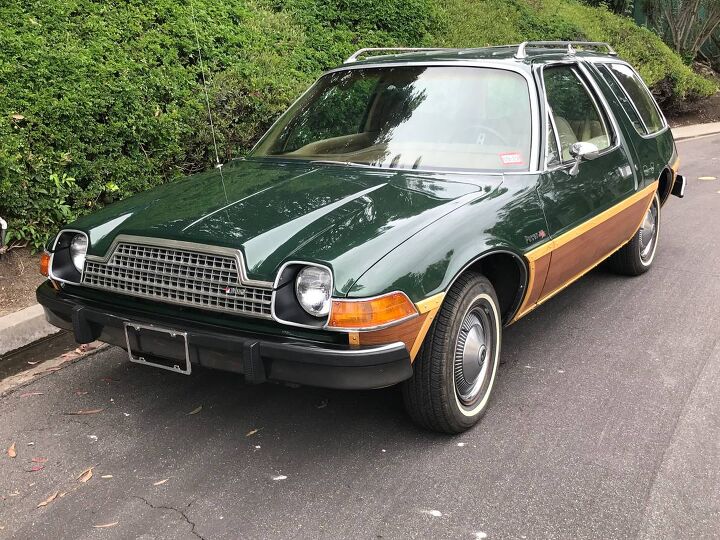
Our most recent late-Seventies Rare Ride from AMC was a delightfully brougham Matador Barcelona from 1978. Today’s Rare Ride shared showroom space with the Matador that very same year, but had its eye on a slightly different customer. It’s a base model Pacer DL, complete with wood paneling.
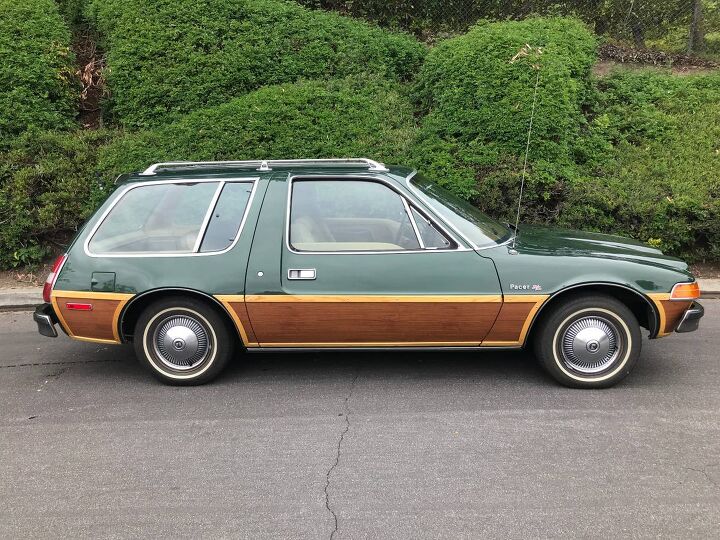
AMC set out to design an all-new type of compact car in the early Seventies. Calling upon designer Richard Teague for its new car, the automaker kicked off design work in 1971. Hoping to avoid a typical three-box design, AMC’s design team paired aerodynamic metal with a large greenhouse for better visibility. Though a compact, AMC chose to make the Pacer the same width as a full-size car. Prevailing wisdom at HQ was that demand for more efficient compact cars would increase throughout the Seventies, but that large-car-driving Americans would be more comfortable in a car of traditional width. The extensive use of glass also made the interior seem brighter and more spacious.
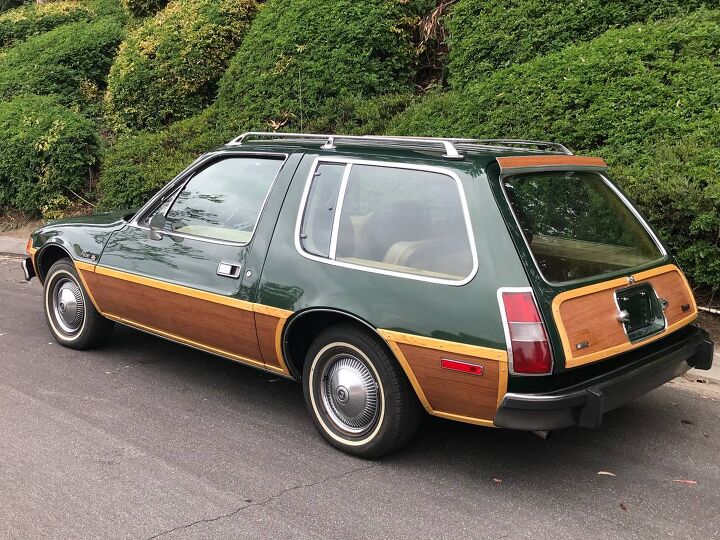
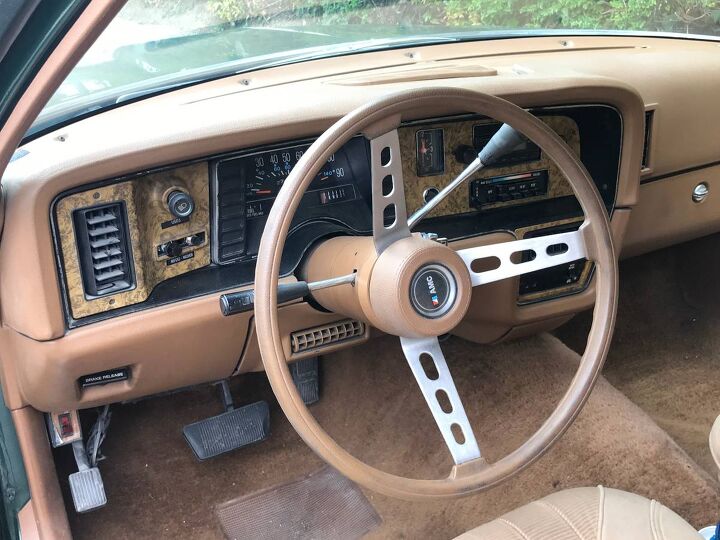
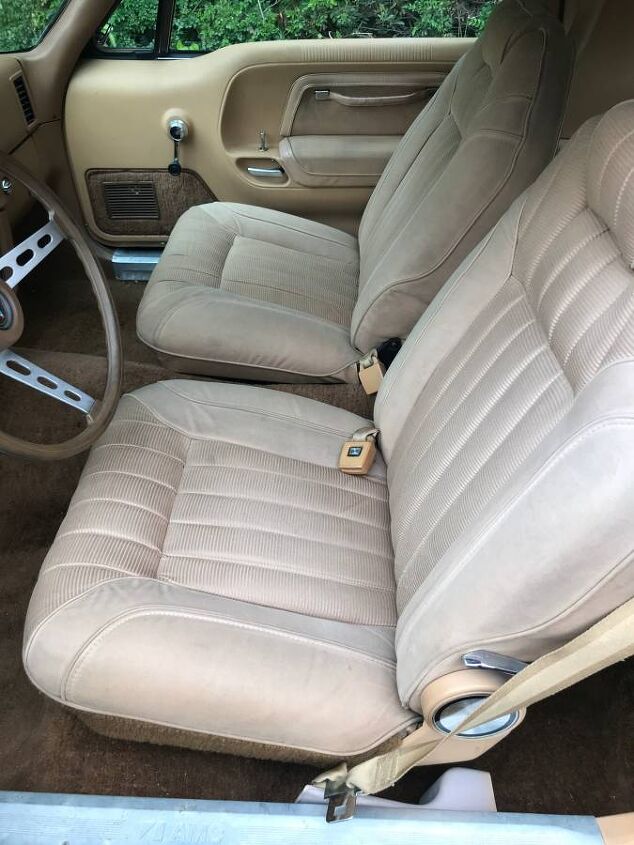
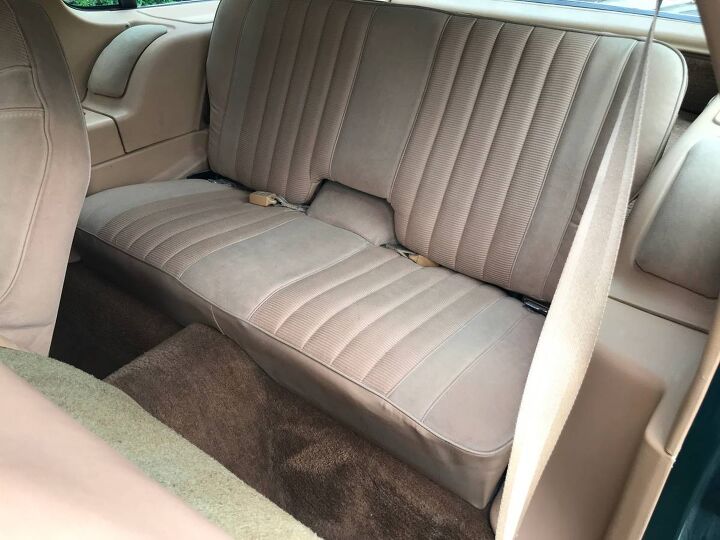
As always, AMC was keen on saving as much money as possible, but it did pull out a few stops for the new compact. The Pacer got modern rack-and-pinion steering, a new feature on American cars at the time. The engine and suspension were isolated from the passenger area for a quieter ride. And though it debuted in 1975, AMC made the Pacer compliant with 1980 crash testing standards, including energy-absorbing bumper mountings, and what the company called “full-circle body protection.” There was also a roll bar built into the roof, visible via a bump in the sheet metal. Wiper blades hid under the hood when not in use. Roof gutters were also eliminated in the name of aerodynamics, and doors blended smoothly into the roof (causing leaks). The whole car was designed with ease of service in mind, using fewer screws to allow better access to the dash, instruments, and bulbs. The passenger-side door was also longer than the driver’s to improve access to the rear seat.
The Pacer was supposed to feature a radical new Wankel engine that AMC intended to purchase from GM. Like everyone ever, General Motors saw the multitude of inevitable issues with Wankel engines and cancelled its rotary project in 1974. AMC was left high and dry and short on time. This meant that, although engineers previously explored the idea of front-drive and mid-engine layouts, a more traditional combustion engine and rear-drive arrangement was chosen for production.
Pacer went on sale in 1975 with a selection of inline-six engines or one 5.0-liter V8. Power went to the rear wheels via a three- or four-speed manual or a three-speed automatic. Customers could choose from a 171.8-inch coupe version or the longer 176.8-inch wagon shown here.
Pacer sold well, experiencing little competition from American manufacturers floored by the OPEC crisis of 1973. The chink in the Pacer’s armor ended up being newer, lighter, more efficient compact offerings from Japan. By the late Seventies, the Pacer’s 22 mpg wasn’t attractive against foreign competition. AMC’s answer was to rely more heavily on the Renault Le Car and phase out the Pacer during the 1980 model year. Le boo.
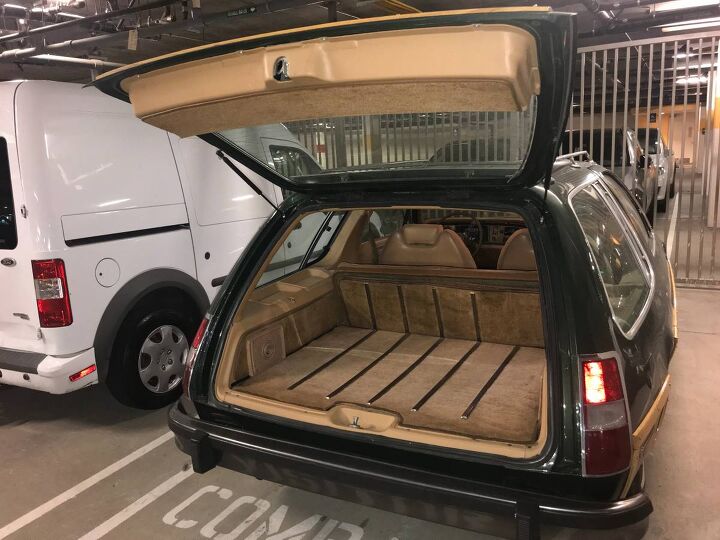
Today’s green-and-wood wagon is for sale with 27,000 miles on the clock in the rural seaside community of Laguna Beach. It asks $14,500.
[Images: seller]
Interested in lots of cars and their various historical contexts. Started writing articles for TTAC in late 2016, when my first posts were QOTDs. From there I started a few new series like Rare Rides, Buy/Drive/Burn, Abandoned History, and most recently Rare Rides Icons. Operating from a home base in Cincinnati, Ohio, a relative auto journalist dead zone. Many of my articles are prompted by something I'll see on social media that sparks my interest and causes me to research. Finding articles and information from the early days of the internet and beyond that covers the little details lost to time: trim packages, color and wheel choices, interior fabrics. Beyond those, I'm fascinated by automotive industry experiments, both failures and successes. Find me on Twitter, @CoreyLewis86.
More by Corey Lewis







Comments
Join the conversation
I like this car. It is wide, spacious and has a lot of cargo space and at the same time is not station wagon and it is 2 door hatchback! Thats the car I would consider next time (given that it is BEV). But why V6 and RWD? Why not I4 FWD? Did Japanese competitor and VW had V6 engines too? Seriously - why compact car needs V6? 2.0L I4 would be more than enough.
New working theory (developed just now): --> The curse of ever-rising beltlines is a direct backlash from this design. This makes me dislike the Pacer even more. You know those plastic "working" model engine kits everyone had as a kid? My parents were weird, so my plastic engine model was a Wankel.