


Here Come the Roads: President 'Big Daddy' Trump Unveils Infrastructure Plan

Few things are sexier than a new road. The scent of fresh tar, smooth pavement that’s still warm to the touch — it’s an absolute feast for the senses. After roughly a year of waiting, President Trump finally seems poised to deliver on a bunch of them. The White House has just offered Congress a 53-page report detailing exactly how to rattle loose $1.5 trillion in investments into the country’s ailing infrastructure.
Maybe “poised” is the wrong word to use; how about we just say that he’s been interested in the idea that somebody should build them.
Expect Democrats to complain that the plan totally fails to create a dedicated funding stream to address the infrastructure issue and Republicans to gripe about how the small federal investment, set at $200 billion, is still far too large. It’s a beautiful system we have here.
As for the nuances of the plan, the report outlines a federal investment of $200 billion to encourage states, localities, and especially the private sector to come up with the remaining $1.3 trillion balance. However, only half of the federal sum goes in without strings attached; the other $100 billion goes toward matching funds that states and cities commit to fixing up their own roadways, rail networks, and waterworks.
The White House also claims there will be an additional $50 billion in block grants allocated for governors wanting to fund rural infrastructure projects and a $20 billion increase in loans and bonds to finance various infrastructure projects.
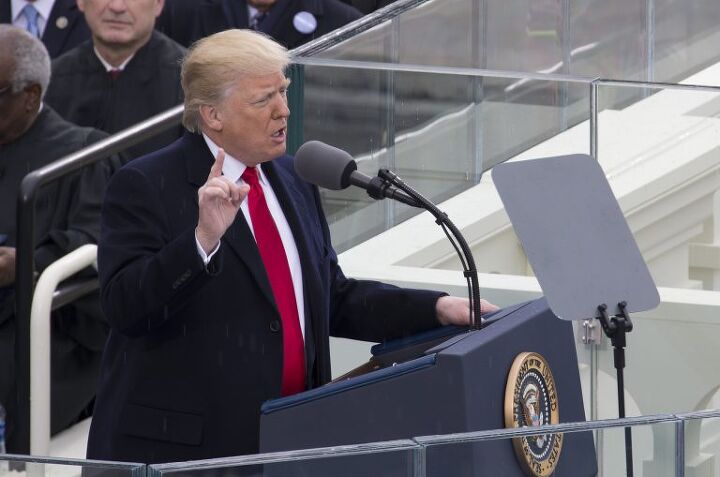
“For too long, lawmakers have invested in infrastructure inefficiently, ignored critical needs, and allowed it to deteriorate,” Trump told Congress during the plan’s introduction. “It is time to give Americans the working, modern infrastructure they deserve.”
The core element to Trump’s strategy is something he’s outlined before, although not in great detail. That’s the proposed streamlining of environmental reviews. Trump believes, by putting a single agency in charge of the regulatory effort, imposing a 21-month deadline for completing project assessments, and a 3-month window for final action, he can drastically expedite the building process.
Unfortunately, environmental advocacy groups have already condemned that strategy for being irresponsible. One sticking point is handing approvals of oil and gas pipelines that cross lands controlled by the National Park Service over to the U.S. Department of the Interior. The White House says requiring each pipeline to get congressional approval is needlessly time consuming and slows progress.
Another criticism of the plan is that it caters too much toward business interests. In fact, the reports says preferential treatment will be given to grant applicants that can provide revenue through raised local taxes, service fees, or road tolls. It does not, however, suggest bolstering revenue through traditional means, like increasing the federal gas tax. Instead, the White House has suggested local lawmakers pay for the infrastructure proposal by cutting funding for other transportation programs like Amtrak or the Highway Trust Fund — both heavily dependent on the fuel tax.
Democrats won’t like that, and the proposal arrives in the wake of a $1.5 trillion tax cut and a $300 billion spending measure signed by the president last week that will add to the federal budget deficit, meaning Republicans will probably take issue with anything that might risk further financial shortfalls. Convincing either of them to pass a bill in the Senate isn’t going to be easy.
The upside is that large companies might be into the elimination of a cumbersome permitting processes. Ditching some of the regulatory red tape, which has been the cornerstone of Trump’s presidency thus far, might convince groups to put money into the country’s infrastructure. It had better, since only a small fraction of the plan’s $1.5 trillion comes from federal spending.
Last week, the president told Republican lawmakers at a West Virginia retreat that it was imperative the country “streamline the horrible approval process — roadways that take 12, 13, 14 years to get approved.”
“We used to build them in three months, and now it takes years and years of approvals,” Trump explained. “We’re going to bring that down, ideally, to one year. Two years is our goal, but one year is our real goal.”
Consumer advocate tracking industry trends and regulations. Before joining TTAC, Matt spent a decade working for marketing and research firms based in NYC. Clients included several of the world’s largest automakers, global tire brands, and aftermarket part suppliers. Dissatisfied, he pivoted to writing about cars. Since then, he has become an ardent supporter of the right-to-repair movement, been interviewed about the automotive sector by national broadcasts, participated in a few amateur rallying events, and driven more rental cars than anyone ever should. Handy with a wrench, Matt grew up surrounded by Detroit auto workers and learned to drive by twelve. A contrarian, Matt claims to prefer understeer and motorcycles.
More by Matt Posky









Comments
Join the conversation
I count the low federal match as the very first thing I have agreed with Trump on. The high historical share of federal spending on infrastructure projects has led to overbuilding of visible ribbon cutting projects like roads that aren't truly needed (add congestion tolling and, wow, suddenly there is excess capacity). Our infrastructure under ground is far more critical to our way of life and in greater need of investment than adding road miles. Start with the oldest water and sewer mains, add stormwater drainage and conduits for data and start rebuilding, up to the source for water and down to upgraded sewage treatment plants for waste. It is time to buck up Americans.
Rise the local and federal gas tax and don't steal this money this time (pinky swear). I hate toll roads