Michigan's Self-Driving Dream Is Now Just a Vote Away
Steph Willems
by Steph Willems

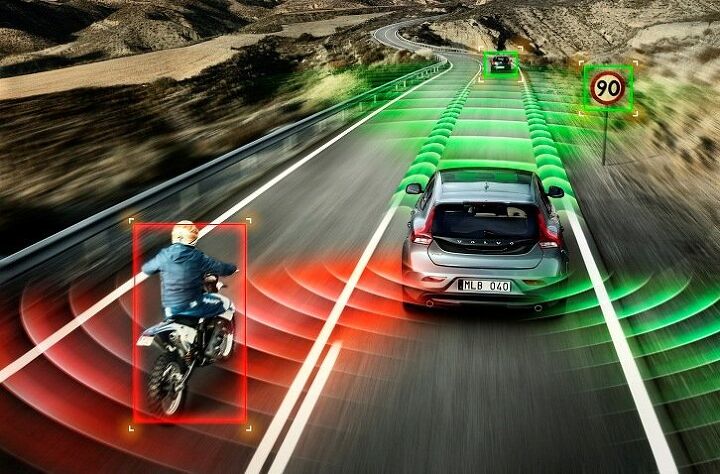
If the House approves it, Michigan will become the first state to allow autonomous vehicles to drive on certain public roads, at any time, for any purpose.

According to the Detroit Free Press, the state Senate has unanimously approved four bills aimed at making Michigan the self-driving mecca of the U.S., giving consent for autonomous vehicles to operate on 122 miles of public roads, not just on closed courses during pilot projects.

After the 36-0 vote in the Senate, the bills move to the House for consideration. Automakers and tech developers have their fingers crossed, as they plan to turn the state into a proving ground for what they hope is the future of driving.

Lawmakers seem to share the same view. Sen. Ken Horn (R-Frankenmuth), speaking to the Detroit Free Press, compared the legislation and burgeoning industry to the Cold War-era space race.

Naturally, the legislation is worded to protect the state’s automakers. Senate Bills 995 and 996 allow “on-demand automated motor vehicle networks,” but only if it involves a recognized automaker. That leaves Ford, Fiat Chrysler and General Motors in the clear, but keeps the likes of Google, Apple and other players out.

Ford and GM have their own autonomous vehicle operations in Michigan, while FCA has partnered with Google on a fleet of 100 self-driving Chrysler Pacifica minivans. Top Japanese automakers have collaborated with Ford and GM on the University of Michigan’s Mobility Transformation Center and its Mcity testing facility.

The legislation, if passed by the House, would benefit the fledgling American Center for Mobility and its goal of turning the Willow Run airport into a self-driving tech hub.

On the safety front, one of the bills targets hackers, making it clear that anyone caught accessing or tampering with a self-driving vehicle’s electronic control systems will face serious consequences, including the potential for life in prison.

[Image: Volvo]

Steph Willems
Steph Willems

More by Steph Willems

Comments
Join the conversation
3 of 16 comments
  • David C. Holzman David C. Holzman on Sep 08, 2016

    bill could backfire

  • V-Strom rider V-Strom rider on Sep 08, 2016

    I read somewhere that autonomous vehicles have a lot of trouble merging onto busy freeways and sometimes come to a complete halt at the end of the ramp, waiting for a big gap. Don't know if this is actual experience or someone's speculation but this could be interesting! Also the "playing chicken" possibilities sound like fun - until someone gets hurt, of course.

    • JimZ JimZ on Sep 10, 2016

      sheesh, I know of plenty of *people* who stop at the bottom of on-ramps. usually old people. but yeah, I'd wager highway merging is going to be one of the tougher nuts to crack. V2V communication would help that situation greatly.

  • Amwhalbi My 1972 Mercury Capri was my first stick shift car. God, I miss that thing. It was a blast to drive.
  • Vid169489471 The technology exists today to produce a variable color temperature (kelvin) LED lamp. It can vary from 2700k that soft orange look to 6500k the bright daylight with the bluish tint.Since everything in a late model car is computer controlled, it would be an easy task to write a few lines of code that enables your vehicle to not only dim down from hi to low beam but to shift color temp down to the 2700k range for oncoming traffic, then back up to 5000k once oncoming traffic has passed. For the operator it would be automatic and seamless. For older cars they could be retrofitted with LEDs that are 2700k on low beam and 5000k on hi beam. As far as standards, there could be a lumens max, and a minimum. Several States already have minimum lumen standards going back to the old incandescent bulbs. Why not update these to national standards.
  • Jam169859557 More regulation is needed for ALL vehicle lighting systems. [list=1][*]The lighting that is most blinding are the rapidly flashing red, blue and amber lights on emergency vehicles. The lights themselves are blinding, flashing so rapidly that it's impossible for even the sharpest eyes to adjust. What's worse, is the nature of the emergency requires a careful view of the area surrounding the emergency vehicle. There is something going on that needs to be seen. More flashing lights is not the solution.[/*][*]Brighter headlights need to be regulated. The tall riding vehicles do not need headlights positioned so high that they blind drivers in lower riding vehicles. And those heasdlights need to be aimed properly. When I first started driving my 2020 Subaru Outback, many drivers would flash their lights, hoping I would dim my lights. This stopped after I performed am easy adjustment that tilted the beam lower. Late model Subaru headlamps are designed with a sharp cutoff that project less glare above the hood line. When the headlights are properly aimed, other drivers are not blinded by the beam.[/*][*]Customized light assemblies make it more difficult to see the marker lights (tail lamps, turn signals and side marker lamps) that have been tinted. There are many municiple codes that prohibit this tinting, but these laws are seldom enforced.[/*][/list=1]Solutions: Tight controls on emergency vehicle lighting. In trying to make these vehicles more visible, a dangerous side effect is reducing the ability of drivers to see the surrounding perils.Headlight design regulations that reduce the height of the headlight assemblies. Just because a pickup truck has a hood that sits 4 feet abouve the pavement, it does not mean the headlights need to be so high. Owneres should maintain proper adjustments to their vehicle headlights.Establish and enforce regulation requiring a illumination standard be followed.
  • Stl170698708 as someone who hates big government, and their interference;but you can add me to the list of people that are blinded by the lights.unfortunately "the poop is out of the horse and no way is it going back in"They have had 5 years to make lights bigger, badder and brighter because in the vehicle work it is go big or go home!Trucks are the worst because so many people use them to express their dominance and that is big, big, big $$ both at the Original Purchase and in the Aftermarket world.If, we are so lucky to get some good government regulation on this it will also take some very good Court enforcement to get the aftermarket people with fines and lawsuits.Much like the EPA did with the Diesel Tuner Industry that felt emission regulations didn't apply to them.This is from someone that owns said pickup truck with the same bright headlights,but i only use the truck when I have too and always turn off the Fog lights when driving in traffic.
  • Art65765977 I saw a porsche 911 with the most amazing headlights from behind approaching the Sunshine skyway in Florida. The pattern was 108 degrees across sweeping the road like a broom. My brother and I were amazed. I don't know what it looked like from the front but i am sure it was better than American cars
Next