

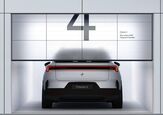
Auto Insurance Institute Claims More Tech Means More Safety


The Insurance Institute for Highway Safety (IIHS) has asserted that electronic safety systems do indeed result in fewer accidents, with the benefits mounting the more those features are bundled together.
“These technologies are awesome,” Matt Moore, chief insurance operations officer at HLDI and the Insurance Institute for Highway Safety, said as part of the press release. “As they improve and become more common, we are seeing compounding crash reductions.”
I thought I’d be able to wait a little longer before doing any editorializing. But these technologies are not universally considered awesome. Many drivers find some of these features woefully invasive and obnoxious. Plenty of motorists are likewise unhappy that governments seem committed to requiring automakers to have them installed in the coming years — limiting privacy while also driving up the price of vehicle ownership by way of MSRP and repair costs.
We also have years of data showcasing how inconsistent some of the relevant systems have been. Studies have shown that early examples of automatic emergency braking (AEB) barely worked at all after sundown. While these features have improved over time, there are still major disparities between their effectiveness. How well they work can vary quite a bit between brands, weather conditions, and even how dirty your car happens to be.
But that doesn’t preclude them from offering safety benefits when everything is operating as intended, which we can assume was the case for the HLDI researchers. The report focuses heavily on automatic emergency braking (where a car will attempt to stop itself prior to a crash) as the most basic bundle. There are a total of six bundles in the study, with the highest level including frontal automatic emergency braking (with pedestrian detection), adaptive cruise control, high-beam assist, lane departure warnings, lane departure prevention, rear automatic emergency braking, and Driver Attention Alert (which monitors the driver inside the vehicle).
The relevant data is tied to a study released by the Highway Loss Data Institute (HLDI) that assessed the advanced driver assistance systems offered on 2015-2023 model year Mazda vehicles — both as standalone features and trim-based bundles. While the research only pertained to Mazda products, the group used them to make generalizations about similar tech being used by other brands.

From the IIHS:
Not only were the larger bundles more comprehensive, but they also included more advanced versions of the technologies in the smaller bundles. That’s because they were offered on newer vehicles. At the same time as Mazda was introducing new features, it was refining the older ones. Thus, while all the bundles included front AEB, the biggest bundles included a more advanced version of it.
The reductions in claim frequency were substantial, especially under property damage liability (PDL) and bodily injury liability (BIL) coverages. PDL coverage pays for crash damage that the at-fault driver’s vehicle causes to other people’s vehicles or property. BIL coverage pays to treat injuries caused to people in other vehicles or other road users.
The most basic bundle was associated with a 13 [percent] reduction in PDL claim rates and a 9 [percent] reduction in BIL claim rates. In general, those benefits grew with the addition of each new technology, and the most comprehensive bundle was linked to a 39 [percent] drop in PDL claim rates and a 21 [percent] fall in BIL claim rates, though the latter figure was not statistically significant.
The bundle that added Driver Attention Alert was a notable exception, delivering no greater benefits with the addition of the new feature. It’s possible that the alert came into play too rarely to affect claim rates, as it only activates after about 20 minutes of driving between 41 mph and 86 mph and may not function on roads without clear lane markings.
Automatic emergency braking received the highest levels of praise from the HDLI, which noted that later versions of the system were likely a significant improvement of the early examples. The report notes that frontal AEB likely helped prevent serious accidents, whereas rearward AEB prevented fender benders in parking lots — which actually make up a majority of insurance claims.
“If you’re worried about rising repair costs, the smartest thing you can do is get a vehicle with rear AEB and make sure it is turned on,” Moore noted.

We’d imagine being an attentive driver would probably be even more advantageous. But we understand that the interiors of many modern vehicles lack poor outward visibility and a slew of distractions. Sometimes having that added level of protection does pay off. It just cannot supplant someone taking the task of driving seriously.
The study also noted that, while they couldn’t be assessed independently due to being bundled together, blind spot detection and rear cross traffic alerts were likely good things to have. Both were included in bundles that saw a reduction in claims. Blind spot monitoring is also one of the few modern safety features that receives near-universal praise from drivers, presumably because it works well without being invasive.
All told, the group suggested that data showed that basically every system reduced the number of claims made by drivers. The only exception was traffic sign recognition, which researchers attributed to a smaller sample size — as it was equipped to the fewest number of high-trimmed vehicles.
With everything being equal, the assertions being made by the HDLI are certainly plausible. The same model of vehicle, with the same driver, could indeed see improved safety benefits by simply having a higher number of electronic nannies. But the report focuses on insurance claims specifically, which the study spends several paragraphs explaining using a lot of complicated math.
However, we’ve also seen the rate of severe accidents increase in the United States as these systems have been implemented. Starting in 2015, the per capita number of fatal automotive incidents began to climb after about a decade of consistent improvement. While those rates have come down slightly since 2022, and are nowhere near as high as the numbers witnessed before 2005, they remain elevated.
This may not even be the fault of the tech being installed into vehicles. As much as we like to groan about the distracting nature of modern vehicle tech, there are other factors to consider. Growing disparities in vehicle size ( newer models tend to be comparatively massive), increases of substance abuse, and an influx of illegal migrants driving in the country are all undoubtedly relevant.
The National Institutes of Health (NIH) has studies showcasing that migrants do indeed accompany an increase in regional accident rates — but stopped short of saying they were the cause. Meanwhile, the IIHS-HDLI has numerous reports on how vehicle sizing tends to go when cars collide with each other. The physics are extremely clear on that front and we probably don’t need to say anything about the dangers of driving under the influence either.
That’s not to say that distracted driving isn’t an important issue. But it’s hardly the only item worth bringing up.
Still, some of us are undoubtedly wondering if the juice is worth the squeeze. Surveys continue to showcase that people are extremely dissatisfied with modern automobiles and technology has become a big part of why. We understand that bolstering safety is important and that insurance groups want to protect themselves. But severe accident rates are still significantly lower than they were from 1900-2005, despite insurance rates now surpassing record highs.
That doesn’t exactly mesh with the IIHS claiming that all this tech will save everyone money. If it prevents you from having an accident, you’ll certainly be glad. However, the influx of safety tech equipped to modern vehicles has ballooned the cost of repairs and your insurance premium is calculated based on a mix of how likely the company thinks you’ll have an accident, the going repair rates based upon models, and the largest profit margins they think they can get away with.
Ironically, buying a vehicle equipped with all the newest safety features might actually result in higher premiums than something without them. Sensors are expensive to replace and will undoubtedly be considered when the company takes into account your rate. While you can sometimes get discounts for having certain features, insurance firms often link this to driver monitoring using telematics. Here, you may see your premiums start lower and quickly go up without having an accident as companies may see hard braking, speeding, or even driving after dark representing increased liabilities.
We’d recommend making up your own mind on how best to balance tech with safety and driving enjoyment. But the HLDI study is certainly worth a read for anyone interested in the topic.

[Images: Bilanol/Shutterstock; IIHS]
Become a TTAC insider. Get the latest news, features, TTAC takes, and everything else that gets to the truth about cars first by subscribing to our newsletter.
Consumer advocate tracking industry trends and regulations. Before joining TTAC, Matt spent a decade working for marketing and research firms in NYC. Clients included several of the world’s largest automakers, global tire brands, and aftermarket part suppliers. Since adding automotive writing to his repertoire, he has become an ardent supporter of the right-to-repair movement, discussed the status of the automotive sector on national broadcasts, participated in a few amateur rallying events, and driven more rental cars than anyone should ever have to. Handy with a wrench, Matt grew up surrounded by Detroit auto workers and learned to drive by twelve. Alleged to be contrarian, Matt claims to prefer understeer and motorcycles.
More by Matt Posky






Comments
Join the conversation
What's important here is to remember that the IIHS is not our friend, they are our adversary. Their primary concern is lowering and limiting payouts as a result of vehicle crashes. They lobby for "No Fault" laws, and they are directly responsible for lobbying congress to create the abominations that we call cars today. As a direct result of their lobbying efforts, people don't really drive "cars" anymore, but instead drive weird cross-over vehicles. Everything is either an egg, or a box. They are directly responsible for the 60/40 rule which is responsible for all non-truck-based vehicles having an enormous rear-end. The fact that we can no longer have pop-up headlights, or doors that we can comfortable put our arms on the top of the door, and why we have drive by wire, or even the fact that my steering wheel jerks every time I change lanes without using my turn signal (which I only do when there is literally no one on the highway anywhere near me). Cars are boring, unexciting, and absolutely horrible today as a direct result of the IIHS. So again... they are not our friends, they don't care about the consumer... they ONLY care about the indemnity companies. 😒
ironically TECH is the reason for most crashes. distracted drivers are worse than drunk drivers... if you are touching your cell phone while driving you're worse than jeffery dahmer in a kindergarten.