

What's the Difference Between All-Season and All-Season Touring Tires?

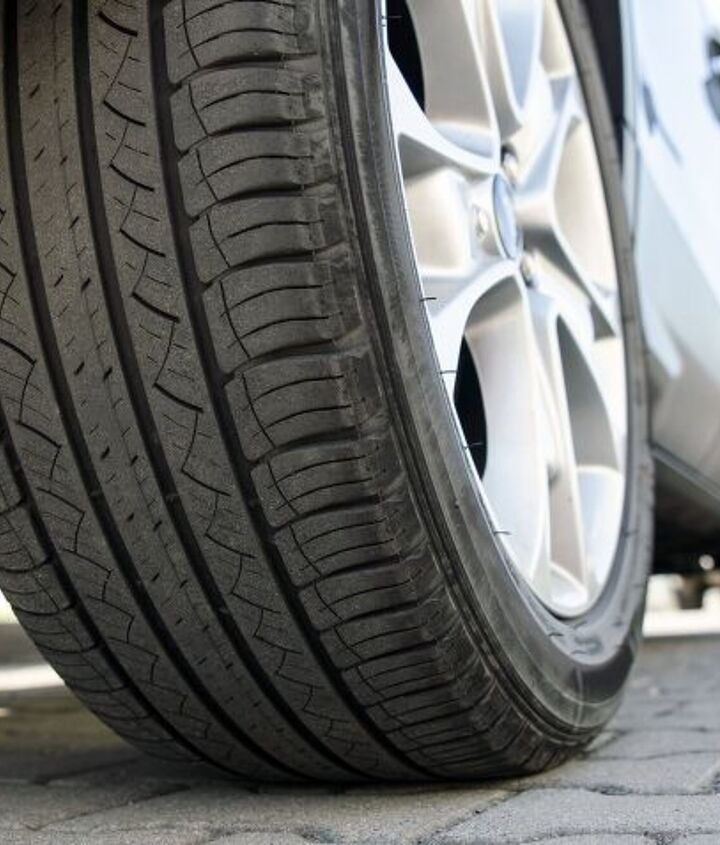
Before straying too far into the weeds of this topic, we need to recognize there are wide swaths of this country – primarily in the snow belt – where drivers can greatly benefit from having a dedicated set of winter tires. In those climes, a single set of year-round rubber isn’t always the best of ideas, especially since what falls from the sky in places like Montana and Michigan is simply not to be believed. If you live in one of these spots, just yer good judgement.
With that caveat out of the way, let’s focus on the difference between all-season and all-weather tires. The former has been around since Adam was an oakum picker, standing as an option for customers who at least live in fair weather parts of the country. The latter type of tire relatively new to the market, packing a host of features and making the most out of the surprisingly robust research and development budgets deployed by tire companies around the world.
Let’s start with that variant, then. All-weather tires generally beat the pants off all-season tires when the snow starts to fly. Actually, they perform better than all-seasons simply when the thermometer drops below 7C/45F, the ambient temp at which the compounds used in tires not overly suited for winter begins to harden like Uncle Walt’s arteries after his second helping of deep-fried fish and chips. Unlike their all-season cousins, all weather tires are certified with the coveted three-peak mountain snowflake symbol. Known in the biz as a severe service emblem, it is a notation which denotes a tire is approved for use in winter conditions.
Promoted Product: Rovelo Tire Instinct AS01 All-Season Touring
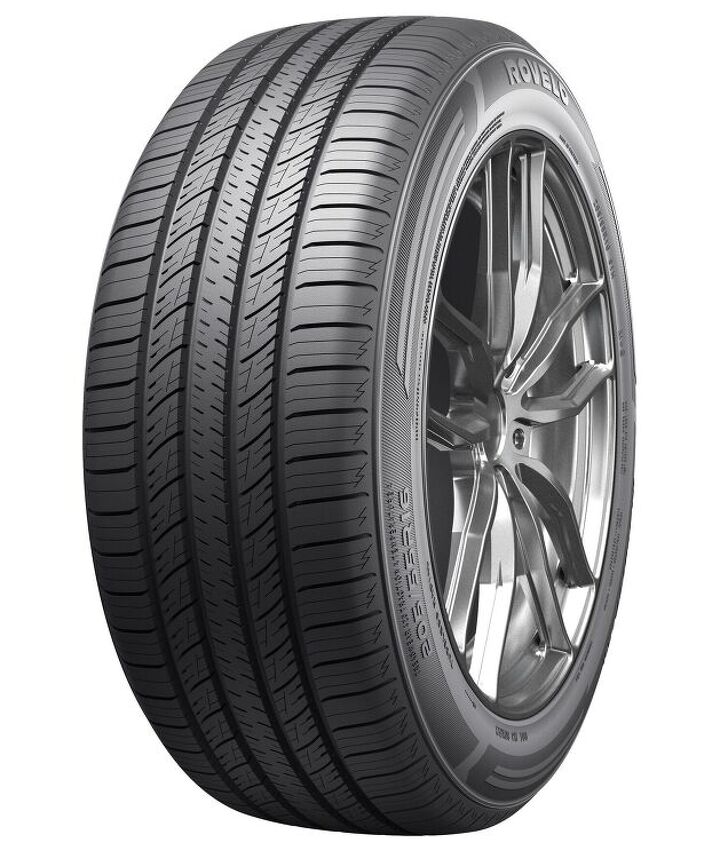
Many of us spend a lot of time in our cars, whether for work or just for the sheer enjoyment of getting out and enjoying the open road. When you spend that time behind the wheel, you can encounter any weather condition, requiring good all-season tires. All-season touring tires, like the Rovelo Instinct AS01, allow you to get the comfortable ride you desire while providing the traction you need. The Instinct AS01 all-season touring tire uses four wide, circumferential grooves in the tread design to help channel water away from the tire giving you excellent grip in wet and dry conditions. The center rib gives you increased directional stability with biting edges for added traction, while wide shoulder lugs promote even wear and improved cornering capability. The balanced variable pitch design delivers a quiet, comfortable ride. The Instinct AS01 tires come with a 60,000 mile/100,000km tread life warranty, giving you another reason to hit the road.
All-weather tires have a tread compound designed to remain soft and pliable at a much lower temperature than all season tires. But, thanks to the tread design, these hoops are still effective in rain, heat, dry conditions, and just about everything in between. A dandy new entry into this segment is the Nokian Remedy WRG5, a tire whose unique asymmetrical tread attempts to blend the best of all worlds while still nabbing the three-peak winter tire stamp of approval. This is partly thanks to so-called Venturi Grooves in that tread pattern which evacuates water (or winter slush) faster than kids evacuate from a school at lunchtime.
But no matter the all-weather tire chosen, buyers are likely to find thick tread blocks that can grip snow in the winter while tread grooves and block sipes drive out water for stability in areas with milder winters – or simply a rainy day in June. Remember, the performance of a tire is dictated by its molecular properties (the rubber compound) and its mechanical properties (the tread design). A top-notch all-weather tire like the Remedy WRG5 will have received ample amounts of R&D attention on both sides of that ledger.
Meanwhile, all-season tires have become a great option for fortunate sods living in parts of the country which don’t get much – if any – accumulation of snow. Some in the industry have taken to calling them three-season tire instead of the traditional all-season moniker, so be aware of that in the marketing hove out into the public sphere by tire companies. Compared with an all-weather tire, these black circles have smaller and lower blocks in their tread, designed to reduce road noise and roll easily in warm weather. These are laudable goals, especially if one’s home address is somewhere in the Pacific Northwest or Mojave Desert. For the rest of us, winter conditions are likely to clog up the tread channels with snow and slush, creating a packed surface whose tractive properties may be less than idea in an emergency maneuver, especially if ambient temperatures have dropped to levels only previously known to the surface of Hoth.
Speaking of temperatures, anything below 7C/45F is likely to start causing the rubber compound in an all-season tire to stiffen, further reducing traction in tough conditions. This will negatively affect braking distance and cornering grip. Remember, even if you live in an area which is prone to milder winters, the tires on our vehicles tend to care equally about that 7C/45F threshold as the amount of white stuff on a road surface. Turns out staying pliable is a good thing for tires and not just toffee candy.
Armed with this knowledge, you’ll be better able to select between the twin offerings of all-season tires and all-weather tires. If your driving conditions include near-freezing temps for a few months of the year, seek out a set of all-seasons. But if sunshine is frequent and the spectre of 60F weather strikes fear into the hearts of your neighbourhood, all-seasons could be a great choice.
[Product Image: Rovelo Tire]
Become a TTAC insider. Get the latest news, features, TTAC takes, and everything else that gets to the truth about cars first by subscribing to our newsletter.
Matthew buys, sells, fixes, & races cars. As a human index of auto & auction knowledge, he is fond of making money and offering loud opinions.
More by Matthew Guy






Comments
Join the conversation