

Driving Dystopia: Congress Still Wants To Mandate In-Car Monitoring

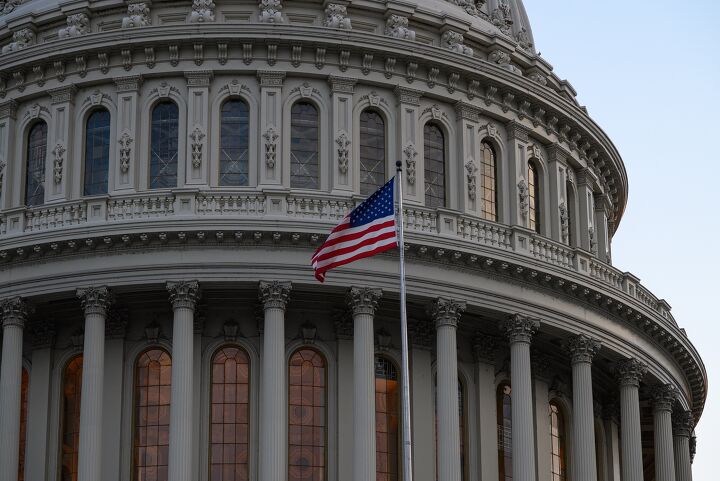
On Thursday, the United States House of Representatives voted to block an amendment that would have curtailed funding for federal requirements to have some form of in-cabin monitoring for drivers. While the technology is being floated as a way to combat drunk driving, the practical application will be universal — effectively creating a permanent form of surveillance inside future automobiles.
While the exact nature of the tech has not yet been decided, past attempts to implement a universal breathalyzer as part of some ignition interlocking device have not gone over well. Forcing millions of sober people, with no history of drunk driving, to blow into a tube in order to start their vehicle has been broadly viewed as invasive. Meanwhile, other detection systems that attempt to calculate blood-alcohol levels by sampling their air inside the cabin can be triggered by passengers who have had one too many.
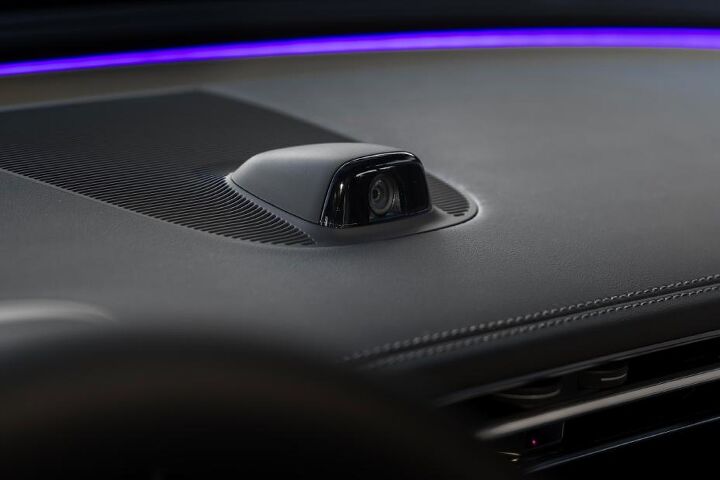
This has led the industry and government regulators to shift toward embracing in-cabin cameras that monitor head and eye movements. The preferred technology is based primarily on the same systems that many automakers now use to determine whether drivers are distracted while using hands-free driving features.
However, the concept also comes with rampant privacy concerns. Motorists would effectively be required by law to have a full-time surveillance camera pointed directly at their face. Granted, assurances about anonymized data have been made. But those tend not to work out all that well in practice and this feels like a rather grotesque violation of American’s Fourth Amendment Rights.
The provision was part of the $1.2 trillion Infrastructure Investment and Jobs Act (also known as the Bipartisan Infrastructure Law) that was passed in 2021. The legislation spends a colossal amount of money on transportation and infrastructure programs. But about half of it goes toward novel investments and programs with varied goals. Passed with most legislators admitting to not even having read the entire 1,039-page bill, it likewise included several provisions claimed to bolster domestic safety.
This is interesting because the European Union has similar requirements that are scheduled to take effect on all new models in July. The only real difference is that Europe claims the measure is being taken to combat distracted or drowsy driving, rather than drunk driving. However, the hardware added to vehicles is assumed to be more-or-less identical.
Europeans will be subjected to new models (registered after July of 2026) incorporating an interior camera that monitors the driver’s actions. While the changes won’t impact every new automobile to take the road later this year, the EU expects the technology to become universal by 2029. Euro NCAP, which establishes safety ratings for vehicles on the market, has likewise said that the inclusion of driver-monitoring technology will become an essential component of good ratings — and the criteria is only supposed to become stricter over time.
Back in the United States, Americans have a stronger propensity to oppose legislation that could be viewed as violating their constitutional rights. So the prospective rules have been presented by the government as a way to combat driving under the influence. Major proponents of the legislation have been groups like Mothers Against Drunk Driving (MADD), which typically highlight tragic instances and then demand the government take whatever action is required to prevent them from happening again.
Won’t someone please think of the children — and so forth.
It’s very similar to how legislators were sold on giving autonomous vehicles leeway for public testing. Almost a decade ago, the automotive industry claimed that relevant technologies could be swiftly implemented with government support and would save tens of thousands of lives. But there’s very little evidence to suggest that related technologies have improved roadway safety thus far.
In fact, fatal accident rates inside the United States have actually averaged higher in recent years than the period between 2009 and 2015. That’s an era that includes widespread smartphone ownership, but predates a lot of the advanced driving aids and touchscreen interfaces that are now commonplace.
However, that doesn’t preclude industry lobbying and activist groups — many of which (like MADD) are heavily dependent upon government funding — from making claims that novel technologies and stricter laws will save countless lives. Nor does it prevent them from using legitimate tragedies to push an agenda that will have sweeping implications for the entire country.
Michigan Representative Debbie Dingell is the legislator best known for pushing the new rule by leveraging a 2019 drunk-driving incident that took the lives of three people. However, it’s hard to view her stance on the matter as wholly genuine. She is perhaps the leading advocate for the automotive industry that’s currently in office. Dingell also worked for General Motors for 30 years, even serving as the President of the GM Foundation, prior to taking a government job.
Backing the industry when it comes to keeping the lights on and bolstering domestic production are fine. But attempting to advance legal requirements that would surveil people inside of their own property are actions worthy of criticism — especially since it’s being done under the guise of safety while the interested parties attempt to evoke sympathy or fear from the public.
Opposition to funding the proposal came from Kentucky Representative Thomas Massie and garnered support from quadrants of the GOP. His concerns pertained to deadlines and government funding being pushed through without the context of the required equipment being finalized. He argued that the technology was unproven and could theoretically falsely identify someone as impaired. For example, he asked what would happen if an injured person needed to drive themselves to the hospital or happened to be physically disabled. Would the car assume they were intoxicated just because their movements existed outside the norm?
According to CBT News, Massie also expressed serious fears regarding public privacy and violating civil liberties — garnering support from additional House Republicans in the process.
Still, he didn't get nearly enough of them on his side to change things. The house ultimately voted 268-164 to defeat his amendment.
From CBT News:
GOP colleagues Reps. Scott Perry and Chip Roy echoed concerns about due-process rights and the potential risks posed by technology that could automatically prevent a vehicle from operating.
Conversely, House Democrats defended the provision, noting that alcohol detection and driver monitoring technology is intended to prevent fatalities without infringing on privacy. Officials stressed that the systems under development do not track vehicle locations or collect sensitive personal data, and that the legislation allows automakers and regulators flexibility in choosing the most effective safety approaches.
This is hard to believe when connected vehicles already report every scrap of data possible back to the manufacturer. Automakers are absolutely in love with data collection and become visibly uneasy whenever you ask them difficult questions about what’s being done with telematic data.
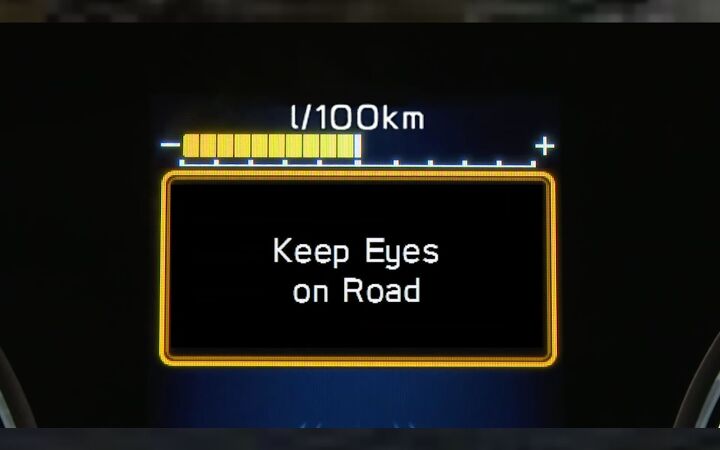
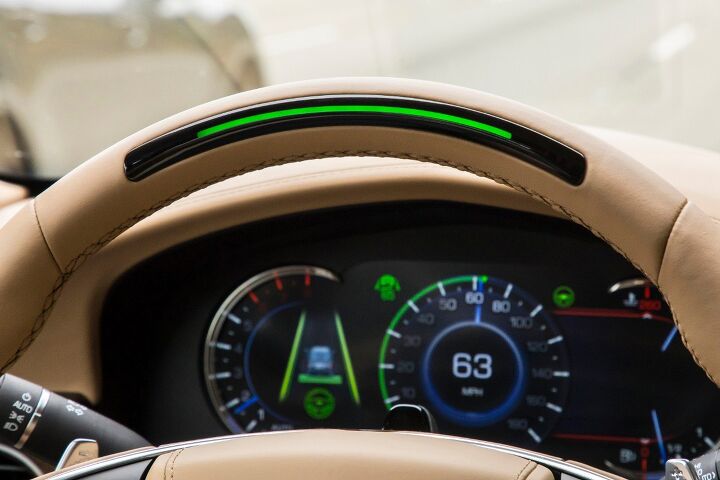
The bottom line is that information is extremely valuable to these companies. Automakers are already implementing in-cabin cameras on vehicles without any laws. General Motors’ Super Cruise, Ford’s BlueCruise, Stellantis’ Active Driving Assist, Tesla’s FSD, the Mercedes-Benz Drive Pilot, and BMW’s Highway Assistant all now utilize some form of driver monitoring. Even Subaru has implemented driver-focused cameras as part of its “DriverFocus Distraction Mitigation System.”
Now, the automotive industry’s leading allies in congress are pushing for legislation that would mandate driver monitoring on all vehicles sold inside every Western market. Insurance agencies likewise want these types of surveillance systems because it provides more opportunities to deny claims. They can simply note that the driver was not properly focused on the task by citing a gaggle of camera systems.
Most of those systems claim not to save any audio, images, or video at present. However, the past has taught us those kinds of promises are frequently subject to change without notice. For example, Microsoft Windows 11 now takes uninitiated screen shots from your computer and saves them. We've also seen instances where Amazon's Alexa has been cited for refusing data-deletion requests. We could go on. But you probably already know that every company on the planet is trying to covertly scoop up data about you for the purposes of creating targeted advertisements and third-party sales.
While everyone wants to be safer, nobody sane wants to be spied upon. But that’s effectively what’s happening here. Implementation may be slow, and come with assurances of privacy. However, the end goal is for the industry to extract more information from their customers because of the presumption of profitability. At the same time, the government now has more vectors to keep track of the population. Should driver monitoring become ubiquitous, it won’t be long before it’s leveraged for law enforcement purposes. We’ve already seen how far law enforcement is willing to go with Flock “traffic cameras” (a network that grows larger every day). Driver-monitoring systems will be no different once the technology has been around for a while.
Opinions on the issue are bound to vary. However, your author is not only opposed to this, he’s willing to violate any future rules under the Federal Motor Vehicle Safety Standards (FMVSS) in order to maintain his privacy. This is wholly unacceptable and being pushed through all around the world without the consent of the governed.
The world is sufficiently Orwellian already and automakers are presently harvesting a previously unimaginable amount of data about us for profit. Whatever steps need to be taken to prevent mandatory driver monitoring seems worth taking from my vantage. Those that want that extra layer of alleged safety can pay for it themselves. But I don’t want it to further raise the cost of vehicles while I’m forced to illegally modify mine, all because a surplus of legislators think they owe more to multinational companies than their own constituents.
[Images: Mercedes-Benz; General Motors; Subaru; pics_with_cb/Shutterstock]
Become a TTAC insider. Get the latest news, features, TTAC takes, and everything else that gets to the truth about cars first by subscribing to our newsletter.
Consumer advocate tracking industry trends and regulations. Before joining TTAC, Matt spent a decade working for marketing and research firms based in NYC. Clients included several of the world’s largest automakers, global tire brands, and aftermarket part suppliers. Dissatisfied, he pivoted to writing about cars. Since then, he has become an ardent supporter of the right-to-repair movement, been interviewed about the automotive sector by national broadcasts, participated in a few amateur rallying events, and driven more rental cars than anyone ever should. Handy with a wrench, Matt grew up surrounded by Detroit auto workers and learned to drive by twelve. A contrarian, Matt claims to prefer understeer and motorcycles.
More by Matt Posky






Comments
Join the conversation
I think the government has gotten way to intrusive regarding vehicle mods and monitoring.What could possibly go wrong if the
I'd promptly park a hula dancer or bobblehead in front of the thing....