


Why Isn’t The Jeep Wagoneer Selling Better?

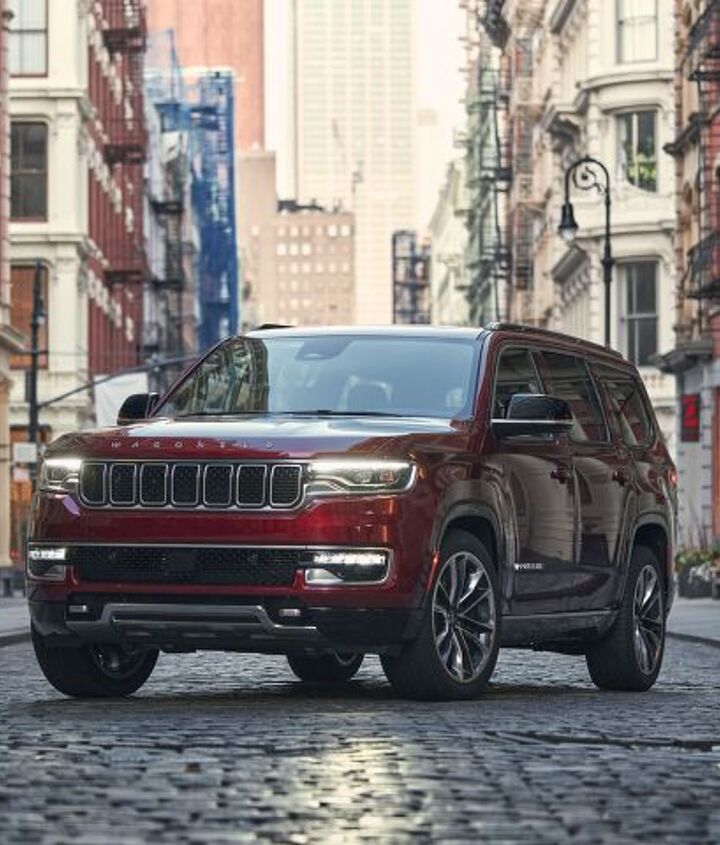
The Jeep Wagoneer has suffered a lapse in sales volume this year. However, your author assumed that this was a problem for all full-sized SUVs and that doesn’t appear to be the case.
Due to widespread complaints about vehicle pricing and overwhelming evidence that full-size pickup sales have slowed down, it makes sense that larger SUVs would be experiencing similar problems. They seem rather plentiful on dealer lots, often parked beside those pickups that aren’t moving, and are almost impossible to find below $65,000.
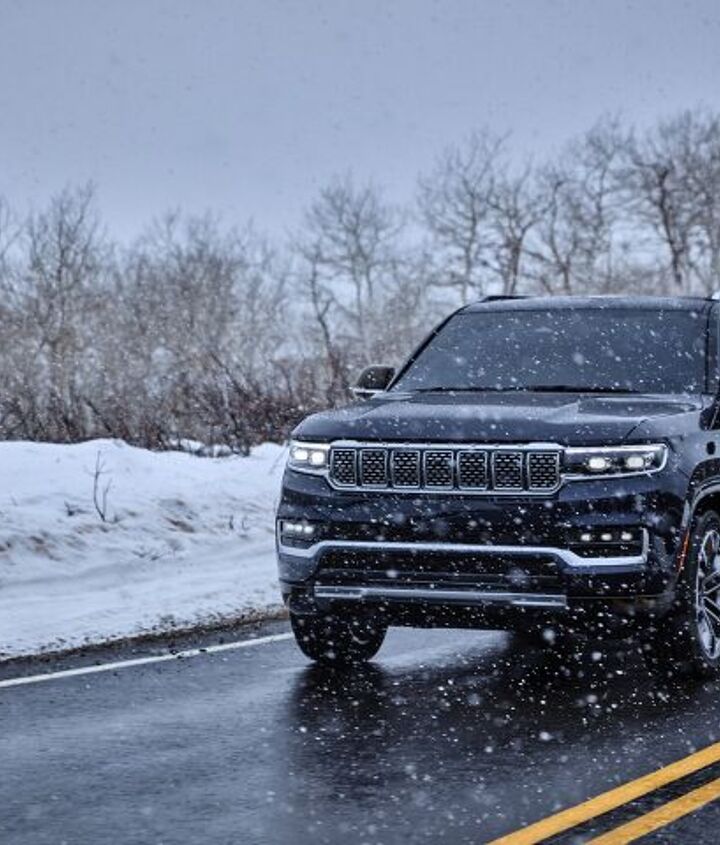
But only some models are actually suffering. The Jeep Wagoneer and Grand Wagoneer have experienced a staggering decline in sales through the first half of 2025. Stacked against volumes from the initial six months in 2024, Wagoneers are down by over 50 percent whereas the Grand Wagoneer (above) is down nearly 60 percent.
While we were aware that Jeep’s domestic competition was performing better, we didn’t realize just how much distance General Motors and Ford were putting between themselves and Stellantis’ Jeep until The Drive laid it out for us.

From The Drive:
Judging by the sales numbers, others are confused, too. So far this year, Jeep has sold 13,616 Wagoneers. A year ago, that figure was 29,843. That’s a drop of 54%. The only production vehicle in Jeep’s lineup that is doing worse is the Grand Wagoneer, which is down 58% from last year. On paper, the only cars doing worse are two models Jeep doesn’t even build anymore, the Renegade and Cherokee.
Demand for full-size SUVs is not to blame, at least not from what I can tell. The Tahoe, Suburban, and Expedition are all having great years, and even the Grand Wagoneer’s luxury competition is breathing easy. Lincoln’s having no trouble moving Navigators (up 74% for the year so far), and the Escalade (up 27%) and Yukon (up 22%) are likewise selling just fine.
If there’s any good news, it’s that Jeep—sorry, Wagoneer—has sold about 6,200 examples of the new Wagoneer S. The EV sits a class size down, competing more directly with midsize two-row SUVs like the Grand Cherokee (non-L). That’s enough to erase this year’s Grand Wagoneer sales deficit, but even factoring in the S’s sales, the “brand” is still short about 14,000 sales compared to a year ago.

I don’t think anyone paying attention to the automotive market will be shocked to learn that the EV version managed to yield a few thousand incentive-driven sales this year. However, the status of gasoline-powered Wagoneers is somewhat flummoxing. While The Drive suggested Jeep’s upmarket push has played a factor, the model isn’t actually any more expensive than its rivals. Both the Chevrolet Suburban and Tahoe start about $61,000 and can be outfitted beyond $80,000. Meanwhile, the GMC Yukon and Cadillac Escalade are both quite a bit more expensive. Over at Ford, Expeditions start around $65,000 whereas the Lincoln Navigator can’t be found below $100,000 unless you’re blackmailing someone at the dealership.
With the above in mind, one would assume Jeep Wagoneers must be extravagantly priced. But the base model starts right around $62,000. Grand Wagoneers are a little dearer at $72,000. But both are arguably competing with Cadillac and Lincoln in terms of outright luxury and typically at lower prices. Money doesn’t appear to be the issue here.

Interiors are likewise fairly varied. The Ford-built SUVs are so screen focused that it’s honestly sort-of ridiculous, whereas the SUVs manufactured by GM span the gamut. Escalades are trying so hard to cater to the Chinese market that the entire dashboard is nothing but a series of massive, overlapping screens. But the Chevy brand has managed to retain a fair number of physical controls, even though we’ve been seeing them gradually be supplanted by touchscreens in recent years.
The Wagoneer sort of occupies the middle ground in terms of screen presence, bending more toward what you’d find on the other luxury models. You’re getting far fewer physical controls than what you’d find in the Chevy SUVs. But you’re also getting interiors that seem to be designed for reasons other than simply serving a rolling display case for said screens.

Your author suspects that it’s a combination of traditional controls and engine options that are helping GM’s sales the most. Whereas Ford’s powertrain of choice for the aforementioned vehicles is now a twin-turbocharged 3.5-liter V6, General Motors continues to offer a 5.3-liter V8 or 6.2-liter V8. Granted, those engines have been faulted with being “troublesome” in recent years. But something tells me plenty of customers still prefer large, naturally aspirated motors when it comes to big SUVs.
While Ford hasn’t been putting V8s into its SUVs for quite some time, Jeep dumped the beloved 5.7-liter and 6.4-liter V8s from Wagoneer models just last year. In exchange, customers are getting a turbocharged 3.0-liter inline-six.

Frankly the turbocharged six-cylinder offerings from both Ford and Jeep are quite good from an experiential standpoint. In most cases, you’re getting a faster vehicle than before and netting slightly better fuel economy in the process. Your author likewise thinks the inside of a Wagoneer is a very nice space to occupy, rivaling if not surpassing most of the vehicles we’ve mentioned in this article. However, I still think that I would rather have a V8 beneath the hood of any full-size SUV. This is especially true if towing is going to feature prominently or you plan on keeping the vehicle for a long time and doing the maintenance yourself.
But that assumes the above applies to all would-be Wagoneer buyers and I’m just not sure that’s the case when V6-powered Fords are seeing an uptick in volume this year. Throw in your two cents if you’ve got an opinion on this one because we’re a little stumped. Why isn’t the Wagoneer doing better?

[Images: Jeep]
Become a TTAC insider. Get the latest news, features, TTAC takes, and everything else that gets to the truth about cars first by subscribing to our newsletter.
Consumer advocate tracking industry trends and regulations. Before joining TTAC, Matt spent a decade working for marketing and research firms based in NYC. Clients included several of the world’s largest automakers, global tire brands, and aftermarket part suppliers. Dissatisfied, he pivoted to writing about cars. Since then, he has become an ardent supporter of the right-to-repair movement, been interviewed about the automotive sector by national broadcasts, participated in a few amateur rallying events, and driven more rental cars than anyone ever should. Handy with a wrench, Matt grew up surrounded by Detroit auto workers and learned to drive by twelve. A contrarian, Matt claims to prefer understeer and motorcycles.
More by Matt Posky


Comments
Join the conversation
I blame the Name(s) and positioning. Just to look at em the Grand Wagoneer and Wagoneer look too similar, most folk who want an Escalade/Navigator level rig probably don't want it to look like the Tahoe/Expedition competitor. On the other hand average Joe looking for that Tahoe/Expedition level might not be doing enough research to know the Wagoneer starts in that territory and not Navicalade pricing. I feel like a Ramcharger/Grand Wagoneer combo would've been better.
... The negatives rolling out of 2022 and 2023 improved in 2024 but resolving more issues until 2025 killed the momentum. The fix? 5 year bumper to bumper warranty and 7 year powertrain. Power rear window. With these additions, the only factor that remains is looks, there is no objective measure that the Wagoneer losses.
....
I can share the truth about these large SUVs, I owned an Avalanche for 20 years loved and wanted to love the GM products. Expedition L/Max for 5 really liked it the L was better for space and range, and now a 2024 Wagoneer L, really like it. Loaded the L with 5 adults, 6 bikes, drive straight through from PA to Utah, amazing space and comfort, would have been more difficult in the Max, it would have been a worse comfort experience in the Suburban. Wagoneer L, 6 full size adults, 9 suite cases, roof luggage, 6x bikes off the back, 6 hour drives are enjoyable. I was looking to buy for 2 years, crawled around in every model, spent much time in the back seats, tilting, folding, and sitting. Drove every model.
If you are looking for space and comfort all around, the Wagoneer L is #1. Every driver and passenger is excellent, GM has the worst 2nd and 3rd row comfort the amount of padding on the seats is lacking next to the competition. Only the Wagoneer and Expedition offer 3rd row tilting, if adults travel in the 3rd row, the GM is lacking, even the Cadillac model lacked 3rd row title in 2024.
Expedition has the worst space behind the 3rd row, best view of the road for the driver. Folding sideboards and mirrors at a 'reasonable' trim.
GM offers a V8 and Diesel but the worst 3rd row, any reviewer who says otherwise is wrong. Even on the Premier trim, the 2nd row captains were lacking. Drive was much more truck like than the Expedition, similar to the Wagoneer.
So.. why the lack sales given the Wagoneer has superior space and tied #1 comfort?
1) Reliability reputation. Jeep is already tricky here, add in the issues with 2022 and 2023 models and people don't trust the brand.
2) Items that should be on a model like this. Power folding Mirrors missing until 2025, no rear access through the window, even a bike rack makes it difficult to get into the back fo the vehicle.