

The 2024 Buick Regal (CN) Leaked: Do We Miss It Yet?

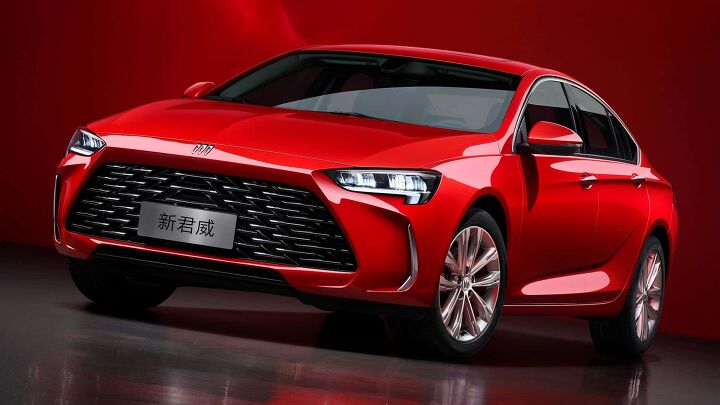
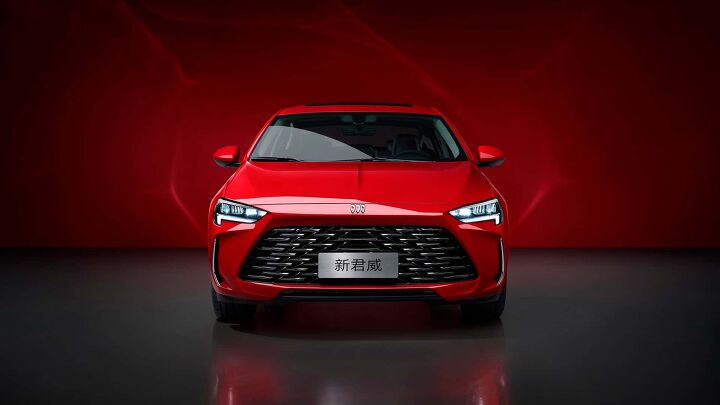
The Buick Regal may have been removed from our market. However, the model persists in China and has recently undergone a refresh that includes the updated tri-shield emblem.
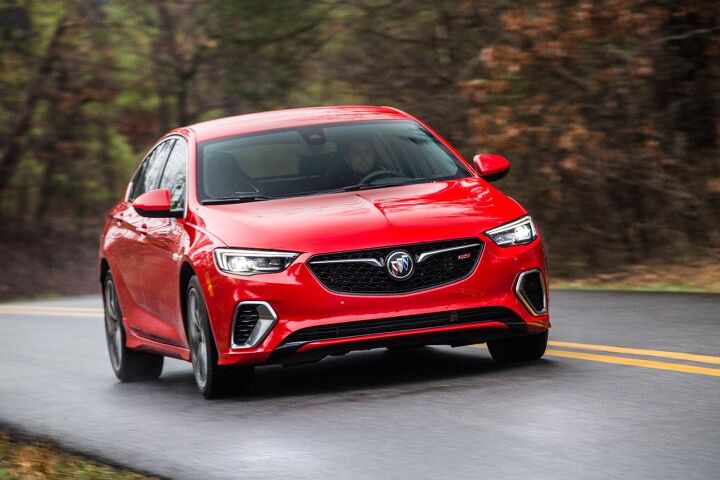
Despite U.S. sales volumes having been lackluster, with the Regal failing to break 20,000 annual units after 2014, the model offered functionality, all-wheel drive, and even a couple of desirable powertrains. There was even a TourX wagon variant that arguably mixed some of the vehicle’s best qualities in an ultra-practical package and the performance-slanted GS that offered a 3.6-liter V6 that developed 310 horsepower. It could have been more focused and aspects of the interior should have been better. But one cannot help but feel like the Regal failed to get the attention it deserved.
It wasn’t even terrible to look at — mixing design trends that had been synonymous with Buick since the 1990s with a tinge of Audi.
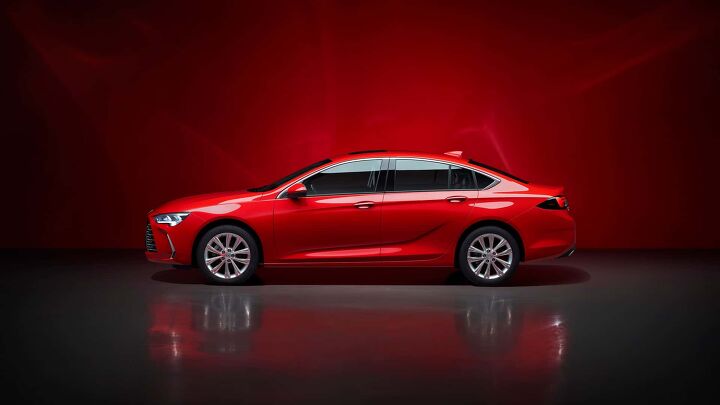
However, the new model (leaked by China's Auto Home) has moved away from those elements to embrace some of the visual trappings we’ve been seeing from the latest products offered by Chevrolet. Traditional headlamps have been supplanted by slimmer units or running lights with the real illumination coming from roughly where we used to expect to see fog lamps. Grilles have likewise been moved down and widened dramatically.
While Buick has embraced these styling changes on some of its newer crossovers — most notably the 2024 Encore GX — America never got a chance to see it on the Regal. The end result is relatively handsome. Though, if you removed the badges and told me this was the next generation of the Toyota Camry, I would probably believe you and would have said the same about the Chinese-market LaCrosse.
Buick is embracing some of the industry’s general design trends here. But the size of the grille and nearly complete absence of exterior (faux) chrome absolutely scream Toyota. Motor1 described the Regal’s new maw as “catfish-like.” But we’re doubting the Chinese Regal is an homage to later examples of the fourth-generation Chevy Camaro.
For all intents and purposes, Buick has become a Chinese brand. While formerly associated with affordable luxury that appealed to basically every generation that came before the Baby Boomers, the brand has been losing market share on the North American market since the 1980s.
There was an uptick in Buick popularity in the 2010s. But some have argued this was inevitable after the recession and Buick’s popularity in China continued to outpace whatever was happening on the domestic market. The brand had been synonymous with high-ranking communist officials since the 1950s and transitioned into becoming an aspirational brand for the Chinese market after General Motors partnered with local manufacturers in the 1990s to build vehicles within the country.
Explaining why a hard-line socialist nation would have premium luxury automobiles catering to young executives and the social elite, let alone entire brands that became extremely popular, is something best left for another article. The important thing is that the SAIC-GM gamble worked incredibly well and Buick ended up being one of China’s more popular brands. The nameplate now boasts some of the market’s highest volume models ever produced.
With the above in mind, it makes sense that the Regal was retained in China after being pulled from North America. Asian consumers still seem broadly interested in traditional automobiles and the brand itself maintains a desirable image there. But it’s hard not to feel a tinge of regret on the other side of the Pacific, especially considering all we get are a handful of crossovers.
Truth be told, the Regal’s fate was probably sealed before it even went on sale in the United States. Consumers were already trending toward crossovers for a myriad of reasons and domestic brands were keen on pushing them due to their yielding a higher profit margin. GM having sold Opel to PSA Group in 2017 also didn’t bode well for the Regal, as it was effectively a re-badged Opel Insignia.
Your author would absolutely like to see the now-exclusive-to-China Regal make its way back to North America. But it would never work. While SAIC-GM has outfitted the model with some tech inclusions older versions lacked, the base trim comes with the turbocharged 1.5-liter LFV I4 engine producing 166 horsepower and 184 pound-feet of torque. Higher trimmed variants (which includes the GS) come with the 2.0-liter LSY four cylinder with 233 hp and 258-pound-feet, which also utilizes a nine-speed automatic. But the 300-hp V6 is long gone and ideally what’s needed to set the car apart from would-be rivals.
At this stage in the game, anything in the segment arguably needs to offer a well-optimized base motor producing a minimum of 190 horsepower (ditto for torque) to be truly competitive. Lacking a continuously variable transmission would undoubtedly draw in a few enthusiasts. Honda’s Accord likely has one of the best CVTs presently on offer and is still bemoaned by driving fans. But it’s also going to win out when we start talking about what’s going to appeal to the vast majority of shoppers that just want to conduct their daily commutes in peace.
There’s a reason the Regal left our market. Blame a lack of interior refinement, GM selling Opel to PSA, or the fact that the whole industry is prioritizing crossovers. All we want to know is do you miss it and has that feeling changed since you’ve seen what it could have looked like if it had survived for a few more model years?

[Images: SAIC-GM; GM]
Become a TTAC insider. Get the latest news, features, TTAC takes, and everything else that gets to the truth about cars first by subscribing to our newsletter.
Consumer advocate tracking industry trends and regulations. Before joining TTAC, Matt spent a decade working for marketing and research firms based in NYC. Clients included several of the world’s largest automakers, global tire brands, and aftermarket part suppliers. Dissatisfied, he pivoted to writing about cars. Since then, he has become an ardent supporter of the right-to-repair movement, been interviewed about the automotive sector by national broadcasts, participated in a few amateur rallying events, and driven more rental cars than anyone ever should. Handy with a wrench, Matt grew up surrounded by Detroit auto workers and learned to drive by twelve. A contrarian, Matt claims to prefer understeer and motorcycles.
More by Matt Posky









Comments
Join the conversation
I would love to own a used 2019 or 2020 Sportback GS. Thing is, I know perfectly well how difficult it will be to find replacement parts for such a vehicle in a few years time, if not already
I bought/own a 2019 Regal GS. This after owning a 2011, 2014, and 2016 LaCrosse. I loved the luxury of the LaCrosse and would have bought another, however the restyled 2017 didn't do anything for me. So being a life long Buick lover and performance enthusiast, we opted for the Regal GS for its styling and performance. It falls short of the LaCrosse on a few luxury items, but it makes up on performance, with the 3.6 liter DOHC V6, a smooth as silk 9 speed auto, and AWD! It handles like a much smaller sports car, with plenty of power to spare. It's very well balanced. I would know, because I've owned 6 Corvettes.
To say I'm disappointed that GM ceased production of sedans is an understatement! They gave the entire market to KIA, Hundai, Genesis, Lexus, BMW, Mercedes, and any other manufacturer that has continued to capture the sedan market. To top that they're planning to go full EV in the coming years, with no national infrastructure to back it up.
The only positive takeaway for me is that I now own 2 incredibly rare Buicks, our 2019 GS (approximately 1319 sold), and my 1983 Riviera convertible (1750 sold). I've owned the Riviera since 1994, and I think I'll keep the GS a while too. I'm not too concerned about getting parts right now, as they're still producing the Opel variant in Germany.