

Jaguar Sales Drop By 97 Percent In Europe, Which Is Allegedly Fine

Sales for Jaguar have been on a downward trend for a while and the brand endured a 97-percent decline in European volume (year-over-year) in April. That’s according to data from the European Automobile Manufacturers’ Association, which also reported that total Jaguar sales have declined 77.8 percent year to date compared to 2024. However, everything is allegedly going according to plan because the company has purposefully decided not stop producing cars last year.
Why would an automaker stop building its core product? Well, Jaguar allegedly believes that it’s going to emerge like a phoenix from the ashes as an all-electric brand. It’s even been slinging data suggesting that it has seen an increase in traffic to its website and that a meaningful portion of consumers still see it as a brand worth paying more for, especially among high-income households.
But this honestly feels like industrial coping to help keep investors happy until everything implodes. Jaguar has jumped on all of the latest trends and now seems to be paying the price.

The Jaguar I-Pace (above) was supposed to be the tip of the spear for its planned EV offensive. But the car has taken criticism for lackluster reliability and odd charging issues. While these are supposed to have been dealt with (minus the slow charging), the vehicle did not become more desirable. Sales were relatively poor and the model has one of the steepest deprecation curves on the entire market. It's been discontinued, along with almost everything else the company used to build (other than the F-Pace).
Then there’s Jaguar’s shift in marketing. Despite being a historically British nameplate with an extensive automotive heritage many companies lack, Jaguar’s advertising efforts don’t leverage any of that. Instead, we’ve been seeing marketing campaigns that typically stem from businesses that don’t have a physical product to sell.

Its “Copy Nothing” advertisement features oddly dressed people walking out onto a pink planet, followed by a series of images that look like they were hastily tossed together for New York Fashion Week. No cars are featured and you wouldn’t even be able to tell it was an ad for Jaguar if it didn’t tell you at the very end. While Jaguar suggested that the spot was designed to appeal to a younger, more diverse, global audience — that it now claims to be targeting — it just feels like the company doesn’t have anything up its sleeve.
You could use that ad for literally anything and it wouldn’t make a bit of difference. It says nothing about Jaguar or where it’s going and has been attributed by many as the reason the brand is now struggling. The Daily Mail even went as far to say that Jaguar had gone “woke.” But outside of the intentionally androgynous and multi-racial casting taking place in its latest ad campaign, it’s hard to cite any examples.
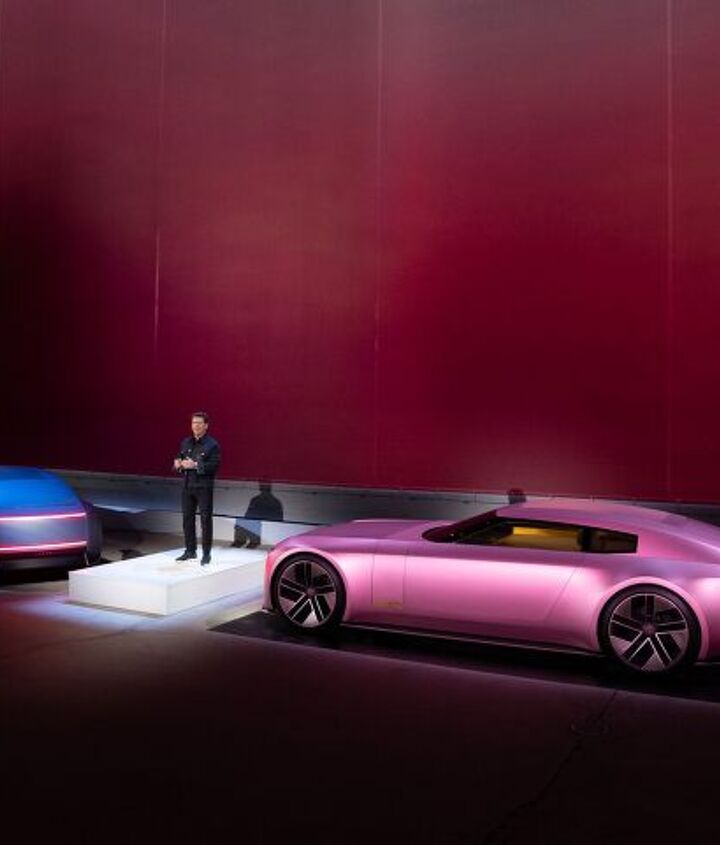
If anything, it just seems like Jaguar doesn’t have much to offer. The Jaguar Type 00 concept (below) that’s supposed to become its next flagship looks like it was hastily designed by a novice art student and winding down production of its existing models in anticipation of electric vehicles that don’t even exist yet just seems kind of stupid. Your author has doubts that it'll ever reach production.

The lesson here is that chasing trends isn’t always prudent. Jaguar’s leadership seems to want to turn the company into a fashionable and modern brand. But it’s a car company that has spent most of the last 100 years building luxury and performance vehicles, not a business that sells perfumes and clothing.
I think the entire industry is starting to learn that attempting to pivot every brand into becoming an uber-hip tech company probably wasn’t the best idea. Tesla’s success clearly surprised legacy manufacturers and copying the EV brand has been a poor strategy for most. It worked for Tesla because it was a novel idea appealing to a niche market of early adopters. But most people arguably want legacy automakers to continue doing what they’ve always done.
Dozens of businesses cannot copy something their rival did ten years ago and then expect the entire world to be dazzled by it.
Even Tesla has seen a decline in sales of late, perhaps indicating market saturation. Meanwhile, the EV brand has taken criticisms for lackluster customer service and using software to effectively undermine the concept of private ownership. That’s simply not going to work for a majority of consumers and following that path may prove to be financially disastrous.
However, it’s hard to know exactly who is to blame. Jaguar Land Rover Automotive PLC has been owned by India’s Tata Motors since 2008 and spent the last several years running through CEOs. Meanwhile, the company is concerned about the United Kingdom’s 2030 target to stop selling vehicles wholly reliant on internal combustion while the European Union has its target set for 2035.
Regulations have undoubtedly played a major factor in sending automakers scrambling to revise their product lineups and the smaller brands are undoubtedly suffering the worst from this. Despite being a well known brand, Jaguar is nowhere near the size of a Mercedes-Benz or BMW. It presumably had to stop production of combustion vehicles (to some degree) and pivot development exclusively toward EVs in order to navigate forthcoming regulatory changes. There's a sense that the brand has been set up to fail, either by regulators or its own parent company.
That’s genuinely kind of a sad thought and may indicate that the gregarious advertisements and goofy concepts Jaguar has been putting out are actually a sign of desperation. Sure, we can say that the sales decline is part of a planned reboot while the automaker finishes development on fresh EVs. But that doesn’t change the fact that its dealer lots are barren and that the company isn’t garnering any sales. As much as the business world would like to totally abstract what commercial success means these days, there’s a limit to what the public is willing to believe.

[Images: Jaguar]
Become a TTAC insider. Get the latest news, features, TTAC takes, and everything else that gets to the truth about cars first by subscribing to our newsletter.
Consumer advocate tracking industry trends and regulations. Before joining TTAC, Matt spent a decade working for marketing and research firms based in NYC. Clients included several of the world’s largest automakers, global tire brands, and aftermarket part suppliers. Dissatisfied, he pivoted to writing about cars. Since then, he has become an ardent supporter of the right-to-repair movement, been interviewed about the automotive sector by national broadcasts, participated in a few amateur rallying events, and driven more rental cars than anyone ever should. Handy with a wrench, Matt grew up surrounded by Detroit auto workers and learned to drive by twelve. A contrarian, Matt claims to prefer understeer and motorcycles.
More by Matt Posky









Comments
Join the conversation
"Copy Nothing"?
Start with "Jaguar", let that name die peacefully with its reputation intact and come up with something new.
Love Jaguar and hope they can find their way. But design details aside, the form factors are simply not emotionally compelling.
The reality of nearly every organization on the planet is the culture is ALWAYS top-down. And with a personality like Musk's, it's not just unavoidable, he dominates the definition of the organization. Gates defined MS, Ellison defines Oracle, Buffet defines Berkshire, Bezos defines Amazon, and so on. If you look at global EV sales, you'll see if there are any overall regional sales drops, they don't come close to the Tesla drops. From the recent IEA report:
Electric car sales exceeded 17 million globally in 2024, reaching a sales share of more than 20%. Just the additional 3.5 million electric cars sold in 2024 compared with the previous year is more than the total number of electric cars sold worldwide in 2020. China maintained its lead, with electric cars accounting for almost half of all car sales in 2024; the over 11 million electric cars sold in China last year were more than global sales just 2 years earlier. As a result of continued strong growth, 1 in 10 cars on Chinese roads is now electric. Europe saw sales stagnate in 2024 as subsidy schemes and other supportive policies waned, but the sales share of electric cars remained around 20% as stronger sales in some countries compensated for lower sales in others. In the United States, electric car sales grew by about 10% year-on-year, reaching more than 1 in 10 cars sold.
And there are simply zero demonstrations, articles, interviews - any evidence - that people aren't buying any other brand because of the company's leadership or social reputation. This is how it always works.