IIHS Notices Modern Vehicles Offer Terrible Visibility, Asks NHTSA for Safety Help


The Insurance Institute for Highway Safety (IIHS) has realized that modern vehicles have proportions that drastically limit visibility and is introducing new methods of testing blind spots. However, it is likewise pressuring the National Highway Traffic Safety Administration (NHTSA) to ramp up efforts to reduce the rising number of on-road fatalities — completely ignoring that government regulations are one of the biggest influences determining how modern vehicles are designed.
Visibility has become a major issue for modern drivers and the IIHS has grown increasingly aware of the problem in recent years. Headlights (particularly those equipped to trucks and SUVs) are blinding oncoming traffic and changes in vehicle designs have exacerbated blind spots. While the IIHS has already been working on better ways of assessing headlight performance, determining outward visibility has become its latest endeavor.
Considering how glaring the difference is to anyone who goes between new and older vehicles, it probably shouldn’t have taken this long for the IIHS to notice. But we suppose this is a case of better-late-than-never and the new testing protocols do sound fairly advanced.
From the IIHS:
Over multiple redesign cycles from 1997 to 2023, forward visibility within a 10-meter radius fell as much as 58 [percent] for three popular SUVs, the researchers found. For a top-selling pickup, close-proximity visibility declined by a smaller 17 [percent], but even the earliest model had extremely large blind zones. In contrast, the early models of the two cars provided relatively good visibility that fell less than 8 [percent] in later generations.
“The across-the-board decrease in visibility for this small group of models is concerning. We need to investigate whether this is a broader trend that may have contributed to the recent spike in pedestrian and bicyclist fatalities,” IIHS President David Harkey said.
“This study also illustrates that the new method developed by IIHS gives researchers a straightforward, repeatable way to assess driver visibility,” he added.
In the past, researchers who wanted to compare the blind zones of different models needed to acquire engineering drawings or position each vehicle in an open area specially marked with grid lines or traffic cones. Because these methods were so cumbersome, no large-scale comparisons were attempted.
While lasers have allowed testing to improve in recent years, the IIHS argued they were likewise limited. The insurance group said its current testing method “relies on computational software and a portable camera rig that can be positioned in the driver seat at various heights to represent different-sized drivers.” This allows for more comprehensive testing and a permanent 360-degree view from the driver’s seat. From there, the software is used to quickly create a blind zone map for individual vehicles (pictured below).

The takeaway was that outward visibility worsened dramatically as vehicles have grown in size. Thicker pillars and smaller windows (both designed to improve crash-worthiness) have made it harder for drivers to see what’s going on outside their vehicles. The IIHS noted that the most obvious example of this was testing various Honda CR-V model years.
“Drivers of the 1997 model were able to see 68 [percent] of the area 10 meters in front of the vehicle, while drivers of the 2022 model can see only 28 [percent],” explained the IIHS. “Similarly, drivers of the model year 2000 Suburban (the earliest model of that vehicle studied) were able to see 56 [percent] of the area 10 meters in front of them, while drivers of the 2023 model can see only 28 [percent].”
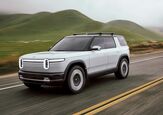
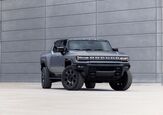
Body styles also played a role. Trucks typically had the worst outward visibility, followed by SUVs, crossovers, and then traditional sedans. While there will always be exceptions, the general rule could be boiled down to the bigger/newer a vehicle happens to be the less outward visibility it probably offers. The IIHS believes this is relevant because the United States has seen an influx of fatal accidents since 2015, with pedestrian-related incidents being highly relevant.
“These results are notable because we already know that the portion of SUVs in the U.S. fleet grew substantially over these years as well,” said IIHS Senior Research Engineer Becky Mueller, who led the development of the new mapping technique and is a co-author of the Volpe Center study. “If further research confirms that these changes reflect a general change, that would suggest that declining visibility in SUVs has compounded the effects of taller, blunt-nosed vehicles that IIHS has already documented.”
However, the IIHS announcement of its new blind-spot test coincided with the group asking government regulators to go into overdrive to help deal with what it called “a road safety emergency.” IIHS President David Harkey even met with the U.S. House of Representatives Committee on Energy and Commerce’s Subcommittee on Commerce, Manufacturing, and Trade to discuss the issue on June 26th.
“NHTSA has an essential role to play in confronting our current road safety emergency, but doing so requires stronger leadership, a sense of urgency and a greater willingness to act,” Harkey told congress.

However, government regulations are a part of why modern vehicles have such abysmal visibility. One of the main reasons automakers pivoted toward selling increasingly large vehicles after 2011 has everything to do with how U.S. emission laws work. Larger vehicles come with certain exemptions. This, along with the fact that they’re typically more profitable, has encouraged manufacturers to build increasingly massive automobiles while doing away with smaller alternatives.
Additional criticisms could be leveled at the IIHS. Automakers want exemplary crash test ratings and have increased body pillars to strengthen vehicles. However, the IIHS has increased the threshold for what constitutes outstanding crash performance over time — with automakers doing what they could to keep up.
The group has likewise failed to criticize the industry’s sudden reliance on driving assistance features and interior screens (both of which coincide heavily with raising accident rates). This is presumably because insurance groups like the idea of connected, data-driven vehicles since they benefit from the telematics data. The IIHS is unlikely to advocate for simple vehicles, even if there’s mounting evidence that they promote safer driving habits, when the groups that fund it are profiting off automotive connectivity. The Insurance Institute for Highway Safety has also adopted Vision Zero policies, which have been criticized by many ( including your author) as overtly anti-car. Vision Zero is overwhelmingly fixated on restricting all forms of travel through aggressive fines and leveraging new technologies designed to surveil the public both inside and outside of the vehicle.
Harkey could have told congress to get screens out of cars. But he instead recommended adding even more technology onto vehicles. His top recommendations included “antilock braking systems for motorcycles, mandating technology to prevent impaired driving and setting stringent requirements for safety features on semitrailers.”
The bit about “mandating technology to prevent impaired driving” has been an issue both the government and insurance industry have both wanted for some time. While numerous concepts have been thrown around, the most common includes driver-monitoring cameras with software that would shut a vehicle down once it determined a motorist was impaired or inattentive.
Even though Western governments previously called similar technologies draconian, anti-privacy and counter to the concepts of liberty when introduced in places like China, they’ve gradually changed their tune. The insurance industry is absolutely giddy about such inclusions becoming requirements and we’re already seeing Europe mandate aspects of this. Vehicles with advanced driving suites have also started implementing similar driver-monitoring technologies in North America. But there’s nothing requiring manufacturers to install them in all cars just yet.
At the end of the day, the IIHS does a lot of sound research and produces useful data. Looking into how badly outward visibility has become is invaluable information for the world to have. However, the group is ultimately beholden to insurance groups that seem fixated on their bottom line and aren’t terribly interested in maintaining driving freedoms. Likewise demanding the government take action, when past activities actually seem to have resulted in reduced safety (while likewise incentivizing the industry to build more massive vehicles with higher price tags) seems ill advised.
Modern drivers are already inundated with highly invasive modern tech that seems to do very little in terms of promoting genuine safety and there are now other factors at play (e.g. worsening vehicle affordability, elevated repair costs, bad designs promoting distracted driving and lessened visibility). Despite all the good that the IIHS and NHTSA have done in the past, remaining fixated on advanced technologies may exacerbate some of the worst problems today’s drivers are facing while totally ignoring practical solutions to many of the problems those safety groups likewise helped to create.

[Images: IIHS-HLDI; Natallia Boroda/Shutterstock; Fabio Principe/Shutterstock]
Become a TTAC insider. Get the latest news, features, TTAC takes, and everything else that gets to the truth about cars first by subscribing to our newsletter.
Consumer advocate tracking industry trends and regulations. Before joining TTAC, Matt spent a decade working for marketing and research firms based in NYC. Clients included several of the world’s largest automakers, global tire brands, and aftermarket part suppliers. Dissatisfied, he pivoted to writing about cars. Since then, he has become an ardent supporter of the right-to-repair movement, been interviewed about the automotive sector by national broadcasts, participated in a few amateur rallying events, and driven more rental cars than anyone ever should. Handy with a wrench, Matt grew up surrounded by Detroit auto workers and learned to drive by twelve. A contrarian, Matt claims to prefer understeer and motorcycles.
More by Matt Posky








Comments
Join the conversation
The expanded A-pillars for increased rigidity has really made it a problem to see pedestrians. Most common is strolling through a grocery store parking lot at 5mph. If you get a person walking at the same speed, they can remain in that blind spot for many seconds undetected. I had a 2011 Leaf that was the worst offender. Not only does it have that thick A-pillar, it also expanded wider at the bottom, so much so they put in a little, useless window in there. Doesn't help, still a big blind spot.
Time to make mirrors SMALLER & mount them to where they are SUPPOSED to be mounted - to the DOORSKIN - like on the 3000gt! - instead of at the front of the door where GLASS is supposed to be! Idiot designers!