
Chinese-Made Vehicles Gaining Acceptance with American Consumers

When Canada agreed to lower tariffs on 49,000 Chinese-made electric vehicles earlier this year, it raised alarm bells for U.S.-based automakers, acting as further confirmation of what many consider inevitable: the sale of those vehicles in America.

Recent studies aren’t easing tensions about the possibility as attitudes about cars, trucks, and SUVs made in China are changing. More and more American consumers, especially young buyers, are becoming more open to the idea of buying a vehicle exported to the U.S. from China by a Chinese automaker.
According to a study released last week by Cox Automotive, 40 percent of consumers support Chinese automotive brands entering the U.S. market. Comfort levels with Chinese automakers rise substantially if paired with an existing U.S. brand. Seventy-six percent of consumers would be comfortable under that scenario.
A separate study last fall by research group AutoPacific Inc., shows Americans are becoming increasingly aware of the top players among Chinese automakers. “Chinese brands are catching the eye and attention of these interested stateside vehicle shoppers, with Huawei (27 percent), Xiaomi Technology (23 percent), and BYD (19 percent) ranking as the top three most considered out of several automakers listed in our study,” researchers noted.

Great Wall (16 percent), Geely (13 percent), and Nio (13 percent) rounded out the top six on the list. Half of those surveyed by AutoPacific said they would give real consideration to the idea of buying a Chinese import, which is a 10-percent increase over the same study conducted in 2024.
If you look at the Cox numbers, only BYD and Geely make the top five, in terms of familiarity, with BYD leading the pack at 35 percent and Geely third at 27 percent. Chery (30 percent), Changan (26 percent), and Jetour (25 percent) comprised the rest of the list.
The big question is who would be most open to these brands, but Cox has it narrowed down. “Consumer sentiment toward Chinese auto brands is sharply divided. Younger, EV-oriented shoppers show meaningful openness, while older and domestic-loyal buyers remain resistant,” Cox officials noted.
Younger buyers will lead the way with 69 percent of Gen Z buyers more likely to consider buying a Chinese brand than older groups. With older groups the number drops to 38 percent. Younger buyers are likely to be more open because they’re looking for a more affordable vehicle.
And all potential buyers see that as the biggest strength of Chinese vehicles, with 49 percent of consumers rating them as excellent or very good for value for money. The idea of “value” extends to the next-strongest metric: fuel efficiency at 43 percent. Other criteria include: technologically advanced (41 percent), innovation (40 percent), good performance (35 percent), and at the bottom of the list is reliability at 32 percent.
“Views are more mixed on fundamentals such as durability, quality and safety, which each received top ratings from roughly a third of respondents, while reliability trails slightly,” Cox noted.
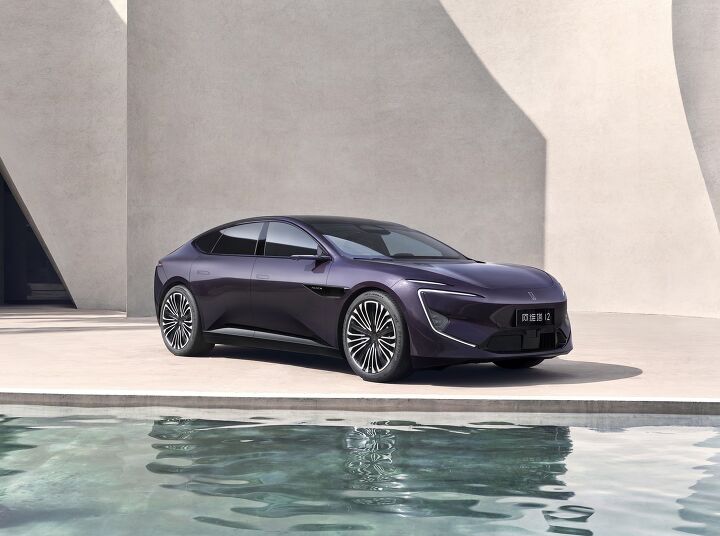
[Images: Xiaomi, BYD, Huawei, Geely]
Become a TTAC insider. Get the latest news, features, TTAC takes, and everything else that gets to the truth about cars first by subscribing to our newsletter.

Michael Strong has spent more than 25 years writing about the automotive industry. A Detroit-area native, he’s written about everything from local car shows to product reviews to financial news. Currently he writes and edits for a variety of national and local publications. He’s also a longtime member of the Automotive Press Association and the International Motor Press Association, and a graduate of Georgia Southern University. Hail Southern! Despite a love for ’70s land yachts and BMWs from the late ’80s and early ’90s, his personal vehicle is neither of those.
More by Michael Strong








Comments
Join the conversation
Why not? We’re letting them buy our farmland. What could go wrong?
Wrong tag line for this article .Should say “ Some Americans , not “Americans” .Any one that buys one does not support the US auto manufactures and manufactures friendly to America and is outwardly supporting our enemy and a fool .Why ????????????