
Fiat X1/23: The Electric City Car That About Forty Years Too Early
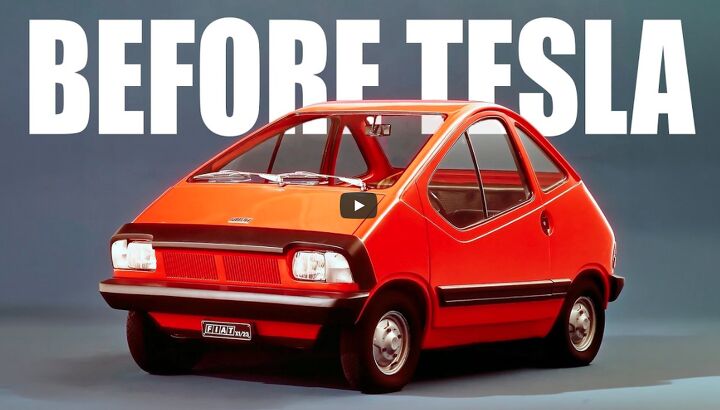
The Fiat X1/23 is one of those quietly brilliant ideas that didn’t fail because it was wrong, but because the world around it simply wasn’t ready. Today, you can’t move without hearing of or seeing electric cars. 


They’re everywhere — whispering through traffic, packed with screens, promising to save the planet while simultaneously needing three software updates before breakfast. But back in 1972, the idea of an electric car wasn’t fashionable. It wasn’t even particularly sensible. It was, at best, an experiment. And that’s exactly what Fiat built.


The TTAC Creators Series tells stories and amplifies creators from all corners of the car world, including culture, dealerships, collections, modified builds and more.


An AI-generated transcript edited by a staffer is below.


[Image: YouTube Screenshot]


Become a TTAC insider. Get the latest news, features, TTAC takes, and everything else that gets to the truth about cars first by  subscribing to our newsletter.


This transcript discusses the forgotten Fiat X1/23, an experimental electric city car developed by Fiat in 1972, arguing that it was far ahead of its time. 


The narrator explains that while electric vehicles are now common and heavily promoted, the idea of an EV in the early 1970s was considered impractical and experimental. Fiat introduced the tiny X1/23 at the Turin Motor Show, but it received little attention because Fiat focused instead on profitable mainstream models like the Fiat 124, Fiat 500, and Fiat 124 Spider. 


The X1/23 was designed specifically for short urban trips. At just over two meters long, it was extremely compact and featured a strict two-seat layout. Its lightweight electric motor produced about 13–14 kW, powered by heavy lead-acid batteries mounted low in the chassis. The car could reach about 70 km/h and travel roughly 70–80 km on a charge—figures the narrator argues were actually practical for city driving, even by modern standards. 


One of the most remarkable aspects of the car was its early use of regenerative braking technology, decades before it became common in modern EVs. Although primitive, the system recovered small amounts of energy during braking to recharge the batteries, showing that Fiat was already experimenting with solutions to electric vehicles’ biggest limitation: range. 


The transcript emphasizes that the X1/23 failed not because the concept was flawed, but because the world lacked the technology and infrastructure needed to support it. Battery technology was expensive and inefficient, charging infrastructure did not exist, and there was almost no consumer demand for electric cars. Fiat ultimately abandoned the project and returned to producing affordable gasoline-powered cars like the Fiat 127 and Fiat 131. 


The narrator concludes that modern city EVs are essentially fulfilling the same vision Fiat explored in 1972: small, efficient electric cars for urban mobility. The difference is that today’s technology, infrastructure, and public attitudes finally make the concept viable. The X1/23 is presented not as a failed experiment, but as a remarkably accurate preview of the future of urban transportation. 


Chris VS Cars | TTAC Creator

I am a proud owner of a single turbo 335i and a Ducati 999s. I make a lot of content on both, as well as just sharing my opinion on just about everything car and motorcycle related,

More by Chris VS Cars | TTAC Creator

Comments
Join the conversation
 2 comments
  • Slavuta Slavuta on May 21, 2026

    Many proud country men would love such a unit. Is good car for driving around town for breadline and then to trade for indoor cigarette. If all local patriot switch to ev many amounts of kerosene fuel would be freed up for tractor and home heating needs.

  • KOKing KOKing on May 21, 2026

    This looks like a musubi rice ball, even more than an Isetta or CitiCar.

  • Amwhalbi My 1972 Mercury Capri was my first stick shift car. God, I miss that thing. It was a blast to drive.
  • Vid169489471 The technology exists today to produce a variable color temperature (kelvin) LED lamp. It can vary from 2700k that soft orange look to 6500k the bright daylight with the bluish tint.Since everything in a late model car is computer controlled, it would be an easy task to write a few lines of code that enables your vehicle to not only dim down from hi to low beam but to shift color temp down to the 2700k range for oncoming traffic, then back up to 5000k once oncoming traffic has passed. For the operator it would be automatic and seamless. For older cars they could be retrofitted with LEDs that are 2700k on low beam and 5000k on hi beam. As far as standards, there could be a lumens max, and a minimum. Several States already have minimum lumen standards going back to the old incandescent bulbs. Why not update these to national standards.
  • Jam169859557 More regulation is needed for ALL vehicle lighting systems. [list=1][*]The lighting that is most blinding are the rapidly flashing red, blue and amber lights on emergency vehicles. The lights themselves are blinding, flashing so rapidly that it's impossible for even the sharpest eyes to adjust. What's worse, is the nature of the emergency requires a careful view of the area surrounding the emergency vehicle. There is something going on that needs to be seen. More flashing lights is not the solution.[/*][*]Brighter headlights need to be regulated. The tall riding vehicles do not need headlights positioned so high that they blind drivers in lower riding vehicles. And those heasdlights need to be aimed properly. When I first started driving my 2020 Subaru Outback, many drivers would flash their lights, hoping I would dim my lights. This stopped after I performed am easy adjustment that tilted the beam lower. Late model Subaru headlamps are designed with a sharp cutoff that project less glare above the hood line. When the headlights are properly aimed, other drivers are not blinded by the beam.[/*][*]Customized light assemblies make it more difficult to see the marker lights (tail lamps, turn signals and side marker lamps) that have been tinted. There are many municiple codes that prohibit this tinting, but these laws are seldom enforced.[/*][/list=1]Solutions: Tight controls on emergency vehicle lighting. In trying to make these vehicles more visible, a dangerous side effect is reducing the ability of drivers to see the surrounding perils.Headlight design regulations that reduce the height of the headlight assemblies. Just because a pickup truck has a hood that sits 4 feet abouve the pavement, it does not mean the headlights need to be so high. Owneres should maintain proper adjustments to their vehicle headlights.Establish and enforce regulation requiring a illumination standard be followed.
  • Stl170698708 as someone who hates big government, and their interference;but you can add me to the list of people that are blinded by the lights.unfortunately "the poop is out of the horse and no way is it going back in"They have had 5 years to make lights bigger, badder and brighter because in the vehicle work it is go big or go home!Trucks are the worst because so many people use them to express their dominance and that is big, big, big $$ both at the Original Purchase and in the Aftermarket world.If, we are so lucky to get some good government regulation on this it will also take some very good Court enforcement to get the aftermarket people with fines and lawsuits.Much like the EPA did with the Diesel Tuner Industry that felt emission regulations didn't apply to them.This is from someone that owns said pickup truck with the same bright headlights,but i only use the truck when I have too and always turn off the Fog lights when driving in traffic.
  • Art65765977 I saw a porsche 911 with the most amazing headlights from behind approaching the Sunshine skyway in Florida. The pattern was 108 degrees across sweeping the road like a broom. My brother and I were amazed. I don't know what it looked like from the front but i am sure it was better than American cars
Next