
What Do You Do When You Write Off Billions?

As Ford and General Motors are taking billions of dollars in charges given that their electric vehicle plans didn’t play out as they had intended, presumably enhanced efforts will be made to help bolster their financial positions.
There are various levers that have various levels of lift associated with them, like reducing materials costs and warranty costs (as for this latter one, realize that comparatively inexpensive over-the-air update fixes can take a company only so far), and to the extent there are numerous recalls (yes, I’m thinking of things like Ford’s 153 recalls, from fuel pumps to wonky rearview cameras), there is the somewhat silent expense of maintaining good will with customers: those people who own a Maverick probably aren’t happy with the 15 recalls and probably could be persuaded to buy something from another company more readily than if they had one or none recalls.
And, of course, there is always the “reorganization,” which is a nice way of saying “cutting jobs.”
A risk is that these companies are going to do something that is not going to work out well for them in the long run, although the more immediate effects will seem effective.
Marketing expert Seth Godin recently wrote a piece that describes what could happen to companies that have plateaued in sales, but it is applicable, I think, to companies that find themselves in a financial fix, one predicated, in this case on having billions of dollars of charges because a decided shift in market demand and additional costs associated with tariffs.
Godin writes:
“Investors want more of a return, shareholders want the stock price to go up. Managers pay attention to the metrics they’re held to, and the squeeze begins.
At first, the squeeze focuses on efficiency. Cut obvious costs without diminishing customer delight or the conditions that the employees work under.
That doesn’t pay off forever, particularly in competitive markets.
At this point, there are two options:
The first is to reengage with the market. Innovate. Create opportunities for customers to find more opportunities and value. Use the resources you have to make something better.
The other, which is far more common, is to squeeze people–imagining that they might not notice, and then, with full knowledge that they do, but betting that they don’t have much of a choice.
Diminish the quality of life for employees. Demand more, offer less. Increase stress and forget what the original focus of the organization might have been.
Raise prices but lower quality and. . . service at the same time.”
A great example of a company that is following the first course is Hyundai. If you’ve never been in a Hyundai over the past several years, you’ve undoubtedly seen the vehicles the company is producing. Since it rolled out with the 2011 Sonata, which had a design that had surfaces and creases unlike any on the road, the company has continue to produce vehicles that are striking, the sorts of things that people would like to have in their driveways. And if you’ve been in Hyundais you know that the interior fit, finish, technology, and details are at levels that are at the very least a class above, if not more. (Arguably other OEMs, regardless of how high their price point, don’t execute their interiors with the flair that is evinced in Hyundai models.) What’s more, the company has continued to provide an array of body styles as well as a full suite of powertrain options—ICE, hybrid, PHEV, EV, and even hydrogen-powered. And it happens to have the least-expensive 2026 model, the Venue, with a starting MSRP of $20,550.
This isn’t meant to be a paean to Hyundai. But in 2023 it sold 801,195 vehicles in the US, 836,802 in 2024 and 901,686 in 2025, a consistent pattern of growth.
But what is the likelihood that some other companies are going to pursue the second course? People will be laid off. There will be de-contenting here and there in vehicles.
Not only will this have negative consequences on the company’s employees (it would be interesting to know how much productivity is lost when people are spending their time wondering if the axe is going to drop on them, to say nothing of the decrease in output—or the enshittification of output because of the same concern), but consumers are going to find that what they’re getting is, well, not what they expected.
In the short term, things will be “normalized.” But in the longer term, things are not going to be going at all well. Employees will be alienated. Consumers, too.
Vehicles will come out that will be heralded as breakthroughs. They won’t be. They’ll be the result of cuts.
Possibly, however, there will be an embrace of the first course Godin describes: Yes, there will be less to work with, but innovation will amplify those efforts (and I don’t mean using AI).
Which brings me back to the Ford Maverick.
When the 2022 Maverick was launched, it was a major success. Yes there was much to be said for the size: comparatively compact in the Land of Behemoths. There was also the appealing $19,995 base MSRP. There was the hybrid powertrain offering.
But one of the exceedingly clever—and innovative—things Ford did was to recognize that to keep the price low the interior would need to be plastic-intensive and that that could be handled as a feature, not a bug.
Often there is a tendency for designers to try to make plastics seem like something they aren’t, to create some sort of faux lux.
With the Maverick, the plastics are treated in a simple, forthright way. They are what they are, no pretending otherwise. And Ford even went a step further, recognizing that a set of Maverick buyers would be aligned with the Maker Movement, so it provided the wherewithal for people to 3D print accessories for their trucks. That’s right: accessories that didn’t have to be purchased from a dealer. Amazing. It is an excellent example of the power of innovation.
An unfortunate—for the consumer—aspect that what has happened since the model year 2022 Maverick is a non-trivial price increase.
When the ’22 was launched, in addition to the base MSRP there was a $1,495 destination fee.
To get the base model ’26 Maverick, the base MSRP is $27,145 and the destination fee is up to $1,695, for a total starting price of $28,840.
That’s a 34% increase to the consumer.
This is not to say there haven’t been some adds, like going from a 4.2-inch digital gauge cluster to an 8-inch. And having the original 8-inch infotainment screen replaced by a 13.2-inch screen.
But there are some subtractions, like the spare tire becoming an option on the 2026 Maverick.
Still, the truck stands as an excellent example of design thinking more so than other products in the Ford showroom—or other brand showrooms, as well.
Perhaps what comes out of the Ford Universal EV Platform project will embrace this approach.
When Ford announced the UEV project on August 11, 2025, it put out a news release with the headline:
Ford’s $5B Bet on America: Innovation Meets Efficiency in New EV Platform, Assembly Process and Midsize Truck
Calling it a “bet” isn’t exactly the most confidence-building term for those involved.
And the $5-billion bet has had some of its chips removed from the table in mid-December because it included some $3 billion for the BlueOval Battery Park Michigan complex, which has been trimmed back to about $2 billion, and the mission has gone from just EV batteries to also include energy storage system batteries for consumer use.
Still, it is important to shift.
But how it is done—Godin’s option (1) or (2)—makes a huge difference for all involved.
Innovation isn’t easy. But in the long run it delivers, while cutting just diminishes products and the organizations—consisting of people—that produce them.
Long-time automotive journalist Gary Vasilash is co-host of "Autoline After Hours" and is a North American Car, Truck & Utility of the Year juror. He is also a contributor to Wards Auto and a juror for its 10 Best Interiors UX and 10 Best Engines & Propulsion Systems awards. He has written for a number of outlets, ranging from Composites Technology to Car and Driver.
The TTAC Creators Series tells stories and amplifies creators from all corners of the car world, including culture, dealerships, collections, modified builds and more.
Check out Gary's Substack here. Republished with permission.
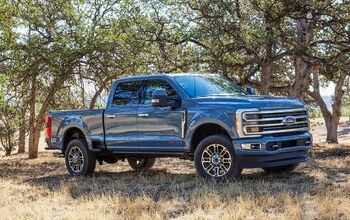
[Image: Ford]
Become a TTAC insider. Get the latest news, features, TTAC takes, and everything else that gets to the truth about cars first by subscribing to our newsletter.

Long-time automotive journalist Gary Vasilash is co-host of "Autoline After Hours" and is a North American Car, Truck & Utility of the Year juror. He is also a contributor to Wards Auto and a juror for its 10 Best Interiors UX and 10 Best Engines & Propulsion Systems awards. He has written for a number of outlets, ranging from Composites Technology to Car and Driver.
More by Gary Vasilash













Comments
Join the conversation
"The build quality is as good as the expensive German luxo cars I’ve had ( never again though ) and the Lexus cars I’ve bought."
Lol no it's not.