
Rare Rides Icons: The Cadillac Eldorado, Distinctly Luxurious (Part LXXXV)

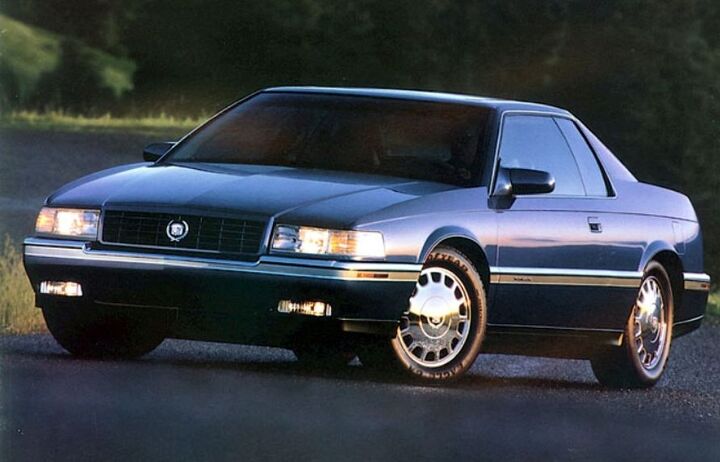
Cadillac’s hope of increasing sales via the exciting new Seville and Eldorado in 1992 didn’t quite pan out, as the rest of the lineup’s aging status meant sales remained flat at 221,112 cars. In 1993 things were a bit worse as several models concluded their tenure in the lineup, and sales slipped to 214,807 vehicles. Surely 1994 with the launch of a new DeVille would be a stellar year! Let’s see.
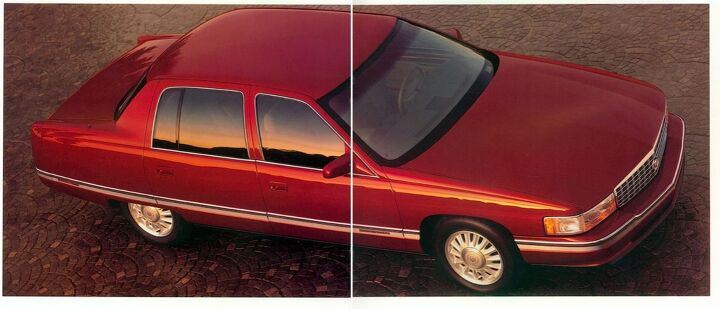
After a nine-year run where it was extended, revised, and fluffed, the C-body DeVille was no more. Cadillac swapped to the K-body (Cadillac’s name for G-body) platform for its mainstay model in 1994 and said goodbye to a slow-selling coupe variant. Also permanently removed was the upmarket Sixty Special version.
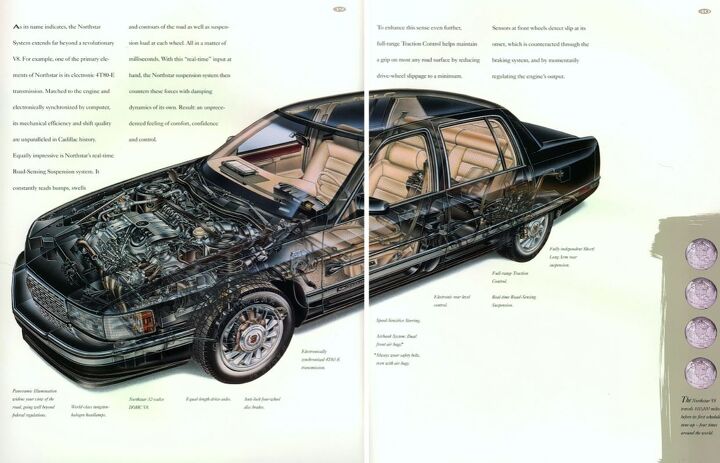
The Seville and Eldorado were carried over with minimal changes, though the Northstar did finally spread to all variants of those models. The Allanté was unceremoniously cancelled from the lineup, which meant Eldorado was the only two-door on offer at Cadillac. At the traditional side of the showroom remained the B-body Fleetwood. Overall, the lineup was slimmer than it had been in some time.
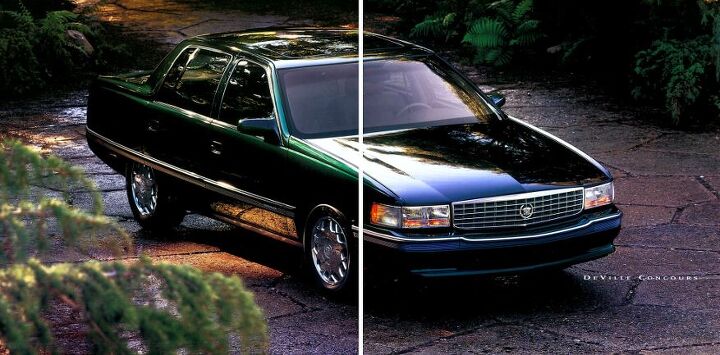
Perhaps a sign of the times for the large sedan market generally, the DeVille’s sales actually decreased at the debut of the new model. From 130,764 sales in 1993, the new seventh generation model managed 120,352 in 1994. Prices started at $32,990 ($73,122 adj.) that year.
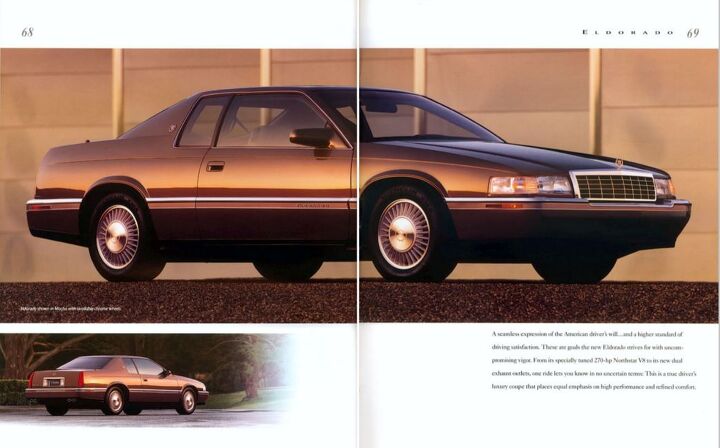
The wider availability of the Northstar engine did boost Seville sales in 1994, where its fortunes improved by nearly 10,000 units to 46,713 in total. The Seville was a notable step up in price from DeVille, and asked $41,430 ($91,830 adj.) for its superior styling and sporty nature. The Eldorado managed 24,837 sales in 1994, which was a small jump over 1993. Eldorado was priced between DeVille and Seville, at $37,690 ($83,540 adj.).
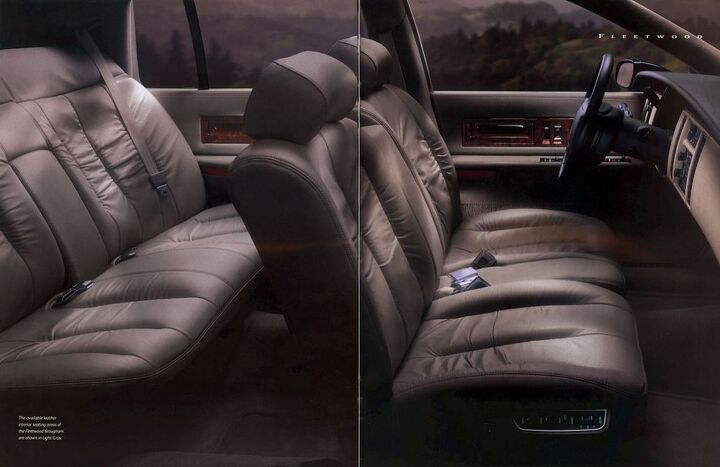
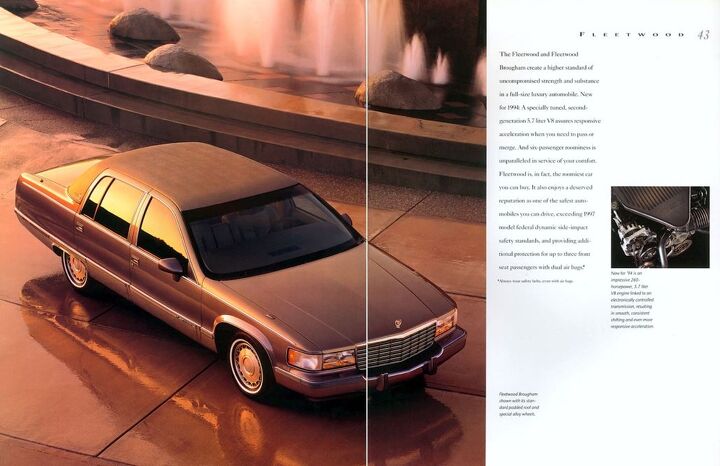
Sales of the Fleetwood and its upmarket Brougham trim slipped somewhat in 1994, to 27,473 sales. A little over 4,000 less than its debut year, the days of the traditional rear-drive large sedan were numbered. In 1994 the base Fleetwood asked $33,990 ($75,339 adj.) which seemed a relative bargain over the ask for the DeVille.
At the end of 1994, Cadillac managed a total of 219,375 sales. A small improvement over 1993, credited almost entirely to the success of the Seville. Cadillac likely assumed that was a high-water mark at the time, as there was no new product on the horizon for several years.
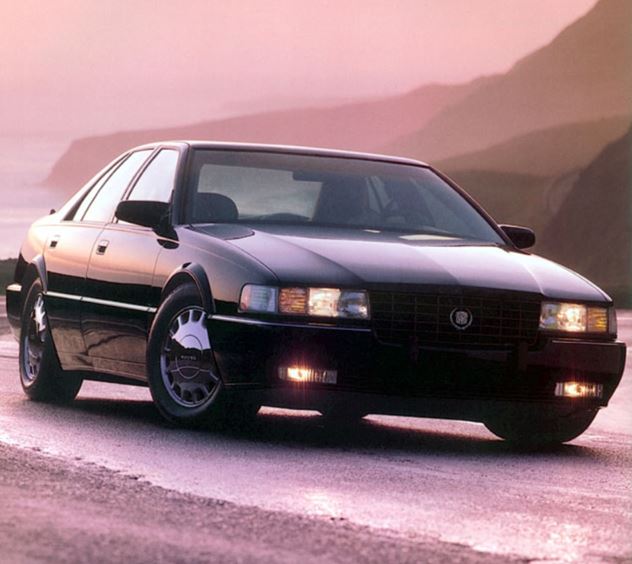
A year after its debut, the 1995 DeVille managed a declining 109,066 sales. Base MSRP was $34,900 ($75,246 adj.). Likewise, the bump the Seville received from its Northstar power evaporated in 1995, and sales fell to 38,931. Seville saw a modest price increase that year to $41,935 ($90,413 adj.).
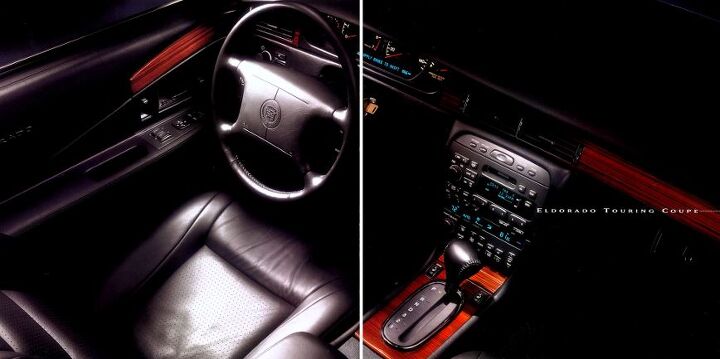
Eldorado buyers were more dedicated in 1995, and sales fell only marginally to 23,200 cars. However this was motivated by a price cut, where the base Eldorado’s MSRP fell over $2,000 to $35,595 ($76,744 adj.). That there was only a minute price difference between a DeVille and an Eldorado was telling of the times.
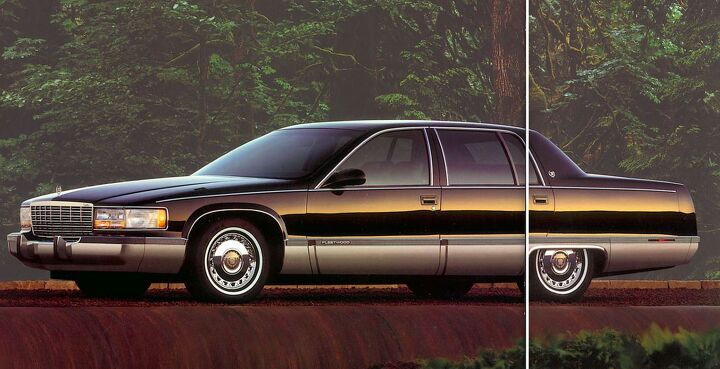
Also telling were Fleetwood's sales which fell by nearly half in 1995, down to 16,180 cars. The final evolution of the B-body had not gone over well as consumer tastes were elsewhere. In 1995 a Fleetwood asked $35,595 ($76,744 adj.), which keen readers will notice matched the Eldorado that year.
With every model’s sales retracting in 1995, the totals at the end of the year were bleak. Just 187,377 Cadillacs found homes in 1995. The brand’s market share had effectively declined to where it was in the mid Sixties, down to the wrong product decisions from the late Seventies onward, changing consumer tastes, and luxury competition.
1996 saw few changes to the lineup, with all models outside Fleetwood finally powered by a Northstar engine. It was the final year for the Fleetwood as all B-body vehicles were cancelled that year. DeVille sales shrunk again, down to 100,251 cars. The price of the DeVille increased slightly, to $35,995 ($75,546 adj.).
Seville nearly matched its 1995 sales total in 1996, and recorded 38,238 cars. Similar to DeVille, the Seville saw its price increase to $42,995 ($90,237 adj.). Eldorado sales slumped to 20,964, its lowest sales figure since 1991. The price cut of the prior year proved temporary and increased by $4,000 to $39,595 ($83,101 adj.).
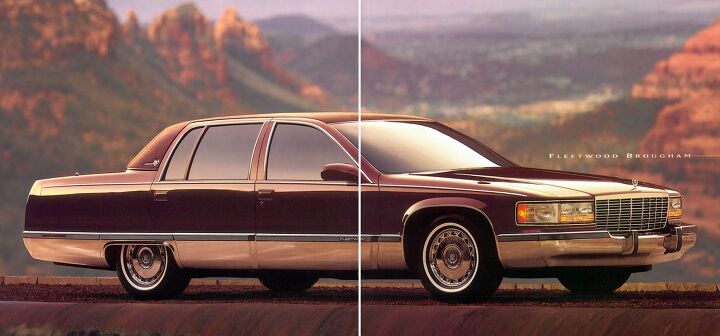
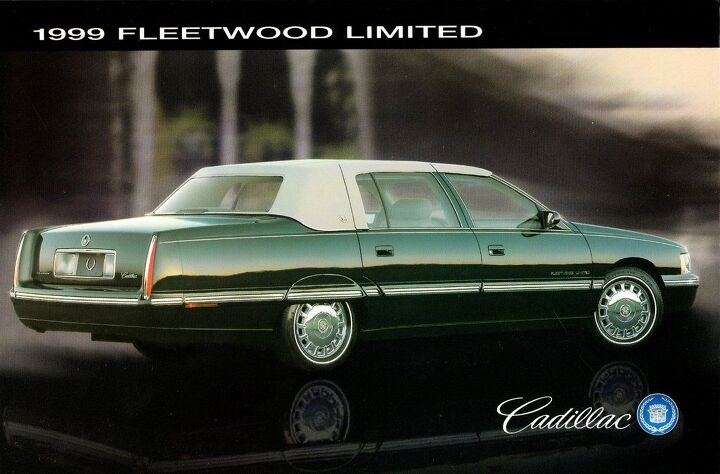
In its final year the Fleetwood experienced its slowest sales ever, and just 15,109 were sold. The Fleetwood asked $1,000 more than the DeVille as it headed to the sunset, and was $36,995 ($77,644 adj.). While Fleetwood exited without a direct successor, an aftermarket firm named Superior Coach produced an extended-length DeVille as the Fleetwood Limited from 1998 to 1999.
With a low tide total of 174,562 sales in 1996, Cadillac’s four-model lineup struggled notably. The death of the Fleetwood in 1996 showed the brand was no longer willing to cater to its ever-smaller traditional car clientele, and those customers were forced to buy a Lincoln Town Car instead. But executives had a bright idea on the way for 1997, intended to make buyers sit up and notice Cadillac as a true international sports sedan competitor: Catera. We’ll pick up there next time.
[Images: GM]
Become a TTAC insider. the latest news, features, TTAC takes, and everything else that gets to the truth about cars first by subscribing to our newsletter.
Interested in lots of cars and their various historical contexts. Started writing articles for TTAC in late 2016, when my first posts were QOTDs. From there I started a few new series like Rare Rides, Buy/Drive/Burn, Abandoned History, and most recently Rare Rides Icons. Operating from a home base in Cincinnati, Ohio, a relative auto journalist dead zone. Many of my articles are prompted by something I'll see on social media that sparks my interest and causes me to research. Finding articles and information from the early days of the internet and beyond that covers the little details lost to time: trim packages, color and wheel choices, interior fabrics. Beyond those, I'm fascinated by automotive industry experiments, both failures and successes. Lately I've taken an interest in AI, and generating "what if" type images for car models long dead. Reincarnating a modern Toyota Paseo, Lincoln Mark IX, or Isuzu Trooper through a text prompt is fun. Fun to post them on Twitter too, and watch people overreact. To that end, the social media I use most is Twitter, @CoreyLewis86. I also contribute pieces for Forbes Wheels and Forbes Home.
More by Corey Lewis






Comments
Join the conversation
Caddy should never had gone front wheel drive.
They were OK cars but not worth the premium. The steering wheel, radio and climate control knobs and materials were just like the ones in the cheaper Buicks, Pontiacs and Chevys. If one wanted a big car with easy power, soft ride and bland but tasteful exterior style, a Caprice or Roadmaster was a better choice for less money.