

Rare Rides Icons: The Cadillac Eldorado, Distinctly Luxurious (Part LXXXIII)

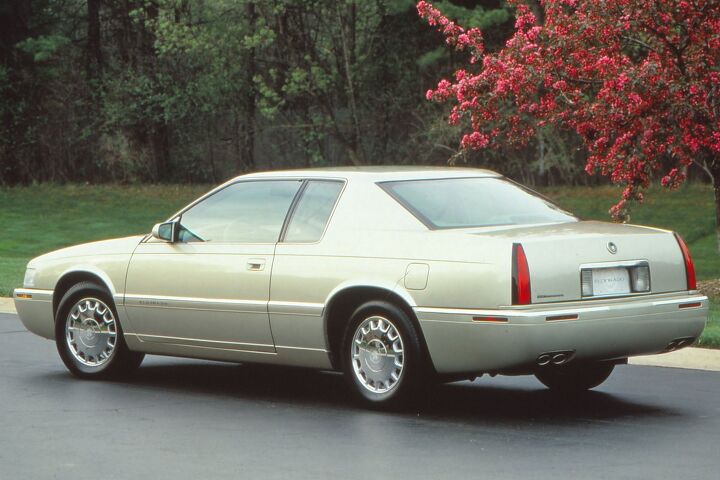
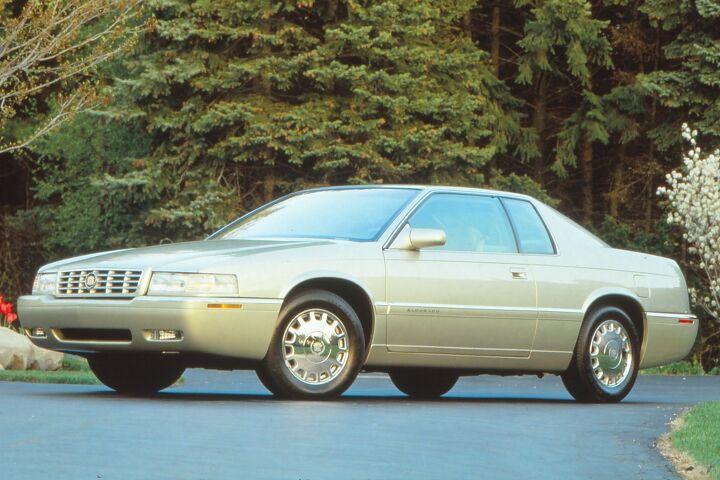
After its exciting launch in 1992 as a twelfth-gen model, the Cadillac Eldorado began the decade-long march to its demise. The exterior design that drew criticism from its contemporary audience was updated in 1995 for the first and only time. And while that made the coupe look more modern (no more hood ornaments), the Eldorado was already behind the rest of the lineup in terms of looks. This would persist through the rest of its run, as the brand’s entire portfolio was updated with new models while the Eldorado remained in stasis.
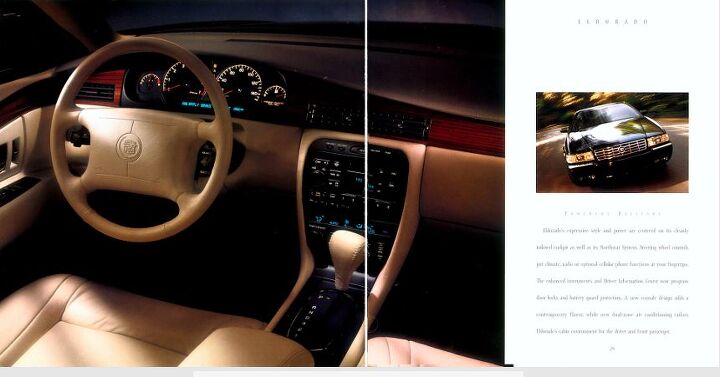
After the exterior revisions in 1995, visual updates for the Eldorado’s interior arrived in 1996. The prior digital and analog gauge options specific to the Eldorado were replaced with the cleaner looking analog gauges of the STS from 1996 onward. The gauges provided more analog information than the outgoing version.
The center stack was also borrowed from the STS in 1996. The redesign brought the climate controls to a more sensible central location; the tiny buttons to the left of the gauges were no more. The radio was also updated with a new design, and both the radio and climate controls were of the same aesthetic for the first time.
The large ash tray in the center of the stack was moved lower, and concealed in the area in front of the shifter. Automotive interior design that catered to smokers was well in its decline by this time, and ash trays would continue to shrink in number and size. The shifter and its surround were also new in 1996 and looked more modern.
Seat cushion patterns were revised and became more defined and more bolstered. Side bolsters were actually present in 1996, no longer a notion amongst ruched leather. Said ruching was removed from 1996 onward, as interior seating surfaces mimicked the taut leather look found in the STS. ETC versions also included perforated leather over the middle sections of the seats. Though done on the cheap, the Eldorado’s interior merge with the STS was a positive for the model, and brought it away from the early Nineties look it wore previously.
The following year in 1997 there were tech updates which brought the Eldorado into its true final form. Traction control was standard, along with electronic stability control marketed as Stabilitrak. The suspension formerly called Road Sensing was rebranded as Continuously Variable Road Sensing Suspension (CVRSS) and was made a standard feature.
All the Eldorado’s systems were now integrated with the engine via microprocessors, as GM updated its underlying technologies into an Integrated Chassis Control System exclusive to the Eldorado in 1997. The ICCS was intended to make the entire car more responsive to driver input and enhance safety. These stability control systems were in their infancy in the Nineties, and were considered “second generation” through about 2003. Passenger vehicles in the US were not required to have electronic stability control until 2012.
In 2000, the death of the Eldorado was all but guaranteed. It was the last remaining of the three upmarket PLC siblings as the Buick Riviera bowed out in 1999. Production was moved from Hamtramck Assembly to the Lansing Craft Center, formerly known as the Reatta Craft Centre. Throughout its history from 1988 through closure in 2006, the Lansing Craft Center produced low-volume vehicles that were in their only, or final, generation.
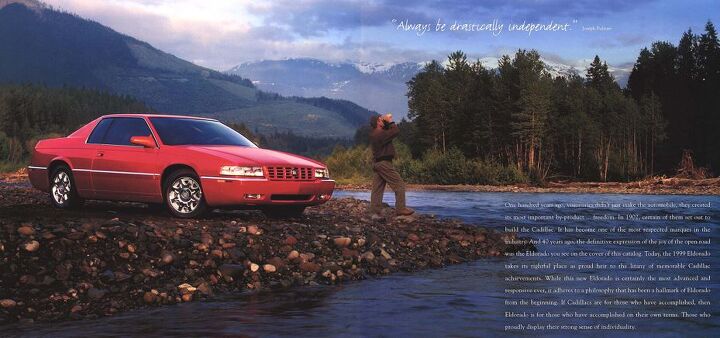
By 2000 the Cadillac lineup was entirely revamped with two additional models (Catera, Escalade) joining the fray. Only the Eldorado remained as a reminder of Cadillacs of old. In fact, the lineup was about to be all-new again as the brand entered the Arts & Science era that continues to this day.
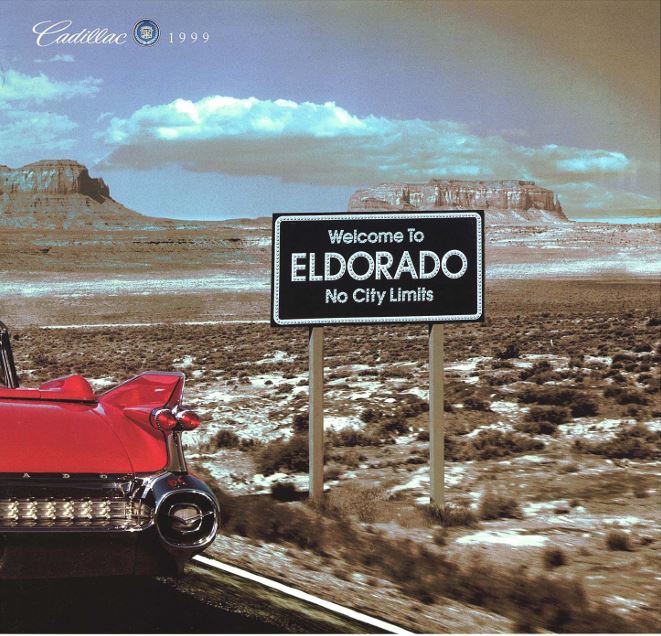
It was thus a surprise to noone that Cadillac announced the Eldorado would see its final year in 2002. From 2000 through 2002, the base model Eldorado became the ESC. Worth noting, marketing materials were not certain of the ESC usage, and included a mixture of “Eldorado” and sometimes “Eldorado ESC.” At this time, the ESC and ETC lost the words behind them and became simply letters.
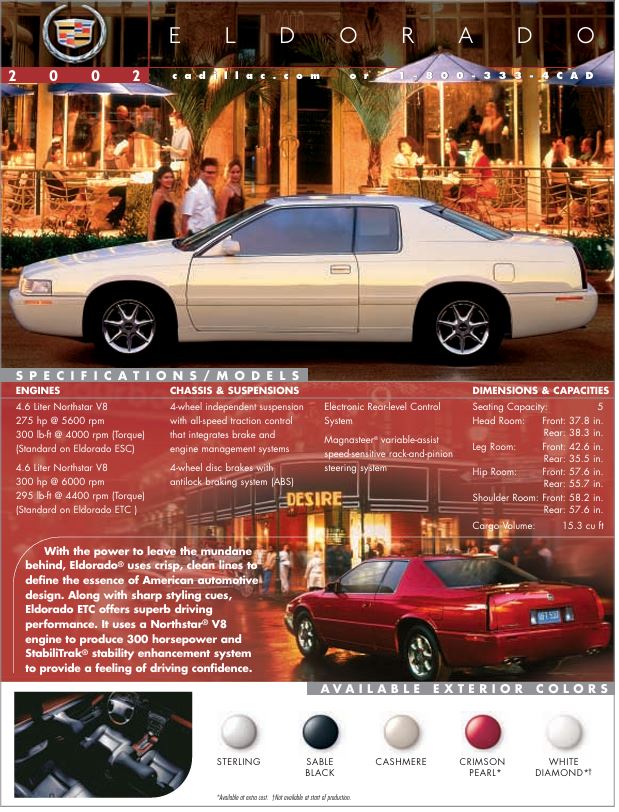
Eldorado managed to make it 50 long years before cancellation. As a final curtain call for its prestige coupe, Cadillac announced a very low-effort special edition. A total of 1,596 Eldorado ETCs in 2002 would be the “Eldorado Collector Series,” which in contemporary terminology would be abbreviated ETC ECS. And Cadillac’s marketing people counted on math to make this edition so special.
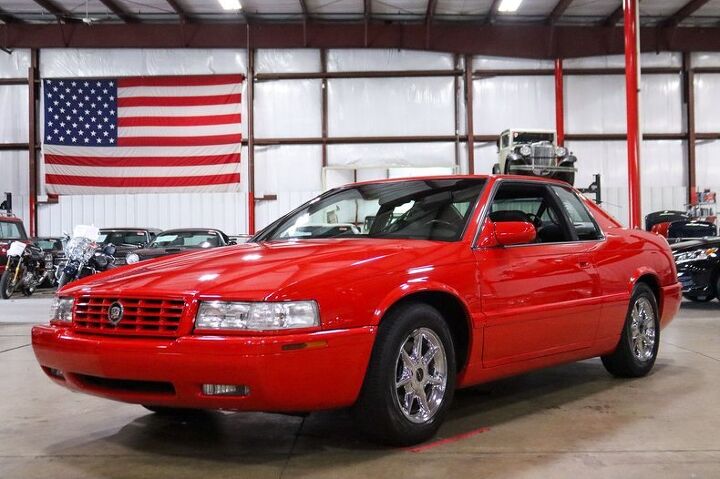
Three batches of 532 cars, a number containing “53” like the Eldorado’s debut year in 1953 was the reason for the total of 1,596 special editions. There were only two color schemes available to match the original car: red or white. The Collector Series also (in theory) had a specially tuned exhaust note to mimic the ‘53 Eldorado’s 331 cubic inch OHV V8.
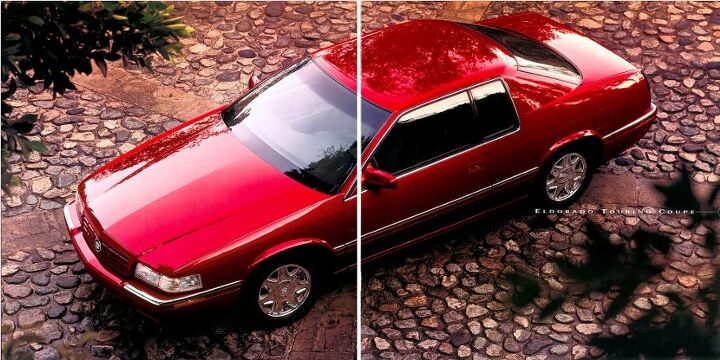
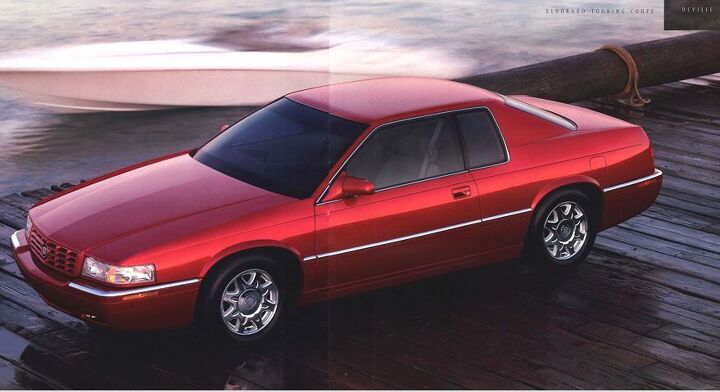
Exterior cues were slim on the Collector Series, the only indication was a set of chromed seven-spoke wheels with an ETC badge in the center against a black background. Inside, there was a numbered badge on the dash with the Collector Series name. The interiors were also specific to the edition, but not in a good way.
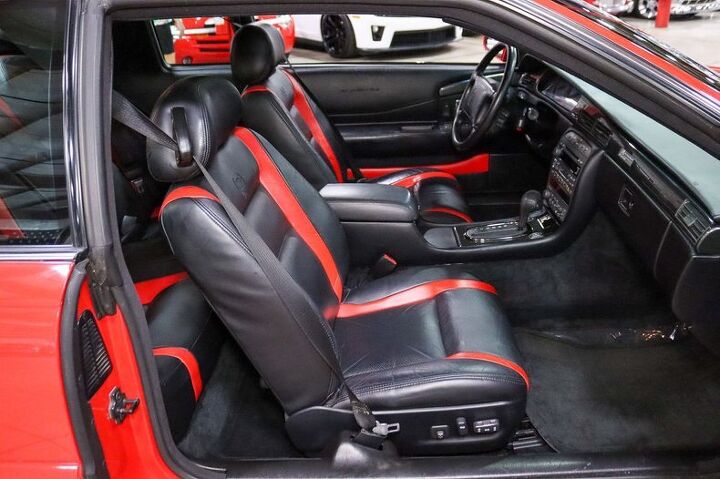
Red cars received a black interior with red accents on the seats and door panels which looked like a complete afterthought. And in a one-off moment, the red cars received gray carbon fiber effect trim on the dash and console in place of the real Zebrano wood fitted as standard. Overall, the red versions looked at least a little aggressive with their bright paintwork.
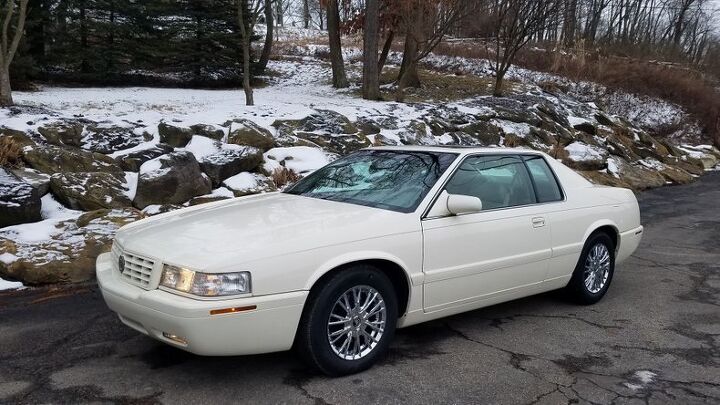
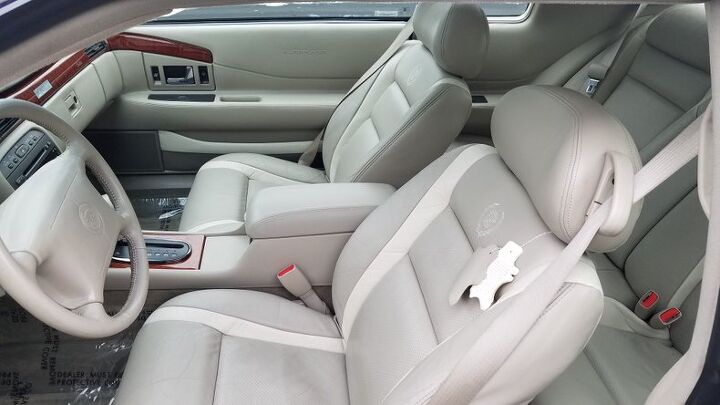
In contrast, the white versions were the same Diamond White Metallic frequently seen on Eldorados. For the interior, the light beige leather was supplemented with white inserts on the seats and doors that looked entirely out of place. Unlike the red version, there were no changes made to the wood trim. Both the red and white Collector Series models used a regular wheel design that did not feature the wood inserts standard on other 2002 Eldorados.
Production ended on April 22, 2002, and the very final Eldorado was donated to the Cadillac Museum. After 50 years the Eldorado came to an end, and with it the tradition of building a large coupe at Cadillac. While the Eldorado had no direct product replacement, its customer base had happily migrated to the Escalade some time ago. In our next installment we’ll see how the sales figures and pricing played out in this last generation.
Become a TTAC insider. the latest news, features, TTAC takes, and everything else that gets to the truth about cars first by subscribing to our newsletter.
Interested in lots of cars and their various historical contexts. Started writing articles for TTAC in late 2016, when my first posts were QOTDs. From there I started a few new series like Rare Rides, Buy/Drive/Burn, Abandoned History, and most recently Rare Rides Icons. Operating from a home base in Cincinnati, Ohio, a relative auto journalist dead zone. Many of my articles are prompted by something I'll see on social media that sparks my interest and causes me to research. Finding articles and information from the early days of the internet and beyond that covers the little details lost to time: trim packages, color and wheel choices, interior fabrics. Beyond those, I'm fascinated by automotive industry experiments, both failures and successes. Find me on Twitter, @CoreyLewis86.
More by Corey Lewis







Comments
Join the conversation
This particular post took me back to high school memories as all the farm kids thought it was a really big deal that our English teacher drove *this* car. The algebra teacher didn't marry into the same level of money and merely drove a Monte Carlo.
I believe the Collector Edition cars were not "Diamond White".