Amazon-Owned Zoox Expands Autonomous Vehicle Testing in Dallas, Phoenix
If you’ve struggled to find a driverless taxi in Dallas or Phoenix, it’s about to get a bit easier with Amazon-owned Zoox announcing plans to expand in those cities.
In the case of Phoenix, Zoox is establishing its first-ever test fleet in Arizona. In Texas, the company already has a fleet in Austin and is now adding a fleet in Dallas. Overall, the company now operates in nine cities in seven states: San Francisco, Los Angeles, Austin, Miami, Atlanta, and now Dallas and Phoenix as well as Washington D.C.
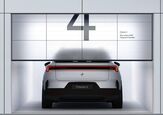
Like most of its competition, Zoox uses a fleet of retrofitted SUVs to test its technology. In this case, they’re using Toyota Highlanders. After an initial phase of mapping and testing, it begins using purpose-built robotaxis with no driver controls which look like giant toasters. Those vehicles are actually in use in Las Vegas. Tesla’s fleets use Model Y vehicles that already have the hardware and software necessary, by its estimation, to drive autonomously.
The company revealed plans to pen its third Fusion Center, located in Scottsdale, Arizona. These centers act as a “command center for fleet operations, where teleguidance, mission control, and rider support provide real-time coordination to help vehicles navigate complex scenarios, complete missions, and support riders when needed,” the company noted in a post on its website.
Zoox is one of several companies running testing operations in Phoenix, including Waymo, Tesla, and previously Cruise, which was a subsidiary of General Motors. San Francisco is another popular market for testing.
“Phoenix and Dallas are both rapidly growing metropolitan areas with high demand for ride-hailing and first- and last-mile connections. Expanding into these cities allows us to test in sprawling environments, differentiating this data from our testing in other dense metro areas like San Francisco,” the company noted.
“Crucially, these markets allow us to rigorously validate our technology's resilience in diverse and challenging weather conditions. In Phoenix, we have the opportunity to test our sensor and battery performance against extreme heat and dust on high-speed roads. Dallas provides a valuable testing ground to refine our AI against diverse weather and complex road networks.”
[Images: Zoox]
Become a TTAC insider. Get the latest news, features, TTAC takes, and everything else that gets to the truth about cars first by subscribing to our newsletter.
Michael Strong has spent more than 25 years writing about the automotive industry. A Detroit-area native, he’s written about everything from local car shows to product reviews to financial news. Currently he writes and edits for a variety of national and local publications. He’s also a longtime member of the Automotive Press Association and the International Motor Press Association, and a graduate of Georgia Southern University. Hail Southern! Despite a love for ’70s land yachts and BMWs from the late ’80s and early ’90s, his personal vehicle is neither of those.
More by Michael Strong
Latest Car Reviews
Read moreLatest Product Reviews
Read moreRecent Comments
- Vid169489471 The technology exists today to produce a variable color temperature (kelvin) LED lamp. It can vary from 2700k that soft orange look to 6500k the bright daylight with the bluish tint.Since everything in a late model car is computer controlled, it would be an easy task to write a few lines of code that enables your vehicle to not only dim down from hi to low beam but to shift color temp down to the 2700k range for oncoming traffic, then back up to 5000k once oncoming traffic has passed. For the operator it would be automatic and seamless. For older cars they could be retrofitted with LEDs that are 2700k on low beam and 5000k on hi beam. As far as standards, there could be a lumens max, and a minimum. Several States already have minimum lumen standards going back to the old incandescent bulbs. Why not update these to national standards.
- Jam169859557 More regulation is needed for ALL vehicle lighting systems. [list=1][*]The lighting that is most blinding are the rapidly flashing red, blue and amber lights on emergency vehicles. The lights themselves are blinding, flashing so rapidly that it's impossible for even the sharpest eyes to adjust. What's worse, is the nature of the emergency requires a careful view of the area surrounding the emergency vehicle. There is something going on that needs to be seen. More flashing lights is not the solution.[/*][*]Brighter headlights need to be regulated. The tall riding vehicles do not need headlights positioned so high that they blind drivers in lower riding vehicles. And those heasdlights need to be aimed properly. When I first started driving my 2020 Subaru Outback, many drivers would flash their lights, hoping I would dim my lights. This stopped after I performed am easy adjustment that tilted the beam lower. Late model Subaru headlamps are designed with a sharp cutoff that project less glare above the hood line. When the headlights are properly aimed, other drivers are not blinded by the beam.[/*][*]Customized light assemblies make it more difficult to see the marker lights (tail lamps, turn signals and side marker lamps) that have been tinted. There are many municiple codes that prohibit this tinting, but these laws are seldom enforced.[/*][/list=1]Solutions: Tight controls on emergency vehicle lighting. In trying to make these vehicles more visible, a dangerous side effect is reducing the ability of drivers to see the surrounding perils.Headlight design regulations that reduce the height of the headlight assemblies. Just because a pickup truck has a hood that sits 4 feet abouve the pavement, it does not mean the headlights need to be so high. Owneres should maintain proper adjustments to their vehicle headlights.Establish and enforce regulation requiring a illumination standard be followed.
- Stl170698708 as someone who hates big government, and their interference;but you can add me to the list of people that are blinded by the lights.unfortunately "the poop is out of the horse and no way is it going back in"They have had 5 years to make lights bigger, badder and brighter because in the vehicle work it is go big or go home!Trucks are the worst because so many people use them to express their dominance and that is big, big, big $$ both at the Original Purchase and in the Aftermarket world.If, we are so lucky to get some good government regulation on this it will also take some very good Court enforcement to get the aftermarket people with fines and lawsuits.Much like the EPA did with the Diesel Tuner Industry that felt emission regulations didn't apply to them.This is from someone that owns said pickup truck with the same bright headlights,but i only use the truck when I have too and always turn off the Fog lights when driving in traffic.
- Art65765977 I saw a porsche 911 with the most amazing headlights from behind approaching the Sunshine skyway in Florida. The pattern was 108 degrees across sweeping the road like a broom. My brother and I were amazed. I don't know what it looked like from the front but i am sure it was better than American cars
- Master Baiter This is what happens when you take a chance on a startup auto company. Designing and building cars is hard.
Comments
Join the conversation
Learn to drive, people.
You too, AI.
Do these systems permit privacy as in having no other passengers along for the trip?
I'd absolutely use one for a ride to and from a med/oral surgical procedure with anesthesia that nixes driving myself home.
I hate burdening a family member with that and local cab service is almost nonexistent.