Rare Rides Icons: The Cadillac Eldorado, Distinctly Luxurious (Part LXXIV)

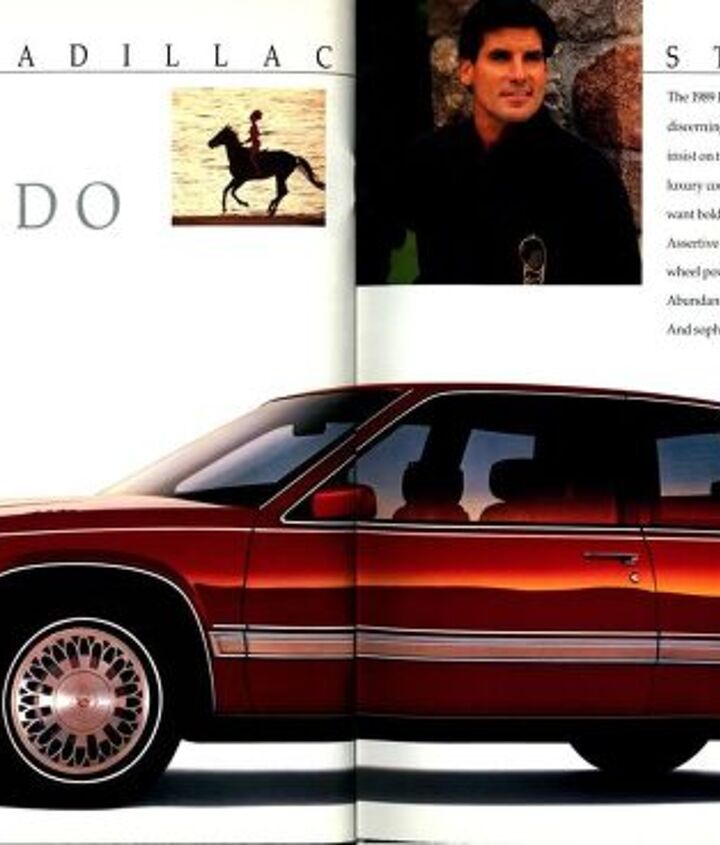
When Cadillac introduced the freshly downsized Eldorado for the 1986 model year, the brand was riding a wave of success. When the majority of the line downsized in 1985, Cadillac experienced its best sales year ever. It was also the best year ever for the Eldorado as it was snapped up by customers before its larger traditional shape headed into the sunset. By the conclusion of 1986, the bloom fell off the sales rose: Sales dipped by over 100,000 units brand-wide, and Eldorado sales were down nearly 79 percent. Revisions to the Eldorado were needed pronto.
The first changes to the Eldorado in 1987 were unsurprisingly minor. Cadillac’s rejection of the traditional customer base in favor of the younger Euro car intender wavered, as it would do many times throughout the decade: Standard tires were taller than before, and grew to a 75 sidewall instead of a 70. The suspension was made softer than in 1986 to be more comfortable to aging backs that drove to dinner at 4:15 PM.
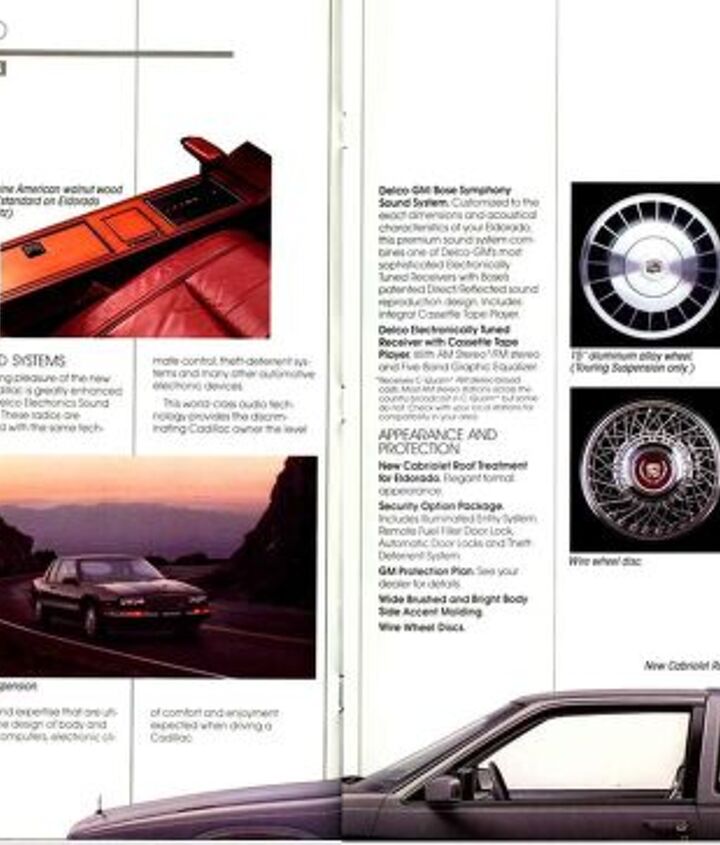
Those same customers were no doubt pleased by the return of the Cabriolet roof option, which intended to make the Eldorado more formal again. There was padded vinyl over the rear portion of the roof, and the large side glass was shrunk to an opera window by the covering. Opera lamps made their return to the model. While the Cabriolet roof was standard on Biarritz, it was optional for base models.
The most expensive option - the car phone - was reworked in 1987. Provided by Motorola, the factory-installed phone had a new microphone between the sun visors. Programming was updated so that when a call was placed and the radio was on, the radio was automatically muted and the front speakers were used for the call’s audio. Customers paid $2,850 ($8,303 adj.) for the privilege of in-car telephony.
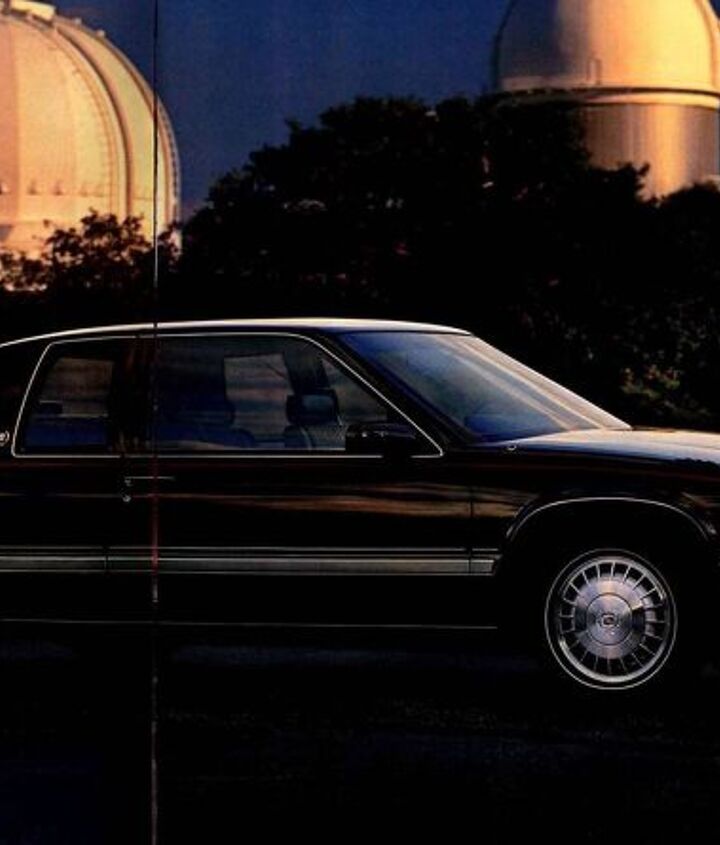
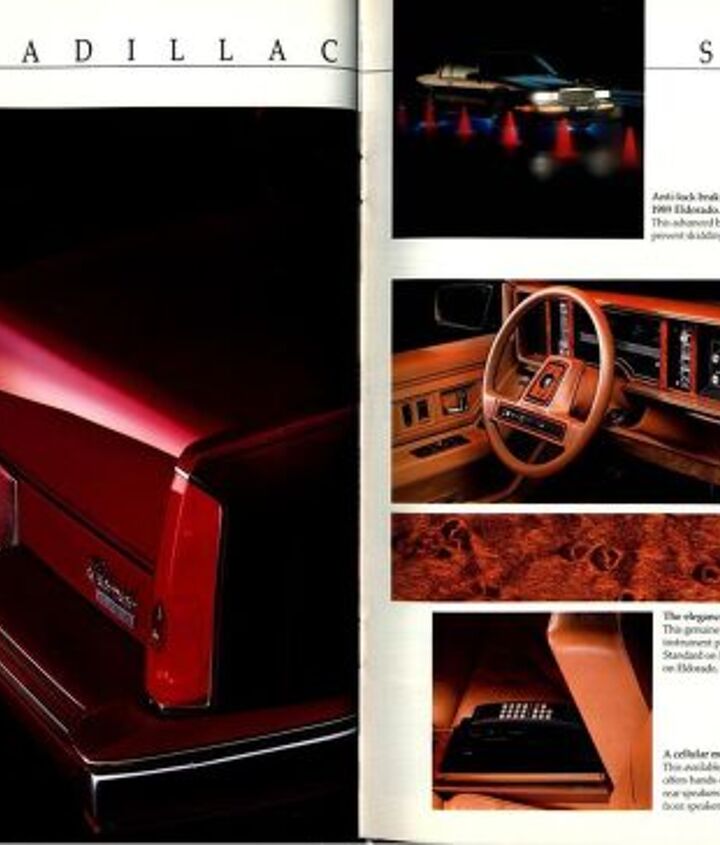
Visual changes arrived in 1988 and were what many customers wanted to see. The rear fender caps were lengthened by three inches which pushed the bumper outward and made room for tail fins to return. Brake lamps were new and wrapped around the fins, no longer flush with the body. The trunk lid was also revised with a sharper edge at its rear. Reflector lenses moved from the trim panel below the trunk and were set into the bumper. The optional Touring Suspension included new 14-inch snowflake alloy wheels.
Overall, the lengthening gave the Eldorado a more uniquely Cadillac look and some more road presence. At the front end raised fins were added to the fenders for a more aggressive looking approach. The change also added some visual separation from the smooth front ends of the Toronado and Riviera.
Roof options were adjusted again as Cadillac bowed to the demands of elderly customers. The Cabriolet feature on base models was deleted after just one year and replaced with a full padded vinyl covering last seen in 1978. The Cabriolet roof was adjusted slightly for Biarritz usage, integrating the opera lamps (now taller and thinner) into a chrome band that ran up and over the roof. This now-unnamed roof option was now standard on Biarritz. Returning from 1985 was the big chrome body spear characteristic of Biarritz. As before, it ran from the roof trim to the front corners at either side where it came to a point.
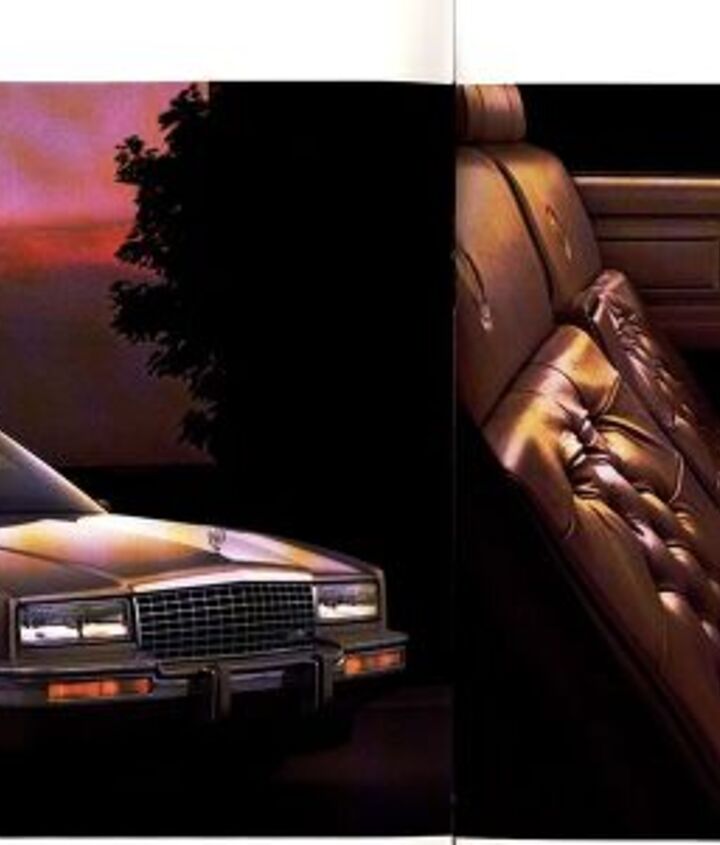
Under the hood there was news too, as the HT4100 V8 and all its maladies was replaced by a 4.5-liter V8. No longer branded “High-Technology,” the reworked engine was really an HT4500, but the marketing people made a clean break from the damaged moniker and declared the mill to be new. Power increased to 155 horses, though fuel injection was still of the throttle body variety. A short-lived engine, the 4.5 was used only from 1988 to 1990 in front-drive Cadillacs, but until 1992 (weirdly) in the Allante. Other technical advancements included Teves-developed anti-lock braking (ABS), available as an optional extra.
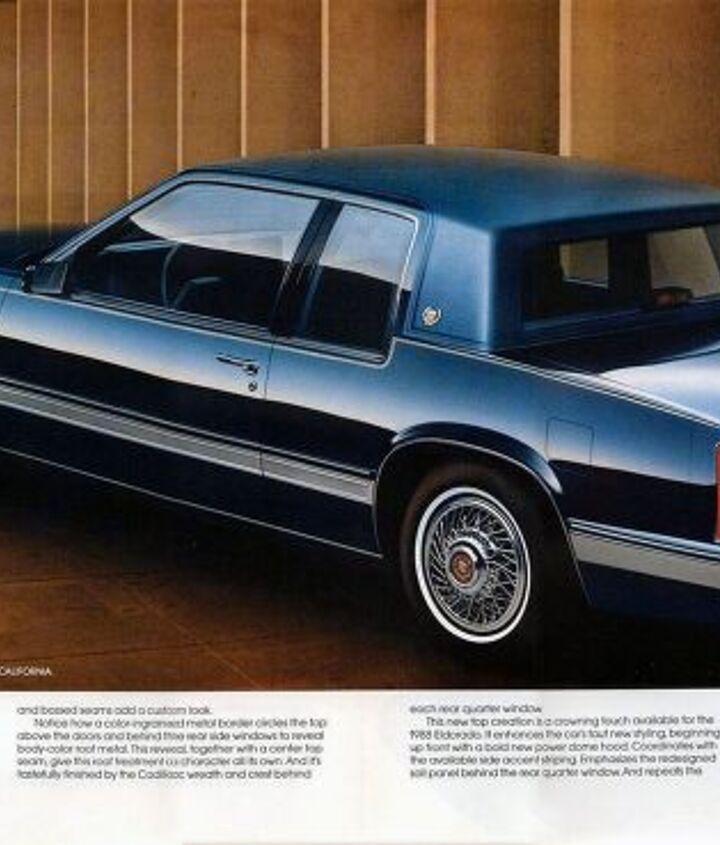
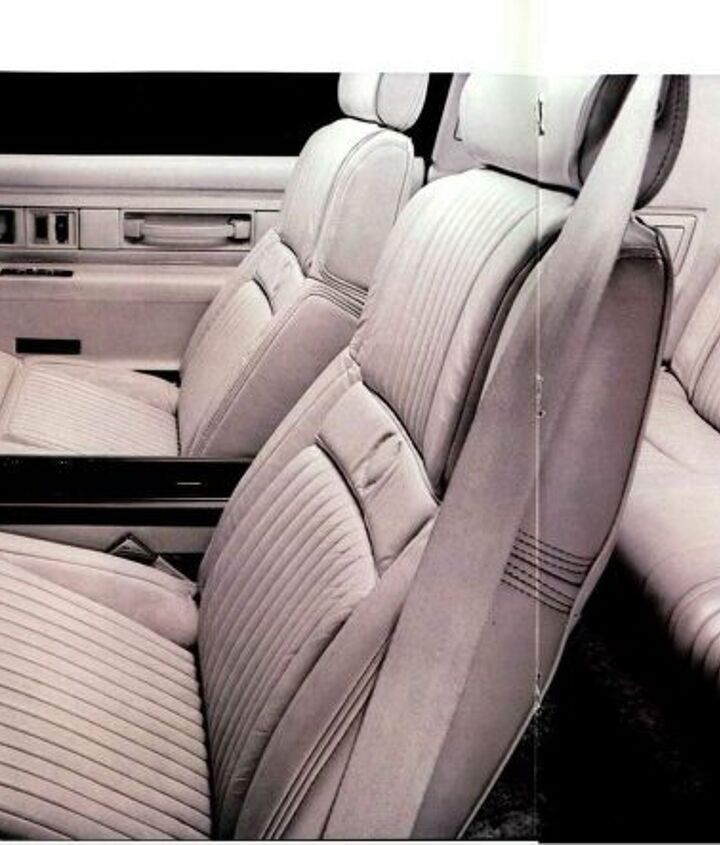
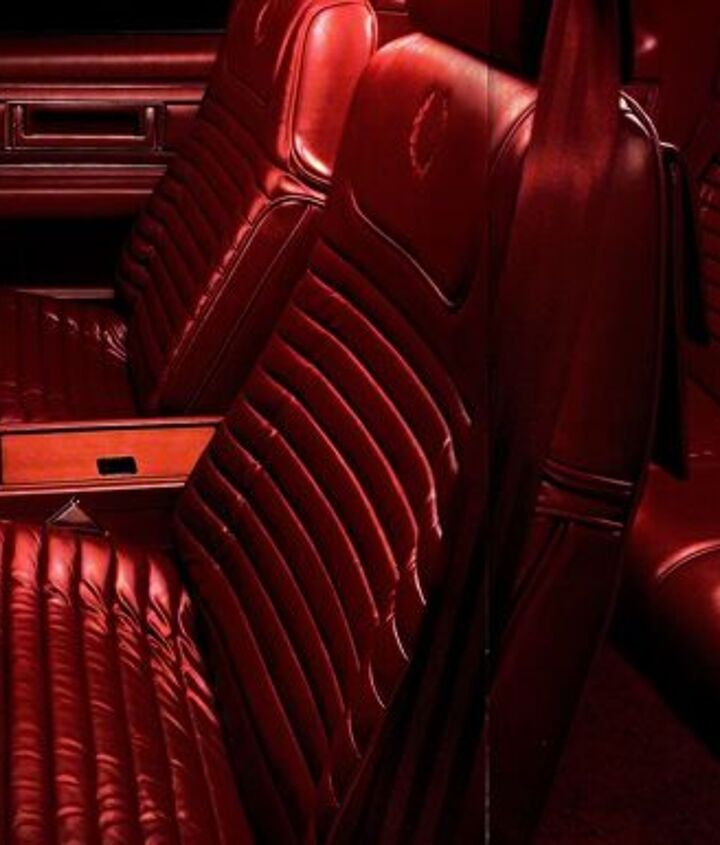
There were also interior changes in 1988. Doors featured newly hinged interior pulls that swung upward, like the previous Eldorado. Front headrests were larger, and rear outboard passengers received shoulder belts. In an attempt to please the traditionalist customer, button tufting returned as an optional seating design on both base and Biarritz trims. Button tufting also returned to the front-drive Fleetwood and was available in the Seville Elegante trim.
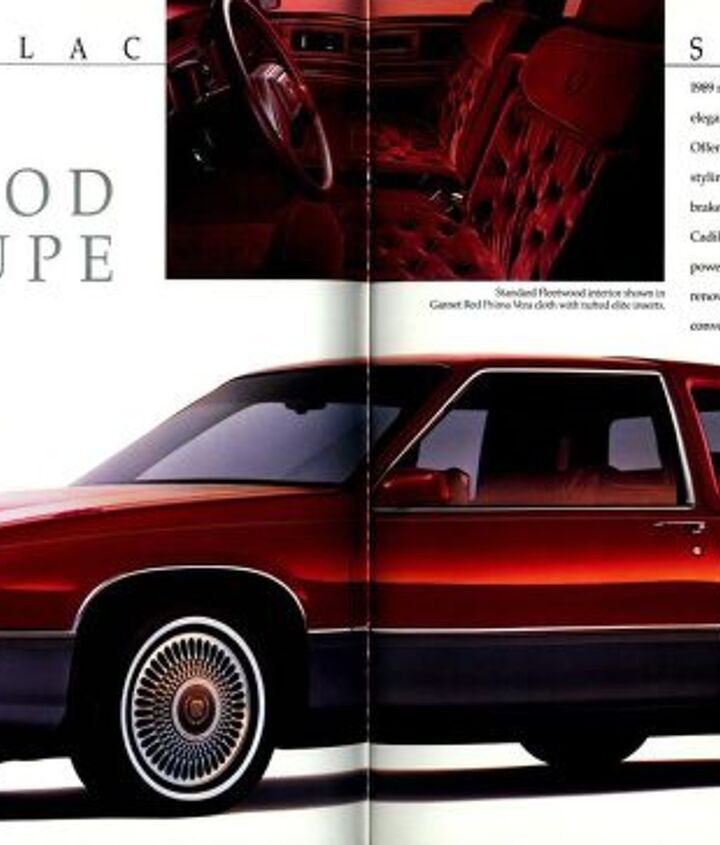
The 1988 year would prove to be the only major visual rework for the eleventh Eldorado. In 1989 there were a few technical revisions and some updates to trim. The rearview mirror which previously tilted electrically to reduce glare was replaced with an electrochromic version that dimmed automatically.
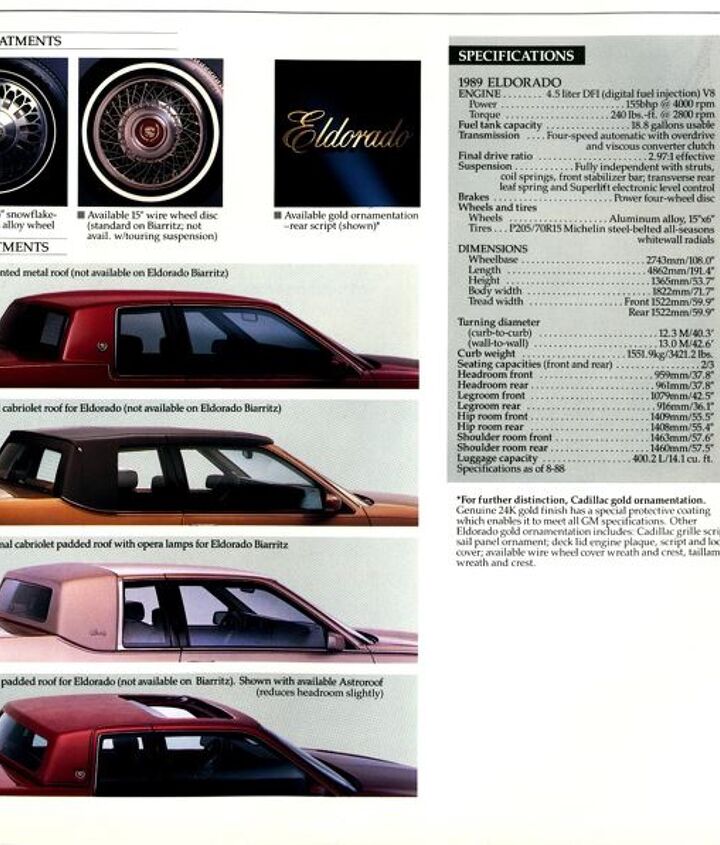
Newly available was White Diamond paint, a pearled metallic that became a mainstay at Cadillac. Eventually it was renamed White Diamond Tricoat, then Crystal White, and for 2026 is renamed again to Vibrant White. The 14-inch wheels were no longer offered on Eldorado, with all versions sporting 15-inch rubber. The previously Touring-exclusive snowflake alloys became the standard wheel in 1989.
More attempts to woo the older customer arrived, as optional gold-plated emblems and badges appeared across the Cadillac lineup (and were often selected). The gold extended to the wreath and crest of the faux wire wheel covers, too. Keys were also finished in gold on all cars, the “Gold Key Delivery System,” whatever that meant.
Embedded in all keys was the new PASS KEY pellet. An anti-theft device, the pellet within the key was coded to each individual car. When a key was inserted, the car checked it to ensure it was the right key before the vehicle would start. The system lived into the 2000s on GM offerings and became problematic over time as ignition locks went bad or body control modules didn’t get along well with aged keys.
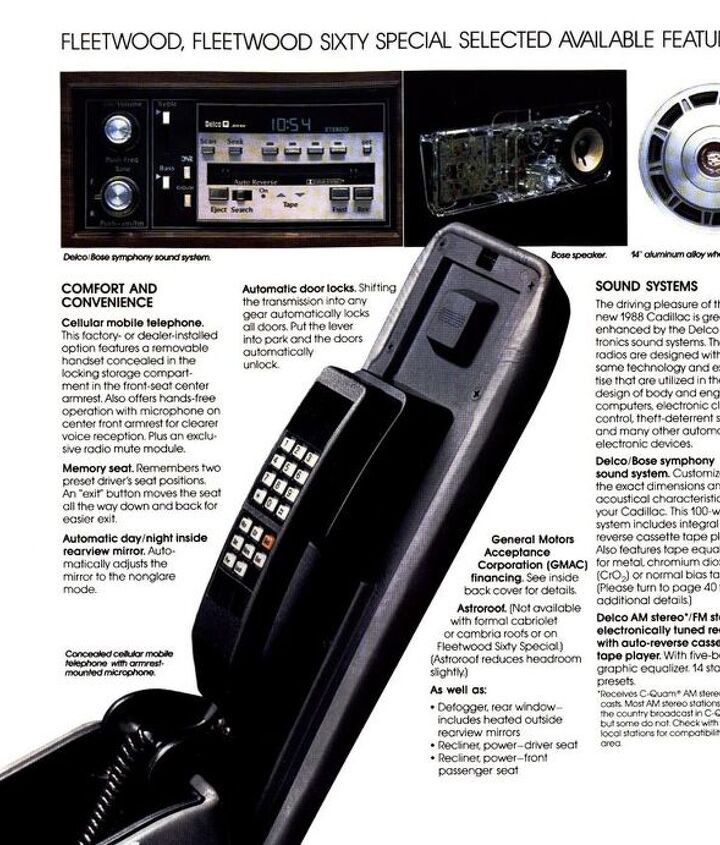
Some additional features became standard in 1989: a cassette player, a front license plate mount, and remote fuel filler door release. These were previously all standalone options. Newly available was a CD player, offered only with the top-tier Delco Bose Gold Series stereo. Some weird configuration choices remained, as front seatback pockets were optional on base Eldorado and standard on Biarritz. Optional on all models at this high entry price were lighted front visor vanity mirrors.
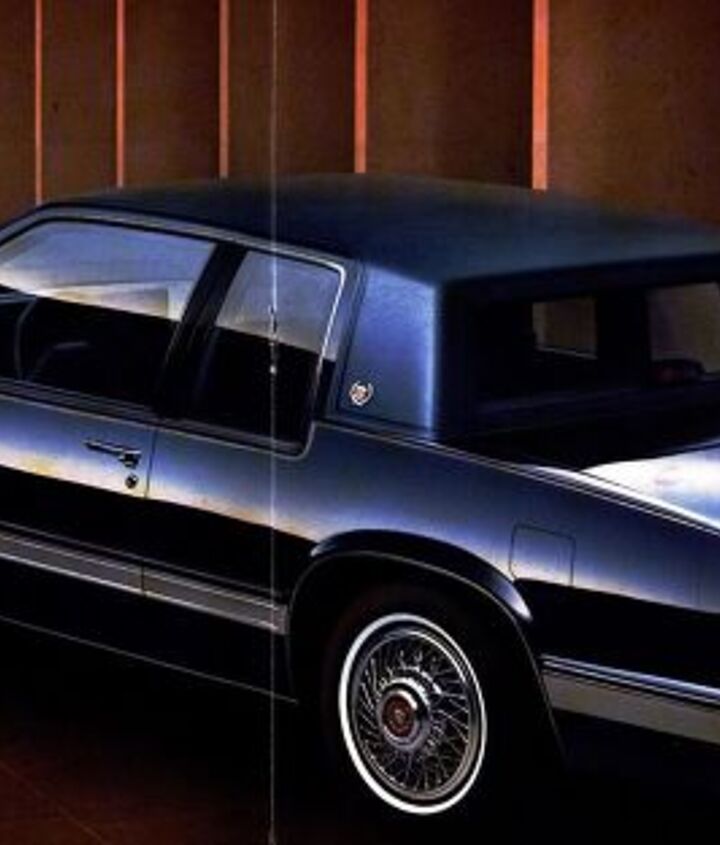
Roof options were again updated in 1989. The standard bare metal roof was only available on the base model Eldorado. The cabriolet roof (no longer capitalized) returned in two varieties: The Biarritz had its quarter roof with opera lamps, finished in vinyl. There was also a full canvas cabriolet roof outside of Biarritz. That was in addition to the full vinyl padded roof, available only on base Eldorado.
There was much exciting news for Eldorado in 1990, with the return of a missing model and some updates and modernization for the new decade. Eldorado struggled with sales since introduction in ‘86, and Cadillac needed to make their former flagship product more enticing. We’ll pick up there next time with the final two eleventh-gen years.
[Images: GM]
Become a TTAC insider. the latest news, features, TTAC takes, and everything else that gets to the truth about cars first by subscribing to our newsletter.
Interested in lots of cars and their various historical contexts. Started writing articles for TTAC in late 2016, when my first posts were QOTDs. From there I started a few new series like Rare Rides, Buy/Drive/Burn, Abandoned History, and most recently Rare Rides Icons. Operating from a home base in Cincinnati, Ohio, a relative auto journalist dead zone. Many of my articles are prompted by something I'll see on social media that sparks my interest and causes me to research. Finding articles and information from the early days of the internet and beyond that covers the little details lost to time: trim packages, color and wheel choices, interior fabrics. Beyond those, I'm fascinated by automotive industry experiments, both failures and successes. Lately I've taken an interest in AI, and generating "what if" type images for car models long dead. Reincarnating a modern Toyota Paseo, Lincoln Mark IX, or Isuzu Trooper through a text prompt is fun. Fun to post them on Twitter too, and watch people overreact. To that end, the social media I use most is Twitter, @CoreyLewis86. I also contribute pieces for Forbes Wheels and Forbes Home.
More by Corey Lewis








Comments
Join the conversation
I know I'm not crazy now. In the last article I made a comment about the lack of fins on the '86 model. I just didn't realize that it took until '88 to get the fins.
always wanted an etc. transverse v8 ftw