
Rare Rides Icons: The Cadillac Eldorado, Distinctly Luxurious (Part LXXIX)

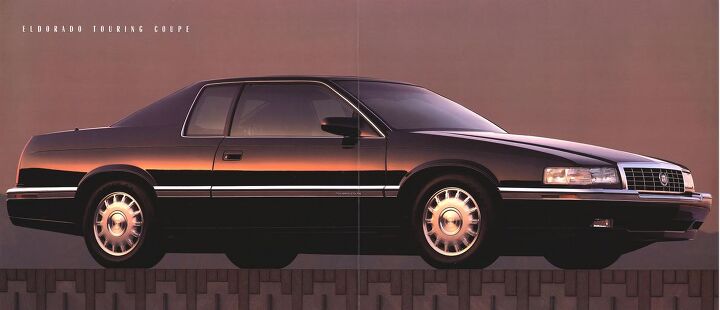
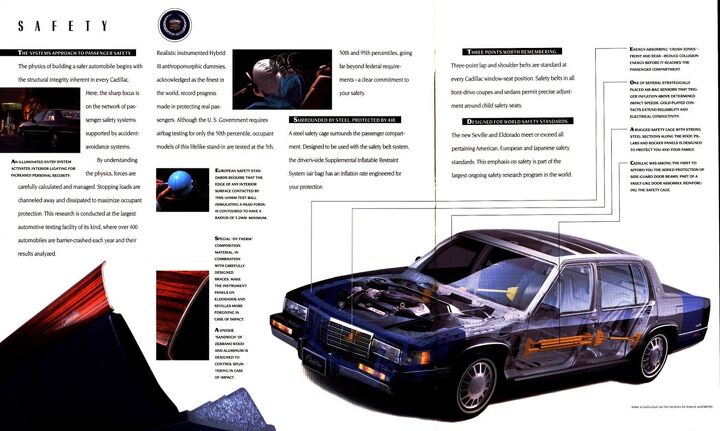
Cadillac introduced what would be the final generation Eldorado - the twelfth - amid a flurry of product activity and a vision of brand rebirth. When it debuted in 1992 alongside a new Seville, both models previewed what the brand would look like moving forward: angular, European-inspired, and altogether less baroque than outgoing models. The Northstar was supposed to power these new flagships, but alas it was not ready and the new models fell back on the trusty 4.9-liter V8. Like the carryover engine, the new Eldorado was more similar to the old one than it appeared.
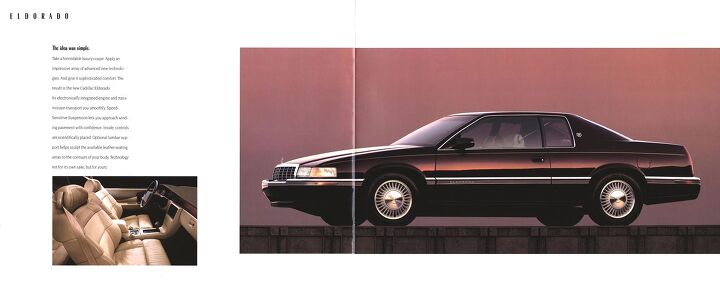
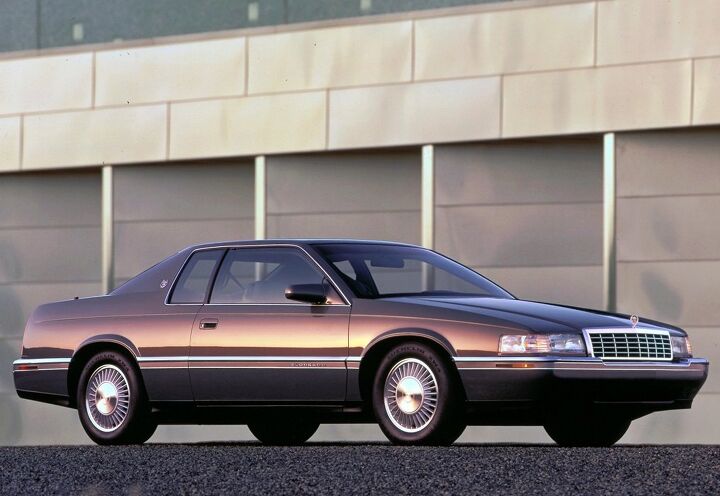
Returning for Eldorado duty was the same E-body platform that underpinned the model since the late Sixties when it became a front-drive vehicle. Though the Unitized Power Package days were long gone, the E-body persisted in a few guises. It’s worth mentioning that in this, the final iteration of the E-body, its usage had both expanded and diverged from the core Eldorado, Toronado, Riviera usage of the past.
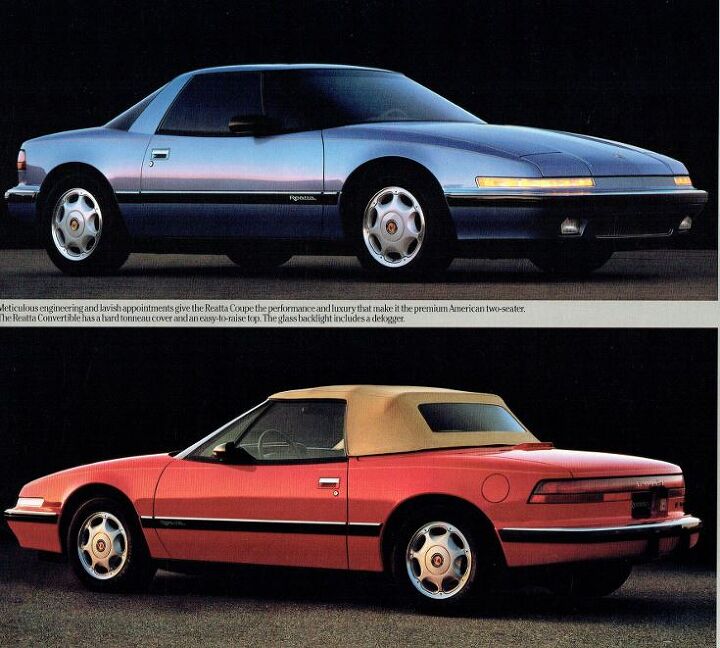
The 1987 Allanté was a shortened E-body, though Cadillac called it V-body. Similarly in 1988 E-body use expanded to include the smaller Buick Reatta coupe, a halo of the Buick brand with its own dedicated production facility. The Reatta would remain in production through 1991, and its production facility the Lansing Craft Center would later be used to build Eldorados.
The E-body that remained closest in looks and size to the Eldorado was the Riviera. It continued in its old Eighties guise (albeit lengthened) through 1993. The model was cancelled for 1994 as Buick prepared the big news for 1995: A new Riviera on a new platform, notably larger than Eldorado! From 1994 through its conclusion in 2002, the Eldorado was the only GM vehicle on the E-body.
The new Riviera was on the G-II body separate from the Eldorado, and shared its platform and 113.8-inch wheelbase with the Park Avenue and Oldsmobile Aurora. GM chose to call the G-body platform different things at different brands, like K-body for Cadillac usage, and H-body for Pontiac. All these were the same G platform.
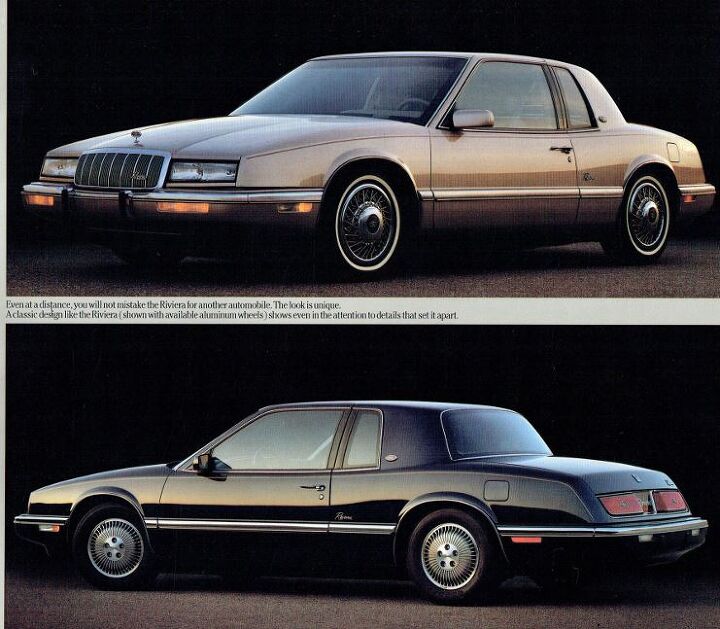
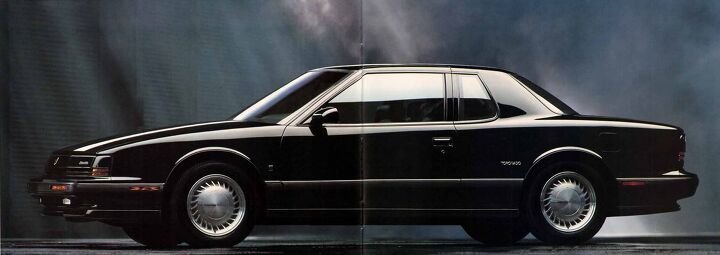
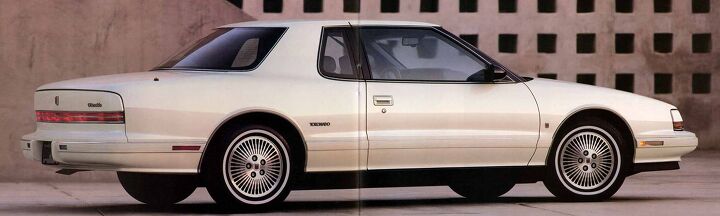
Oldsmobile’s Toronado, the personal luxury coupe that started it all, had fallen on hard times by the early Nineties. Though it was lengthened considerably (13 inches) and restyled in 1990, its sales continued to falter. Its concealed headlamps and odd styling were not what customers wanted at such a high price, and it was dropped after the 1992 model year when just 6,436 were sold. Oldsmobile considered the Aurora sedan the official replacement for the Toronado, but its buyers likely shifted to the Riviera.
In the change from the eleventh to twelfth Eldorado the wheelbase remained the same 108 inches, though styling masked this sameness very well. In its original guise, the shrunken eleventh-gen Eldorado was 191.2 inches (subsequently extended three more inches by the revisions of 1988). Cadillac saw it needed to add even more length, and when the Eldorado arrived in 1992 it was 202.2 inches long overall.
Similarly, the pencil-like ‘86 Eldorado debuted with a 71.7-inch width that increased to 72.4 inches via revised body panels in 1988. The new twelfth Eldorado increased this width considerably to 75.5 inches. Overall height increased from 53.2 inches (a half-inch decrease over the ‘86 version) in 1991 to 54 inches in 1992.
This was courtesy of a larger glass area, and a more upright windshield angle that gave the benefit of greater interior headroom. Also greater was the coupe’s weight figure, which increased from a 1991 figure of 3,461 pounds to between 3,700 and 3,950 pounds (sources vary). Aside from a larger body overall, there were bigger tires, more insulation, a more plush interior, and more features.
The lengthened hood contained the same 4.9-liter V8 as the previous Eldorado, as mentioned. The 4.9 was good for 200 horsepower and 275 lb-ft of torque. But the engine showed its roots (back to the HT4100) as it was down on power compared to more modern V8s. Luckily for Cadillac it was only temporary. The 4.9 was down about 80 horses compared to the new Lincoln V8 that debuted the following year.
Better news arrived in the form of a more refined transmission, the 4T60-E. A direct replacement of the THM440-T4, the new gearbox reflected a change in transmission nomenclature. In the early Nineties GM stepped away from the long-running Turbo-Hydramatic naming in use since 1964.
Naturally it was actually a Turbo-Hydramatic derivative anyway, even if the name didn’t reflect it. The 4T60-E was a further derivative of the THM440-T4, itself a development of the original THM125 of 1982. 4T60E was introduced in 1991 in the Buick Park Avenue and Buick’s other high-end front-drive cars.
The -E in the name meant the transmission was electronically controlled. A unique innovation of that particular variant was how the cruise control was integrated into the transmission’s control module, which meant improved ability to keep a constant set speed and avoid unnecessary shifting behaviors. The unit was adapted to various vehicles largely by using different stall speeds and gear ratios.
There were twelve different final drive ratios to the 4T60-E, which meant it was very adaptable to different use cases at GM. As it spread through the front-drive offerings across the company portfolio, it picked up an HD version specifically for use with supercharged versions of the Buick 3800 (Riviera, Park Avenue Ultra, Bonneville SSEi, etc.).
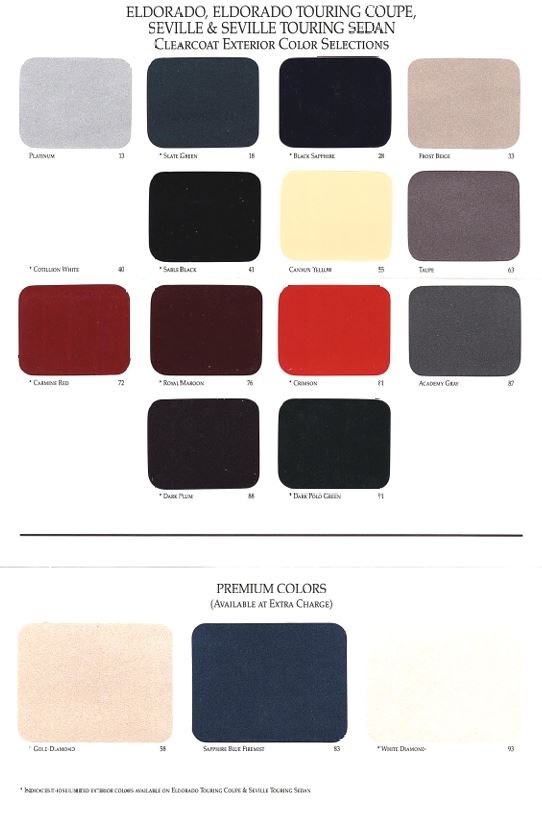
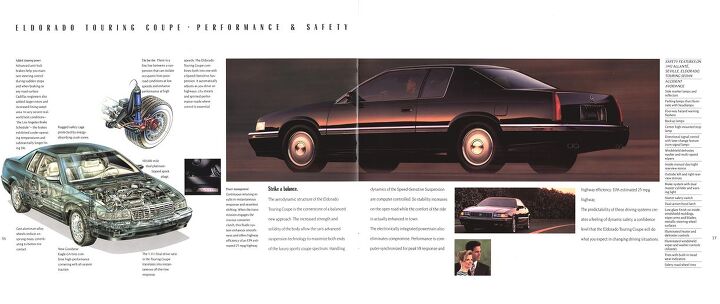
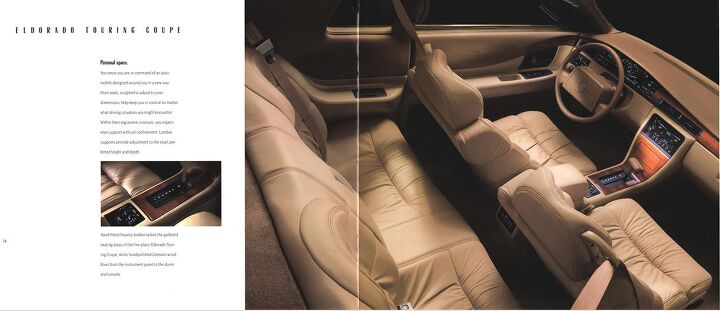
Cadillac touted new standard features on the 1992 Eldorado like Zebrano wood trim, power bucket front seats, digital gauges, and climate control. Cloth seats were standard but your author has never seen an Eldorado so equipped. Standard on all cars was a “Speed-Sensitive Suspension” which adjusted damping dependent upon the speed of travel. The system debuted on the 1989 Allanté, and would be developed into the Road Sensing Suspension (RSS) and the ultimate Continuously Variable version, CVRSS. These were replaced in the 2000s by GM’s Magnetic Ride Control that’s in use today.
But the biggest news for the 1992 Eldorado was the styling! In our next installment we’ll take a look at the exterior of the coupe’s final iteration. Its angular appearance was thoroughly modernized over the prior year, and generated buzz in the early Nineties.
[Images: General Motors]
Become a TTAC insider. the latest news, features, TTAC takes, and everything else that gets to the truth about cars first by subscribing to our newsletter.
Interested in lots of cars and their various historical contexts. Started writing articles for TTAC in late 2016, when my first posts were QOTDs. From there I started a few new series like Rare Rides, Buy/Drive/Burn, Abandoned History, and most recently Rare Rides Icons. Operating from a home base in Cincinnati, Ohio, a relative auto journalist dead zone. Many of my articles are prompted by something I'll see on social media that sparks my interest and causes me to research. Finding articles and information from the early days of the internet and beyond that covers the little details lost to time: trim packages, color and wheel choices, interior fabrics. Beyond those, I'm fascinated by automotive industry experiments, both failures and successes. Lately I've taken an interest in AI, and generating "what if" type images for car models long dead. Reincarnating a modern Toyota Paseo, Lincoln Mark IX, or Isuzu Trooper through a text prompt is fun. Fun to post them on Twitter too, and watch people overreact. To that end, the social media I use most is Twitter, @CoreyLewis86. I also contribute pieces for Forbes Wheels and Forbes Home.
More by Corey Lewis






Comments
Join the conversation
I can't wait to hear Corey's take on the design in the next installment. When this model of the Eldorado debuted and was reviewed by Motor Trend, I'll never forget their two word description (it may have been the headline): Old think. HA! That summed up the car for me. I confirmed it when I drove one.
My favorite line : The -E in the name meant the transmission was electronically controlled.