
Rare Rides: A Renault R5 Turbo Is Your Hot Hatch Dream From 1984


We’ve had a couple of Renaults featured on Rare Rides previously. Starting out gently with the Kenosha, Wisconsin-built Alliance GTA, we kicked it up a notch with Renault’s second generation 5 GT Turbo.
But that hatchback was sort of a pretender using the 5 Turbo name. Let’s look at the original one, which was altogether more serious.
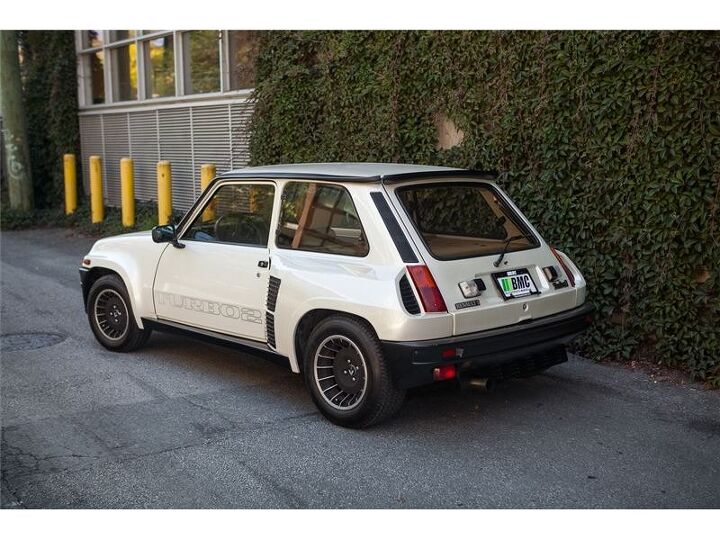
Today’s Renault hatchback is an R5 Turbo. Unlike the GT Turbo which came afterward, this one had its engine in the back.
Debuting at the Brussels Motor Show in 1980, Renault had the rally circuit in mind when engineering the beastly R5. You see, Renault was jealous — jealous of Lancia, which had much success with its Stratos (Rare Rides fodder for a different day).
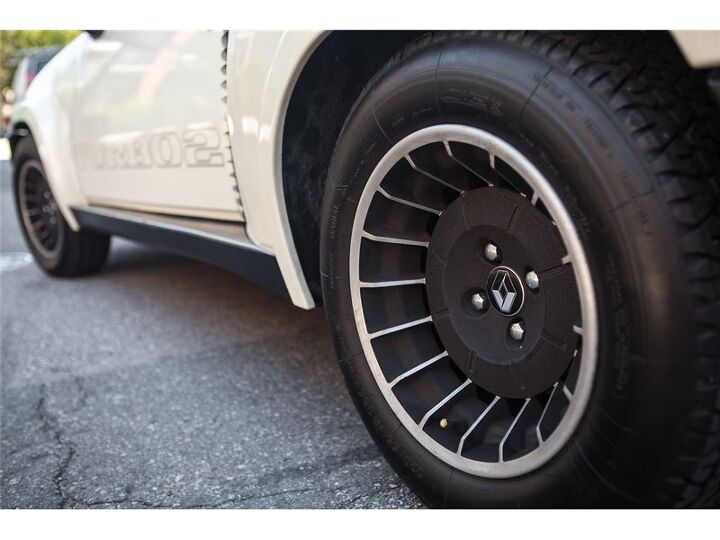
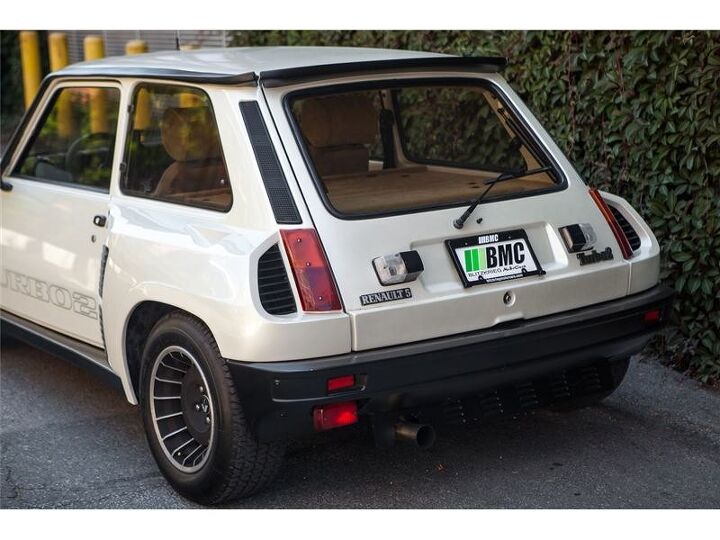
Like our Alfa Romeo Montreal, design work for this modified hatchback was done by Marcello Gandini over at the Bertone office. He drew up the wide hips and air vents necessary to cool the 1.4-liter turbocharged inline-four engine. Producing 158 horsepower, the engine’s thrust is delivered to the rear wheels via a five-speed manual.
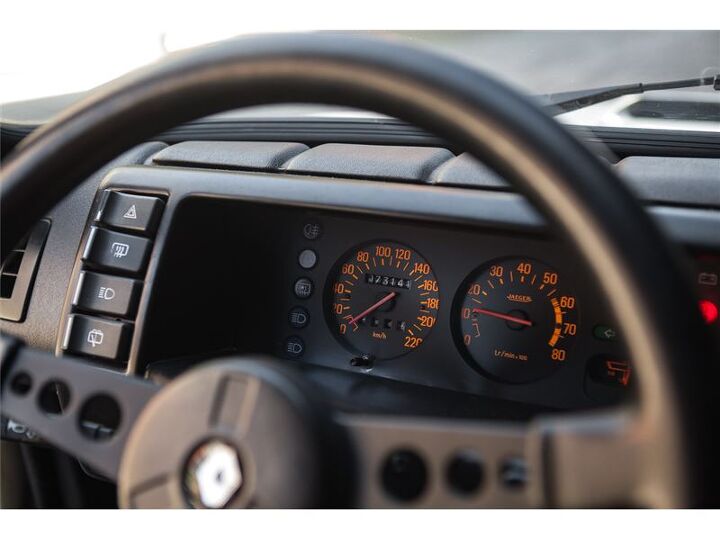
Race homologization rules required production of at least 400 road-going examples, allowing the R5 to enter international rallies. Renault’s Alpine division manufactured the initial run in France, though there was simultaneous production in Belgium. Renault took the R5 racing as planned, and won the Monte Carlo Rally in 1981 — its first time at the World Rally Championship. Renault would have a short time to celebrate; Audi was coming out with its Quattro and the era of rear-drive rally car success was at an end.
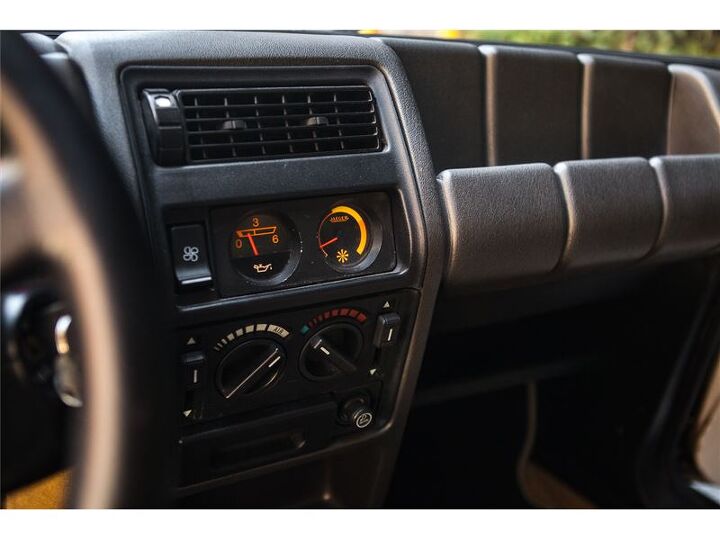
The initial run of vehicles was known as Turbo 1, totaling to 1,820 hatchbacks. Afterward, Turbo 2 production started. This model used more off-the-shelf Renault parts, and was less expensive than the Turbo 1. Renault was able to produce and sell more of the less expensive Turbo 2, with a total production figure of 3,167.
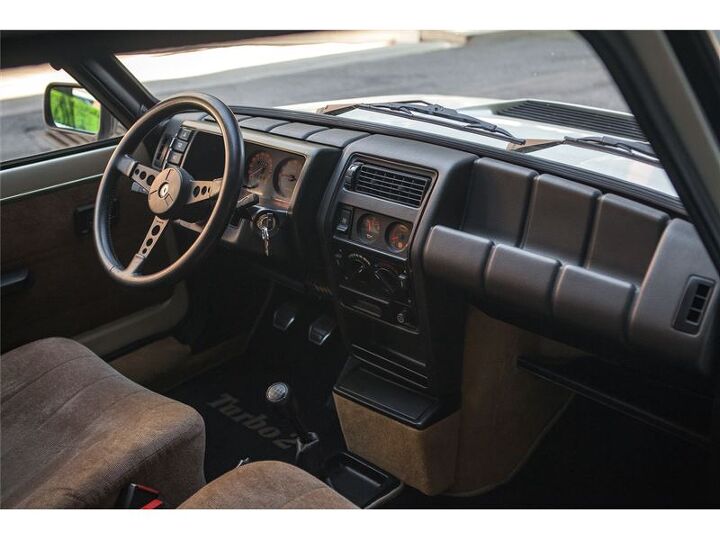
Though the special lightweight components were replaced with stock ones, the Turbo 2 maintained almost the same performance as its illustrious sibling. A 0-60 time of 6.9 seconds and a top speed of 120 miles per hour was very respectable for the time. Racing versions had amped up performance, of course.
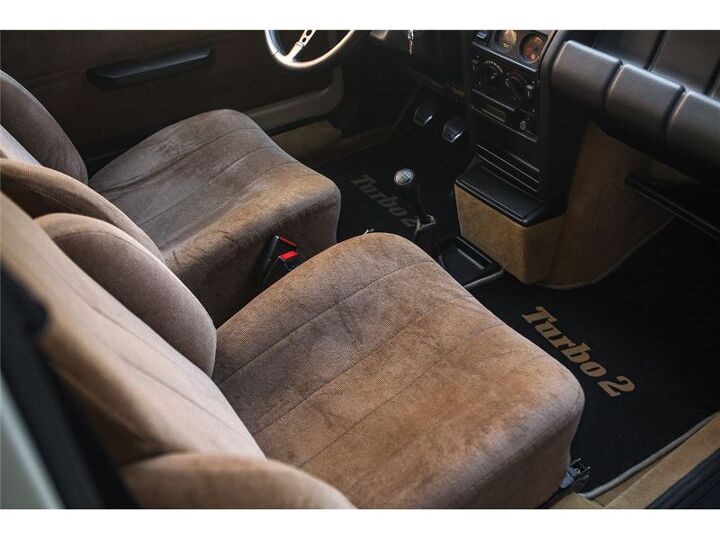
Today’s example is a Turbo 2 from 1984. Located in the northern Seattle suburb of Vancouver, in Canada, it has covered a little over 45,000 miles. Asking price is nearly $122,000 USD, which Renault expert Chris Tonn tells me is a bit too high.
But don’t let that put you off. Consult with your financial planner today, and make room for Renault R5.
[Images via seller]
Interested in lots of cars and their various historical contexts. Started writing articles for TTAC in late 2016, when my first posts were QOTDs. From there I started a few new series like Rare Rides, Buy/Drive/Burn, Abandoned History, and most recently Rare Rides Icons. Operating from a home base in Cincinnati, Ohio, a relative auto journalist dead zone. Many of my articles are prompted by something I'll see on social media that sparks my interest and causes me to research. Finding articles and information from the early days of the internet and beyond that covers the little details lost to time: trim packages, color and wheel choices, interior fabrics. Beyond those, I'm fascinated by automotive industry experiments, both failures and successes. Lately I've taken an interest in AI, and generating "what if" type images for car models long dead. Reincarnating a modern Toyota Paseo, Lincoln Mark IX, or Isuzu Trooper through a text prompt is fun. Fun to post them on Twitter too, and watch people overreact. To that end, the social media I use most is Twitter, @CoreyLewis86. I also contribute pieces for Forbes Wheels and Forbes Home.
More by Corey Lewis






Comments
Join the conversation
This car has been on my bucket list since I first saw the pictures in 1981. When I saw one in person in Paris in 1983 it moved up to the top 5. There was a place in Pompano Beach, FL that sold the federalized ones for around $25K around 1984 or so. We stopped to look at them and they were visually stunning. I would have given anything to take one home (but I was 15).
"Asking price is nearly $122,000 USD, which Renault expert Chris Tonn tells me is a bit too high." Actually, that's not unreasonable given a couple of factors. The US dollar has weakened against euro (€1.00 is now $1.25 USD). Secondly, there's probably not many of them on the road due to various reasons such as damages, collisions, blatant negligence, deferred maintenance, life as garage queens, and so forth. Looking through autoscout24.de and mobile.de (Germany's largest online classified listings for automobiles), I can see many of Turbo 1 and Turbo 2 listed for the price between €75,000 to €120,000 ($93,444.81 USD to $149,520.23 USD), including one Group B version for €135,000 ($168,210.26 USD). https://www.autoscout24.com/results?mmvmk0=60&mmvmd0=1975&version0=Turbo%20&mmvco=1&fregfrom=1980&fregto=1985&powertype=hp&powerfrom=110&atype=C&ustate=N%2CU&sort=price&desc=0 https://suchen.mobile.de/fahrzeuge/search.html?damageUnrepaired=NO_DAMAGE_UNREPAIRED&isSearchRequest=true&makeModelVariant1.makeId=20700&makeModelVariant1.modelDescription=Turbo&makeModelVariant1.modelId=29&maxFirstRegistrationDate=1985-12-31&maxPowerAsArray=PS&minFirstRegistrationDate=1980-01-01&minPowerAsArray=150&minPowerAsArray=PS&scopeId=C So this guy took trouble of sourcing the R5 Turbo 2 in excellent condition, registering himself as its owner, arranging the shipment from Europe to Canada, sorting the customs declaration, and so forth. Give him the credit where it's due. Not to mention the need to have good return of investment for his trouble. I suspect this car had side-turn signal repeaters attached to the front part of front wing by the owner outside France. Actually, there's better design and better location than this. Renault didn't fit the side-turn signal repeaters unless they were mandated in the countries such as Italy and Scandinavian countries and until the EU regulations made them compulsory from 1995 on.