

QOTD: What Car Had An Undeserved Reputation?
Today, one of our TTAC content creators argues on his YouTube platform that the Mercury Bobcat wasn't as bad as some folks said.

The Mercury Bobcat - Why It's Not As Bad As It's Reputation

The Mercury Bobcat. It was Mercury's first subcompact car sold in North America and yes, it was a rebadged Pinto but it gave Mercury an inexpensive model that had good gas mileage numbers.

1969 - 70 Mercury Marauder: BIG Brute Muscle?

The 2nd generation Mercury Marauder. The Marauder name was 1st used on an engine in the late 50s and it was 1st used as a nameplate for a car in 1963 only to be retired in 1965.
QOTD: What's The Best Animal/Insect Name For A Car?
We've been having fun with galleries lately, and the past few have centered around the animal world.

Third-Gen Mercury Cougar: The History, Features, & Options

For 1974, Cougar Mercury decided to drop the 3rd generation Cougar on the Torino/Montego platform, which was larger than its previous version. The move was meant to lean more on luxury than performance and the convertible model was to be dropped.
2003-2004 Mercury Marauder: It Could have been a Contender

If you wanted to go fast but had a family or needed a full size car this might have been the car for you.
Junkyard Find: 1986 Mercury Topaz GS, Lichen This Car Edition
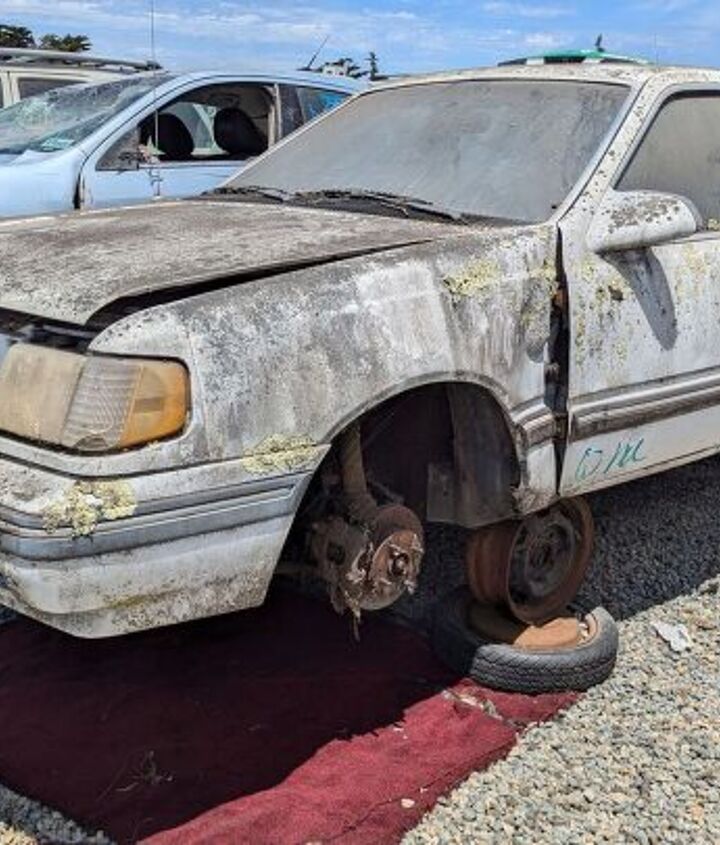
Would you believe that the last time we saw a Ford Tempo in this series was seven years ago, or that we've never seen a discarded example of its Mercurized sibling, the Topaz? We'll fix that right now, with a Northern California Topaz that served as habitat for a fascinating variety of moss and lichens.
I found this car at the Pick-n-Pull in the appropriately named city of Moss Landing, California. That yard visit was exceptionally productive for my pursuit of discarded automotive history, yielding such machines as a 1984 Grumman-Olson Kurbsite Frito-Lay truck, a 648,928-mile 1985 Toyota Camry, a 434,475-mile 1994 Dodge Caravan, a Volvo Amazon with a heartfelt biography scrawled on its flank, a 1971 Opel GT, a 1977 VW Westfalia Campmobile, a near-showroom condition 1987 Mazda 323 and a 1980 Honda Accord.


Junkyard Find: 2008 Mercury Sable, Press Loaner Flashback Edition
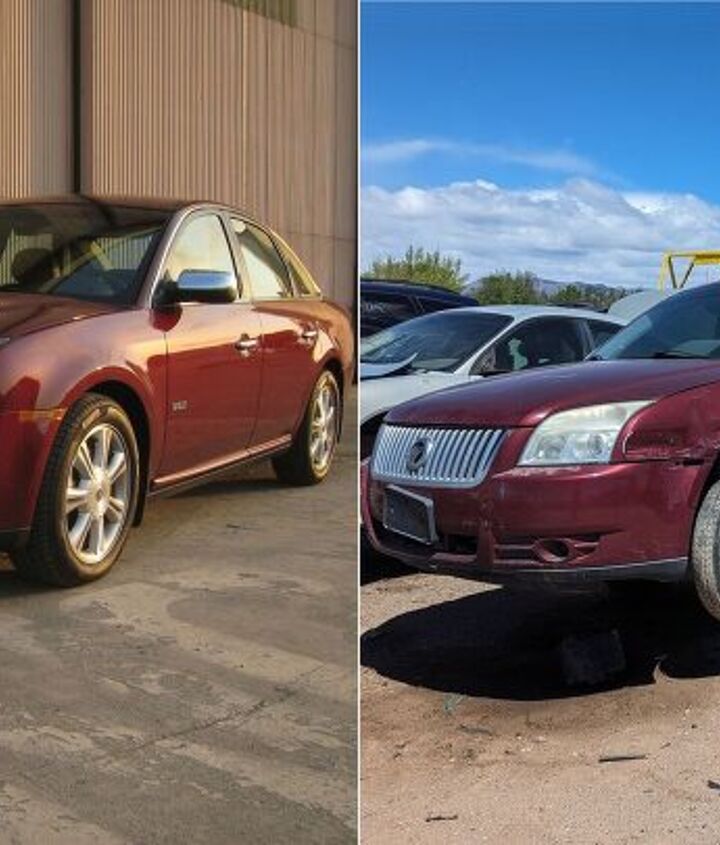
When you write about cars for a living, you can get carefully prepared vehicles dropped off at your door (or at airports) for you to experience and then review. Sometimes you even get the experience of wrecking them! The very first press car I ever received was a red 2008 Mercury Sable, so let's take a look at the same kind of car at the end of its 16-year career.
Junkyard Find: 2007 Ford Taurus SE
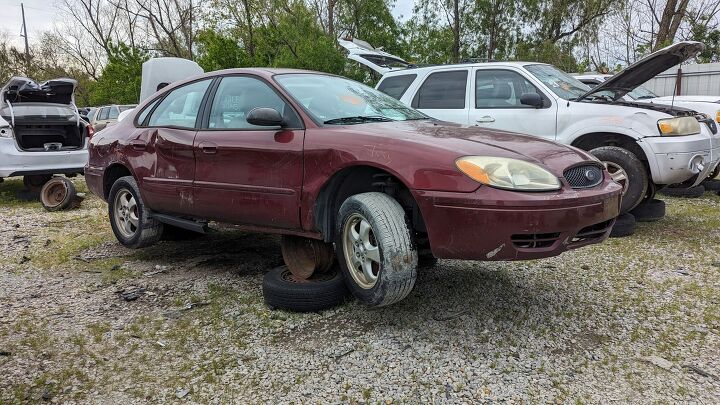
The original Ford Taurus first appeared as a 1986 model, going through three generations and nearly 10 million sales (counting the Mercury Sable) before getting the axe in October of 2006. That made 2007 the final model year for the "real" Taurus, and I've found one of these rare cars in a New Orleans self-service junkyard.
Junkyard Find: 1964 Mercury Montclair Four-Door Hardtop Marauder
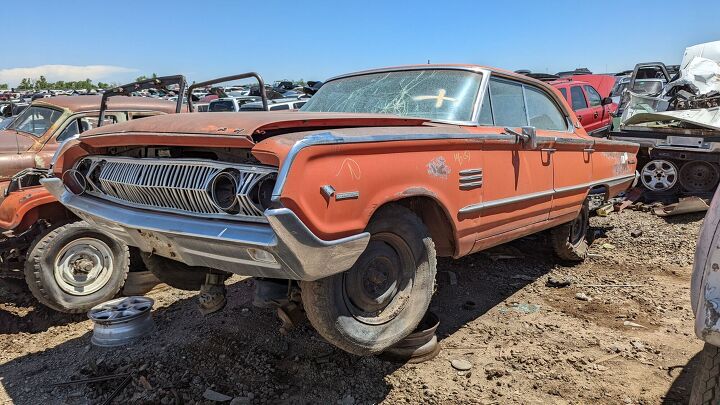
Here's a car trivia question for you: what engine name went on to become the designation for a body style and then a car model name in its own right? The answer is, of course, Marauder.
TTAC Throwback: 1979 Mercury Cougar XR-7

As electric cars are finding favor again, I keep hoping that their virtue of instantaneous, silent power will inspire automakers to revive the personal luxury coupe. Electric propulsion would be ideal for a car whose mission is to provide comfortable, stylish accommodation for two passengers plus the occasional occupants of a not-too-small rear compartment.
The long hood, an essential styling hallmark of the genre, could become a commodious “frunk” able to hold all the golf bags the marketing department might desire. Glove-soft upholstery might enrobe seats devoid of confining, uncomfortable lateral support bolstering. Every power assist and convenience would be in place to gladden the sybarite’s heart. For instance, power window switches could operate just by sight, so one’s fingers aren’t strained when ordering at the Starbucks drive-through window. Personal luxury coupes don’t need to be fast, enhancing driving range. The possibilities for Broughamized electric coupes are endless!
Yet, despite my frequent, vigorous attempts to show them the way, carmakers seem blind to the golden opportunity to revive the personal luxury coupe. Elon Musk has even stopped returning my texts. Philistine.

Abandoned History: The Life and Times of Edsel, a Ford Alternative by Ford (Part III)
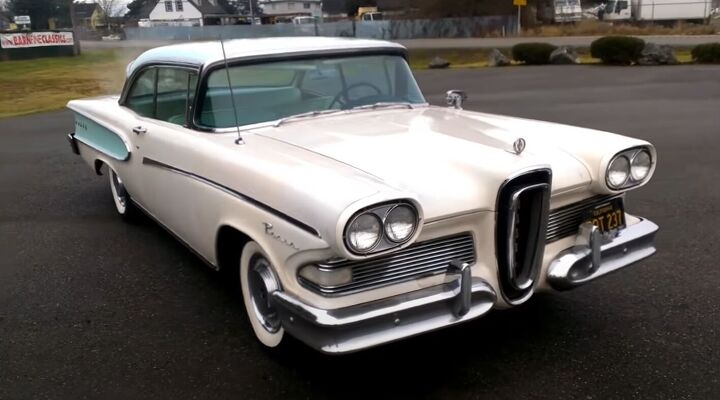
Ford conducted a lot of marketing research for its Edsel brand and was assured by many well-educated MBA types that its new lineup would be hugely successful. The research scientists said the unique styling and features Edsel offered would appeal to a broad cross-section of the American populace. After a television musical debut in the fall of 1957, Edsels were shipped to dealers where they remained under wraps until it was time for the ‘58 model year.
Crazy styling aside, Edsel’s arrival caused some immediate brand confusion in relation to Mercury, and in more limited circumstances, Ford. Much of said confusion occurred in the company’s debut year when Edsel spread the “lots of new models” sauce a little too thin. We start at the brand’s second most basic offering: Pacer.

Abandoned History: Ford's Cruise-O-Matic and the C Family of Automatic Transmissions (Part VI)
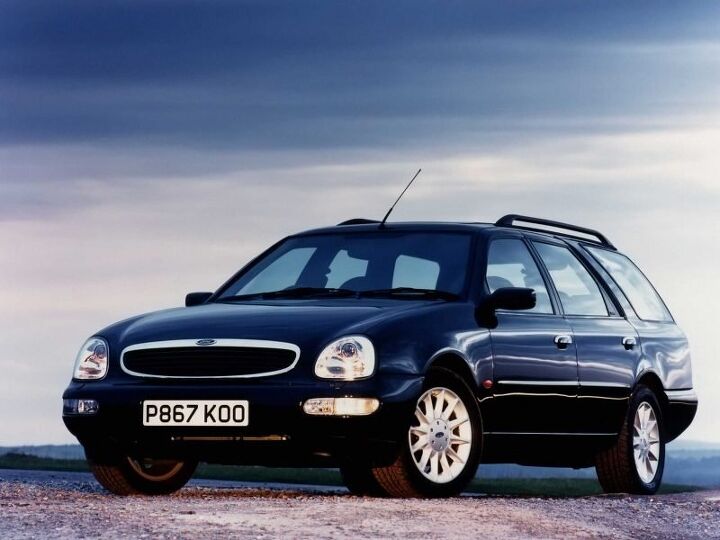
We return to the final entry in our Cruise-O-Matic and C transmission series, at a time when the former’s Fifties-tastic name had faded from the memory of most. The C family was the wave of the future when it arrived as a rework of the Cruise-O-Matic in 1964. The first of the line was the C4, a medium-duty box that was followed two years later by the heavy-duty C6.
Read more
Abandoned History: The Life and Times of Edsel, a Ford Alternative by Ford (Part II)
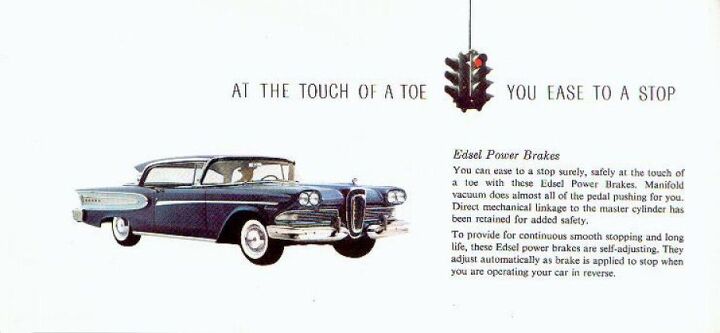
Ford successfully orchestrated a splashy live television musical debut for its new brand Edsel in the fall of 1957. The program was a culmination of a multi-year project to establish a new division of Ford that would compete more directly with the likes of Oldsmobile, Buick, and DeSoto. Edsels promised to be notably different from the Mercury with which it shared most everything except styling.
Edsel was to be much more value-conscious than the new-for-’58 unibody Lincolns, which sought to move the brand upmarket after the almost instantaneous discontinuation of the Continental Division. After Frank Sinatra and Bing Crosby ushered in the Edsel name it was time to show off the all-new models in showrooms, and introduce a supposedly excited American consumer to the lineup.
Abandoned History: Ford's Cruise-O-Matic and the C Family of Automatic Transmissions (Part V)
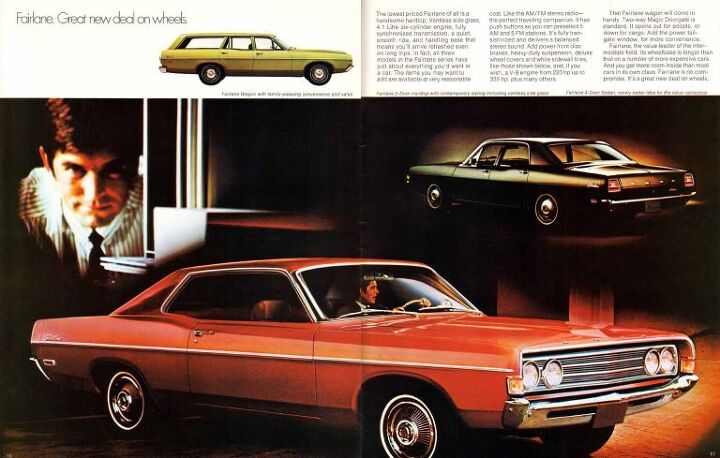
We resume our Ford Cruise-O-Matic transmission coverage today, as the original two- and three-speed automatics of the Fifties transition into the new C family. C transmissions were designed to be lighter (aluminum) and more efficient than their cast iron predecessors. The wonder of alloys!
In our last entry, we covered the first two C transmissions, the C4 (1964-1981) and C6 (1966-1996). Since we’re proceeding chronologically, we step back to Cruise-O-Matic for a moment, and a mix-and-match transmission: FMX.
Rare Rides Icons: The Lincoln Mark Series Cars, Feeling Continental (Part IX)
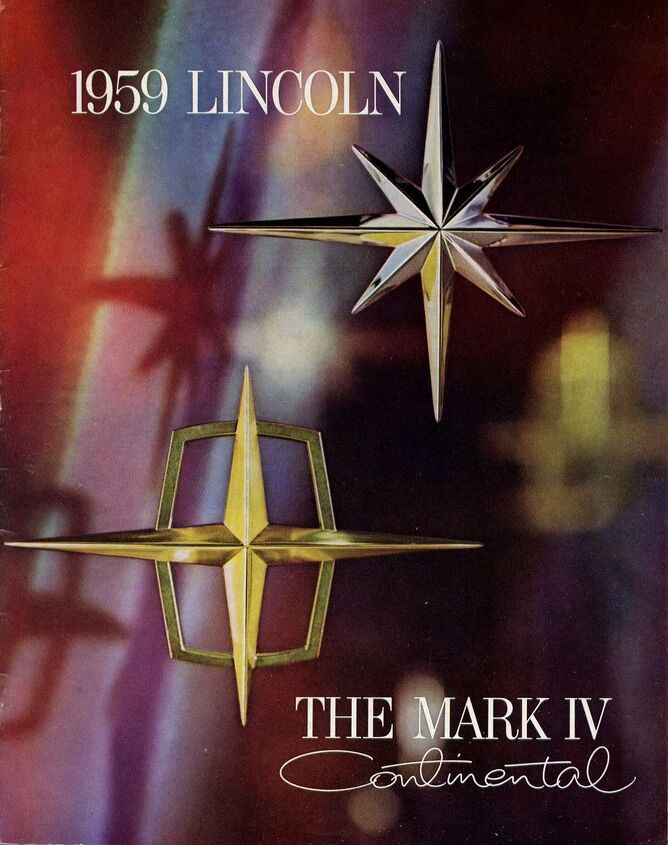
Our Lincoln Mark Series coverage continues today, and we pick up at the end of 1958. After Ford dumped many millions into the Continental Division and quickly shut it down, the company then spent a lot more money to develop an all-new unibody platform for Lincoln’s usage. In an attempt to woo customers away from Cadillac, the new Lincolns for 1958 wore some of the most shocking styling ever to come from Detroit.
All three of Lincoln’s new “models” were really just trim levels of the same car. Said models included Capri, Premier, and the top-tier Continental Mark III, which was not a Continental except in trim badges. At least it had a Breezeway window! At the 1958 launch of Lincoln’s new unibody line there was a steep recession across the globe, as lots of Americans decided they didn’t actually need a new car every year or two. Nevertheless, the Continental Mark III made up 62 percent of Lincoln’s sales that year. Lincoln veered off on a revised course in 1959, hoping to improve its lot with some more “new” models.
Abandoned History: The Life and Times of Edsel, a Ford Alternative by Ford (Part I)
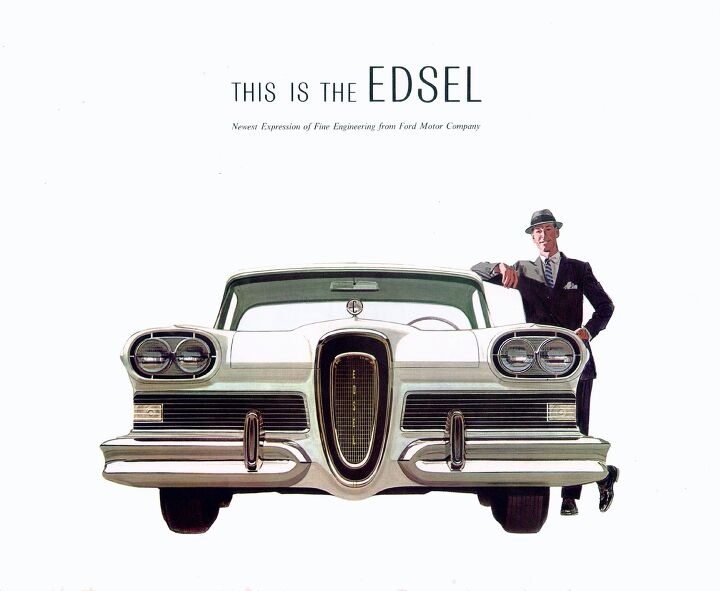
Edsel received an honorary mention a couple of weeks ago, in our current Rare Rides Icons series on the Lincoln Mark cars. Then it was mentioned again the other day in Abandoned History’s coverage of the Cruise-O-Matic transmissions. It’s a sign. We need to talk about Edsel.
Rare Rides Icons: The Lincoln Mark Series Cars, Feeling Continental (Part VIII)
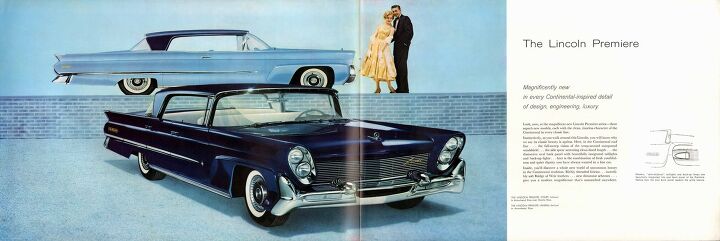
With the Continental Division dead, a cost-weary and (newly) publicly traded Ford Motor Company headed into the 1958 model year determined to unveil a solid luxury car showing against its primary rival, Cadillac. However, the “Continental Mark III by Lincoln” was a Continental in name only: It wore the same metal and was produced at the same new factory, Wixom Assembly, as the rest of the Lincoln models (Capri, Premiere) that year.
Brass at Ford hoped the Continental name on the Mark III would make customers believe it was something special, like the Cadillac Eldorado with which it competed. As mentioned last time, aside from its Continental name, the Mark III for 1958 used One Simple Trick to lure buyers into its leather seats: a Breezeway window. First up today, pricing problems.
Abandoned History: Ford's Cruise-O-Matic and the C Family of Automatic Transmissions (Part IV)
Last time on our Abandoned History coverage of Ford’s historical Cruise-O-Matic automatic transmission, we spent some time in Russia. Communist automaker GAZ liked Ford’s automatic and decided to lightly rework it into their “own” transmission rather than pay Ford to build it under license. The GAZ two- and three-speed automatics remained in use in the company’s passenger cars well into the Eighties, which was a very long time for a late Fifties transmission to live.
Shortly after GAZ made its copies, the real versions of the FX/MX Cruise-O-Matic and Ford-O-Matic were nearing the end of their respective service lives. The two-speed was naturally the first to go.
Abandoned History: Ford's Cruise-O-Matic and the C Family of Automatic Transmissions (Part III)
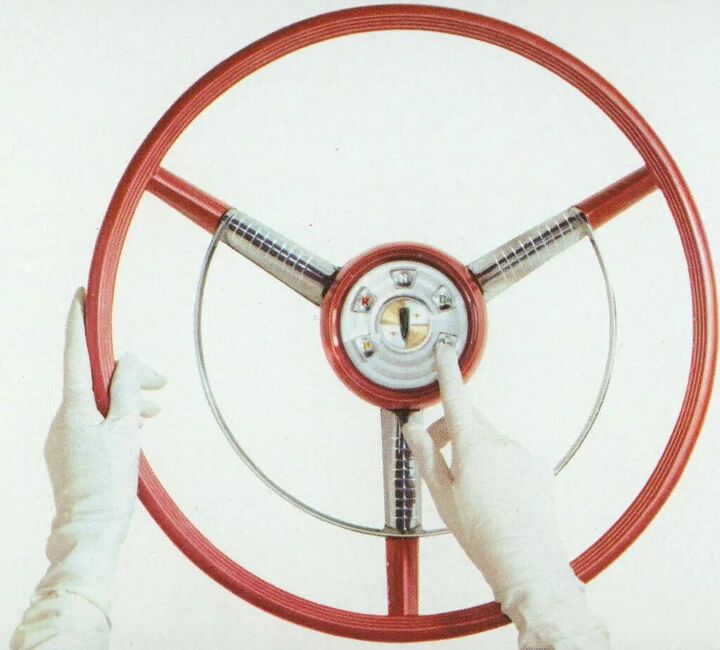
We pick up our Cruise-O-Matic automatic transmission coverage again today, as Ford’s first mass-produced gearbox found its stride in the Fifties. As consumers turned toward automatic transmissions in their two- and four-door domestic iron, they also turned toward more powerful V8 engines and big chrome bumpers and tail fins. Detroit’s manufacturers had to respond, and Ford’s answer was a second-generation Ford-O-Matic, the FX and MX. Both transmissions were marketed under the new Cruise-O-Matic moniker, while a new generation two-speed auto became the bargain basement Ford-O-Matic.
As we discussed in our last entry, in 1957 and 1958 Ford offered fiddly Keyboard Control. The whiz-bang new feature meant the Cruise-O-Matic was operated by confusingly marked dash-mounted buttons on select Mercury vehicles. And while Keyboard Control was limited to Mercury, an even worse version of the same idea was reserved for Edsel.
Rare Rides Icons: The Lincoln Mark Series Cars, Feeling Continental (Part VII)
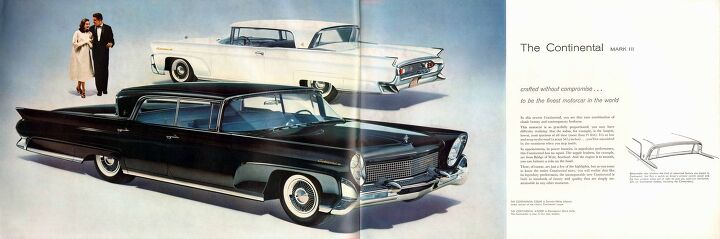
The Continental Division was in a very difficult place when it designed an all-new Mark III as the (sedan only) replacement for the slow-selling and super expensive Continental Mark II coupe. As we learned last time, shortly after the Mark II went on sale the Continental Division was already on its last legs. It continued to lose money hand over foot after Ford’s huge initial investment and was doomed to a quick closure.
And so it was the 1956 and 1957 Mark IIs became the only Continental Division product and the only Marks that were hand-assembled in a factory-built, especially for Continental. After Continental’s closure, Ford’s new VP of passenger vehicles Lewis Crusoe quickly dismantled the division and integrated its employees into Lincoln. The Continental factory became the Edsel factory, and the three extant Mark III prototypes became a burden.
Abandoned History: Ford's Cruise-O-Matic and the C Family of Automatic Transmissions (Part II)
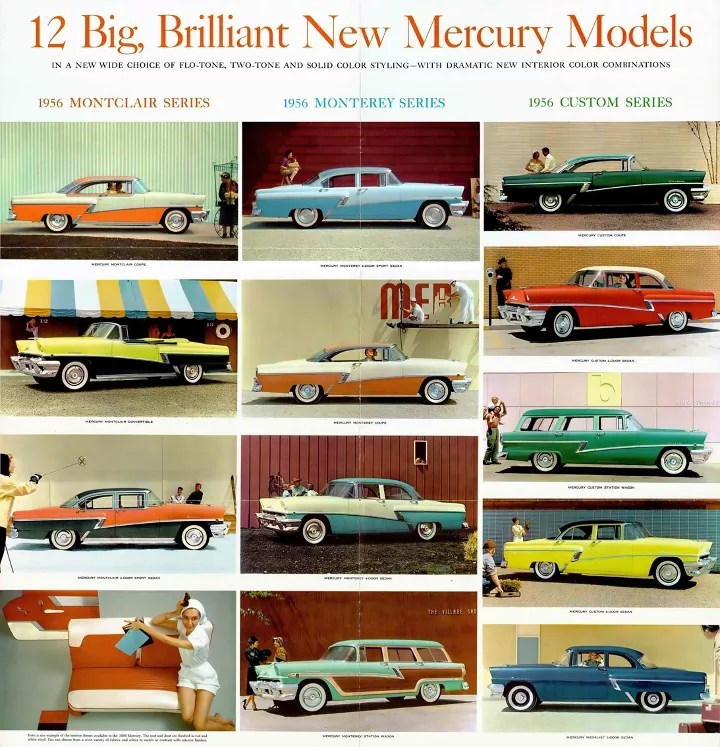
We continue our Abandoned History coverage of the Ford Cruise-O-Matic transmission today, shortly after the three-speed automatic established itself as a reliable motivation source for Ford, Lincoln, and Mercury products. Developed by the Warner Gear division of Borg-Warner, the new automatic caught Ford up to the competition as far as an automatic offering was concerned. Efficient and economical to build, Studebaker got in on the Cruise-O-Matic action for their cars too.
After the box proved itself on Ford and Mercury cars, it spread to the luxurious ’55 Lincoln lineup where it replaced the four-speed GM Hydra-Matic. We pick up there, as efforts got underway to improve upon the original Borg-Warner design and add whiz-bang features. This entry doesn’t end up where you’d expect.
Rare Rides Icons: The Lincoln Mark Series Cars, Feeling Continental (Part VI)
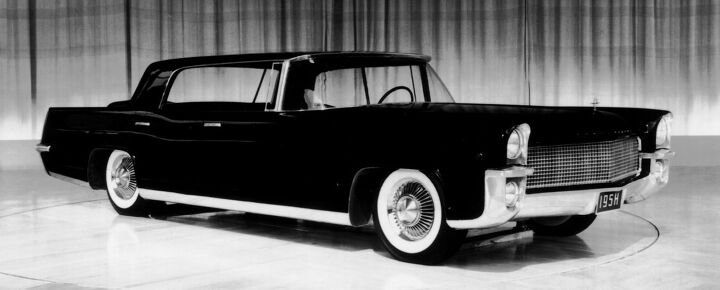
We pick up the story of Lincoln’s Mark series cars once again today, at a low point in the coupe’s history. The intensely expensive development and launch of the new Continental marque arrived at exactly the wrong time for Ford.
Shortly after the family-owned company spent $21 million ($227 million adj.) on the launch of its new super-luxury brand, the company had its IPO. That meant the big money poured into the black hole that was Continental was visible to everyone who cared to see, including shareholders. The pressure was just too much, and the Continental brand was canceled in 1956 by Henry Ford II, just a year after the Mark II entered production.
But let’s back up a year, right as the Mark II went on sale. Management of the Continental Division knew the singular, hand-assembled model was not enough to keep the company going. They needed to save and make more money, and fast.
Abandoned History: Ford's Cruise-O-Matic and the C Family of Automatic Transmissions (Part I)
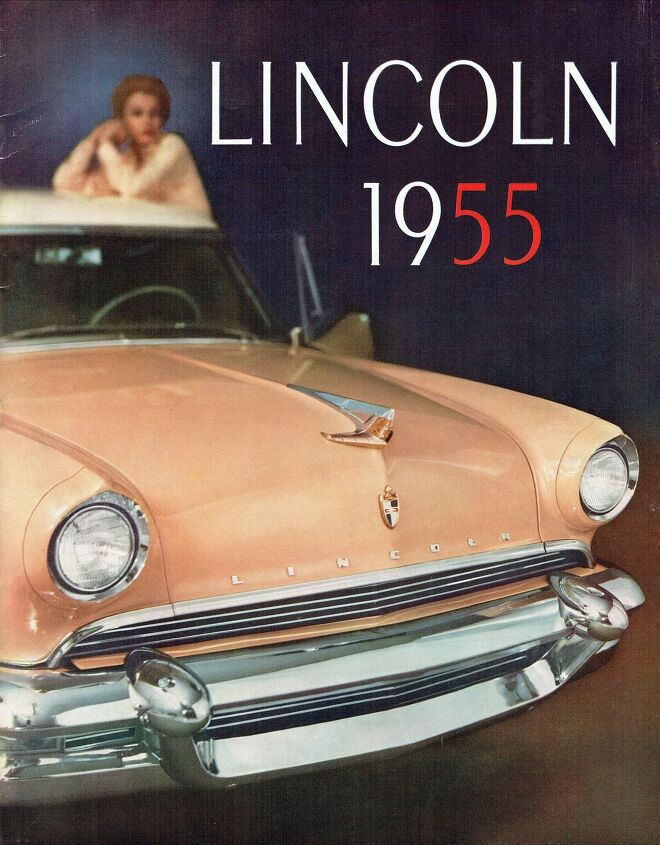
As we finished up our coverage of General Motors’ Turbo-Hydramatic family of transmissions, I asked which gearbox you might like to see covered next by Abandoned History. The comments honed in on Ford, and the various versions of the C family of automatics. Fine by me! Today we head back to the Fifties to learn about the genesis of all the Cs. It was the extremely Fifties-sounding Cruise-O-Matic, built with pride in Cincinnati, Ohio.
Rare Rides Icons: The Lincoln Mark Series Cars, Feeling Continental (Part V)
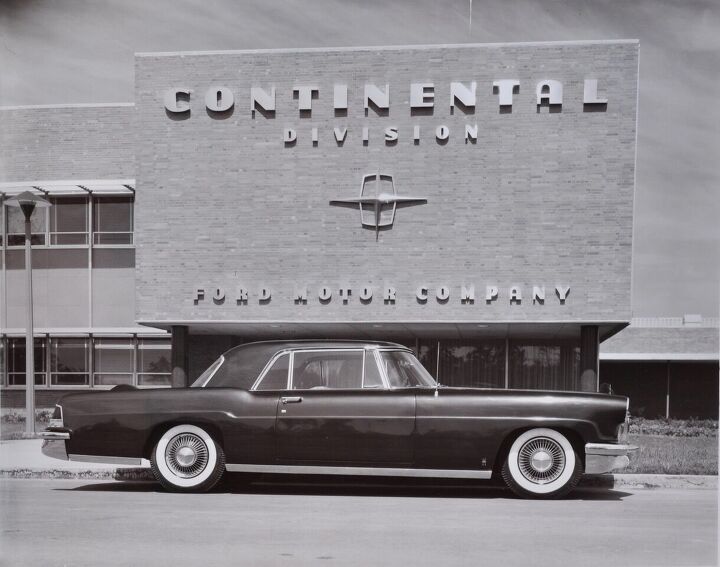
We arrive today at the fifth installment of our Rare Rides Icons coverage on the Lincoln Mark series cars. Thus far we covered the first Continental of the late Thirties, and Ford’s desire to go ultra luxury with the Mark II sold under the newly minted Continental Division. The Mark that debuted for the 1956 model year was Mid-century in its styling, built of top quality components, and constructed in a methodically controlled manner via a QC program that consisted of seven initiatives.
It was time to put the new Continental Mark II coupe on sale.
Rare Rides Icons: The Lincoln Mark Series Cars, Feeling Continental (Part IV)
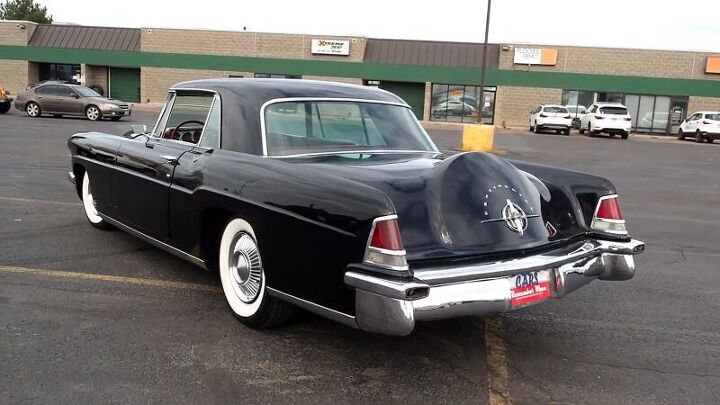
We return to our Lincoln Mark series coverage today, in the midst of learning about the first Mark of the line, the Continental Mark II. The Mark II aimed to carry on the tradition set by the gracious Continental of the Forties, and take Ford to new heights of luxury, desirability, price (and thus exclusivity), and quality. The latter adjective is where we’ll focus today; it was certainly the focus of the folks at the Continental Division prior to the Mark II’s release.
Rare Rides Icons: The Lincoln Mark Series Cars, Feeling Continental (Part III)

Today finds us at the third installment in our coverage of the Lincoln Mark series cars. So far we’ve covered the original Continental that ran from 1939 to 1948 and learned about the styling decisions that made for the most excellent Midcentury Continental Mark II. The Mark II arrived to herald the birth of the new Continental luxury division at Ford. A division of Ford and not Lincoln-Mercury, Continental was established as the flagship of the Ford enterprise. We pick up circa 1952, with Cadillac.
Rare Rides Icons: The Lincoln Mark Series Cars, Feeling Continental (Part II)
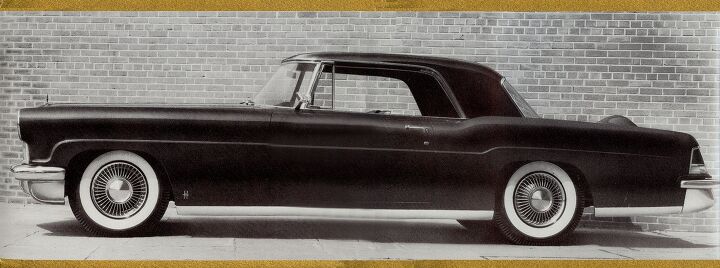
We pick up our Lincoln Mark series again today, at a point where Ford’s executives were really not interested in selling a personal luxury coupe. The original Continental was developed as a concept at the request of Edsel Ford, who wanted a car to take on his spring vacation in 1939. After an informal debut in Florida, Edsel came back with 200 orders and the Continental entered production.
Halted by World War II, the Continental picked up where it left off and underwent a light reworking at the hands of Virgil Exner. But the end of the Forties were not kind to the likes of the V12 engine, nor did Ford want to create a new Continental to replace the decade-old one circa 1948. Continental went away, its name unused. Instead, Lincoln foisted reworked Mercurys as the Cosmopolitan and ignored personal luxury. The brand generally lowered the bar of exclusivity set by Continental and the K-Series cars, and made things more affordable to the upper-middle portion of the American consumer base. Things stayed that way at Lincoln for some time.
Junkyard Find: 1997 Mercury Cougar XR7 30th Anniversary Edition
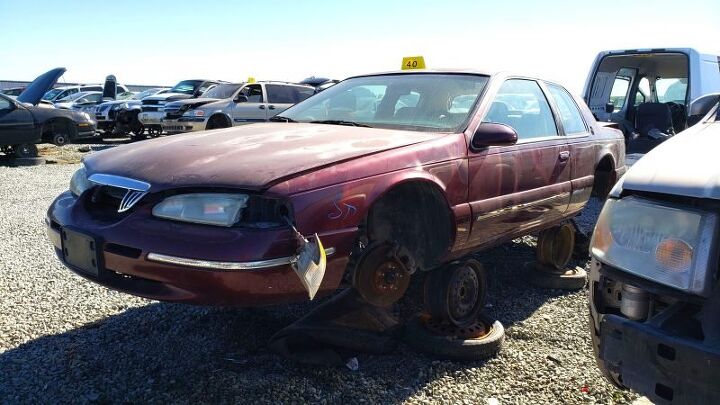
Ford’s Mercury Division built rear-wheel-drive Cougars from the 1967 through 1997 model years, followed by a 1999-2002 run of front-wheel-drive Cougars based on the Mondeo chassis. Today’s Junkyard Find is thus historically significant on three counts: it’s the last model year for the rear-wheel-drive Cougar, it’s a special edition commemorating the 30th anniversary of the debut of The Man’s Car, and it’s the last year for the XR7 luxury package. Bitter tears, indeed!
Buy/Drive/Burn: Upmarket Brand American Midsize Sedans in 1997
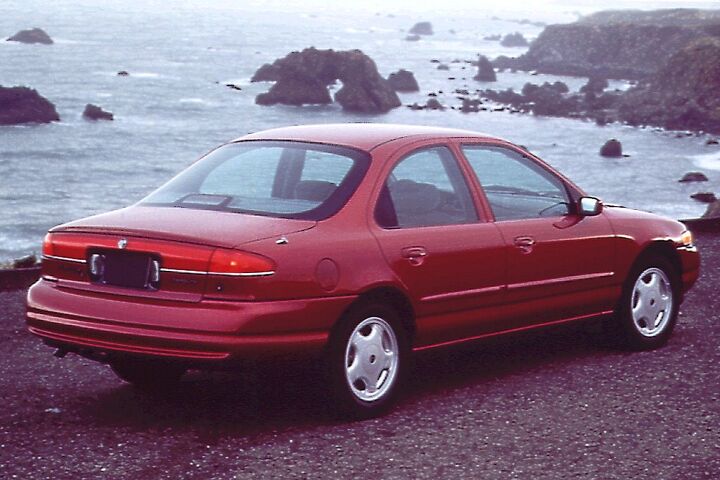
We’re back with more 1997 midsize sedan action in today’s edition of Buy/Drive/Burn. They’re all on the smaller end of the midsize sedan scale, all American, and crucially, all wearing semi-upmarket branding.
Junkyard Find: 2011 Mercury Mariner, Last Gasp of the Mercury Brand Edition
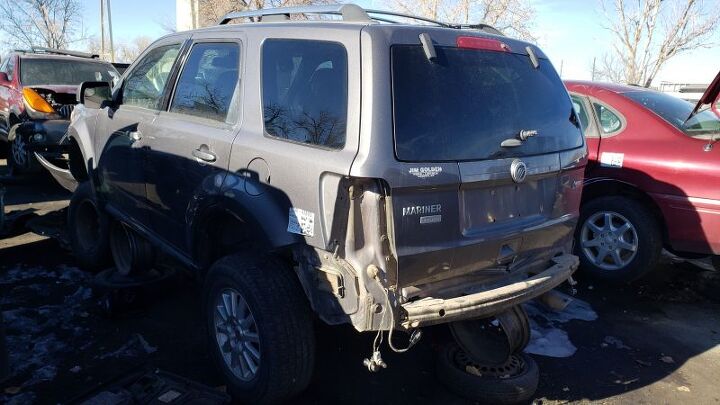
Ever since I found one of the very last Oldsmobiles in a Denver car graveyard, I’ve been keeping my junkyard eye open for other final-year-of-marque Detroit machinery. We’ve got the 1998 Eagle, the 2001 Plymouth, and the 2010 Pontiac, and now it’s time for one of the very last vehicles to wear the Mercury badge: this 2011 Mariner Premier.
Junkyard Find: 1974 Mercury Montego MX Brougham 4-Door Pillared Hardtop

For the connoisseur of Malaise Era Broughams, the Mercury Montego MX Brougham checks all the boxes: long hood, “stitches” molded into plastic door panels, unapologetically phony “wood” dashboard trim, low-compression smog V8, and obvious kinship with a much cheaper corporate twin. That’s what we’ve got with today’s Junkyard Find from the year of Richard Nixon’s resignation.
Rare Rides: The 1991 Mercury Tracer LTS, Put It on Your List

Rare Rides has featured Ford’s compact Escort offering previously, in a first-generation EXP from 1986. Today’s Escort hails from the model’s second generation and wears a Mercury badge instead. It also has three important letters on the back: LTS.
Let’s check out a sporty economy sedan from the good people at Mercury.
Rare Rides: The Singular 1989 Mercury Sable Convertible

Today we head deep into the purest sort of Rare Ride: A vehicle which exists as a singularity, a one-off. It’s a two-door convertible version of the first-generation Mercury Sable.
The lightbar will guide our way.
Rare Rides: The Practical and Luxurious 1979 Mercury Zephyr Villager

Today’s Rare Ride comes from a time when the family wagon segment was alive and well and Ford was eager to use its brand new Fox platform on as many vehicles as possible.
Presenting the wood-clad Mercury Zephyr Villager wagon, from 1979.
Junkyard Find: 1977 Mercury Bobcat 3-Door
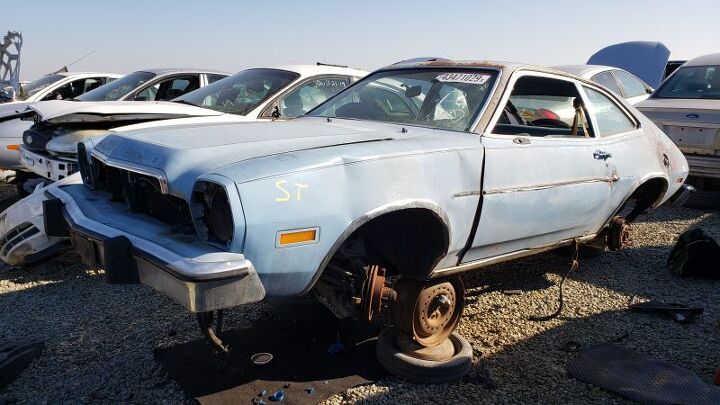
You’d think that examples of the Ford Pinto and its Mercury-badged twin, the Bobcat, would have disappeared from the American junkyard ecosystem by now, given the cheapness of these cars and the decades of exploding-Pinto punchlines since “Pinto Madness” came out in 1977. No doubt due to the huge quantities sold during the Pinto/Bobcat’s 10-year production run (well over three million), such is not the case; I continue to find Pintos and Bobcats in junkyards to this day.
Here’s a light blue ’77 three-door Bobcat in a Northern California self-serve yard.
Junkyard Find: 1983 Mercury Marquis Sedan
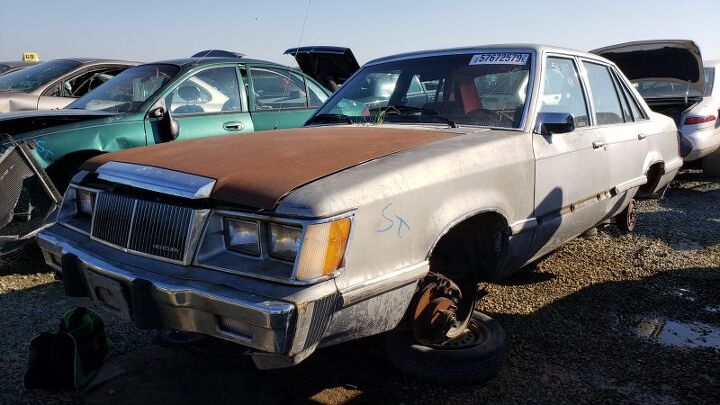
Ford squeezed every possible nickel of value out of the rear-wheel-drive Fox platform during its near-20-year production run (longer than that, if you accept the SN95 Mustang as a Fox), and I enjoy tracking down as many Fox variants as possible while I march up and down the rows of my favorite car graveyards.I think the period of Peak Fox came during the first half of the 1980s, as the Malaise Era shifted into the Conspicuous Consumption Era (and we haven’t seen a Fox Ford here since 2019), so this 1983 Mercury Marquis deserves inclusion in this series.
Read more
Rare Rides: The Extra THICC 1970 Mercury Marauder X-100

We all recall the Panther-based Mercury Marauder as the last gasp of large, sporty motoring from Mercury. Today’s Rare Ride is the predecessor everyone forgot — the 219-inch Marauder X-100.
Junkyard Find: 1982 Mercury Cougar GS Two-door Sedan
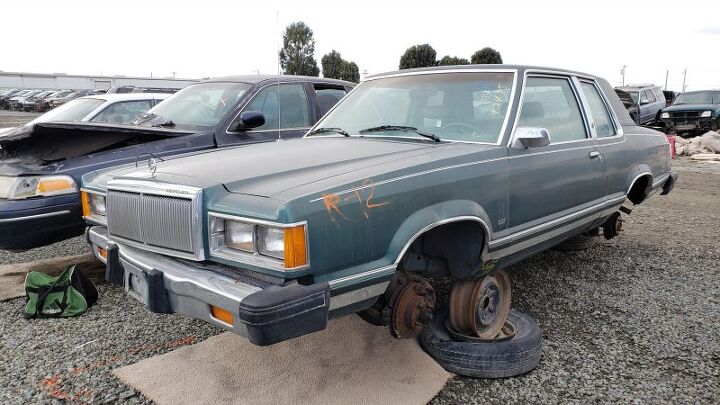
The Mercury Cougar went through numerous platform and image changes during its 34 years of production, and I’ve managed to document examples of just about all of those changes during the course of my junkyard journeys. One generation of Cougar that remained a tough one to find, however, was the 1980-1982 fifth-generation cat, the first of the Fox-body Cougars and the boxiest of the bunch.Finally, I discovered this green-on-green-on-some-more-green ’82 GS two-door sedan in a California self-service yard — yet another vehicle sure to result in many bitter tears from my Ford-obsessed colleague, Sajeev Mehta.
Read more
Buy/Drive/Burn: American Two-doors for a New Century
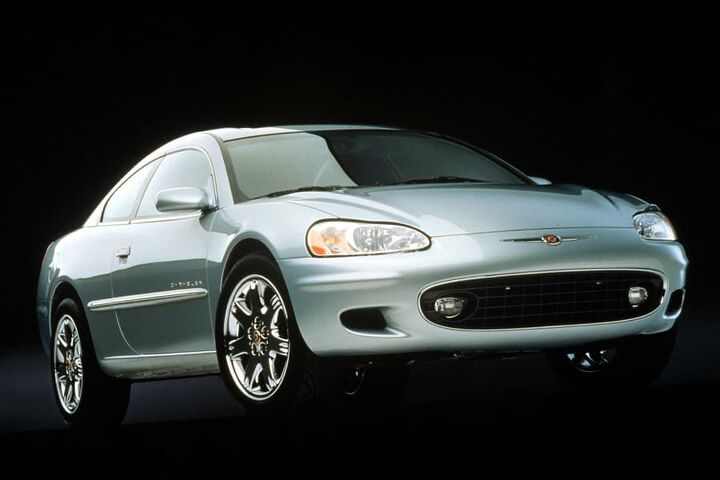
Today’s Buy/Drive/Burn is the first of two consecutive entries where we’ll be evaluating two-door offerings from the dawn of the new millennium. First up is the American car trio… though one of them is thoroughly European.
Junkyard Find: 1979 Mercury Cougar XR-7
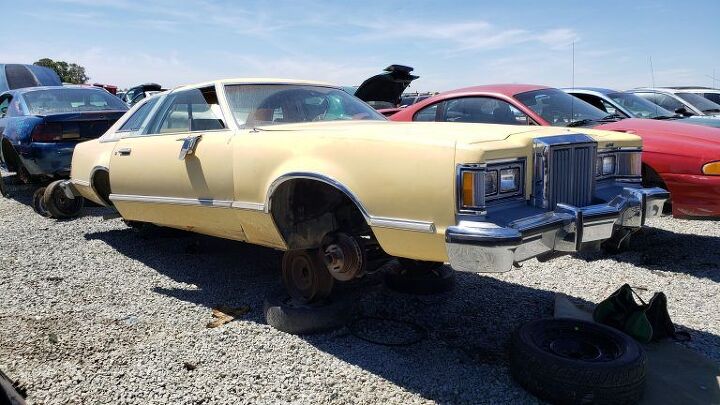
With all the generations of the Cougar that Mercury sold, from the Mustang-based ’67 through the Mondeo-based ’02, which one sold the best? That’s right, the rococo Thunderbird-sibling 1977-1979 models, and most of them were luxed-up XR-7s.Yes, the Man’s Car, slathered with chrome and vinyl and menacing feline-themed badging, proved to be the ideal machine for the Disco Period of the Malaise Era, and I’ve found this well-preserved ’79 in a Northern California self-service yard.
Read more
Junkyard Find: 2005 Mercury Monterey
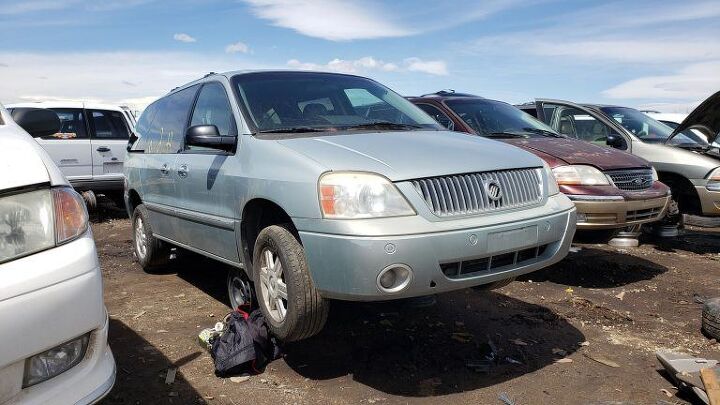
With minivan sales in decline and the Mercury brand itself locked in a death spiral, the bosses in Dearborn decided to create a Mercury-badged version of the Ford Freestar: the Monterey. No, not this kind of Monterey, which sought slightly devilish middle-managers with a sense of style as potential buyers, but an option-loaded and sensible family hauler for the 21st century.Sales of the 2004-2007 Monterey started off weak and then bombed miserably, to be followed by the disappearance of Mercury itself by 2011. Here’s a rare example of this forgotten-but-interesting vehicle, found in a Denver self-service wrecking yard.
Read more
Junkyard Find: 1978 Mercury Zephyr Z-7
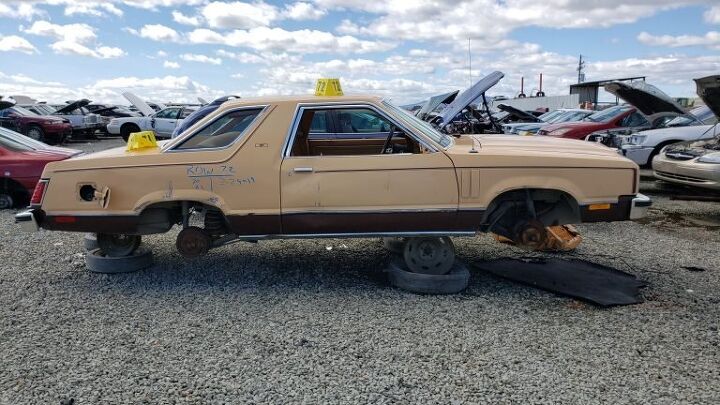
In between the homely Ford Maverick/Mercury Comet and the punitively sensible Ford Tempo/Mercury Topaz, the folks at Dearborn provided North Americans with the Ford Fairmont and its Mercury sibling, the Zephyr, as reasonably modern rear-wheel-drive compact commuter machines. For those car shoppers wanting to get a bit devilish with their selections, Ford dealers offered the Fairmont Futura coupe, while your local Mercury store had the Zephyr Z-7 coupe.Here’s a tan-beige-brown Zephyr Z-7 in a Northern California self-service wrecking yard.
Read more
Rare Rides: The 1994 Mercury Capri - Miata's Serious Competitor
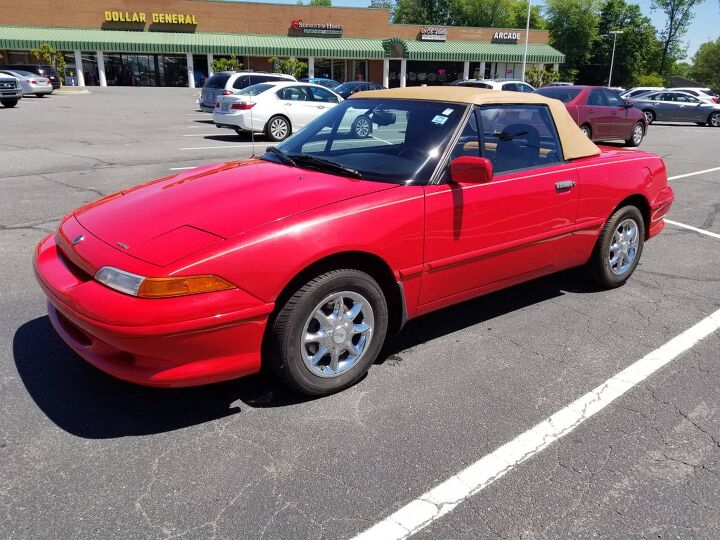
The Rare Rides series has featured two Capri-adjacent vehicles in past: This car’s immediate predecessor, the ASC McLaren Capri, and its contemporary competitor, the Lotus Elan. Let’s find out how much better the final Capri was than either of those two (or not).
Junkyard Find: 1952 Mercury Custom Sedan

Ordinary family sedans of the 1940s and 1950s look cool and everyone claims to love them, but the sad reality is that hardly anyone with the time, money, space, and skills to restore an old Detroit car bothers with the postwar four-doors. I see 1946-1959 American sedans, mostly in pretty solid condition, with depressing regularity in the big self-service wrecking yards I frequent, and this ’52 Mercury in Denver is the latest one.
Buy/Drive/Burn: American Wagon Life, Circa 1975
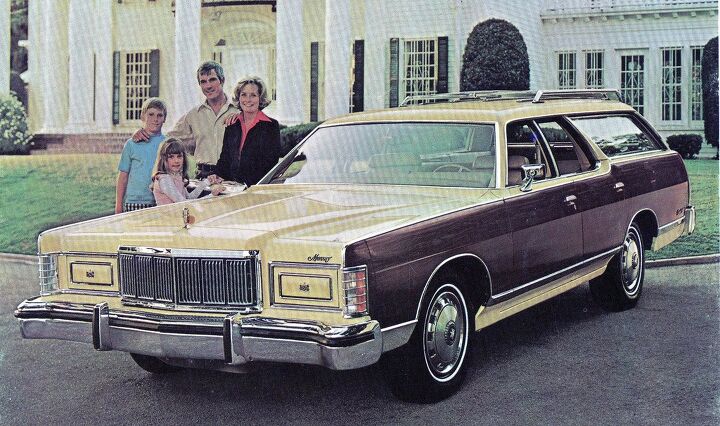
Today’s Buy/Drive/Burn setup comes to us via commenter 87 Morgan, who suggested the trio a while ago. For consideration today: Malaise Era transportation for upper middle-class families. These gigantic wagons served as family haulers before the minivan came along and ripped the sculpted carpet from under their feet.
What will it be — the Chrysler, the Mercury, or the Buick?
Junkyard Find: 1983 Mercury Lynx L Wagon
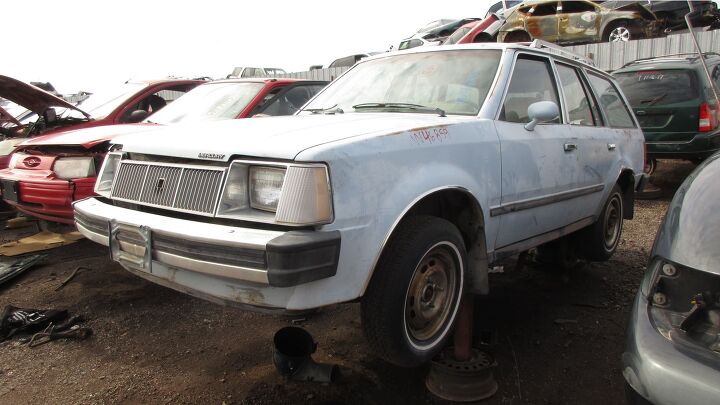
Before the North American Ford Escort became a Mazda 323/Protegé sibling, the folks in Dearborn masterminded a Mercurized version known as the Lynx. Escort wagons are rare now (though I have shot a couple during my junkyard wanderings), so I did a double-take when I saw this optioned-up ’83 Lynx wagon in a Phoenix self-service yard last winter.
Read more
Rare Rides: 2008 Edsel Citation - A Tribute Via Victoria
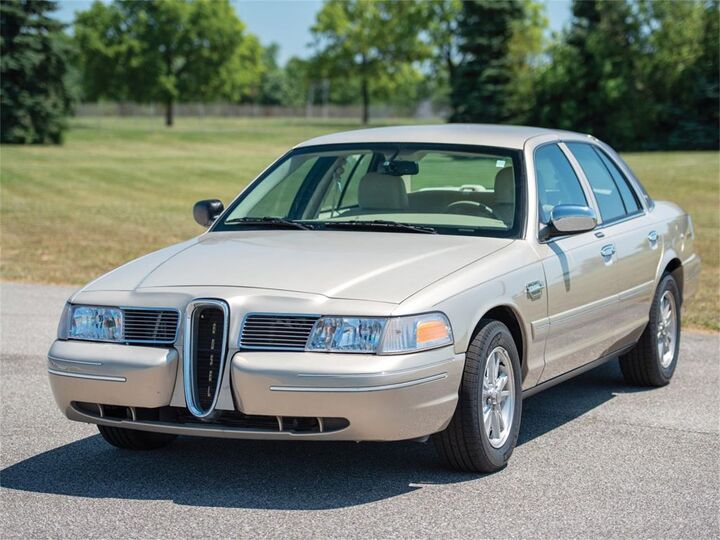
What do you get when you cross an enthusiast of a dead car brand, a bank account, and a late-model Panther?
This. Presenting the 2008 Edsel Citation:
QOTD: Can You Build an Ideal Crapwagon Garage? (Part VII: Vans)

In last week’s Crapwagon Garage QOTD, we combined truck and station wagon to create an SUV, picking five winners. In part VII of the series, we’ll combine truck and station wagon a bit differently and end up with a van.
That’s right, it’s time for some #vanlife (ugh). Car-based minivans also apply, so we’re not limited to things like the sweet Safari GT above.
Rare Rides: This 1976 Mercury Monarch Is Both Grand and a Ghia

Our own Sajeev Mehta pointed out this grey brougham box the other day. He always keeps his ear to the pulse of the Internets for any old Ford, Ghia, or Ford Ghia vehicles which come up for sale.
It’s luxury and elegance on a Grand level! Come have a look.
Buy/Drive/Burn: Toasting a Luxury Minivan From 1994

When the Picture Time post for the Villager Nautica went up on these pages last year, the idea for this particular edition of Buy/Drive/Burn was already on my mind. In fact, in the big list of trios I keep for this series, this one has always been at the top of the list.
The year is 1994, and you’ve got a luxury minivan to set alight.
Rare Rides: A Year Later, Ghia's 1983 Lincoln Quicksilver
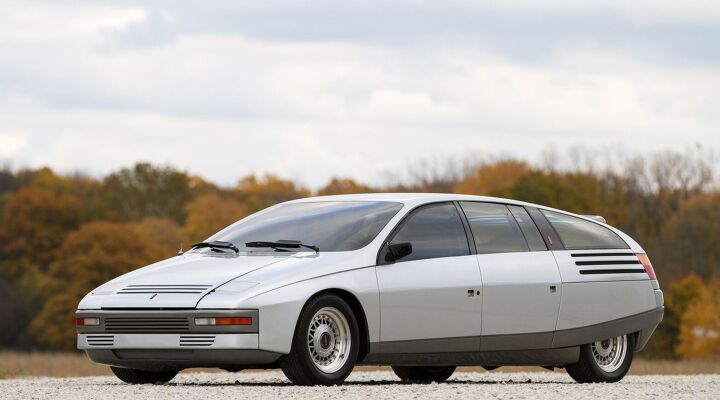
Today’s post serves as a couple of milestones at TTAC (for me, anyway); 200 articles written, and a year of Rare Rides. Since I did not plan this in any way or think about it in advance, I thought we might make this post a bit special. Bringing us back to the very first Rare Rides entry of one year ago, we have another concept car Ghia designed for Ford which never saw the production green light.
Presenting the 1983 Lincoln Quicksilver.
Junkyard Find: 1995 Mercury Tracer Trio
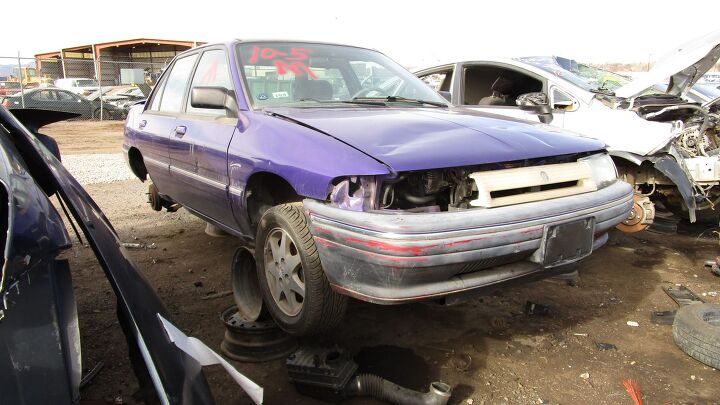
Kicky appearance packages and vivid colors were all the rage among Detroit makers of cheap econoboxes during the late 1980s through middle 1990s, and so it became necessary for the Dearborn masterminds to create a Mercurized Ford Escort that would enthrall younger car shoppers. Thus was the Mercury Tracer Trio born. Here’s a screaming purple ’95, spotted in a Denver self-service yard.
Rare Rides: The 1983 Ford EXP Handles All Your Malaise Driving Needs
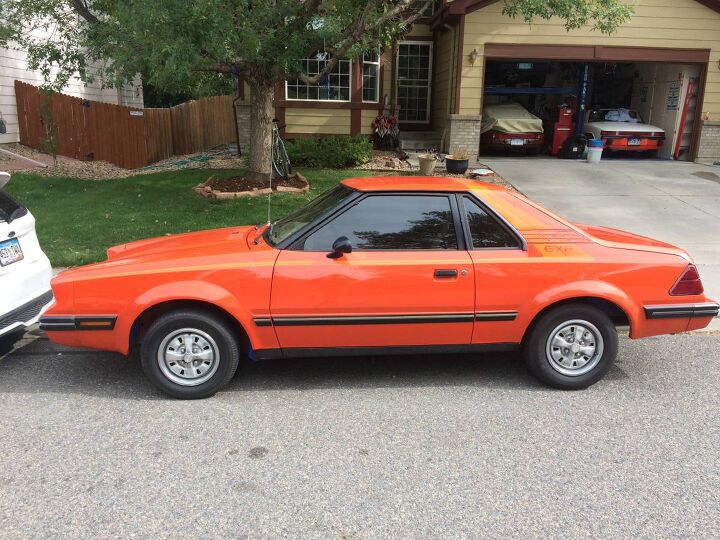
Great handling, two seats, sporty styling, and coupe lines. No, we’re not talking about a Corvette Z06, because it’s another Malaise Day here at Rare Rides — and our topic of discussion is a shockingly orange Ford EXP.
I always thought those letters stood for EXtra Powerful, but maybe I was wrong. Let’s find out.
Rare Rides: 1985 ASC McLaren Mercury Capri - the Fox Body Mashup
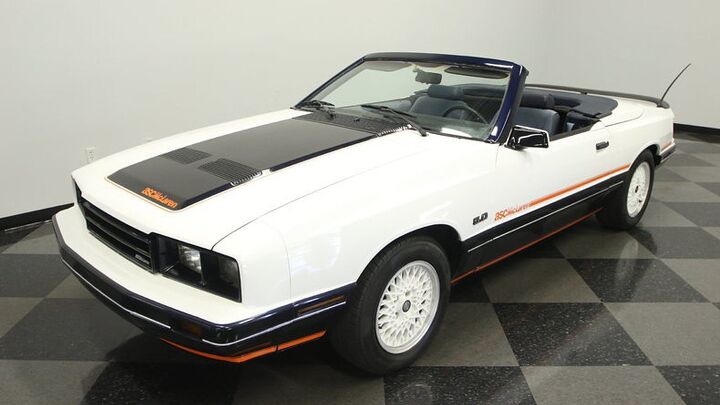
Last time on Rare Rides we featured a V8-powered American muscle car that started out as a coupe and had the roof removed by an aftermarket company. Opinions of the Callaway Speedster were mixed, ranging from “meh” to “1990s meh.” So for this Rare Rides entry, we are doing something completely different following the exact same formula, executed in a different way.
It’s a very special Mercury, at a much lower price point. McLaren anyone?
QOTD: What Was the Most Awesome Car at Your High School?

It’s been a couple of weeks since we took a stroll down memory lane together. I asked you in May about the worst car you could recall in your high school parking lot. The incoming responses made it seem like our enthusiast B&B members were often aware they were the winner of the bad car blue ribbon in school. That speaks to our level of enlightenment and self-awareness. Think of how many people go through life not ever realizing how bad their cars are.
For today though, we run away from the rust buckets and 75-horsepower Malaise Wonders. I want to hear about the most awesome car in your high school lot.
Picture Time: More of the Mercury Villager Nautica

I’m back again. Shortly after today’s QOTD about special editions went live, I received an email back from a kind contact at Ford. She provided me with the press photos of the Mercury Villager Nautica I had requested. Since they’re so nice, and you probably haven’t seen them anywhere else, it’s Picture Time.
Feast your eyes on this tasty minivan.






Recent Comments