
Rare Rides: The Practical and Luxurious 1979 Mercury Zephyr Villager


Today’s Rare Ride comes from a time when the family wagon segment was alive and well and Ford was eager to use its brand new Fox platform on as many vehicles as possible.
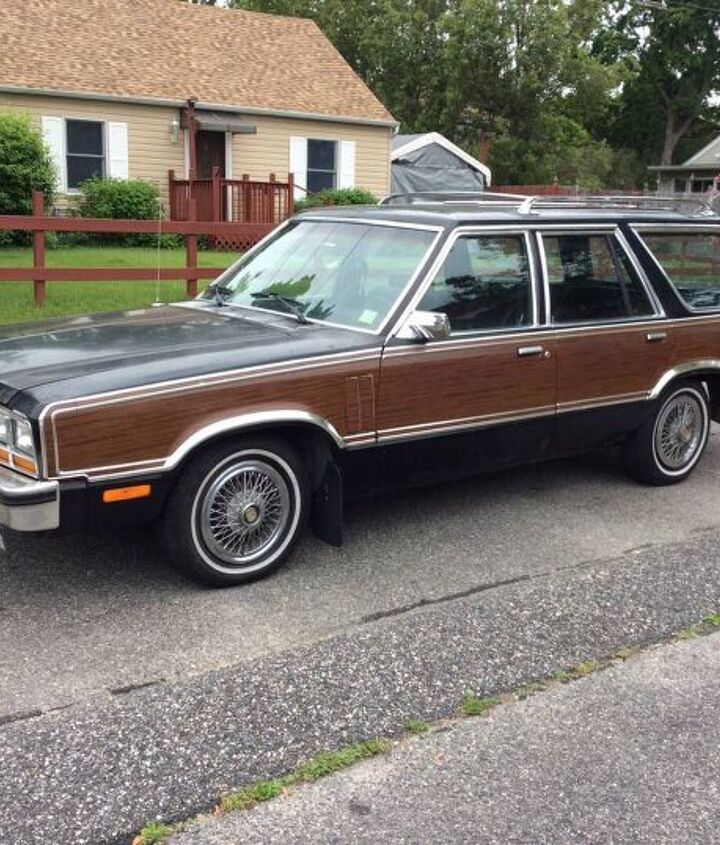
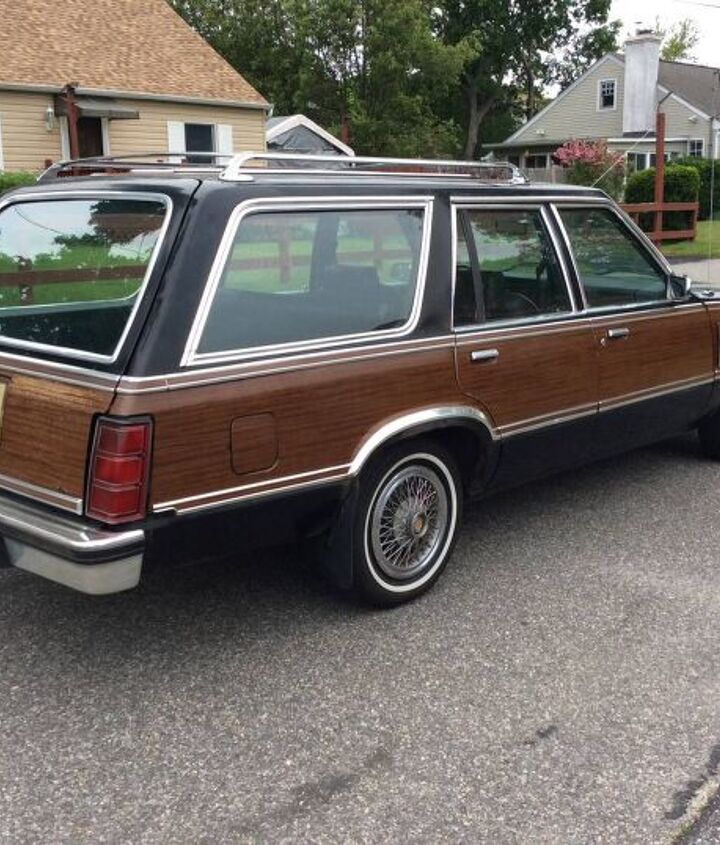
Presenting the wood-clad Mercury Zephyr Villager wagon, from 1979.

The Zephyr name originated as a line of luxurious Lincoln vehicles in the Thirties and Forties, before being borrowed by Ford of Europe for a small family car in 1950. It returned for domestic use via Mercury in 1978, as Ford needed a name for the slightly more upscale sibling of its new Fairmont.
By the late Seventies, having a competitive compact car in one’s lineup was vital. Fuel economy regulations and an oil crisis put miles per gallon at the forefront of consumers’ minds. Ford took a look at its lineup circa 1974, and saw that all of its small models would need replacement around the same time. After some intense product development, Fairmont and Zephyr were ready as successors to the Maverick and Comet twins.
Given the need to appeal to a broad consumer base, Fairmont and Zephyr were offered in two-door styles as coupe and sedan, and with four doors as sedan and wagon. Thrifty customers chose an inline-four engine of 2.3 liters displacement, while the middling engine option was the Thriftpower 3.3L inline-six. Those with fatter wallets could select from the 255 or 302 Windsor V8s. Transmissions on offer through the model’s history were three- and four-speed manuals, or a three speed automatic.

In the Mercury lineup, the Zephyr was placed between the smaller Bobcat ( Pinto) and the larger Monarch (Granada). Zephyr stood out from Fairmont via horizontal design tail lamps (Fairmont used vertical) and its quad-headlamp arrangement; double the number on Fairmont. Ford customers had to step up to Fairmont Futura to receive four headlamps on their Fox. Wagon variants were available without wood as a base model, or in wood-swathed Villager trim.
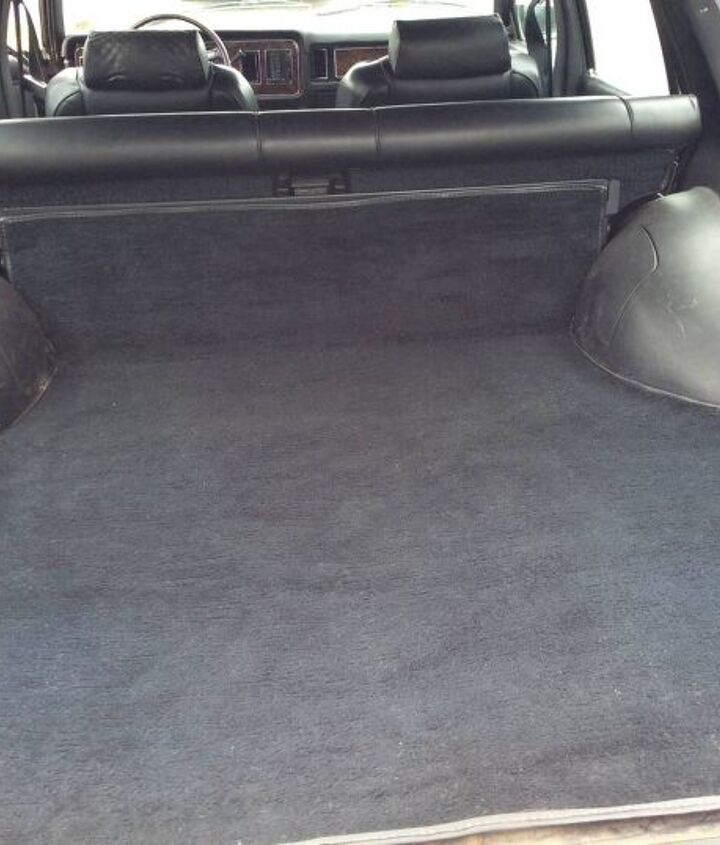
Successful in their time as mass-market family mobiles, the writing was on the wall for rear-drive economy cars by the early Eighties. Customers wanted even more efficiency, as well as front-drive safety, in their compacts. Thus, 1983 was the last year for the Fairmont and Zephyr; in 1984 they gave way to the new Tempo and Topaz.
Today’s 1979 Zephyr Villager is a loaded example, in black over black. High-line options include cruise control, air conditioning, and the largest 302 V8. With 75,000 miles on the odometer, it’s yours for just $2,750.
[Images: seller]
Interested in lots of cars and their various historical contexts. Started writing articles for TTAC in late 2016, when my first posts were QOTDs. From there I started a few new series like Rare Rides, Buy/Drive/Burn, Abandoned History, and most recently Rare Rides Icons. Operating from a home base in Cincinnati, Ohio, a relative auto journalist dead zone. Many of my articles are prompted by something I'll see on social media that sparks my interest and causes me to research. Finding articles and information from the early days of the internet and beyond that covers the little details lost to time: trim packages, color and wheel choices, interior fabrics. Beyond those, I'm fascinated by automotive industry experiments, both failures and successes. Find me on Twitter, @CoreyLewis86.
More by Corey Lewis





Comments
Join the conversation
One of the best Lemons cars ever. https://www.thetruthaboutcars.com/2013/03/super-piston-slap-the-life-and-death-of-a-proper-lemons-car/
Ye gads, these were awful. There was a guy who ran a super-cut-rate car rental joint in my town with a mostly-Fairmont fleet. As the owner of a succession of terrible imported cars that I got to visit in the shop now and then, I had the pleasure of driving every one of his Fairmonts over the years, from a black-on-whorehouse-red V8 (not fast) to a baby-blue-on-blue I6 (very slow) to a white-on-poop I4 (glacial). No steering effort, feel, or self-centering. Every body panel flimsy enough you could see it moving as you drove. Terrifying "brakes." And awful MPG: I'm sure whatever I was saving in daily rates was being made up at the pump. But at least they still did interior colors in those days: seats, carpets, door cards, and dash were all color-matched to a wide variety of available colors. That one old-car novelty was my small consolation in driving these dogs.