
Rare Rides: The Extra THICC 1970 Mercury Marauder X-100


We all recall the Panther-based Mercury Marauder as the last gasp of large, sporty motoring from Mercury. Today’s Rare Ride is the predecessor everyone forgot — the 219-inch Marauder X-100.
The Marauder name started out as a Mercury trim package midway through the 1963 model year. A development for the brand’s full-size cars, there were Marauder badges applied to the Park Lane, Monterey, Montclair, and the short-lived S-55 coupe. Cars built to Marauder spec had hardtop or notchback roof styles (no Breezeway here), bucket seats, and a center console. Generally, it brought the more relaxed Mercury offerings in line with Ford’s Galaxie models.
Those first Marauders didn’t last for long; consumers wanted to hear more about luxury than sporting pretensions. After 1965 Marauder offerings disappeared from Mercury, only to reappear four years later.
That brings us to today’s Rare Ride — the two-door hardtop that shared its styling with the full-size Marquis. In 1969 the Marauder replaced the slow-selling S-55, after it was extinguished for the second time in 1967. Positioned as a personal luxury car, the Marauder shared its front-end styling and interior with the Marquis. But underneath, it was not the same car. Marauder used the chassis from Ford’s XL range and the Mercury Colony Park wagon, with a wheelbase of 121 inches. Marquis models of two- and four-doors used the chassis from the LTD, and had a 124-inch wheelbase. Marauder came standard with the generously-sized 390 cubic inch (6.4L) FE V8, and was available with a three-speed manual or automatic.
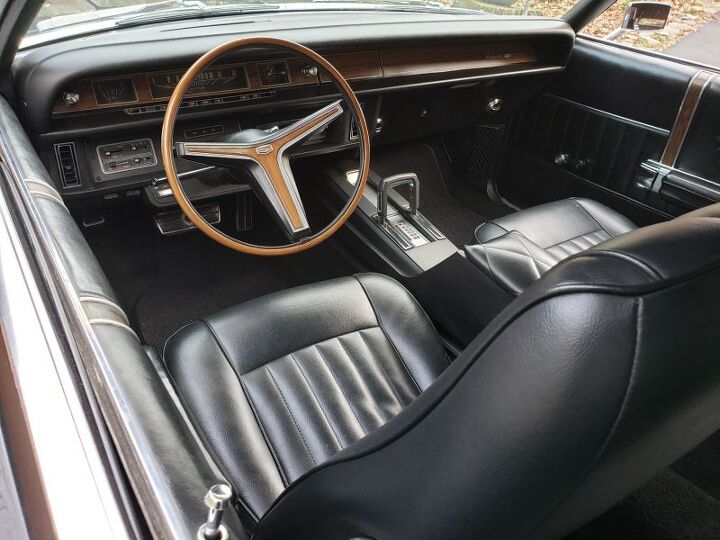
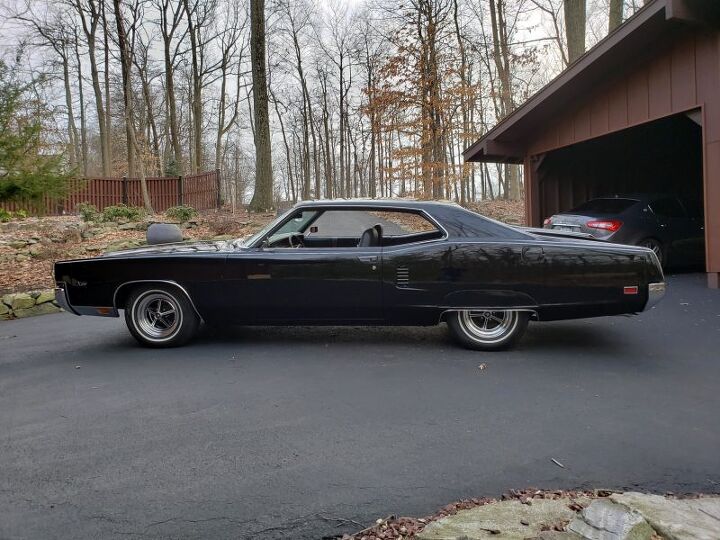
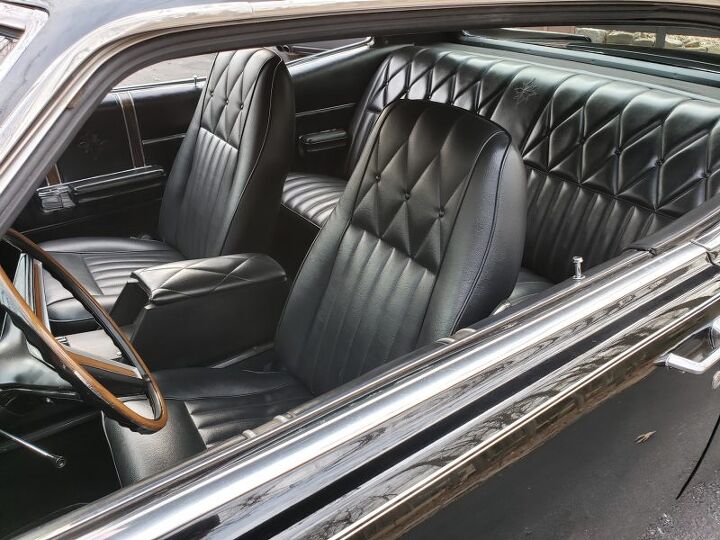
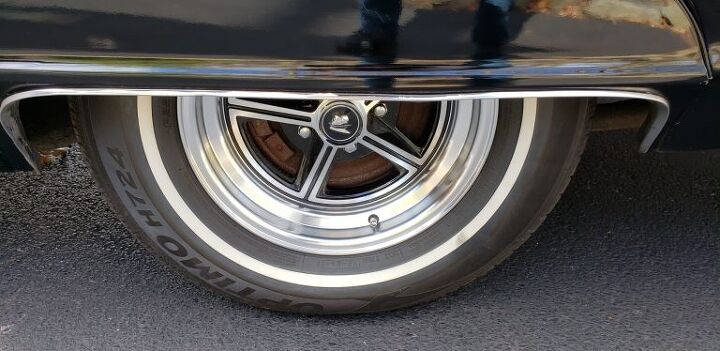
Available with only two doors this time, the fastback Marauder went head to head against the Buick Riviera and Oldsmobile Toronado. And for the real performance luxury enthusiast who turned up at the Mercury showroom, there was the special X-100 variant. X-100s were fitted with a larger 429 cubic inch (7.0L) 385 V8, paired only to a three-speed automatic. Inside, twin lounge seats were optional over standard bucket fare. The center console contained a basket handle shifter, as was appropriate for the era. The X-100’s unique Kelsey-Hayes wheels were partially obscured by rear fender skirts, also not found on standard Marauder.
Customers shied away from the new Marauder. It was just too performance-oriented. While Mercury moved around 20,000 Marauders in 1969 and 1970, the same dealers shifted 173,000 Cougars. Lincoln dealers also sold twice as many Continental Mark IIIs. Marauder went away after 1970, and was quickly forgotten.
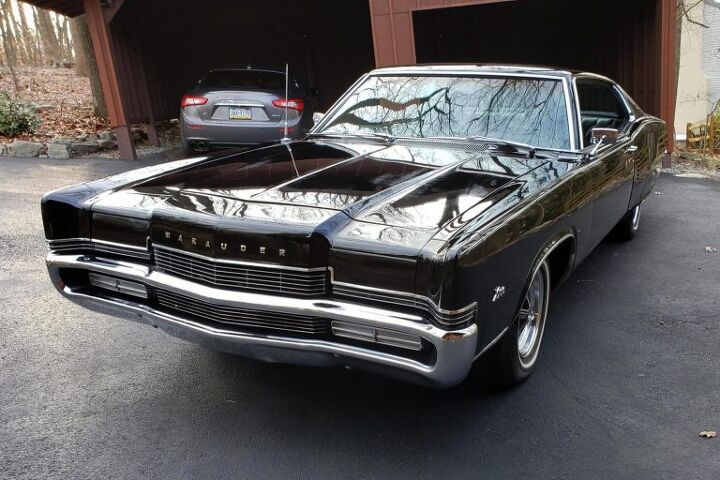
Today’s Rare Ride is a black-over-black beauty. Originally purchased by the Catholic Diocese of Fresno, California, it’s loaded up with Church-approved luxury options. For sale on Bring a Trailer, it sits at $16,500 with 22 hours left in the auction.
[Images: seller]
Interested in lots of cars and their various historical contexts. Started writing articles for TTAC in late 2016, when my first posts were QOTDs. From there I started a few new series like Rare Rides, Buy/Drive/Burn, Abandoned History, and most recently Rare Rides Icons. Operating from a home base in Cincinnati, Ohio, a relative auto journalist dead zone. Many of my articles are prompted by something I'll see on social media that sparks my interest and causes me to research. Finding articles and information from the early days of the internet and beyond that covers the little details lost to time: trim packages, color and wheel choices, interior fabrics. Beyond those, I'm fascinated by automotive industry experiments, both failures and successes. Lately I've taken an interest in AI, and generating "what if" type images for car models long dead. Reincarnating a modern Toyota Paseo, Lincoln Mark IX, or Isuzu Trooper through a text prompt is fun. Fun to post them on Twitter too, and watch people overreact. To that end, the social media I use most is Twitter, @CoreyLewis86. I also contribute pieces for Forbes Wheels and Forbes Home.
More by Corey Lewis







Comments
Join the conversation
What is the purpose of that huge front overhang (and rear too). It is RWD car after all, it should not have it. It looks unwieldy for coupe. Kind of oversized for no good reason.
Front overhangs on cars were on many of the 60's and 70's cars. Much easier to criticize something decades later especially if you were not around during that time. At least this car and others of the same era had some style which few of today's new vehicles have. There is about as much styling and uniqueness in most of today's new vehicles as a washing machine especially crossovers. I might not want to drive a vehicle from the 70's daily but I appreciate that there are those who do preserve them.