


Why Do Japanese Automakers Like Hydrogen Power?

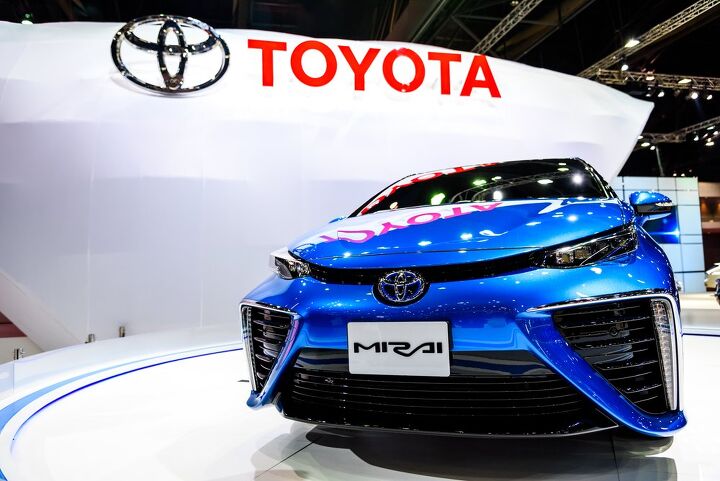
Honda, Suzuki, Kawasaki, and Yamaha have just collectively promised to develop a slew of hydrogen-reliant engines designed to power small vehicles. While this is supposed to encompass construction equipment, small boats, airborne drones, and even motorcycles, the scheme doesn’t seem to focus on automobiles. However, Japanese automakers have already been working on hydrogen fuel cell vehicles for years and Toyota Chairman Akio Toyoda has even been championing the development of hydrogen-burning motors for some of the brand's racing applications.
It’s largely counter to what the rest of the world is doing and begs the question of why Japan seems so intent on making hydrogen power work. What exactly makes the scheme so appealing to the island nation?
The Japanese government certainly plays a large role here and has been advocating for hydrogen power for years — much, in the same way, China, Europe, and (to a lesser extent) the United States have been pushing all-electric vehicles. In 2017, Japan became the first country in the world to release a national hydrogen strategy.
At the time, Honda had already released the Clarity to consumers, and it would be followed by Toyota’s Mirai. Nissan also expressed an interest in hydrogen technologies and stated it was actively developing FCEVs of its own. Meanwhile, the only brand outside of Japan that seemed to really care for the concept was Hyundai — which released the Nexo.
But it hasn’t been steady progress. Honda CEO Toshihiro Mibe even stated that, despite the company having worked so hard to develop hydrogen cars, he wondered how realistic it would be to see them ever become mainstream solutions for transportation. Of course, that was a few years ago and the industry’s messaging can turn on a dime.
This week, Honda, Suzuki, Kawasaki, and Yamaha released a joint statement saying they will form a research association called HySE (Hydrogen Small Engine) with Toyota on the periphery to take into account how the resulting tech might be adapted for larger vehicles. But the focus is not on hydrogen fuel cell vehicles that utilize electricity for propulsion, they’ll be developing internal combustion engines that burn hydrogen in lieu of gasoline — with the assumption benign that they’ll produce fewer carbon dioxide emissions.
That seems to be the new trend. Interest in creating EVs that haul around tanks of hydrogen is being supplanted by the notion that cars could simply burn hydrogen like we do gasoline.
But why bother at all when so many other manufacturers have deemed hydrogen too volatile to be safely utilized for combustion and too expensive to rationalize as a substitute for the large battery packs going into all-electric vehicles? No matter where hydrogen seems to be inserted into the process, it always seems like a big compromise.
Well, Japan sees EVs as needing to be heavily dependent upon nuclear power to maximize their environmental benefits. But the 2011 Fukushima nuclear disaster has the country rethinking its reliance on atomic energy. Batteries are likewise constructed from rare earth minerals the country doesn’t have in abundance. A major breakthrough in hydrogen production would allow the nation to become energy independent for the first time in modern history.
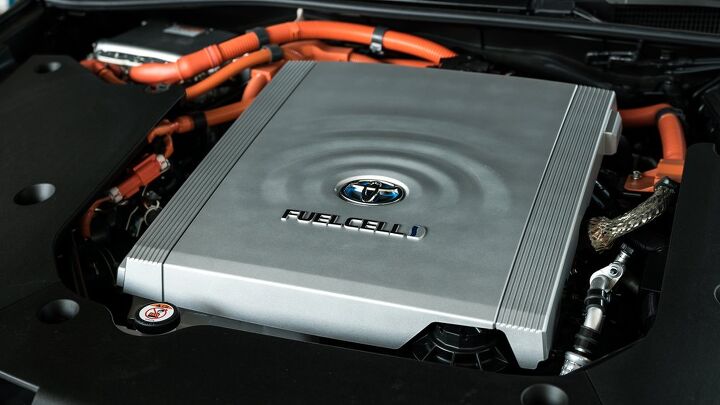
But such a breakthrough seems a long way off. Presently, the vast majority of hydrogen is produced using coal or natural gas as feedstocks. That makes it incredibly energy inefficient and results in a lot of extra pollution. Though the hope is that there will come future technologies allowing humanity to isolate the chemical element in clean, efficient ways.
Still, we’ve seen how renewable energy sources (similarly championed as green) have had trouble creating enough electricity. Europe, which dove into renewables harder than anybody, is suffering from a legitimate energy crisis right now with prices surpassing historic levels. Germany even had to pivot back toward coal for energy production after realizing there was no way to build enough wind and solar farms.
That’s not to say the above technologies should not be pursued. It’s wise for automakers to plan for all contingencies and they should not be mocked for thinking outside the box. But traditional energy sources remain the most reliable, even if they’ve yet to evolve to a point where there are no consequences.
Regardless, all opinions need to be taken with a grain of salt. Oil companies have a vested interest in your continued consumption of petroleum products and EV manufacturers don’t want you to consider the alternatives because that ultimately means fewer sales. It’s likewise true that what works in one market may not be feasible in another.
In the United States, it’s basically unthinkable to own a hydrogen-powered vehicle anywhere other than California because that’s basically the only state with enough fueling stations to allow for daily driving. But Japan is much smaller than the whole of the U.S. and the government offering billions of yen in subsidies to ensure my hydrogen stations are added will have a bigger impact there — even if overall demand remains lackluster.
Whether or not hydrogen turns out to be a legitimate energy source for the masses, everyone still seems curious about what the Japanese industry is doing. Toyota’s hydrogen racer seems to come with a power plant that’s directly comparable to traditional variants. The Corolla H2 rally prototype even uses a familiar layout and sounds pretty close to a standard engine. Though we’ve not seen it running many races since a fuel leak caused it to catch fire in March. Of course, these speed bumps are normal whenever you’re pushing technological boundaries.
Meanwhile, other Japanese manufacturers say they’ll be hard at work developing smaller applications. At the very least, it will be interesting to see what they churn out.
[Images: Tofudevil/Shutterstock; GELEFIN/Shutterstock]
Become a TTAC insider. Get the latest news, features, TTAC takes, and everything else that gets to the truth about cars first by subscribing to our newsletter.
Consumer advocate tracking industry trends and regulations. Before joining TTAC, Matt spent a decade working for marketing and research firms based in NYC. Clients included several of the world’s largest automakers, global tire brands, and aftermarket part suppliers. Dissatisfied, he pivoted to writing about cars. Since then, he has become an ardent supporter of the right-to-repair movement, been interviewed about the automotive sector by national broadcasts, participated in a few amateur rallying events, and driven more rental cars than anyone ever should. Handy with a wrench, Matt grew up surrounded by Detroit auto workers and learned to drive by twelve. A contrarian, Matt claims to prefer understeer and motorcycles.
More by Matt Posky









Comments
Join the conversation
Helium-3, baby!!
>Germany even had to pivot back toward coal for energy production after realizing there was no way to build enough wind and solar farms.
That’s pretty misleading, they opened coal plants to replace the low-carbon nuclear power plants they shut down without a plan for what will replace them.