


EV Owner Satisfaction with Home Chargers Declines, JD Power Says
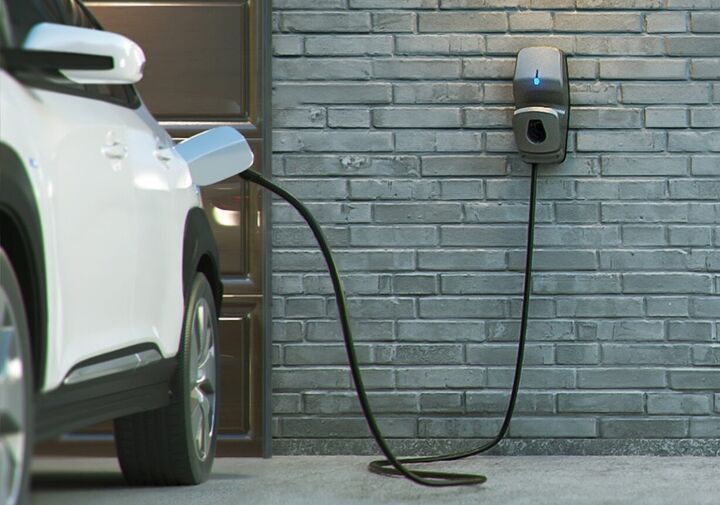
One of the primary benefits of electric vehicle ownership is avoiding the run to the gas station because you can charge at home daily. However, a new study from JD Power & Associates suggests EV owners aren’t as happy as they used to be with that experience.

Several studies have shown up to 86 percent of EV owners regularly charge at home. Doing so is convenient and cheaper, although not faster, than charging at DC Fast Charging stations available to the public.
According to the JD Power 2026 U.S. Electric Vehicle Experience (EVX) Home Charging Study, overall satisfaction of the owners of Level 1 (569 points out of 1,000) and Level 2 (710) portable chargers fell 12 and four points respectively. Level 2 permanently mounted home chargers remained unchanged at 733 points.
The study cited rising costs for home charging and the lack of education about how to keep charging costs low as the reasons for the rising unhappiness.
“Charging costs for EV owners are climbing, and there are several options out there for managing those costs through utility incentive programs and optimization of charging schedules during off-peak hours, yet only about 20% of owners say they received any kind of education or advice on home charging from their purchasing dealer,” said Brent Gruber, executive director of the EV practice at JD Power.

The big savings for home charging comes from scheduled charging, generally during overnight hours when usage rates are low and utilities offer prices breaks for users. Despite that advantage, the study shows just 38 percent of EV owners always schedule their charging times. Perhaps more importantly, 46 percent say they never schedule their charging times.
“Automakers, dealers and utility companies all have a role in helping owners understand options like utility incentives, programs and upgrading to Level 2 permanently mounted chargers, which have more advanced options for scheduling charging windows to maximize cost savings,” Gruber said.
“By providing better guidance and support, the EV ecosystem can help more owners save money, make more efficient charging choices and enjoy a more satisfying home charging experience. For manufacturers, maximizing home charging satisfaction is crucial because the data shows that it’s instrumental in influencing future brand loyalty.”

Education helps, but owners must take on some responsibility. Nearly 70 percent of EV owners know about smart charging options, but just 12 percent actually take advantage of them.
The study also offered some important insights from EV owners around charging, including the fact that home charging has risen to an average of $63 a month in the last 30 days, which is a $5 increase. As a result, satisfaction with the cost of charging falls to 687, down 11 points from the 2025 study.
New Englanders are on the hook for the highest monthly average at $99 while EV owners in the Mountain region are paying about a third of that at $36. Unsuprisingly, their satisfaction score came in at 771 while New Englanders were at 552.
[Images: Ford, FLO, Stellantis, General Motors]
Become a TTAC insider. Get the latest news, features, TTAC takes, and everything else that gets to the truth about cars first by subscribing to our newsletter.

Michael Strong has spent more than 25 years writing about the automotive industry. A Detroit-area native, he’s written about everything from local car shows to product reviews to financial news. Currently he writes and edits for a variety of national and local publications. He’s also a longtime member of the Automotive Press Association and the International Motor Press Association, and a graduate of Georgia Southern University. Hail Southern! Despite a love for ’70s land yachts and BMWs from the late ’80s and early ’90s, his personal vehicle is neither of those.
More by Michael Strong









Comments
Join the conversation
I plug the Volt in anytime I'm home. I've looked into tiered rates, but Excel Energy in MN nails you so hard during the day it's pointless. Also I charge at work for free so there's that.
Level 2 is a must for home charging. Level 1 isn't gonna cut it for most. Secondly if Level 2 charging isn't able to keep up with your charging needs forget about owning an EV. And again , if you cannot charge at home forget about owning an EV. Pulling into a gas station is much easier than finding a public charging area that works. Plus you now have negated the lower fuel costs of owning an EV and added whole list of problems(waitng for it to charge) that you don't have w/home charging.
Regardless, owning an EV is currently more expensive than a gas car. So don't buy one with the false pretense that it is going to save you money. In the long run, TCO of an electric vehicle is higher than a gas. Used or new, doesn't matter. I am one person that doesn't care about that, to a point. I would have never bought my Volt new. too expensive. But used I was good with. Still, I will never tell you I'm saving money over a used Corolla or Civic that I could have purchased back in the spring of 2016. As a DD I much prefer electric over gas, for a number of reasons. Even if it costs me a bit more to run.
In western NY they tore down the summerset coal power plant a few years ago. Now their is an AI farm of some sort sucking power in the opposite direction. The components of the coal plant will likely be repurposed in a Chinese coal plant. So electricity demand goes up, supply goes down and prices go up dramatically. The only ones surprised by this evidently are democrat voters in the 8 NY counties that elected Kathy.