


We Have Good News About Fuel Prices


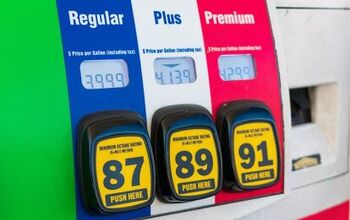
Gasoline prices have been surprisingly stable for 2025 and are anticipated to get a little lower as the winter months approach.
Our household is presently in the midst of selecting a new vehicle, forcing conversations about fuel economy and gasoline prices. However, this also resulted in the revelation that things have been fairly consistent at the pump across the United States this year. The only noteworthy hiccup was a recent refinery snafu that caused a pricing spike in the Midwest ahead of Labor Day, as noted by AAA. But even that seems to have resolved itself by the time the holiday actually rolled around.
Nationally, Americans have been enjoying an average of roughly $3.20 per gallon since the start of 2025. While that’s nearly a dollar more than what we were seeing prior to 2018, it’s still less than the annual averages witnessed since 2020. It’s also been relatively stable all year, with good reason to believe prices will only decline.
In 2024, we saw gasoline becoming more expensive in the spring until it reached a national peak of $3.60 per gallon. Prices declined gradually through the rest of that year, leveling out to the $3.20 per gallon average we’re currently enjoying.
Pricing was significantly more volatile in 2023, with most drivers spending around $3.50 per gallon in February and nearly $4.00 by September. But even that was preferable to the see-saw pricing endured throughout 2022. While prices started nearly as low as they are today, 2022 delivered national averages of $4.30 per gallon by March. Those rates would taper a bit in the successive months before spiking up to a national average in excess of $5.00 per gallon in June.
Relative to all that, 2025 has been a rather tranquil experience. Meanwhile, EV owners have seen an overall increase in residential electricity costs. In 2021, the average household was paying roughly 13 cents per kilowatt-hour (kWh) and that has gradually increased to about 19 cents per kWh — which of course varies between regions, much like gasoline.
But at-home charging is undoubtedly the cheapest way to recharge your electric vehicle. Public charging rates have been a little less consistent. National rates actually came down significantly to average out to a relatively affordable $0.35 per kWh for DC fast chargers in 2023. As always, slower charging types (e.g. Level 2) were even cheaper.
Rates climbed to be about 10 cents dearer in 2024. However, 2025 has been kind to both fans of electrification and internal combustion. According to AAA, the national average per kilowatt hour of electricity at a public EV charging station stayed the same going into Labor Day at 36 cents. Give or take a few pennies, that’s about what Americans have enjoyed throughout the whole year.
However, your rates for both gasoline and electricity may differ from the aforementioned national averages. AAA recently ran a list of states presently offering the best and worst prices.
From AAA:
The nation’s top 10 most expensive gasoline markets are California ($4.59), Hawaii ($4.47), Washington ($4.39), Oregon ($3.97), Nevada ($3.81), Alaska ($3.75), Illinois ($3.54), Idaho ($3.48), Arizona ($3.42), and Michigan ($3.37).
The nation’s top 10 least expensive gasoline markets are Mississippi ($2.73), Arkansas ($2.78), Louisiana ($2.78), Oklahoma ($2.78), Tennessee ($2.79), Texas ($2.80), Alabama ($2.83), South Carolina ($2.84), Missouri ($2.87), and Kansas ($2.87).
The nation’s top 10 most expensive states for public charging per kilowatt hour are Alaska (51 cents), West Virginia (49 cents), Hawaii (47 cents), South Carolina (45 cents), New Hampshire (43 cents), Tennessee (43 cents), Arkansas (42 cents), Montana (42 cents), Idaho (42 cents), and Louisiana (42 cents).
The nation’s top 10 least expensive states for public charging per kilowatt hour are Kansas (25 cents), Missouri (27 cents), Maryland (28 cents), Utah (28 cents), Nebraska (30 cents), Delaware (31 cents), Vermont (32 cents), North Carolina (32 cents), Washington (33 cents), and Virginia (33 cents).
The above has more-or-less been backed up by the U.S. Energy Information Administration. Fuel remains comparatively expensive on the West Coast and quite a bit cheaper along the Gulf and East Coast. But we haven’t seen any major fluctuations, even in those pricier markets or regions that had temporary issues with refineries. The majority of the difference in price comes down to state fuel taxes or regulatory issues.
Looking ahead, the assumption is that fuel prices will decline through the rest of 2025. Assuming that the energy sector doesn’t encounter any significant curveballs, there’s even a potential to see a national average below $3.00 per gallon before December.
Brent crude oil prices averaged $67 per barrel last month, which is about 15-percent less than we saw in August of 2024. The expectation is that it will continue to fall by another 11 percent before the year is over due to increased supply and refineries pivoting to winter blends. Meanwhile, electricity prices are expected to increase over the same timeframe due to increased residential and especially commercial demand. But the increase should be modest, not being more than a penny or two per kWh.

[Images: Stillgravity/Shutterstock]
Become a TTAC insider. Get the latest news, features, TTAC takes, and everything else that gets to the truth about cars first by subscribing to our newsletter.
Consumer advocate tracking industry trends and regulations. Before joining TTAC, Matt spent a decade working for marketing and research firms based in NYC. Clients included several of the world’s largest automakers, global tire brands, and aftermarket part suppliers. Dissatisfied, he pivoted to writing about cars. Since then, he has become an ardent supporter of the right-to-repair movement, been interviewed about the automotive sector by national broadcasts, participated in a few amateur rallying events, and driven more rental cars than anyone ever should. Handy with a wrench, Matt grew up surrounded by Detroit auto workers and learned to drive by twelve. A contrarian, Matt claims to prefer understeer and motorcycles.
More by Matt Posky












Comments
Join the conversation
In SE PA we’ve had a 20¢ jump in gas since the end of August. The price trends seem to have little correlation with crude oil trends.
Gas prices has gone up in New York and Long Island