Washington State Introduces Bills to Legalize Direct-to-Consumer EV Sales

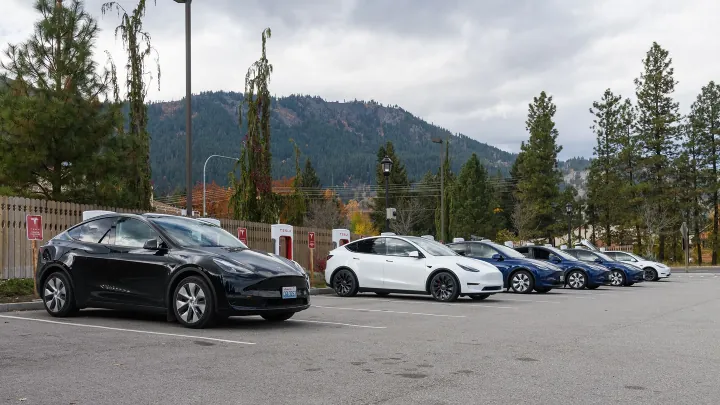
Following news that Florida-based Volkswagen dealerships would be suing Scout Motors over its direct-to-consumer sales, it was brought to our attention that Washington State was likewise coming to grips with non-traditional retail methods. The Pacific Northwest apparently wants to see more all-electric vehicles and is entertaining the prospect of giving them more leeway in order to improve sales volumes — something it has already done for Tesla.
Like much of the United States, Washington has legislation on the books that prohibits the direct sale of automobiles to retail customers. Tesla is the region’s one exception after having obtained an exception from the government a decade ago. This is because Washington has been on an EV kick for quite some time and Tesla was simply the first brand on the scene.
The state had numerous tax rebates available for individuals purchasing EVs and had at one point even made EVs and PHEVs tax-exempt. This was in addition to federal incentives and undoubtedly helped contribute toward making the region a hot spot for all-electric vehicles. Washington is also one of roughly a dozen states with leadership that has likewise vowed to adhere to Californian emission standards — which includes banning the sale of internal combustion vehicles by 2035.
However, a good portion of the local subsidies have dried up and Washington still seems keen to push consumers toward electric vehicles. To address the matter, a bipartisan proposal has suggested expanding direct-to-consumer sales exceptions to all EVs. This would put brands like Rivian on more equal footing with Tesla and could potentially open the door for legacy manufacturers to likewise sell their products directly, provided that the relevant models are electrified.
House Bill 1721 — and its companion Senate Bill 5592 — seek to re-establish what exactly constitutes “zero-emissions” and how to create a situation where companies are able to circumvent the dealer model. Additionally, SB 5377 was proposed to revoke Tesla’s existing exception in order to place it on equal footing with other brands selling within the state.
“We’re moving in this direction. I want to give consumers more options as we make this transition,” Rep. Beth Doglio (D-Olympia), was quoted as saying by the Washington State Standard.
Dealers within the region are predictably not thrilled with the premise of letting manufacturers take over sales, as it would presumably mean less business for them. But the Washington State Department of Commerce has an aggressive plan in place to boost the sale of all-electric vehicles via funding for charging infrastructure and changing laws to prioritize EVs. Direct-to-consumer sales have become another aspect of the broader strategy.
From the Washington State Standard:
The stated intent of the proposed legislation is to end the prohibition on direct sales “while ensuring that traditional auto dealers are supported in transitioning to a zero emissions vehicle-focused market.”
Under the bill, a carmaker could directly sell zero-emission vehicles if it has set up at least two service centers in the state and provides a mobile service too.
It also provides grants to auto dealerships to train their technicians on maintenance of zero-emission vehicles and charging systems. And dealerships can receive other incentives as they increase their sales of EVs.
That last item is undoubtedly there to appease dealerships who will undoubtedly come out in opposition to the scheme. Based on what we’ve seen in other states, lawsuits and lobbying are probably a guarantee. But Washington's main goal doesn’t appear to be eliminating dealerships. Based on the relevant proposals, showrooms that can prove themselves adept as selling EVs will be eligible for subsidization.
Readers interested in all the fine print (keep in mind the bills are all subject to change until they’re officially signed into law) can view HB 1721, SB 5592, and SB 5377 in their own time. Meanwhile, the Washington State Legislature plans on holding hearings on all of the above bills in the coming days.
[Image: Ian Dewar Photography/Shutterstock]
Become a TTAC insider. Get the latest news, features, TTAC takes, and everything else that gets to the truth about cars first by subscribing to our newsletter.
Consumer advocate tracking industry trends and regulations. Before joining TTAC, Matt spent a decade working for marketing and research firms in NYC. Clients included several of the world’s largest automakers, global tire brands, and aftermarket part suppliers. Since adding automotive writing to his repertoire, he has become an ardent supporter of the right-to-repair movement, discussed the status of the automotive sector on national broadcasts, participated in a few amateur rallying events, and driven more rental cars than anyone should ever have to. Handy with a wrench, Matt grew up surrounded by Detroit auto workers and learned to drive by twelve. Alleged to be contrarian, Matt claims to prefer understeer and motorcycles.
More by Matt Posky




Comments
Join the conversation
I think I just accidentally ordered a Hyundai from Amazon. What year is this? Who is the President?
"Nurse? Someone help this man -- and take away his internet access!"
Dealers for traditional automakers don't want to deal with EVs, so fine, let the automakers handle the EVs directly. I personally don't see the 2035 EV mandate coming to fruition so in theory dealerships should be able to continue effing over ICE shoppers for many decades to come